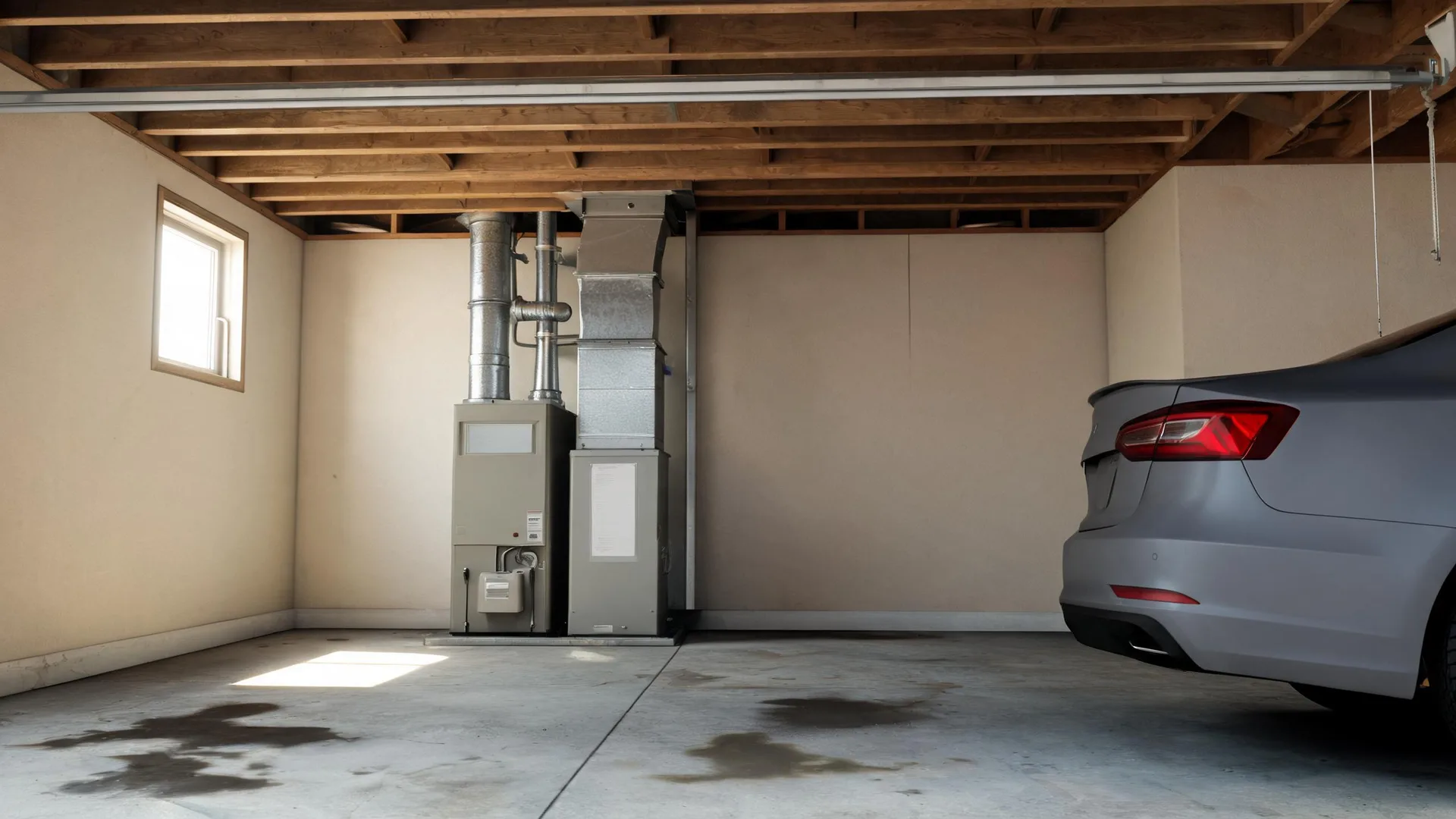
An unfinished basement featuring concrete block walls, exposed floor joists, and a metal forced-air furnace with ductwork near a central pillar.

Furnace Installation in Payette, ID

Tell us about the job

Takes about a minute. No obligation.

New system or replacementFurnace or heatingPayette County, ID
Step 1 of 2

What ZIP code is the job in?

Electricity here runs $33.76 per million Btu

That's what Idaho homes paid for electric power in 2024, measured across the state by the EIA. Most furnaces around Payette run on electricity, so that rate is what shows up on your bill every time the furnace cycles on.

The furnace you pick decides what that rate costs you

Two furnaces using the same electricity at the same rate can leave you with very different bills, depending on how much of that power actually turns into heat in your house. At Idaho's electric rates, that difference is worth knowing before you buy, not after.

8 months
October through May, your furnace is on duty
25°F
the average winter night it heats against
80% AFUE
the federal minimum any new unit must meet
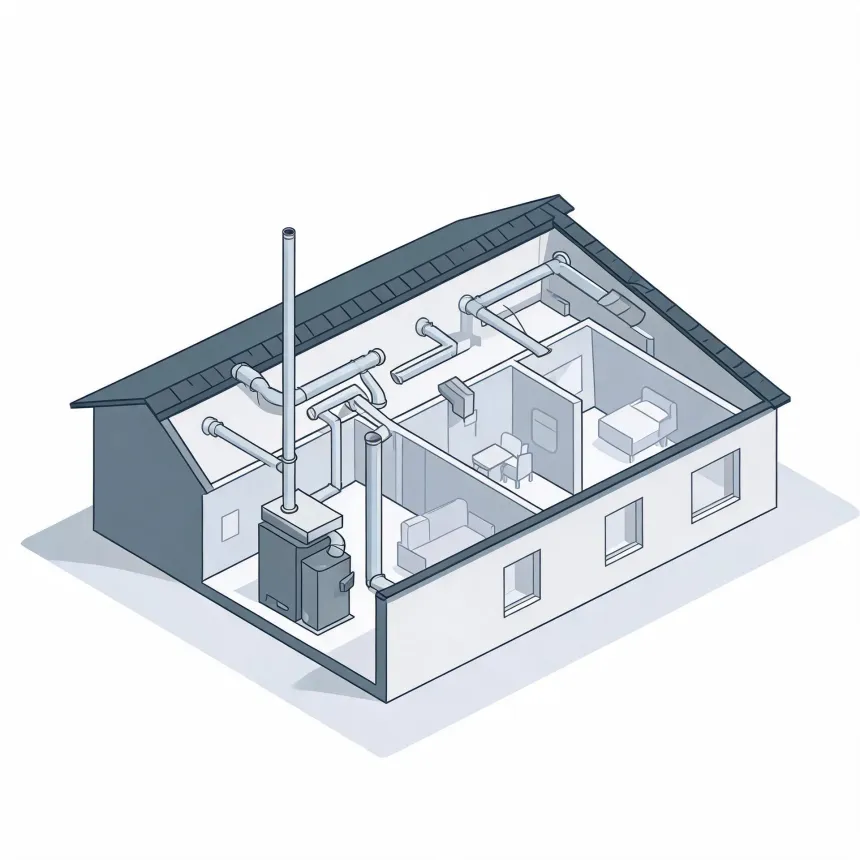
Isometric line illustration of a single-story house cutaway showing interior rooms with furniture, ductwork or piping running along the ceiling, and a boxy furnace unit with a tall vertical flue pipe.
Your furnace works hardest from November through March.

NOAA nClimDiv, 1991–2020 normals

Electricity heats 44.3% of homes in Payette County, more than any other fuel.

An electric furnace replacing an electric furnace means the hookup is already there.

Eight months of heat a year makes installing this thing right worth doing before October

Heat runs October through May
Winter nights average 25°F
37 winter storms from 2015 to 2024

Payette County falls under zone 5B in the 2021 energy code, a cool zone where the furnace carries more of the load than the air conditioner does. That classification does not set a furnace efficiency number by itself, but federal rule does. Any gas furnace built since November 2015 has to turn at least 80 percent of the gas it burns into heat. That floor changes in December 2028, when new units will need to hit 95 percent. An electric furnace works differently and is not bound by that gas rule, but where gas is an option, this is the minimum it has to clear before it can be installed at all.

Pick the furnace before the rate decides it for you

At $33.76 per million Btu, the furnace you install sets what every cycle costs for as long as it runs. Deciding that now, before the old one is pulled, is easier than living with the pick after.

Find a contractor
A man in a dark jacket and tan pants, seen from behind, carries a canvas tool bag up concrete steps toward a blue front door of a house with light horizontal siding and a potted shrub in a blue planter.
A gray gas furnace with attached ductwork and piping installed in an unfinished concrete basement.

What's inside it matters more than what it says on the box

A furnace runs on a heat exchanger, and that part is the whole reason to ask hard questions before you buy. Every time it fires, the exchanger heats up, then cools back down when the cycle ends. That expansion and contraction, over and over, for years, is what eventually cracks it. A furnace built with a heavier gauge exchanger and better corrosion resistance shrinks that risk. Ask what the exchanger is made of and what the warranty on it actually covers, not just the warranty on parts. Ask how the furnace stages its heat too. A single stage unit runs at full fire every time it kicks on. A two stage or modulating unit can run at a lower fire for most of the time it's heating, which means fewer hard starts and less wear on the igniter and blower motor over the long run. Ask about the blower motor itself. A variable speed motor ramps up and down instead of snapping straight to full speed, and that matters for both comfort and how hard the motor works over its life. None of this shows up on a spec sheet as one clean number. It shows up in how many winters the furnace gets through before something fails.

The rating tells you what happens to the fuel, not the house

A furnace's efficiency rating is a measure of waste. It says how much of the fuel burned turns into heat you actually get, and how much leaves through the flue unused. A furnace with a higher rating wastes less doing the same job. It says nothing about how that heat spreads through the house or how long the unit holds up. Two furnaces with the same rating can still live very differently in a home.

That number only holds if the furnace matches the house

A furnace sized too big for the space fires, hits temperature fast, and shuts off before it has run long enough to work the way its rating assumes. One sized too small runs long stretches trying to catch up, burning more fuel than the rating would suggest. The number on the box describes the furnace running against a load it fits. Get the sizing wrong and the rating stops meaning much.

Pulling the old furnace is part of the job, not an extra step. A contractor disconnects the gas line or electrical circuit, detaches the ductwork, and takes the whole cabinet out, usually in one piece if the space allows. If it is a gas furnace, the vent connection gets capped or removed too, since a vent sized for the old unit is not automatically right for the new one. What's inside sometimes matters as much as the furnace itself. An old heat exchanger can carry soot or scale that a contractor checks for before closing anything up, and refrigerant lines or drain lines tied to the old setup get inspected rather than just reused. None of this is optional work tacked onto the sale. A new furnace connected to old vent pipe, old ductwork, or wiring sized for a different unit can run into problems that have nothing to do with the furnace itself.

Installation day starts with the house going cold for a few hours, since the old furnace has to come out before the new one goes in. A contractor checks the ductwork and the return before setting the new cabinet in place, not after, because connecting a new furnace to a duct run that does not fit it is how comfort problems start. The gas line or electrical circuit gets hooked up next, then the venting, then the control wiring that ties the thermostat to the furnace itself. Once it's set, a contractor runs it through a full cycle, checking the flame or the heat strips, the blower, and the temperature rise across the unit against what the manufacturer specifies for that model. That last check matters more than it looks. A furnace that fires but never gets tested against its own numbers can run for years a little off and nobody notices until a bill or a breakdown forces the question.