Profile view of a bearded man wearing a dark baseball cap and a dark gray T-shirt against a plain off-white background.

What size furnace an Idaho home needs

New system or replacementFurnace or heatingIdaho
Step 1 of 2

What ZIP code is the job in?

What size furnace do I need for my house in Idaho?

You're planning ahead for a furnace, which makes sense: Idaho winters push a system hard, and the wrong size shows up fast, either in a house that never quite gets warm or one that cycles on and off and never settles. The right size comes from a load calculation on your house, not a chart or a rule of thumb, because two homes of the same square footage can need different furnaces depending on insulation, windows, and how the house is built.

There's no single size that fits every Idaho home

A furnace is sized by BTU output, and the right number comes from a Manual J load calculation, which looks at your square footage, your insulation, your windows, and how the house holds heat. Idaho winters are cold enough that an undersized furnace will run constantly and still lose ground on the coldest nights. An oversized one heats the house fast, shuts off, and cycles on and off all day, which wears out parts sooner and leaves rooms unevenly heated. Most homes here run on gas, so sizing also has to account for how your ductwork moves that heat through the house. A contractor who measures your home can tell you the actual number; nothing shorter gets it right.

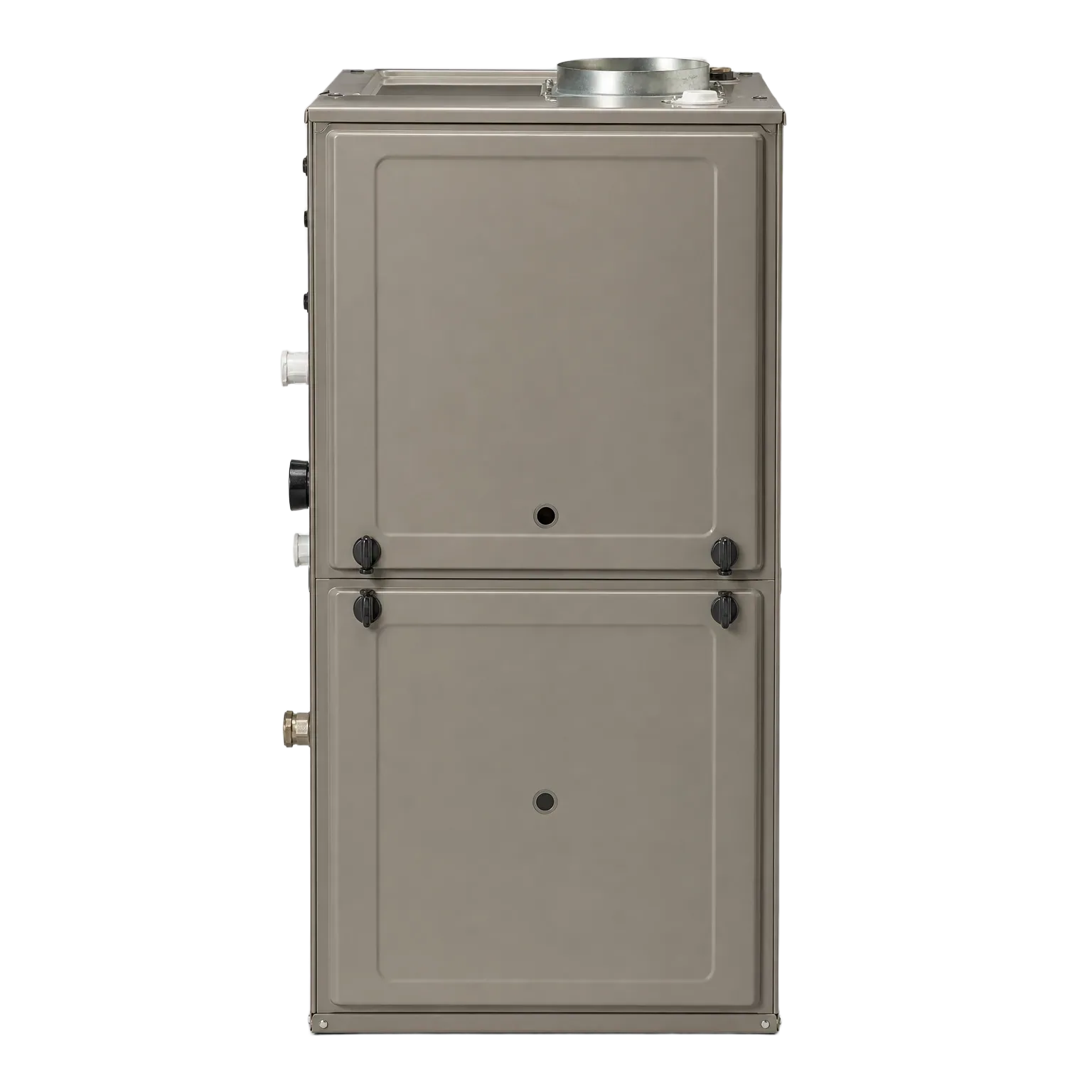
A beige high-efficiency furnace stands on a concrete basement floor beside sheet-metal ductwork, with white PVC vent pipes, flexible conduit and copper and steel piping running up a concrete wall to an electrical box.

Furnace sized right

Warm air pushes steady through the ducts and the house holds its temperature without the furnace running nonstop. It cycles on, heats the place evenly, and shuts off. Gas use tracks with the cold outside, not with a unit straining to keep up.


An older gas furnace with a louvered front panel stands on a concrete basement floor beside large sheet-metal ductwork, a metal flue pipe, copper piping and wood framing.

Furnace sized wrong

An oversized furnace blasts heat, shuts off fast, then kicks back on again within minutes. An undersized one runs long stretches and the far rooms stay cold anyway. Dust collects around a unit that's working harder than it should, and the gas bill reflects it.

A wooden table in the foreground holds a closed laptop and a ceramic mug of coffee, with a spindle-back wooden chair behind it, a beige wall with paneled wainscoting, a window at left, and a kitchen counter with a cutting board, bowl of fruit and greenery at right.

Guessing on size costs you twice

An undersized furnace in your house means the living room never quite reaches the thermostat setting on the coldest nights, and you end up running space heaters to fill the gap. An oversized one heats the house too fast, shuts off, then starts again a few minutes later, all night long. That short cycling wears out the parts sooner than they should wear, and your gas bill reflects a furnace working harder than it needs to for the heat you actually get.

Getting the size right takes a load calculation, one that accounts for your square footage, your windows, your insulation, and how Idaho's winter actually sits on your particular house. That's a job for whoever installs it, not a number you look up. Skip the search for who does that work well, the calls to three different companies, the repeating of your address and your house's quirks to each one, and the pile of quotes you'd otherwise have to line up side by side to figure out who actually knows what they're doing.

A gray upholstered sofa with a beige cushion and knit blanket beside a curtained window, with a white mug and a book on a dark wooden table in the foreground and a lit lamp in the background.
A man in a gray sweater reclines in a brown leather armchair with his eyes closed, beside a wooden side table holding a mug, a folded newspaper and a potted plant, with a bookshelf and sunlit window behind him.
A man with greying hair and a dark sweater leans back on an armchair with his eyes closed and a slight smile, in a living room with a bookshelf, plant, folded newspaper and mug on a wooden table.
A man in a gray fleece jacket sits reclined in a leather chair with his eyes closed, in a room with bookshelves, a table lamp, a window, and a desk holding a folded newspaper and a dark mug.
A bearded man in a gray fleece pullover sits with eyes closed in a brown leather armchair in a living room, with a floor lamp, bookshelf, potted plants, a side table holding newspapers and a dark mug, and a bright window behind him.

Load Calculation vs. Square Footage Rule

Load calculation

  • A Manual J calculation weighs your square footage against your windows, insulation, and ceiling height to find the actual heat loss on a cold night.
  • It accounts for how much sun the house gets and which way the walls face, not just the floor plan.
  • Two houses with the same square footage can need different furnace sizes if one has more glass or higher ceilings.
  • The number it produces is specific to your house, not a range that covers houses like it.
  • A contractor doing an install should run this calculation rather than size off the old furnace's rating.

Square footage rule

  • A rule of thumb multiplies your square footage by a BTU figure per square foot to land on a furnace size fast.
  • It skips insulation, window count, and ceiling height, so two different houses of the same size get the same answer.
  • In a well-insulated house it tends to push the number higher than the house needs.
  • In a drafty house it can land short, leaving the furnace to run long cycles all winter to keep up.
  • It gives you a ballpark to start the conversation, not the number to install off of.
An older man with gray hair and a navy knit sweater sits in an armchair with his eyes closed, near a bright window with potted green plants.
A woman in a cream knit sweater sits in an armchair indoors, eyes closed and smiling, beside a window showing yellow and orange autumn foliage, with a mug on a wooden side table and shelves holding vases behind her.

One request and it's handed off

Describe the project once instead of to every installer.

No charge to send it. You decide if you hire them.

BTUs trace heat loss, not floor space

A furnace is rated in BTUs, the heat it can put out in an hour. Square footage is where most rule-of-thumb sizing starts, but two houses at 2,000 square feet can lose heat at very different rates depending on how many windows face north, how high the ceilings run, and what's behind the drywall. That's why a Manual J calculation exists: it turns those details into a number the furnace has to match. A contractor doing the math isn't padding the job. It's the only way the BTU rating on the new furnace actually fits the house it's going into.

Ductwork has to carry what the furnace makes

A furnace rated right for the house still needs ducts sized to move that much warm air. If the ductwork was built for a smaller unit, the new furnace can push harder than the ducts can carry, and you get rooms that run cold anyway or a blower working louder than it should. This is part of why installation isn't just swapping one box for another. A contractor checking duct size alongside the BTU number is checking that the heat the furnace makes actually gets to the rooms that need it, not just out of the cabinet.

Winter nights average 22°F statewide

A 22°F night means your furnace isn't just holding the house steady, it's working against a 50 degree gap to get there. That's the kind of load a Manual J needs to catch, not a rule of thumb.

NOAA nClimDiv 1991-2020 county normals weighted by homes

A gray high-efficiency furnace with white PVC vent pipes stands in an unfinished basement beside sheet-metal ductwork, gas piping, and insulated stud walls on a concrete floor.
Working right, the furnace cycles on long enough to push warm air through every run of duct, then shuts off clean.
A beige sheet-metal furnace with a louvered upper panel stands on a concrete basement floor, connected to galvanized ductwork, white PVC vent pipes, and a metal gas line with an electrical box.
Mismatched to the house, the furnace short-cycles or runs flat out, and the ductwork around it can't make up for the wrong size unit.

How a furnace actually fires

  • A furnace fires when the thermostat calls, the gas valve opens, and the igniter lights the burners inside the heat exchanger.
  • Air from the return duct passes over the heat exchanger and comes out the supply ducts, never mixing with the combustion gas itself.
  • The blower runs on a delay after the burners light, so the air coming out starts warm instead of cold.
  • An inducer motor pulls combustion byproducts out through the flue before the burners even ignite, as a safety check.
  • Once the house reaches the thermostat setting, the gas valve shuts and the blower keeps running briefly to clear leftover heat from the exchanger.
  • A furnace sized to the house cycles through this sequence in full, rather than shutting down early or running long to compensate.

The thermostat sends the call, but the furnace runs through a set order before any heat reaches the house. The inducer motor spins up first and clears the flue, proving it's safe to light the gas. Only then does the igniter fire the burners inside the heat exchanger, a sealed chamber that keeps combustion gas away from the air you breathe. The blower waits a few seconds after that, long enough for the exchanger to warm up, so what comes out the supply ducts is warm air, not cold. Return air pulls across the outside of the exchanger, picks up the heat, and gets pushed through the house. None of this touches the flame directly. When the house reaches the temperature on the thermostat, the gas valve closes first, then the blower keeps turning a little longer to pull the last of the heat off the exchanger before it shuts down too.

This whole sequence, inducer, igniter, blower delay, shutoff, takes a particular amount of time to run start to finish. A furnace sized to your house gets to run it that way every cycle. One that's too big for the house satisfies the thermostat fast and shuts down before it's finished pushing heat evenly through the ducts. One that's too small never quite gets there, so it keeps cycling back through the same startup sequence far more often than the equipment is built to.

An older gas furnace with louvered panels sits on a concrete pad in a basement, connected to sheet-metal ductwork and PVC and metal pipes, with a water heater and wooden stair framing in the background.
Before you get your furnace installation
A gray high-efficiency furnace with white PVC vent pipes stands beside galvanized sheet-metal ductwork in a basement with a concrete floor, with a wooden staircase and railing at left.
After you get your furnace installation
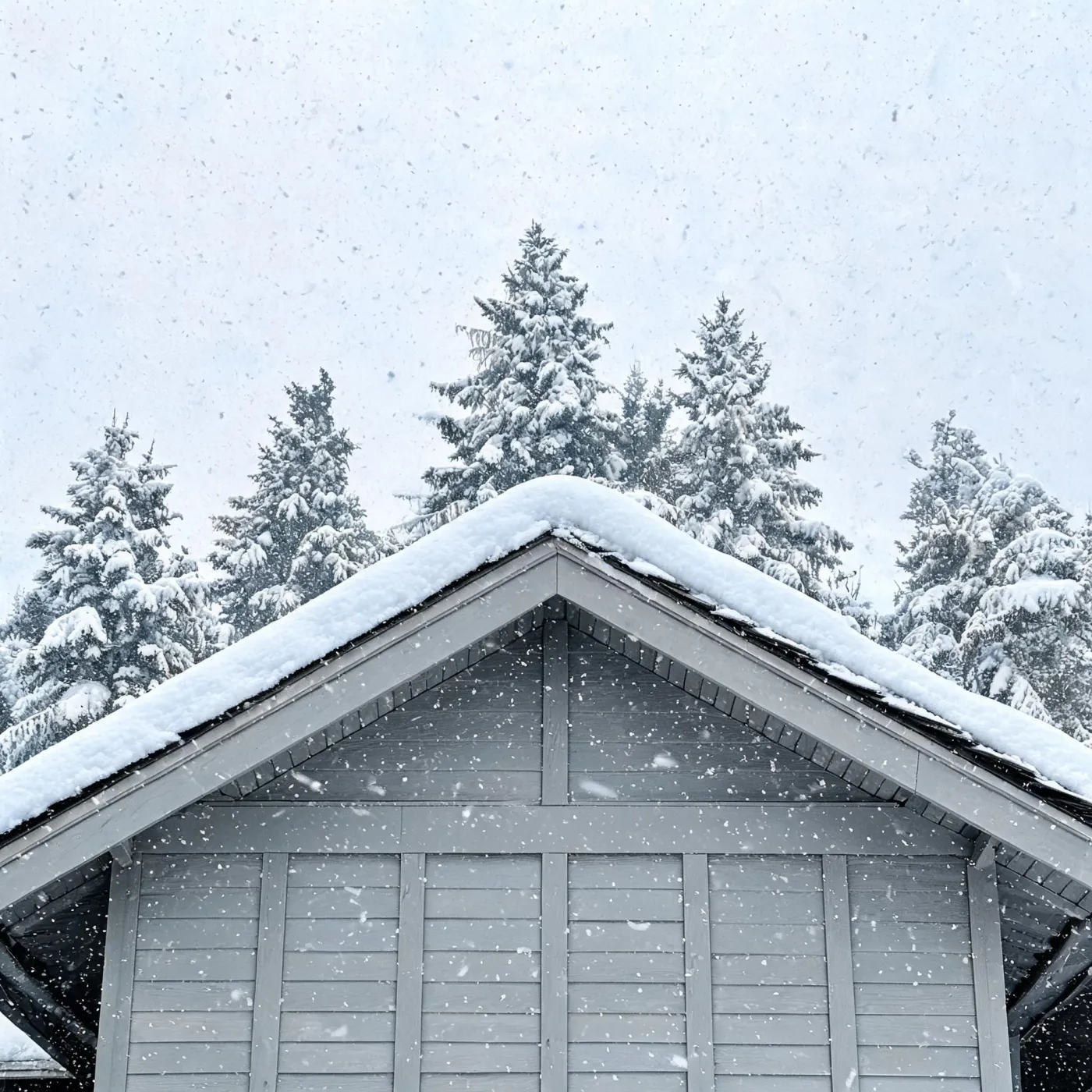
The snow-covered gable end of a gray wood-clad building, with snow-laden conifers and falling snow behind it under an overcast sky.

Statewide, winter nights average 22°F, according to NOAA climate data. That's the temperature your furnace is holding against while everyone's asleep and the thermostat hasn't moved in hours. At that gap between outside and 68 or 70 inside, a furnace sized even a little wrong shows itself. Too small, and it runs the whole night without closing that last gap, so the house settles a few degrees under the setting by morning. Too big, and it blasts the room near the thermostat warm, shuts off, and leaves the far bedrooms cold until the next cycle. Either way you feel it at the far end of the house before you feel it anywhere else.

NOAA nClimDiv 1991-2020 county normals weighted by homes

The right size furnace for your house comes from a Manual J load calculation, not the square footage on your listing. That's the whole answer. Getting there means someone actually measures your windows, your insulation, your ceiling height, and runs the numbers against a 22°F night rather than a guess. You could spend the next few weeks calling contractors around your part of Idaho, asking who does load calculations instead of eyeballing a chart, explaining your house over and over, then setting quotes side by side trying to tell a real bid from a rough one. Or you can send one form and let that search land on someone else's desk. Once it's sent, you're not the one tracking down who's licensed, who answers the phone, or who actually shows up. That part is off your plate. What's left is the part that was always going to take real work: a contractor in your house, measuring what's actually there, sizing the furnace to hold against the cold your winters bring.

A curving paver walkway runs alongside a house with beige lap siding and a white-trimmed window, bordered by low shrubs, grassy plants, and trees in sunlight.
A dark-framed casement window with divided upper panes set in a stucco wall beside a stone-clad section, with hydrangeas, hostas and trimmed shrubs in a mulched bed above a lawn.
White horizontal lap siding wall with a single six-pane double-hung window, above a mulched bed of hydrangea shrubs with browning blooms, bordered by mown grass in low sunlight.
Interior corner with tan plaster walls, a potted olive tree in a large terracotta urn beside a floor-to-ceiling window, and a wooden bench with a beige cushion on a herringbone brick floor partly covered by a woven jute rug.
A wooden bench beneath a window holds a green linen cushion and a fringed cream throw, with a woven basket stored underneath on a wood plank floor.

Done looking for a furnace pro

Skip collecting and comparing quotes for the new furnace.

Send my request

There's no charge for the request.