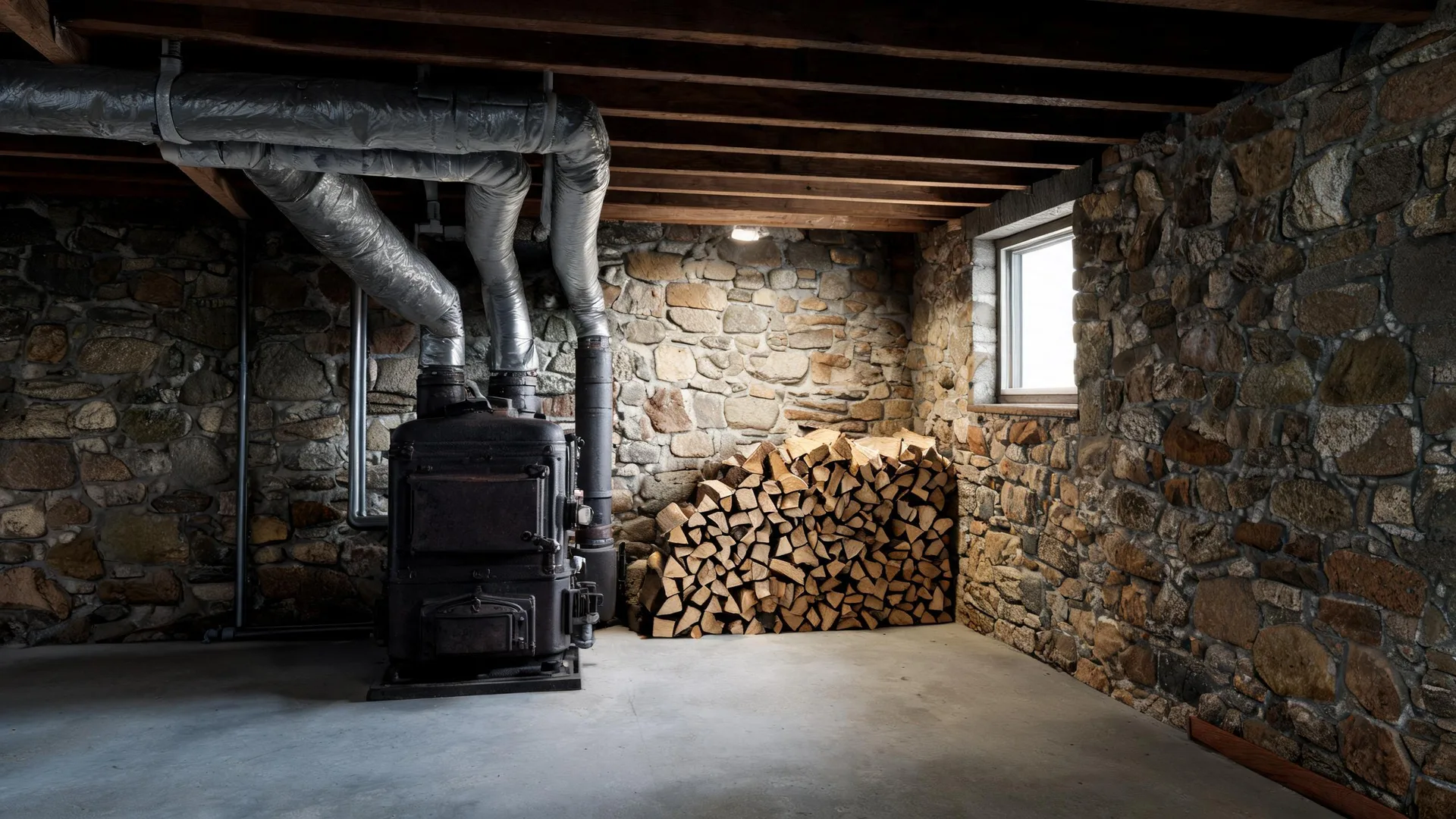
Gas is the default here
Nearly 6 in 10 homes in Canyon County heat with utility gas. If your house already has a gas line run to a furnace, putting in another gas furnace is usually the straightforward choice.
Takes about a minute. No obligation.
Nearly 6 in 10 homes in Canyon County heat with utility gas. If your house already has a gas line run to a furnace, putting in another gas furnace is usually the straightforward choice.
About a third of homes in the county heat with electricity instead. Before anything gets ordered, confirm which fuel your current system runs on, since that decides whether this is a straight swap or a bigger change to the gas or electrical line.
NOAA nClimDiv, 1991–2020 normals
Natural gas ran $8.25 per million Btu in Idaho homes in 2024.
A high-efficiency furnace here pays back slower, so the install should be judged on fit and reliability first.
Canyon County sits in zone 5B, a cool zone where heating carries most of the load on the house. Any furnace going in now has to clear 80.0 percent AFUE, the current minimum for a non-weatherized gas furnace. That floor rises to 95.0 percent in a few years, but a furnace bought today only has to meet the standard in place now. Plenty of furnaces on the market already run higher than the minimum, so check the AFUE number on the unit rather than assume. A federal tax credit is available for qualifying high-efficiency equipment, worth asking about while you're comparing models.
Pick the furnace that will hold up and get serviced without a fight, not the one with the highest AFUE number. With gas this cheap in Idaho, that difference shows up slowly on the bill but fast if the unit is hard to get parts for. Ask the contractor what they install the most and why.
Find a contractorThe old furnace does not get reused or rebuilt once a new one goes in. It gets disconnected from the gas line and the vent, cut free of the ductwork, and hauled out whole or in pieces. By the time a furnace is on the list to be replaced, the heat exchanger has usually been running with age on it for a long while, and that part cannot be inspected the way a filter or a belt can. A cracked heat exchanger is often the reason the swap is happening at all. Whatever still works on the old unit, a blower motor, a thermostat, does not get kept for parts. The new furnace comes with its own, matched to how it fires and how it runs.
The AFUE number tells you how much of the fuel burned turns into heat in the house versus what goes out the flue. It says nothing about how long the furnace lasts, how often it needs a repair, or how evenly it heats the rooms. A high number is one data point, not a verdict on the furnace.
A furnace only hits its rated efficiency if the ductwork, the venting, and the gas supply are sized to match it. A high-efficiency furnace choked by undersized ducts or a vent run that fights it will burn fuel without delivering the comfort the label promised. The number on the sticker is a lab result, not a guarantee for this house.
Estimates for a typical Canyon County home, from EIA household energy data, Idaho fuel prices and NOAA climate normals. Your home will differ.
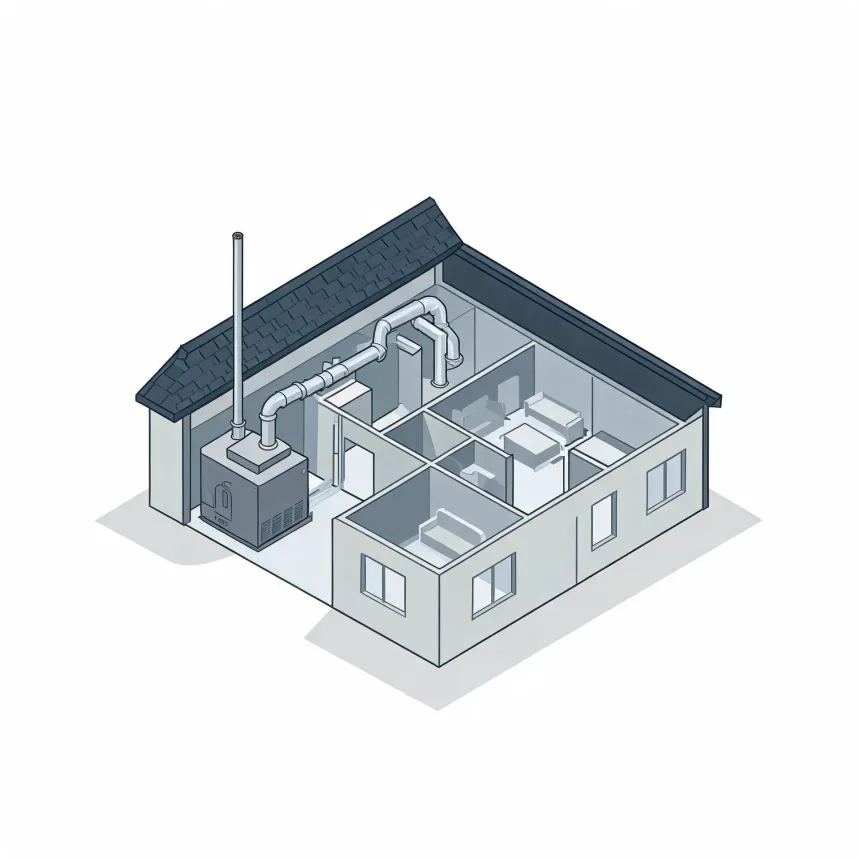
Installation starts with the old furnace coming out, then the new one gets set in place and the real work begins. The gas line gets connected and checked for a tight seal, since a gas leak at the fitting is not something anyone wants to find later. The vent pipe gets attached and run the way that furnace needs it run, not however the old one happened to be routed. The ductwork gets tied back in, and a good installer checks the return air opening is large enough rather than just bolting the plenum back on. Once it's wired up and the thermostat is talking to it, the furnace gets fired and run through a full cycle while someone checks the flame, the gas pressure, and the temperature rise against what the manufacturer specifies for that model. None of that shows up on the invoice, but skipping it is how a furnace ends up short-cycling or never hitting its rated output.