










Furnace smells like burning in Nampa, ID

RepairFurnace or heatingCanyon County, ID
Step 1 of 2

What ZIP code is the job in?

Why does my furnace smell like it's burning?

A burning smell from your furnace is unsettling, especially when it's the first cold morning you've run it in months. You want to know if this is dust burning off a heat exchanger that sat idle since spring, or something wrong enough to shut the system down. In Nampa, where furnaces run hard through the cold months, the answer depends on what kind of smell it is and whether it fades or lingers.

A light dusty smell that fades in an hour is normal. A sharp or lasting one is not

Dust collects on the burners and heat exchanger over the months your furnace sits unused, and the first few cycles of the season burn it off. That smell should ease within an hour and not come back. A smell that doesn't fade, or one that's sharper, like hot metal, plastic, or anything like a struck match, points to something else: a cracked heat exchanger, a wiring problem, or a gas leak. Any of those is a reason to shut the furnace off and have it looked at before running it again. With winters as cold as they get around Nampa, you don't want to be without heat, but running a furnace with a real problem is worse than losing it for a day.

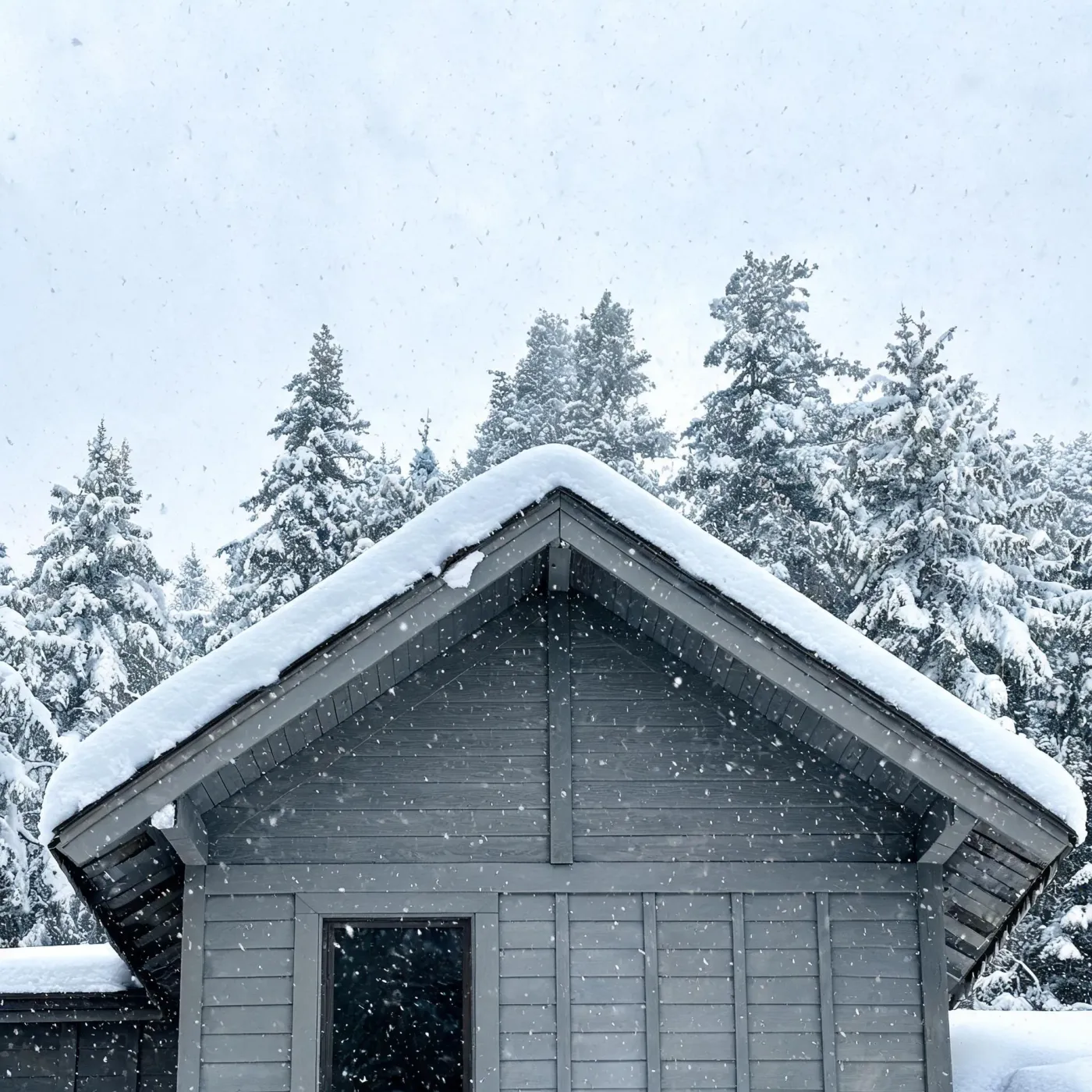
Gable end of a gray wood-clad cabin with a snow-covered roof, falling snowflakes, and snow-laden conifer trees behind it under a pale overcast sky.

Nights here average 25°F through December, January and February, according to NOAA climate data for Canyon County. At that temperature your furnace isn't cycling on for a few minutes here and there. It runs long stretches to keep up, and it runs them night after night. That kind of steady demand is when a burning smell tends to show up, because whatever's causing it, dust on the heat exchanger, a dirty filter restricting airflow, a motor working harder than it should, gets pushed past the point you'd notice it on a mild day. If the smell lingers past the first run of the season, the cold isn't letting your system rest long enough to tell you it's minor.

NOAA nClimDiv 1991-2020

A gray-haired bearded man in a dark knit sweater sits on a light gray sofa in a sunlit living room, looking to his left, with a framed artwork, a potted palm, and a curtained glass door behind him.
A middle-aged man in a dark green sweater sits on a light grey sofa looking toward a sunlit window, with a wooden shelving unit, lamp and potted plants in the background.
A man in a dark green sweater sits on a light grey sofa in a sunlit living room, looking to his left, with a shelving unit, houseplants, framed art and a large window behind him.
A gray-haired bearded man in a dark green sweater sits on a light gray sofa in a sunlit living room with a potted plant, framed picture, and dark shelving in the background.

Why does a burning smell matter more on a furnace that runs this much?

  • Winter nights average 25°F

    At 25°F overnight, the furnace is the thing standing between you and a cold house. A burning smell is worth checking before it fails on you at night.

  • Heat runs October through May

    Eight months of runtime means more hours on the igniter, the blower motor and every electrical connection inside the cabinet. That's more chances for a smell to mean something.

  • 59.4% of homes heat with gas

    Most homes near you burn gas for heat. A gas furnace with a burning smell can point to a wiring or motor problem, or in rare cases a cracked heat exchanger, and it's worth having someone rule out which.

NOAA nClimDiv 1991-2020 · ACS 2020-2024

What the smell is telling you

  • A dust smell for the first ten or fifteen minutes of the first few runs is normal and should fade on its own.
  • A burning plastic or electrical smell points to a part overheating, like the blower motor or a failing circuit board.
  • A smell like hot metal often means a cracked heat exchanger or a belt or bearing running dry, worth shutting the furnace off for.
  • A smell like rotten eggs is not the furnace burning anything, it's added to gas so you notice a leak and should get everyone out and call for help right away.
  • The furnace draws air from inside the house, so anything scorching near the intake, a stored box or a dropped sock, gets pulled in and smells like it's the furnace itself.
  • A burning smell that returns every time the furnace cycles, instead of fading after startup, means something is still making contact with a hot part.

Dust burning off the heat exchanger is the one smell you can wait out. It happens because the furnace sat unused for months and a layer settled on the metal. Give it ten or fifteen minutes on the first couple of runs. If it is still there after that, something else is going on.

A plastic or electrical smell means a part is running hotter than it should. The blower motor or the circuit board are the usual suspects, and either one is a reason to shut the system off rather than let it keep cycling. Hot metal is a step further. It can mean the heat exchanger has a crack, or that a belt or bearing has lost its lubrication and is grinding against metal that was never meant to touch it. That one is worth turning off at the thermostat and not running again until someone has looked at it.

Rotten eggs is not a furnace problem at all. Natural gas has no smell on its own, so the gas company adds that odor so a leak gets noticed. If you smell it, the furnace itself is not the thing burning. Get everyone out of the house and call for help from outside.

Worth ruling out first: anything stored near the intake. The furnace pulls air from inside the house, so a box too close to the vent or something that fell against it will smell like the furnace even though the furnace is fine.

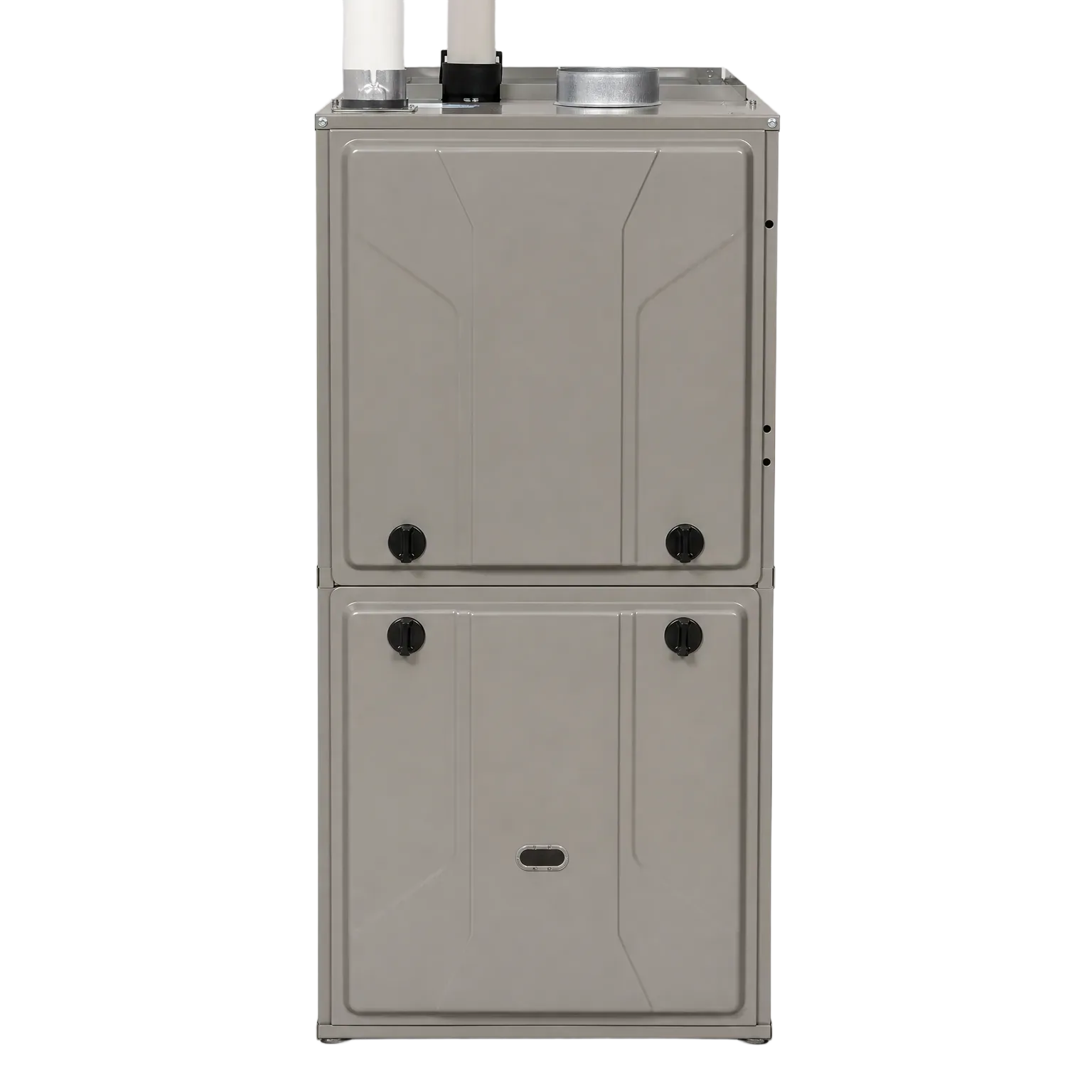
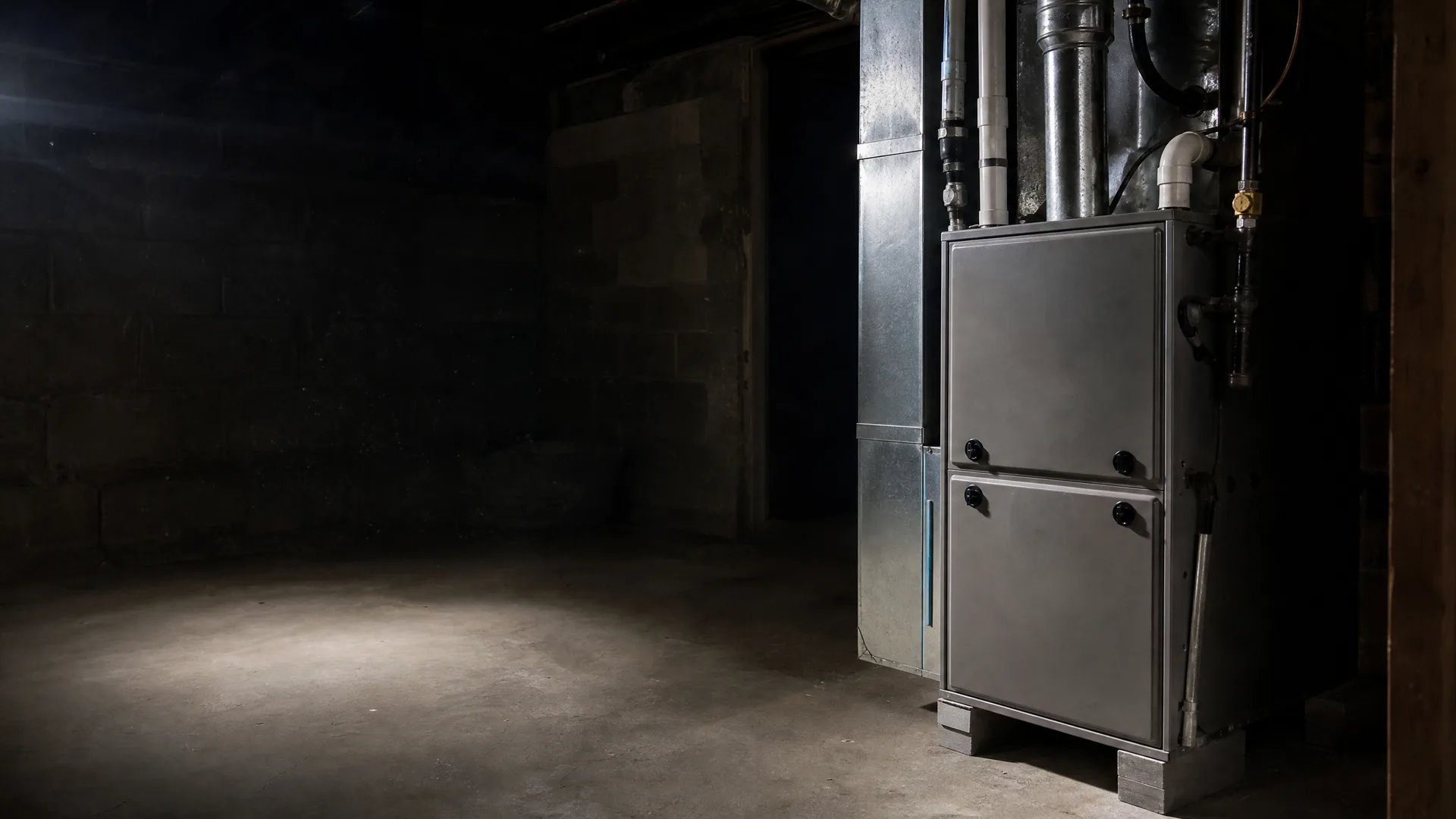
A gray high-efficiency furnace stands on a concrete basement floor beside galvanized sheet-metal ductwork, white PVC vent pipes, copper and black piping, and unfinished wood stud framing.
Dust burning off the heat exchanger on a cold start, gone within ten or fifteen minutes once the furnace has run a while.
A gray furnace with two access panels stands on a concrete basement floor beside sheet-metal ductwork, with pipes, flexible conduit and an electrical box on the concrete wall to the left.
A smell that holds past the first run, or smells like plastic or hot metal, means a part is overheating in there.

If that smell is still there on the third or fourth run, not just the first cold morning, it's worth paying attention to what it's near. A burning smell that comes with the furnace short cycling, or the blower running louder than usual, or a breaker that trips, means something is drawing too much current or sitting too close to a part that's overheating. Left alone through a Nampa winter, that's a furnace that can fail on a night when it's 25°F outside and you need it most, or in the worse case, a cracked heat exchanger or an electrical fault that's a fire risk, not just an inconvenience. You'd notice it first as a smell, then maybe a furnace that won't stay lit, then a cold house. None of that needs to happen. A qualified technician can tell within a few minutes of opening the cabinet whether what you're smelling is the normal start-of-season dust or a part that needs to be replaced before it takes the furnace down with it.

A middle-aged woman with shoulder-length dark hair, wearing a gray cardigan over a cream top, sits in an upholstered armchair and looks toward a sunlit window, with a shelf holding framed pictures and a plant behind her.
A woman with dark hair in a bun sits on a sofa with a child resting his head on her shoulder, both wrapped in a cream knit blanket, with a lit lamp and bookshelf in the dim background.
  1. Cold air crosses the igniter, which glows and lights the gas

  2. Burners fire and heat moves into the metal heat exchanger

  3. The blower motor switches on and pushes air across the exchanger

  4. Heated air travels the ducts into the rooms of your house

A beige gas furnace with a metal flue pipe stands in a basement against concrete block walls, beside sheet-metal ductwork, copper and white plastic pipes, and a water heater at right.
Before you get your furnace repair
A gray high-efficiency furnace with white PVC vent pipes stands beside sheet-metal ductwork and a water heater in an unfinished basement with concrete walls and wood framing.
After you get your furnace repair

No calling every shop in Canyon County

A licensed pro who repairs furnaces in Canyon County gets your request.

No fee to send it, and nothing to sign.

A beige high-efficiency furnace in an unfinished basement, with white PVC vent pipes, a yellow gas line, metal ductwork, and exposed wood framing on a concrete floor.

The furnace running clean

This is what a furnace should look like: ductwork sealed tight, the condensate line clear, the gas line connected and nothing loose at the junction box. A furnace in this shape warms the house without a smell past the first few minutes of a cold start.

An older beige furnace with two louvered vent panels stands on a concrete basement floor, connected to galvanized ductwork and a metal flue pipe, with gas piping and flexible conduit on the wall behind.

The furnace in trouble

Older cabinets like this one show their age at the gas pipe and the flue. A burning smell that won't quit on a furnace like this could be dust in a flue that's drafting poorly, or a part behind those louvered panels working harder than it should. A licensed tech working in Canyon County furnaces all winter can get into that cabinet and tell you which.

What are you noticing when this happens

You probably caught it walking past a vent, or sitting in the room the furnace heats first. Maybe the smell is faint and only shows up when the furnace has been running a while. Maybe it's sharp enough that you turned the thing off already. You might also notice the furnace cycling on and off more than it used to, or the blower sounding louder, or a breaker that trips when it hasn't before. None of that is normal wear. At 25°F overnight, a furnace that shuts itself down or trips a breaker leaves your house to lose heat fast, and that's a harder problem to catch at two in the morning than it is right now.

A gray furnace with ductwork and pipes stands against the wall of a dim concrete-block basement with a bare concrete floor lit by a single light.

You go down to check the thermostat setting before bed and the basement is already cold, the kind of cold that means the furnace quit a while ago, not just now. It's dark except for the bulb over the stairs, and when you flip it on you see the furnace sitting there dead, the burners off, no hum from the blower. A thin haze hangs in the air near the cabinet, dust that got stirred up before it shut down. Outside it's already in the 20s and dropping. You stand there a second, waiting to hear it kick back on. It doesn't.

Winter nights average 25°F

At 25°F, your furnace is one of the only things keeping the house livable overnight. A part that's overheating doesn't get a break to cool down between cycles. That's why a burning smell this time of year is worth acting on rather than watching.

NOAA nClimDiv 1991-2020

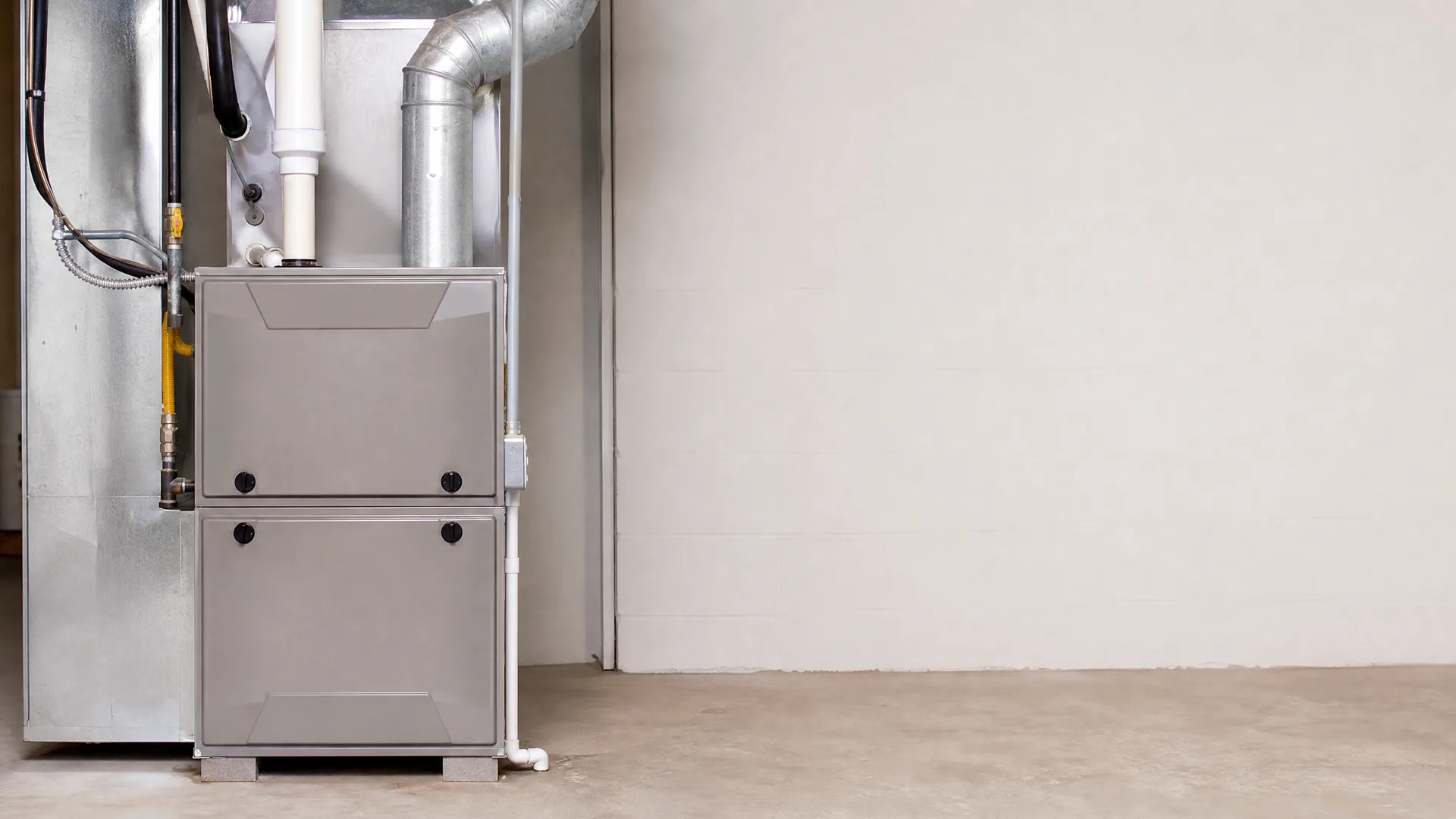
A gray gas furnace with ductwork, PVC venting and gas piping stands against a light-colored wall on a concrete floor, with empty wall space to the right.

Letting it go another night

A furnace with a burning smell that doesn't fade is still a furnace most people keep running, because shutting it off at 25°F overnight feels worse than the smell. The part that's overheating keeps overheating. If it's a blower motor, it can seize. If it's a circuit board, it can trip the breaker partway through the night, and the house is cold when you wake up, not warm with a smell.

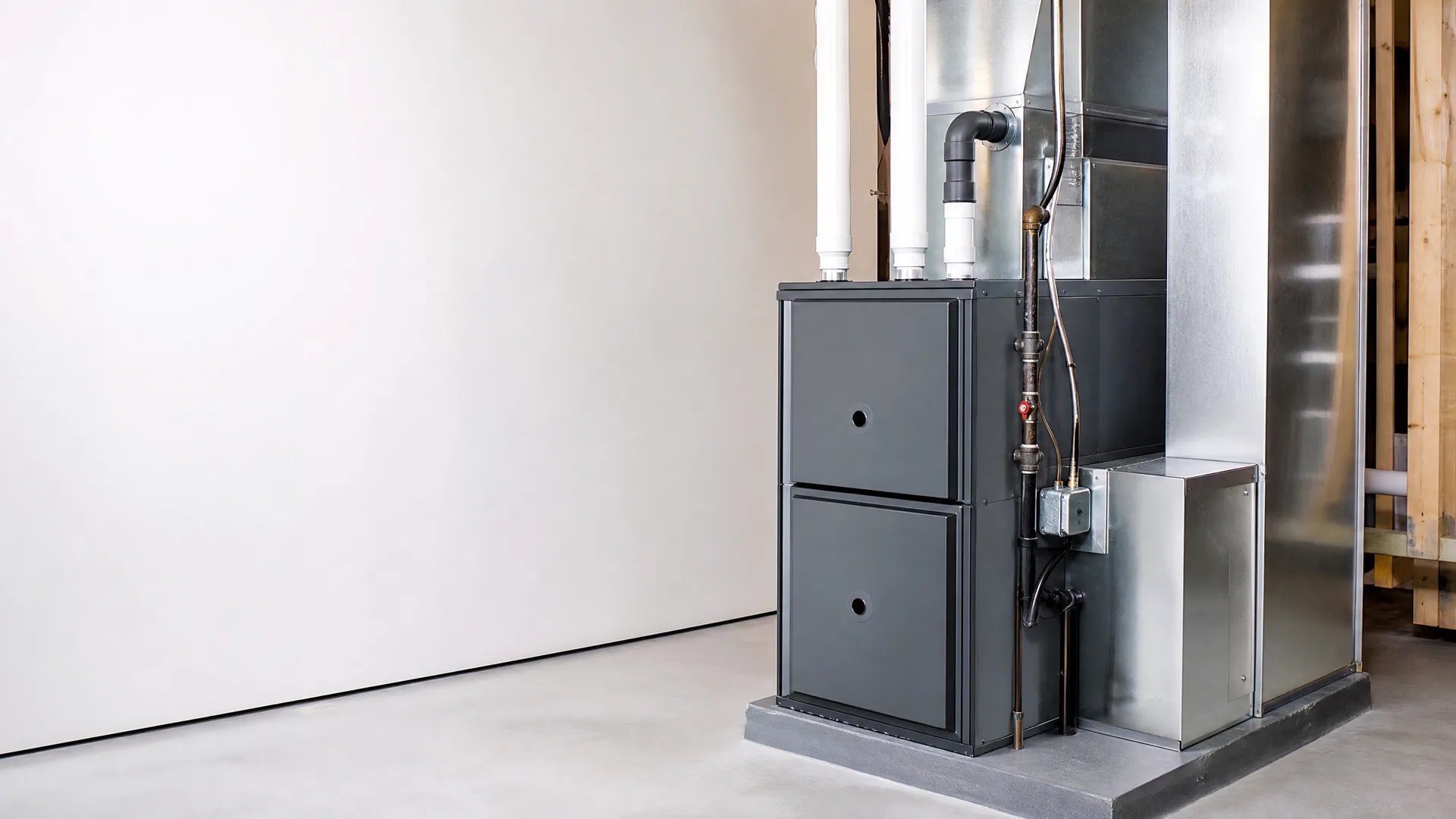
A dark gray furnace with two access panels sits on a concrete pad beside sheet-metal ductwork, white PVC vent pipes, copper gas piping and an electrical junction box against a plain light wall.

Getting a tech out to look

A licensed contractor who works on furnaces around Canyon County every winter has seen this smell before and knows where to check first, the blower motor, the circuit board, the heat exchanger. Instead of searching around and calling a few places to describe the smell over and over, you reach one contractor who can get out to look at it and tell you straight what's overheating and what it takes to fix.

A closed silver laptop and a white cup of coffee on a saucer sit on a wooden table in front of a wooden chair, a plain beige wall, a potted leafy plant and a window with greenery outside.

So where does that leave you

A dust smell that fades after the first run or two is nothing to worry about. A burning smell that stays past that, or smells like plastic or hot metal, means something in the furnace is overheating and needs a look before it fails on a cold night. That's the whole answer.

Instead of searching through contractors, calling a few, and explaining the smell over and over while you wait on quotes, you get matched with one licensed furnace repair contractor who works in Nampa and the rest of Canyon County and knows what tends to go wrong in a furnace running long stretches at 25°F. You tell them once what you're smelling and when it shows up, and they take it from there.

A large weathered ceramic vase and a shallow wooden bowl sit on a rustic wooden table beside a window with linen curtains, with a blurred sofa with cushions and a hanging fabric panel in the background.
Dark-sided house with steep shingled gable roofs in the foreground, with conifer trees, grassy hills and snow-dusted mountains under a partly cloudy sky behind.

One form, no calling around

Fill out one form

Sending the form costs nothing.

One call gets a local contractor who works on furnaces around Nampa all winter and knows what a burning smell usually means once it's past the first run. You skip the searching and the back and forth with multiple companies, and get someone who can look at it before a cold night turns into a cold house.