Cold weather makes it worse
Metal contracts in the cold, so a loose panel or a worn bearing often gets louder on the coldest nights, right when you need the furnace most.
Finding a pro stops being your job
A loud noise from your furnace usually points to one of a few things: a loose panel, a blower wheel out of balance, or something rattling loose in the burner assembly. What it means depends on the sound itself, bang, screech, rumble, and where it happens in the cycle. Once you send the request, you're not the one tracking down who can look at it.
Hand it offA bang when your furnace starts usually means gas is building up in the burner before it lights, then catching all at once. A screech points to the blower motor bearings or the belt, if your furnace is old enough to have one. A rumble while it runs is often the burner flame hitting dirty burners instead of burning clean. These furnaces run most days from November through March here, and that kind of daily cycling is what loosens a panel, wears down a bearing, or lets soot build up on a burner over a few winters. None of these sounds mean stop using the furnace outright, but a bang from delayed ignition is worth getting looked at soon, since it stresses the heat exchanger every time it happens. A local contractor who works on these furnaces every winter can usually tell which one it is from the sound alone.


A weak igniter is often behind a bang at startup. It glows but doesn't get hot enough to catch the gas right away, so gas builds up for a second before it lights all at once. That same delay can come from a dirty flame sensor, which makes the burners shut off and relight over and over, and every relight brings another bang. A squeal that shows up only when the furnace first kicks on usually comes from the inducer motor. Its bearings haven't warmed and loosened yet, so they squeal until they do. Clicking and popping while the furnace runs points to the heat exchanger, the metal expanding as it heats and contracting again once the burner shuts off. If the noise is more of a wobble or a rattling hum, check the blower wheel. Dust builds up unevenly on the blades and throws it off balance, and it wobbles every time it spins. A buzz against the cabinet is usually simpler: loose screws on the blower access panel letting the panel shake against the frame.


Metal contracts in the cold, so a loose panel or a worn bearing often gets louder on the coldest nights, right when you need the furnace most.
Most homes in Nampa heat with gas, and a local contractor who works on these furnaces all winter knows which noise points to which part.

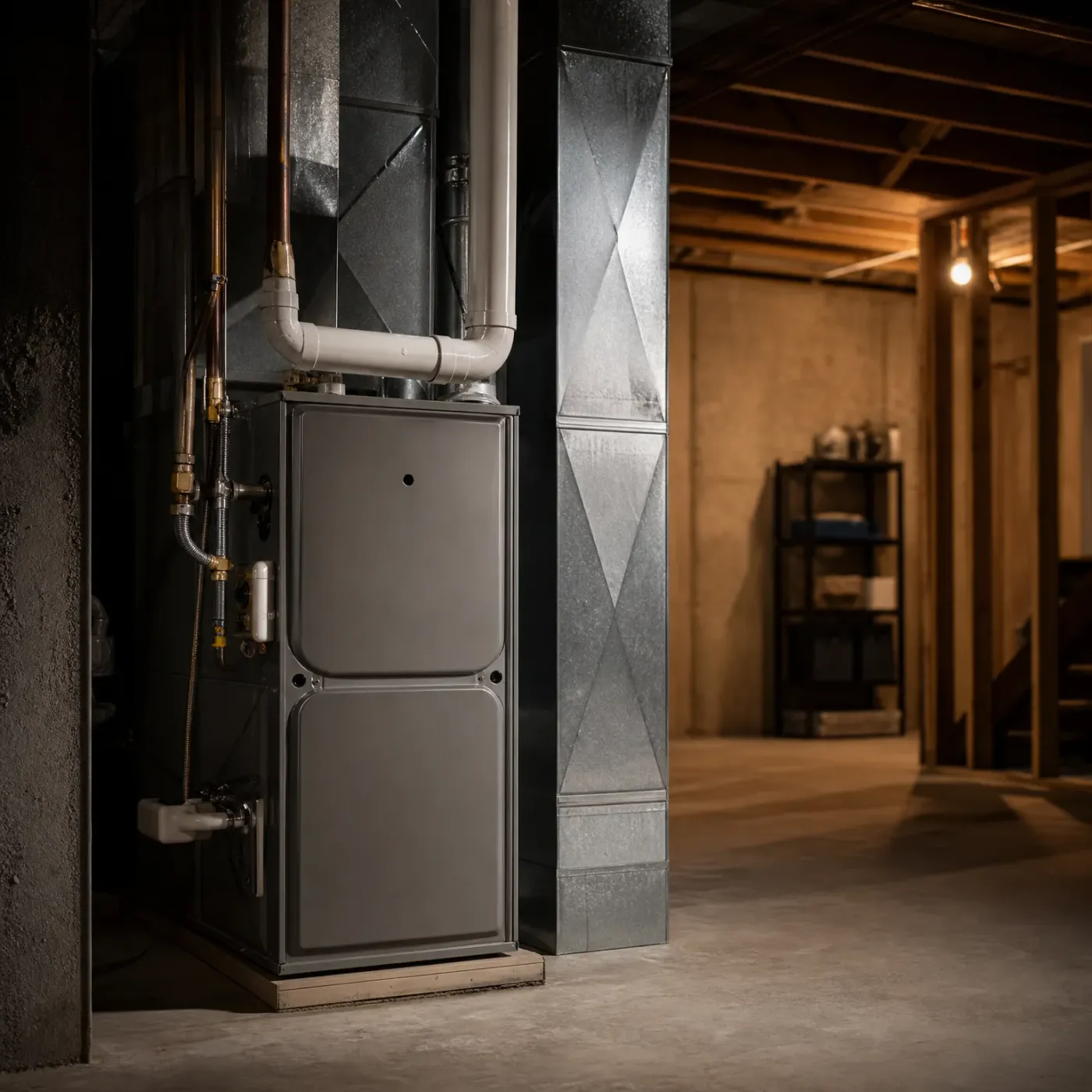
A furnace like this lights clean and moves air without a fight. The blower pulls steady through the ductwork above, the gas lines and condensate piping stay where they were set, and nothing in the cabinet has worked loose. This is what yours sounded like before the noise started.

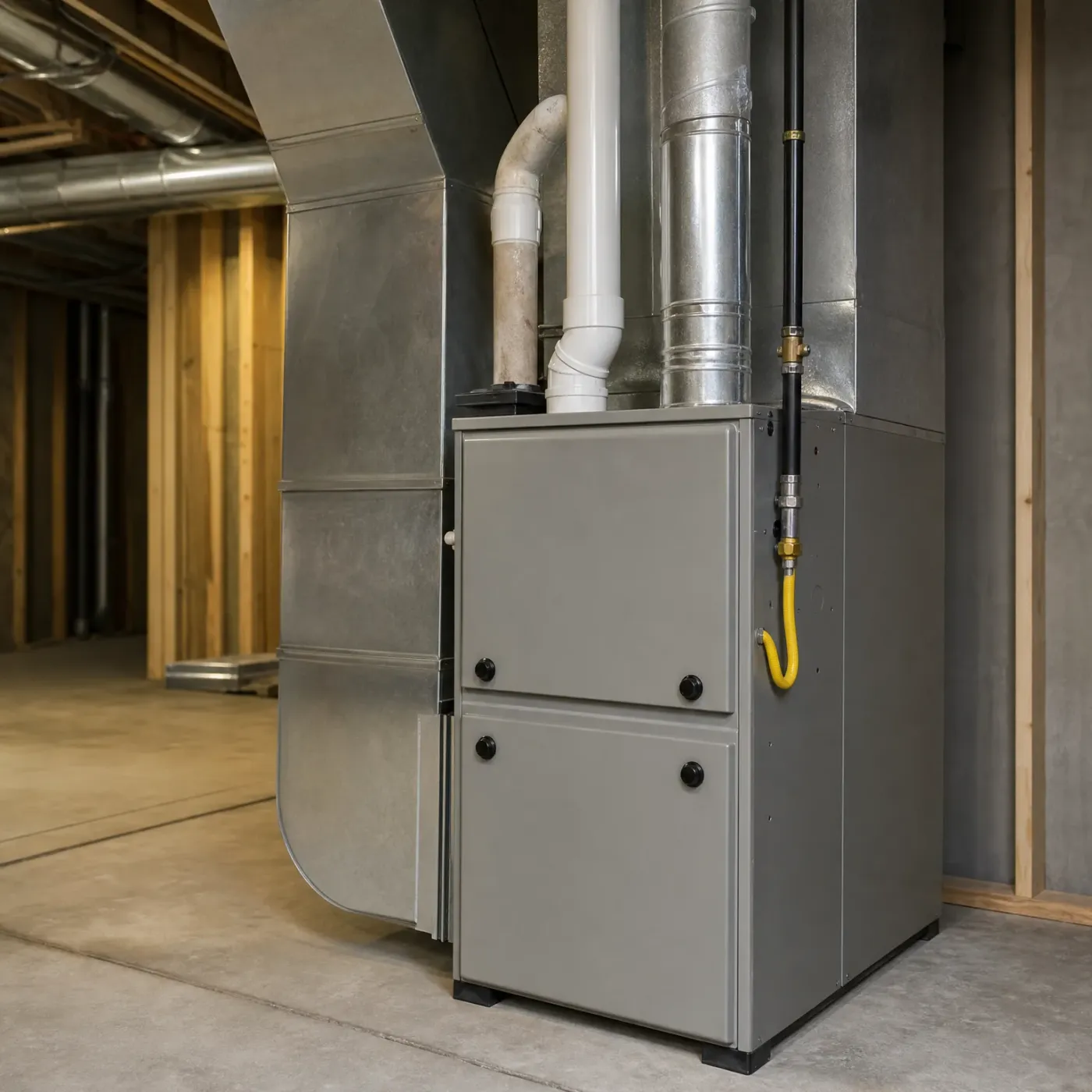
An older furnace like this has had more years for a panel to loosen or a bearing to wear down. The flue still vents fine and the shutoff valves still hold, but a new sound from the cabinet usually means something inside has shifted and a contractor needs to see it running.
Winter nights average 25°F
Overnight lows average 25°F here in December and January, cold enough that metal parts contract and a loose panel or worn bearing gets louder right when the furnace runs hardest.
Heat runs October through May
Furnaces in Canyon County run from October through May, about eight months of the year, so a noise that starts now has months left to turn into a bigger repair.
59.4% of homes heat with gas
Just under 60% of homes here heat with gas, and a gas furnace that bangs or rumbles at startup needs a look before that noise means a cracked burner or a failed igniter.
NOAA nClimDiv 1991-2020 · ACS 2020-2024


Only one pro gets your request, so you hear from one company.
After you send the request, you're done searching.
It costs nothing to send, and you don't have to hire anyone.
A bang from inside the cabinet is different from a bang in the ductwork, and you're trying to figure out which one you're hearing and what it means for the furnace. You've heard it happen more than once now, usually right when the burners should be lighting, and you want to know what's actually making that sound before you decide whether it's something to watch or something to get looked at.
When the igniter doesn't get hot enough fast enough, the gas valve opens but nothing lights right away. Gas keeps flowing into the burner chamber for a second or two before it finally catches, and when it does, it catches all at once instead of lighting clean at the burner tip. That's the bang. It's louder in a cold furnace room because the metal in the burner assembly has contracted, so there's more for the ignition to push against. A weak igniter is the usual cause, though a burner that's gone dirty or slightly out of position can cause the same delay. Either way, it's worth having looked at, since each delayed light stresses the heat exchanger a little more than the last one did.

Nothing loose on this cabinet, nothing rattling against the ductwork above it. The flue and condensate lines run straight out the top and the gas fittings on the right sit tight. A furnace built this way stays quiet because every part is still where it was installed.

An older furnace like this has had more winters to work a panel loose or wear down a bearing. The gas lines and flue pipe along the wall are original to the unit, and so is whatever's rattling inside it. Age alone explains a lot of the noise you're hearing.
You probably heard it from another room first, a bang or a screech that stopped you for a second. Maybe the cabinet rattles when the blower spins up, or there's a rumble that sits in the background the whole time it runs. Some of these noises get worse the longer you wait. A loose panel can work itself looser. A bearing that's dry now can seize later and take the blower motor with it. A bang from delayed ignition is gas catching late, and that's hard on the heat exchanger over time. None of this means shut the furnace off tonight, but a noise that's new or getting louder is the furnace telling you something's worked loose or worn down, and it's worth having someone look before the coldest part of winter finds out first.
Thermostat calls for heat and opens the gas valve
Igniter glows hot enough to light the gas
Burners ignite and the flame sensor confirms they caught
Inducer motor spins up to pull exhaust through the flue
At 25°F overnight, your furnace is running long stretches to keep up, and that's more hours for a loose panel or a worn bearing to make itself heard. A noise that's easy to miss in October usually isn't easy to miss by January.
NOAA nClimDiv 1991-2020
A furnace that's always run quiet and suddenly isn't is telling you something specific. The sound itself, a bang, a screech, a rumble, points toward a particular part. Where it falls in the cycle, right at startup, partway through the run, or as the blower winds down, narrows it further. A bang when the burners light usually means gas pooling before it catches. A screech is almost always the blower motor bearings or a belt, if your furnace is old enough to have one. A rumble that sits in the background while it runs often traces back to the burner assembly.
Not every sound means trouble. Ductwork ticks as it heats and cools, and that faint clicking is normal. A hum from the blower that's been there since the furnace was installed and hasn't changed isn't a sign of anything failing. What matters is change: louder than before, a new pitch, a noise that wasn't there last month. That's the furnace telling you a part has worn down or worked loose.
Cold nights here make all of this more obvious. Metal contracts in the cold, so a loose panel rattles harder and a worn bearing screeches louder on the coldest stretch of December and January, right when the furnace is running longest to keep up. A contractor who works on these furnaces all winter in Canyon County has usually heard the exact sound you're describing before and knows what it means before taking the panel off.




Done looking for a furnace pro
A licensed pro who works in Canyon County gets your request.