Is a high-efficiency gas furnace worth it in Idaho

Once you send the form, finding a pro is off your list.

Hand it off

Is a high-efficiency furnace worth it in Idaho?

Gas heats most homes in Idaho, and the furnace runs hard for months once the cold sets in. You have probably seen the high-efficiency models advertised, with the higher price tag attached, and you are trying to figure out if that extra cost actually pays you back here or if it is money better spent elsewhere, given what you already pay for gas and power.

It depends on how much you run your furnace, and in Idaho, that's a lot

A high-efficiency furnace pulls more heat out of the same amount of gas, venting less of it outside as exhaust. In a state where the furnace carries most of the cold months, that difference shows up on the gas bill every month you run it. Power here is cheap, so the electricity a furnace uses barely moves the needle either way. What matters is the gas, and how long the furnace burns it. A high-efficiency unit also vents through PVC pipe instead of a metal flue, which changes what installation involves depending on how your current furnace is vented. For a furnace that runs as many months as it does here, the upgrade has more time to pay you back than it would somewhere milder.

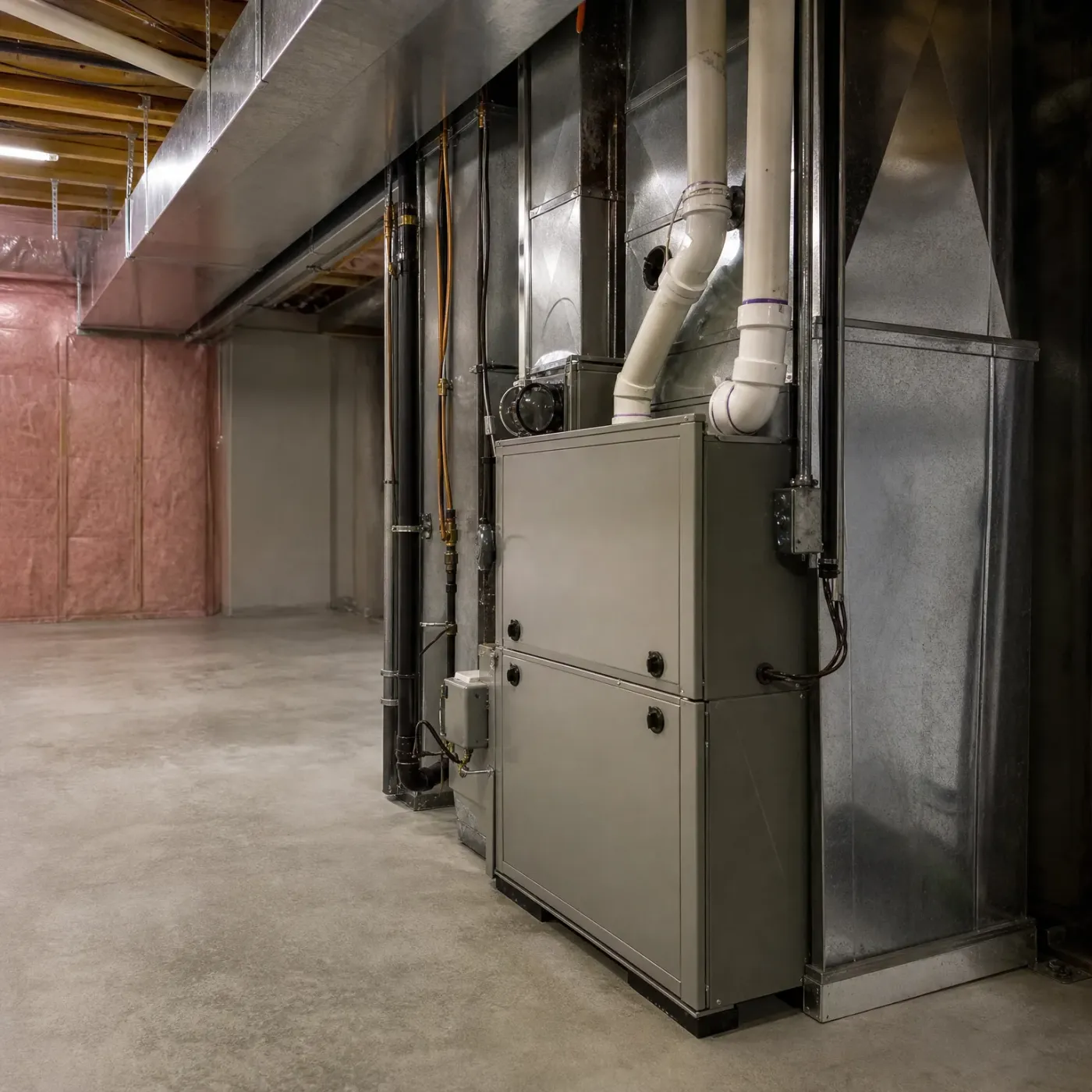
A gray high-efficiency furnace stands on a concrete basement floor beside galvanized sheet-metal ductwork, with white PVC vent pipes, gas and water lines, and unfinished wood framing behind it.

A standard furnace, running as designed

That white PVC pipe venting out the side means the furnace is pulling more heat out of the gas before it lets the exhaust go. Less heat goes up the flue, more of it moves through your ductwork. The old metal flue pipe is gone because this unit does not need it.

A beige furnace with two louvered front panels stands on a concrete basement floor beside galvanized ductwork, metal pipes, and a wooden post.

An older furnace, working against itself

This one vents through round metal pipe, which means a lot of the heat it makes is leaving the house unused. It will still keep a house warm, but it has to burn more gas to do it, every day the temperature drops outside.

A beige residential furnace stands on a concrete basement floor beside galvanized sheet-metal ductwork, a round flue pipe, copper gas piping, and a PVC condensate line, with a wood-paneled wall at right.
Before you get your furnace installation
A gray high-efficiency furnace in a basement with white PVC vent pipes, sheet-metal ductwork, copper and black piping, a condensate pump, and insulated walls above a concrete floor.
After you get your furnace installation

What the AFUE number means

A standard furnace runs around 80 AFUE, so 80 cents of every dollar of gas becomes heat in your house and the rest goes out the flue. A high-efficiency furnace runs 90 to 98 AFUE. That difference shows up every time the furnace fires, not just on the coldest night. Idaho winters ask a furnace to cycle on for months, so that gap between 80 and 96 gets multiplied by every one of those cycles. It is the same gas line, the same thermostat setting, the same ductwork moving the air. The difference is how much of the gas you are paying for actually ends up as heat instead of exhaust.

Why the exhaust changes

The second heat exchanger is what gets that extra heat out of the exhaust before it leaves the house. A standard furnace sends that exhaust up a metal flue while it is still hot enough to need the pull of a chimney. A high-efficiency furnace cools the exhaust enough that it can be pushed out through PVC pipe by a small fan instead, which is why you see it vent out the side wall near the ground rather than up through the roof. That lower exhaust temperature is the same thing that produces the condensate line running to a drain. It is a mechanical difference, not a marketing one.

A woman and a sleeping child wrapped together in a cream knitted blanket on a couch, with a potted plant, framed photo and lit lamp in the background.
A gray-haired woman in a cream knit sweater stands in a dimly lit kitchen at night, looking to her right, with a round loaf of bread in the foreground and a dark window and potted plant behind her.
An unfinished basement with a concrete floor, pink insulation on one wall, exposed joists, galvanized sheet-metal ductwork, PVC vent pipes, and a tall gray furnace with attached gas and electrical lines.

Send one request and you're done looking

Your request goes to one pro, not a list of companies.

After you send the request, you're done searching.

Hand off the search

It costs nothing to send, and you don't have to hire anyone.

Why does your furnace run so long before the house feels warm

You turn the thermostat up and the furnace kicks on, but it takes a while before you actually feel the heat coming through the vents. Some rooms stay cooler than others no matter how long it runs. The gas bill in January is a lot higher than it was in October, even though you kept the thermostat at the same setting. You might notice the flue pipe outside is warm to the touch, or that the furnace cycles on and off more than it seems like it should on a cold day. None of this means the furnace is broken. It means it's doing what an older or standard-efficiency unit does: using more gas to produce the same warmth, and losing a good share of that heat straight out the flue before it ever reaches your living room.

A woman in a knitted shawl sits in a living room with a fireplace, shelves, a sofa with cushions, and a lamp by a bright window, looking off to the side.
A woman with long brown wavy hair in a green shirt over a white top stands in a living room with built-in white shelves, a ceiling fan, a potted plant and a sliding glass door.
A woman with shoulder-length gray-streaked hair in a light gray knit sweater stands smiling and looking off to the side in a living room with a sofa, houseplant, framed picture, and sunlit sliding glass door.
A woman with shoulder-length curly gray hair wearing a gray knit sweater stands near a window with a sheer curtain, looking to the side, with a blurred interior room behind her.
A gray high-efficiency furnace stands on a concrete basement floor beside galvanized sheet-metal ductwork, white PVC vent pipes, copper and black piping, and unfinished wood stud framing.
The PVC pipes on the left are doing the work of pulling extra heat before it leaves the house.
A gray furnace with two access panels stands on a concrete basement floor beside sheet-metal ductwork, with pipes, flexible conduit and an electrical box on the concrete wall to the left.
A furnace in good shape still needs the gas line, the venting and the ductwork checked each winter.

A standard furnace burns gas, pulls the heat it can out in one pass, and sends the rest up the flue hot enough to melt plastic pipe, which is why it needs metal venting. A high-efficiency furnace has a second heat exchanger. The exhaust passes through it before it leaves the house, and that second pass pulls out enough heat that the exhaust comes out cool and wet instead of hot and dry. That condensation is acidic, so the furnace drains it off through a small tube and vents the cooled exhaust through PVC instead of metal. Two blowers usually run instead of one, moving air through both heat exchangers and pushing the exhaust out the side wall rather than letting it rise on its own through a chimney. That is why you will sometimes see two PVC pipes instead of one, one bringing in combustion air, the other carrying exhaust out. It is a different machine inside the cabinet, not the same furnace with a better rating stamped on it.

51.6% of homes statewide heat with gas

Most houses around you are already burning gas to stay warm, so the furnace you have is likely the one doing all the work every winter. That's the appliance a high-efficiency upgrade actually changes, not something you'd be adding on top of electric heat.

ACS 2020-2024 5-year B25040

Where this leaves you

  • A high-efficiency furnace pays you back in lower gas bills every winter it runs in your house.
  • The upgrade makes the most sense for a furnace that runs hard for months, which is what yours does.
  • A licensed local installer can look at your venting and ductwork and tell you what size and model fits your house.
  • Working with one contractor instead of several means you get a straight answer instead of a stack of competing quotes.
  • Someone who services this equipment all winter knows which parts tend to fail first and what to check before installation.
  • Once you send the request, finding that contractor stops being something you have to sort out on your own.

A high-efficiency furnace costs more up front, and in Idaho, where gas heats most homes and the furnace runs hard for months, that cost comes back to you in what you don't pay the gas company. The math works in your favor because of how long your furnace runs each winter, not despite it. A standard furnace sends a good share of what you pay for straight up the flue. A high-efficiency model pulls more of that heat into your house before it lets the exhaust go, and that difference shows up on every bill from October through the coldest months.

Whether it's worth it for your house specifically depends on things a page can't see, your venting, your ductwork, what size unit actually fits the place. That's a conversation for someone who works on these systems locally, all winter, and knows which parts tend to go first and what a proper installation needs to account for before the first cold snap. That's also the reason this connects you with one contractor rather than several. You get someone who looked at your situation and gave you a straight answer, not a pile of quotes to sort through on your own.

Send the request and that search becomes someone else's job. You've got the answer. The next step is just getting the right person to your door.


A gas furnace with attached PVC and metal piping and sheet-metal ductwork stands on a concrete pad in a dim unfinished basement with concrete walls and exposed floor joists.

Finding a pro stops being your job

One installer gets your project, so there's no bidding war over it.

New system or replacementFurnace or heatingIdaho
Step 1 of 2

What ZIP code is the job in?