

How long a furnace lasts in Burley, ID

Find my pro

Furnaces don't quit on a schedule. Two houses in Cassia County, same age of system, can land years apart depending on how it was installed and how hard it's been run through winters like these. If yours is getting old, or you're just trying to plan ahead before the cold sets in, the real question isn't an average number. It's what shape your specific furnace is in and what makes sense for your house. That's what a contractor who installs furnaces around Burley every winter can tell you after actually looking at your setup, not a guess from a search page. Answer a few questions about your home and you'll be matched with one licensed local contractor who handles this kind of installation, not a handful of companies competing for your callback. They'll reach out and walk through your options with you directly.

How long does a furnace last in Burley, ID?

You want a straight number before you decide whether to keep repairing your furnace or start planning for a new one. Winters in Burley get hard, and a furnace that quits in January is a different problem than one that quits in May. Knowing roughly how many years you have left helps you budget for it instead of reacting to it.

Most furnaces last 15 to 20 years

That range holds for gas and electric furnaces alike, and it's a wide range because how a furnace was installed and sized matters as much as the brand. Cassia County winters push a furnace hard for months at a stretch, and a unit that runs longer and harder each winter wears its parts down faster than one in a milder climate. Most homes here heat with electricity, and electric furnaces have fewer parts that fail compared to gas models, but they still wear out on the same general timeline. If your furnace came with the house and you don't know its age, check the manufacture date on the nameplate inside the cabinet. Once a furnace passes 15 years, it's worth watching closely rather than waiting for it to fail outright.

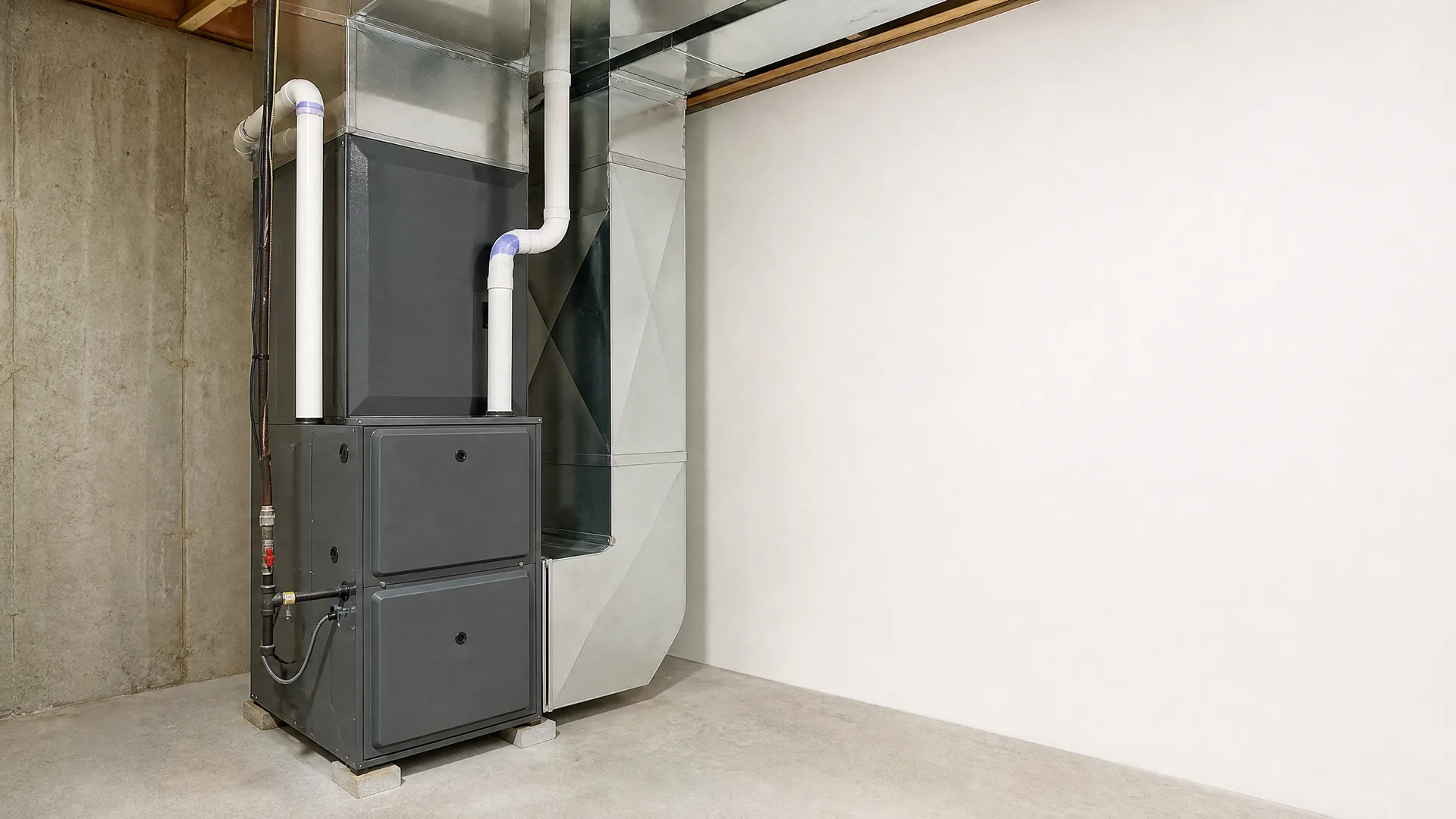
A dark gray high-efficiency furnace with white PVC vent pipes stands against a concrete basement wall, connected to sheet-metal ductwork running along the ceiling joists.

Why most homes here use electric heat

Most furnaces in Cassia County run on electricity, not gas, and electric furnaces don't deal with the same wear as a gas burner and heat exchanger. There's no flame, no exhaust venting, no fuel line to maintain. What wears out instead is the blower motor, the heating elements and the electrical connections that carry the load every time the system cycles on through a hard winter.

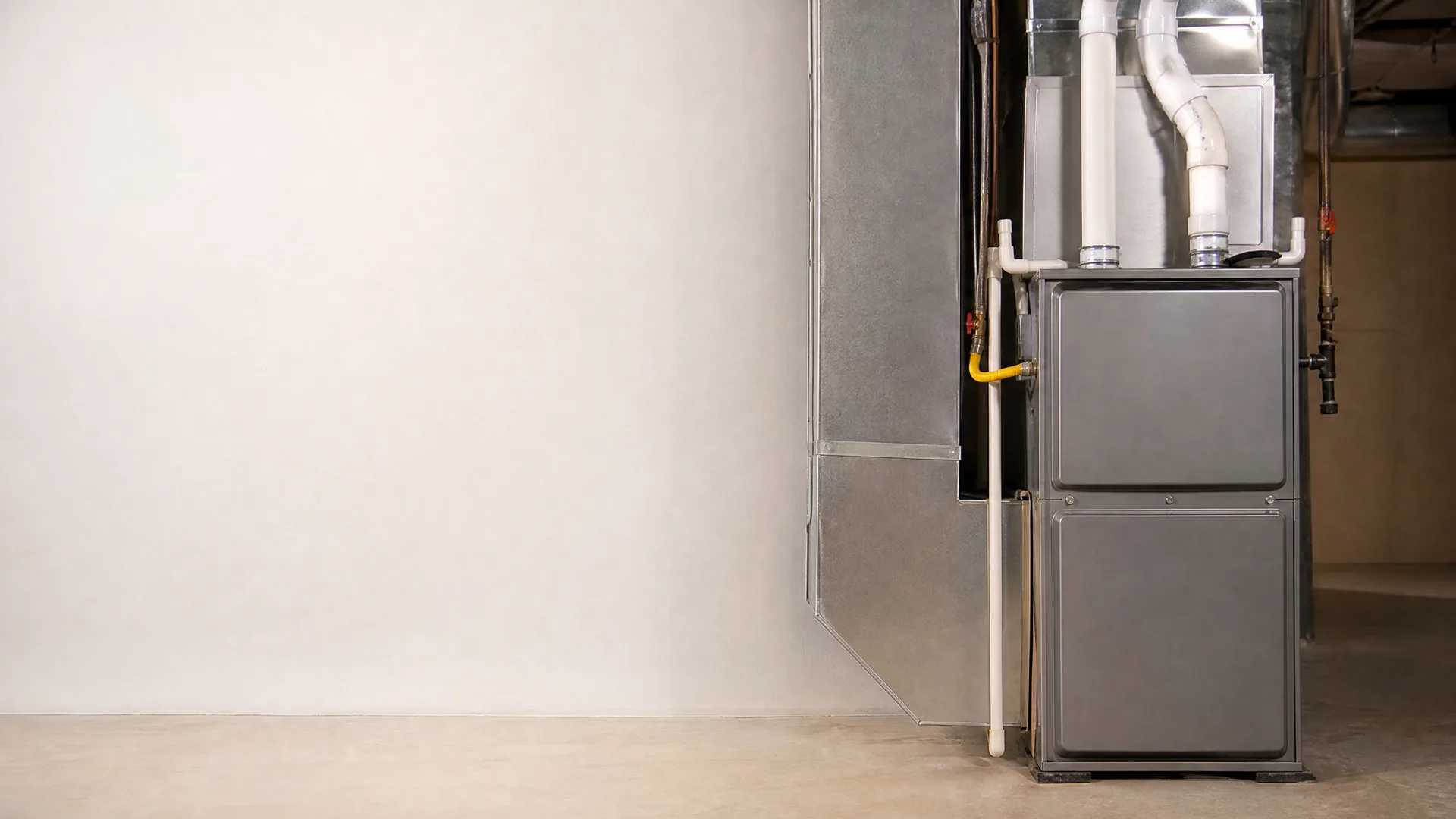
A gray high-efficiency furnace with white PVC vent pipes, a yellow gas line and metal ductwork stands against a plain light wall in a basement with a concrete floor.

What cheap power means for runtime

Power here is cheap, and that changes how people run their furnace. A homeowner who isn't watching the bill closely tends to let the system run longer and cycle more often through the cold months, from November into March. More cycles means more wear on the same parts, year after year, which is part of why two systems the same age can be in different shape by the time you compare them.

What does winter in Burley really ask of your furnace?

  • Winter nights average 20°F

    Nights this cold mean your furnace runs long stretches to hold the house, not quick bursts. That adds hours to the system year after year.

  • Heat runs September through June

    Ten months of heat a year leaves a short window of rest. Most of the wear your furnace takes happens in that long stretch.

  • 61.3% of homes heat with electricity

    With most homes here running electric, the furnace itself is doing the work without a burner or heat exchanger to share the load.

NOAA nClimDiv 1991-2020 · ACS 2020-2024

A furnace installed right, sized for the house and set up the way the equipment calls for, tends to use up its years evenly. You get most or all of what it's rated for, and it fails the normal way: parts wearing out after a long run of winters.

A furnace installed wrong, oversized, undersized, or just not set up to spec, works harder than it should from day one. It can fail years before a furnace that's identical on paper but was put in correctly.

A beige residential furnace stands on a concrete basement floor beside galvanized sheet-metal ductwork, a round flue pipe, copper gas piping, and a PVC condensate line, with a wood-paneled wall at right.
Before you get your furnace installation
A gray high-efficiency furnace in a basement with white PVC vent pipes, sheet-metal ductwork, copper and black piping, a condensate pump, and insulated walls above a concrete floor.
After you get your furnace installation

Get matched with a furnace pro in Cassia County

You've read what shapes a furnace's life in Cassia County: how it was installed, how it was sized, how many winters like this one it's had to run through. An electric furnace that was put in right and sized for your house can get close to what it's rated for. One that was installed wrong starts losing years from the first winter, and there's no way to see that from the thermostat. Figuring out which one you have means someone looking at your actual system, not a general number. A local contractor who installs and services these furnaces every winter knows what tends to go wrong with a Cassia County setup and what a proper installation looks like here. Asking for a quote connects you with one contractor suited to your situation, not a handful competing for your attention. If your furnace is getting old, or you're deciding between repairing again and replacing it, that's the conversation worth having now, before the next cold stretch decides it for you.

What you'd notice first

An electric furnace nearing the end doesn't always quit outright. You'll see rooms that used to heat evenly start running cold in the corners, or the blower cycling on for longer stretches just to hold the thermostat setting. Your power bill climbs a little more each winter even though nothing else changed. Some homeowners notice a burnt smell from the heating element, or the furnace short cycling, kicking on and off every few minutes instead of running a full cycle. None of this means it's done, but it means the parts inside are working harder than they used to.

What's actually at stake

A furnace that fails in January in Burley isn't a weekend inconvenience. You're looking at pipes that can freeze if the house drops low enough, and a scramble to get a contractor out while everyone else with an old system is calling too. Waiting until it quits also takes the choice away from you. You end up with whatever unit can be installed fastest instead of one sized right for your house. Planning ahead means you pick the timing, not the cold snap, and you avoid paying for emergency labor on top of the furnace itself.

Winter nights average 20°F

A 20°F night means your furnace isn't cycling, it's holding a line for hours at a stretch. That kind of run time adds up fast over a winter, and it's harder on a system than the quick bursts milder places ask for.

NOAA nClimDiv 1991-2020

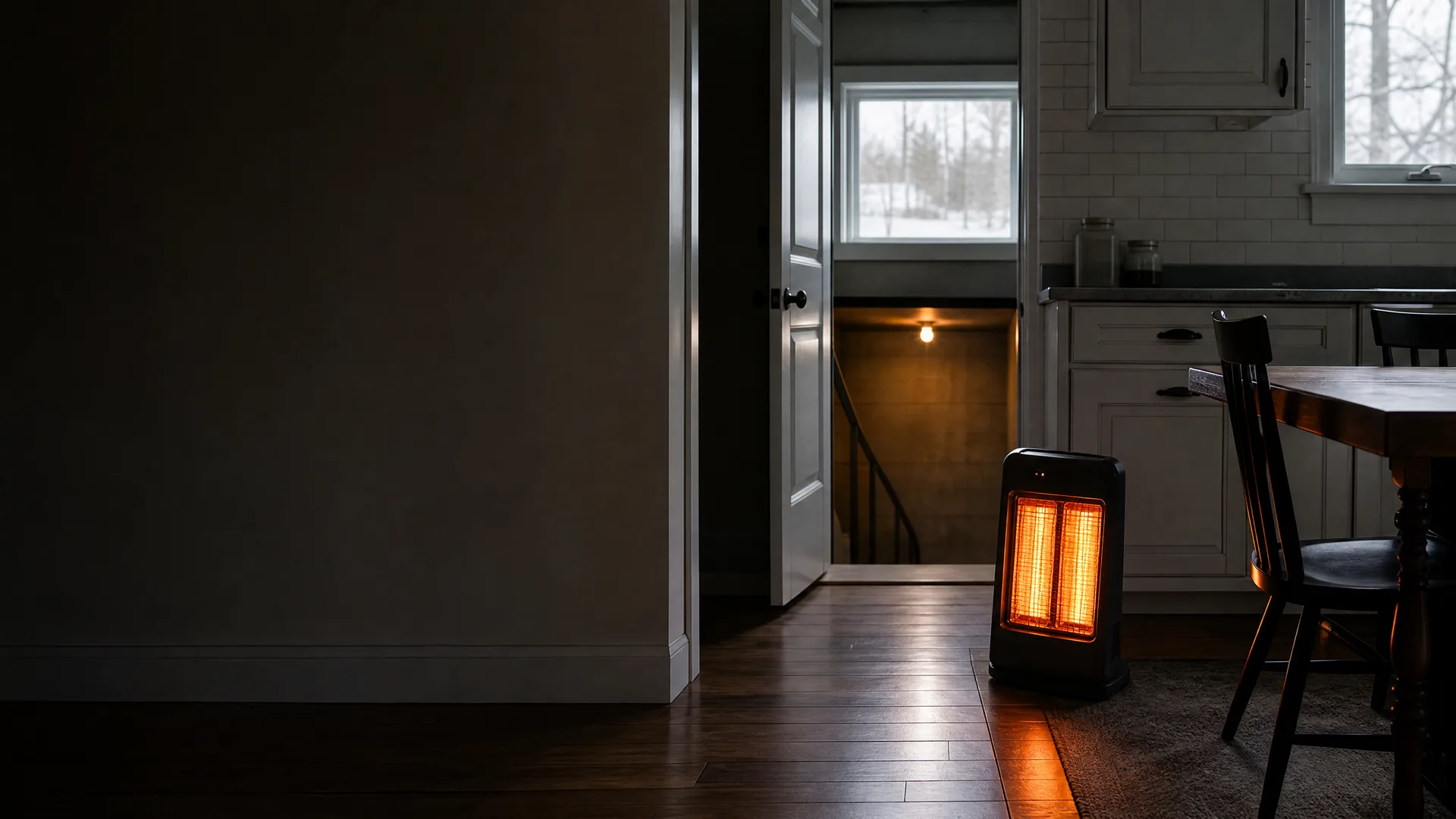
A portable electric space heater with glowing orange elements stands on a dark wood floor in a dim room beside an open door leading to a lit stairway, with a kitchen counter, window and wooden table and chairs at right.

The space heater's been on since five, orange coil ticking next to the table. You caught the basement door swinging open on your way to start coffee and left it, no point fighting it now. Outside it's still dark and somewhere near 20 degrees, the kind of morning where the furnace runs the whole time you're getting ready and the floor by the back door still doesn't warm up. You step around the heater's cord twice getting the kids' bowls down. It's not an emergency yet. It's just a house that needs help holding heat in one corner, and a Tuesday where you noticed it before you had coffee in hand.

A furnace in Burley or anywhere in Cassia County lasts as long as how it was put in and how many winters like this one it's had to run. Installed right and sized for your house, an electric furnace can get close to what it's rated for, worn down evenly by ten months of heat a year rather than failing early from a mismatch nobody caught at the start. If yours is older or struggling to hold the thermostat setting, that's worth a look now, before a cold night makes the decision for you. A licensed local contractor who works on these systems every winter can tell you whether yours has years left or whether you're better off planning the next one. Either way, you know what's driving the number now: the install, the sizing, and the winters it's already been through.

A gray-haired, bearded man in a dark coat dusted with snow stands smiling in a dimly lit room with a lamp, mirror, framed art, and a sofa in the background.
An older man with white hair and a beard, wearing a dark snow-dusted coat and scarf, stands in a warmly lit interior hallway with a framed landscape picture, a table lamp and a potted plant behind him, and a snowy view through a window at left.
An older man in a dark snow-flecked overcoat and scarf stands smiling in a warmly lit home entryway, with a glass-paned door showing darkness outside and a lamp-lit room visible through a doorway behind him.
An older man with gray hair and a beard, wearing a dark snow-dusted jacket and scarf, stands smiling in a warmly lit interior hallway with a lit table lamp, a vase of dried branches, and a framed picture in the background.

Furnace Installation

Find a furnace installation pro in Cassia County

A licensed pro who works in Cassia County gets your request.

A black smartphone standing upright against a plain light gray background, its screen filled with solid green.
New system or replacementFurnace or heatingCassia County, ID
Step 1 of 2

What ZIP code is the job in?



