
Furnace won't turn on in Blackfoot, ID

RepairFurnace or heatingBingham County, ID
Step 1 of 2

What ZIP code is the job in?

A furnace that won't turn on is almost always an electrical problem, not a gas problem. Start with the thermostat: check that it's set to heat and the temperature is above room temperature, and that its batteries aren't dead. Next check the furnace switch, the one that looks like a light switch near the unit, and the breaker at your panel. If those are fine, the igniter is a common failure in gas furnaces around Blackfoot, especially after years of cycling on through hard winters. A furnace that won't even try to start, no fan, no sound, often points to power not reaching the unit at all. One that clicks but doesn't light points to the igniter or the flame sensor. Either way, this isn't something to leave unresolved with winter weather ahead. A licensed contractor can pin down which one it is and get your heat running again.

A gray high-efficiency furnace with white PVC vent pipes stands beside galvanized sheet-metal ductwork in a basement with a concrete floor, with a wooden staircase and railing at left.

When it's working right

A furnace like this fires on its own schedule all winter, drawing air through the plenum and venting exhaust out the PVC pipe without you noticing it. The gas line stays closed off except to feed the burner. You only think about it when the house is warm.

An older gas furnace with louvered panels sits on a concrete pad in a basement, connected to sheet-metal ductwork and PVC and metal pipes, with a water heater and wooden stair framing in the background.

When it won't start

Same furnace, same gas line and shutoff valve, but nothing happens when the thermostat calls for heat. No burner sound, no air moving through the ductwork above it. That points to the switch, the control board, or the valve itself, not the gas supply.

Check It Yourself or Call Now

Call for repair now

  • A furnace that won't fire at all leaves you without heat the same night, and Bingham County nights get cold fast once the sun goes down.
  • If the switch, thermostat and breaker all check out, the problem is likely the igniter, the flame sensor or the control board, and those need a licensed hand.
  • A furnace stuck off can mean a safety lockout, where the system shut itself down on purpose rather than run unsafely.
  • Waiting it out risks frozen pipes if the house drops below freezing overnight, which costs more to fix than the furnace itself.
  • A local contractor who services furnaces through Blackfoot winters has likely seen this exact failure before and carries the part on the truck.

Try the basics first

  • Checking the thermostat batteries and the furnace switch takes a few minutes and costs nothing if that turns out to be the fix.
  • A tripped breaker is common after a power blip and resetting it is something anyone can do without tools.
  • Some furnaces have a reset button on the control board itself, often behind the front panel, worth a look before calling anyone.
  • If the filter is badly clogged, some furnaces will shut down rather than overheat, and a clean filter is a cheap swap.
  • If none of this gets it running, you've at least ruled out the simple causes before a contractor arrives.
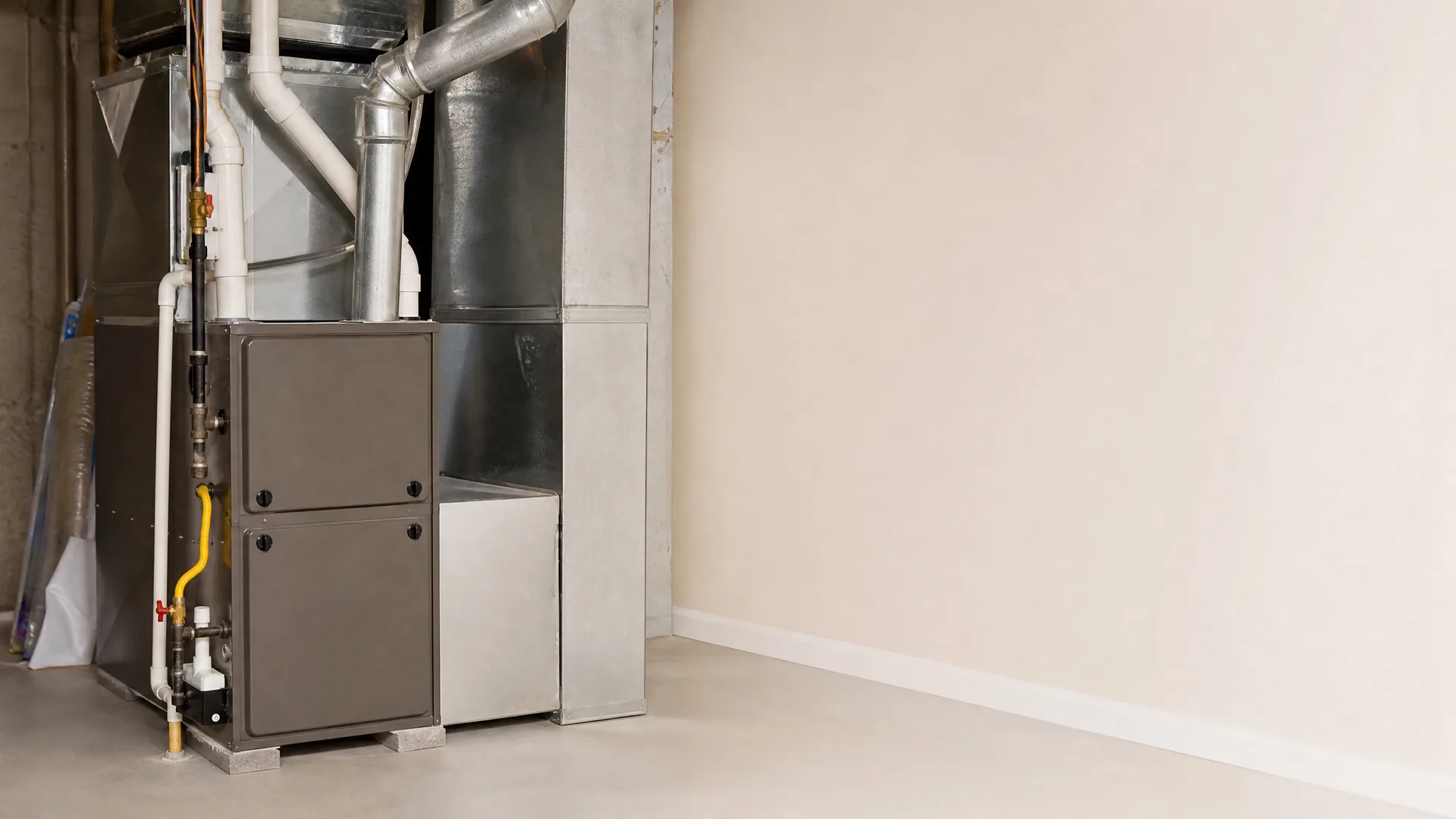
A gas furnace with two gray access panels stands in a basement corner, connected to sheet-metal ductwork and copper, PVC, and yellow gas piping, beside a plain beige wall and concrete floor.

Why the switch trips first

That switch by the furnace looks like a light switch, and a lot of people never notice it. It cuts power to the whole unit so a contractor can work on it safely. If it gets bumped while someone's storing something nearby, or a kid flips it thinking it's for a light, the furnace goes dead with no warning and no error code. It's the easiest thing to check and the easiest thing to miss.

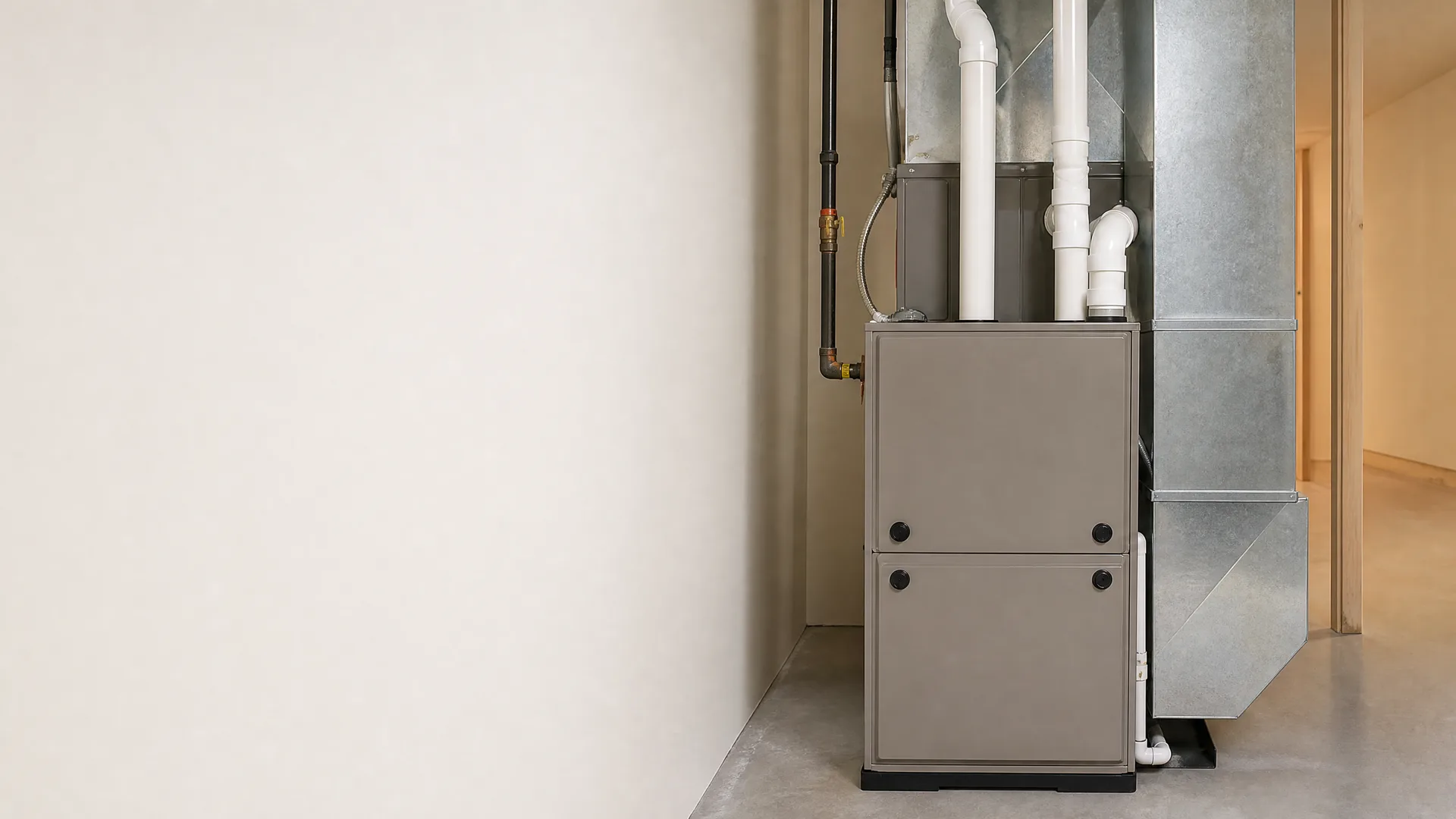
A gray furnace with white PVC vent pipes and a galvanized sheet-metal duct stands against an interior wall on a concrete floor, with a large blank wall to the left.

What the igniter actually does

Most furnaces built in the last few decades use a hot surface igniter instead of a standing pilot. It's a small ceramic strip that glows and lights the gas when the furnace calls for heat. It only gets a few seconds to do its job before the control board gives up and shuts the gas valve. Igniters are fragile and wear out with age. When one cracks, the furnace will run through its startup sequence and still never fire.

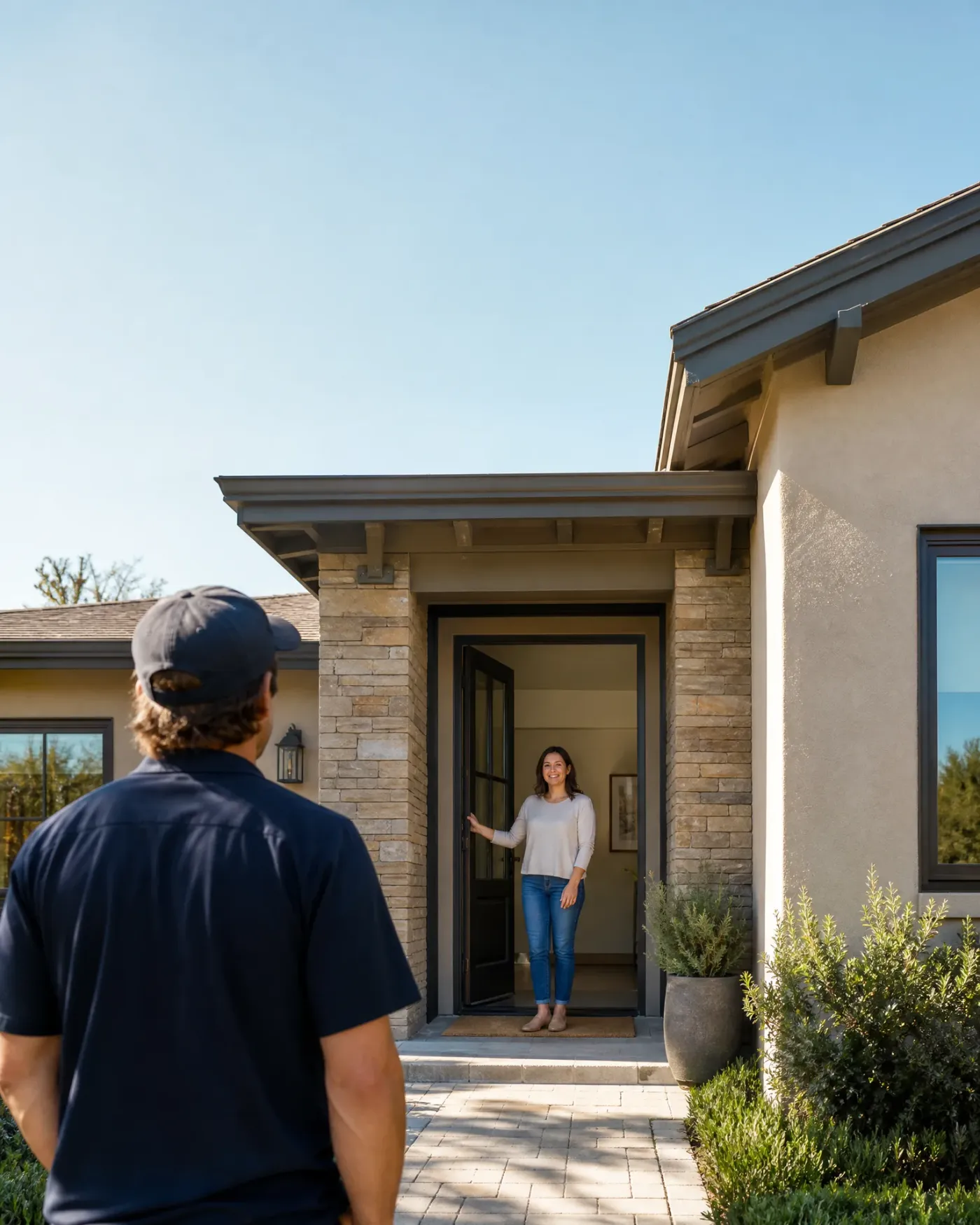
A man in a dark polo shirt and cap, seen from behind, walks up a paver path toward a woman standing in the open front doorway of a single-story stucco and stone house.

What a dead furnace means for your house tonight

Once the sun goes down in Bingham County, a house without heat cools off fast, and a furnace that won't fire doesn't wait for a convenient hour to quit. If you've got kids, older parents or anyone who gets cold easily under your roof, a few hours of troubleshooting on your own can turn into a long, cold night for them while you work through the thermostat, the switch and the breaker.

If you've gone through the checks above and the furnace still won't start, it's worth getting someone out who works on these systems all winter in this area and has a good idea what's failed before they even open the cabinet. A local contractor can usually tell you over the phone what it sounds like based on what you've already checked, and get to your house without you waiting on a dispatcher who's never been to Bingham County. You'll be matched with one contractor for your situation, not a handful of companies calling you back at once.

A gray upholstered sofa with a textured cushion sits beside a dark round side table holding a vase of green foliage, with a table lamp and sheer-curtained window behind.
A gray furnace with sheet-metal ductwork, PVC vent pipes and a yellow gas line stands on a concrete basement floor beside wooden stair framing.

Running right

This is what a working furnace looks like: everything closed up, the flue pipe sealed, the gas line connected tight, nothing loose or out of place. It sits there and fires when the thermostat calls for it, then shuts off again. No smell, no noise you'd notice from upstairs.

An older gas furnace with a louvered front panel stands on a concrete basement floor beside galvanized sheet-metal ductwork, a metal flue pipe, gas piping and a flexible conduit along a concrete wall.

Won't fire

Same kind of unit, same hookups, but nothing happens when it should. No flame, no blower, maybe a clicking sound and then quiet. Everything still looks connected and normal from the outside, which is why the problem is almost never obvious just by looking at it.

A beige furnace with a louvered front panel and metal ductwork stands on a concrete basement floor beside pipes and a white cylindrical water heater.
Before you get your furnace repair
A gray high-efficiency furnace in a basement with PVC venting pipes, a yellow gas line, metal ductwork, concrete walls and floor, and a wood-framed stairway at left.
After you get your furnace repair

Matched to your furnace job

A licensed pro who repairs furnaces in Bingham County gets your request.

You only hire the pro if you want to.

Why it stops working mid-winter

Most furnaces that quit in Bingham County do it on the coldest nights, because that's when they run the longest and the hardest. The igniter heats up and cools down every time the furnace cycles, and after enough cycles it cracks. The flame sensor gets a coat of residue from the burner flame and stops reading the fire, so the furnace shuts itself off as a safety measure. These are wear parts. They don't last forever, and nothing you do changes that. A furnace running flat out through a hard January is putting more hours and more cycles on those parts than it will the rest of the year combined.

Why a quick fix doesn't always hold

Resetting the breaker or flipping the switch can bring a furnace back on for a night, and sometimes that's all it needed. But if the shutdown was the flame sensor or a cracked igniter, the furnace will fire, run a short while, and cut out again, because the part causing it is still there. A reset clears the symptom, not the cause. If your furnace needs the switch flipped more than once to stay running, that's the part telling you it's close to done, not fixed. Worth knowing before the next cold snap, since the failure tends to repeat at the worst possible hour.

Why does a furnace in Bingham County need to be this reliable?

  • Winter nights average 16°F

    Overnight lows average 16°F through December, January and February, so a furnace that quits doesn't give the house much time before it's uncomfortable.

  • Heat runs September through June

    Heat runs here from September through June, about ten months a year. That's ten months where a broken furnace isn't a minor inconvenience.

  • 45.3% of homes heat with gas

    Gas heats 45.3% of homes in Bingham County, more than any other fuel. If yours is one of them, a furnace problem is almost never the gas line itself.

NOAA nClimDiv 1991-2020 · ACS 2020-2024

Checking it yourself first

Flip the furnace switch off and on, confirm the thermostat batteries are good and it's set to heat, and check the breaker panel for a tripped switch. Those three things take a few minutes and fix a good number of no-heat calls without anyone else coming out. If the furnace still won't fire after that, the problem is inside the unit, likely the igniter, the flame sensor or the control board, and none of those are something to open up yourself. That's the point where it's a call, not a project.

Waiting to see if it starts

Sometimes a furnace that didn't fire will catch on the next thermostat call, and it's tempting to wait and see rather than deal with it right away. But if it didn't fire because of a cracked heat exchanger or a failing control board, waiting doesn't fix it, it just delays the night you're stuck without heat. Bingham County drops fast once the sun's down, and a furnace that's already struggling usually picks the coldest night to quit for good instead of the mildest one.

A woman in a gray turtleneck sweater sits on a beige sofa in a living room, looking toward a curtained window with blurred greenery outside.
A woman in a brown knit sweater leans back on a sofa with her eyes closed and arms spread along the cushions, in a blurred indoor room with a window, potted plant and kitchen counter behind her.
A woman in a cream sweater sits on a gray sofa with textured cushions, smiling and looking off to the side, with a blurred living room, plants and a pendant lamp behind her.
A woman in a dark green sweater sits on a gray sofa in a living room with a large houseplant, a framed picture, a fireplace, and windows in the background.
  1. Thermostat calls for heat and signals the control board

  2. Inducer motor starts and pulls air through to vent exhaust

  3. Pressure switch closes once airflow through the inducer is confirmed

  4. Igniter heats up and glows hot enough to light gas

An older woman in a cream knit sweater smiles while looking off-camera in a warmly lit kitchen, with a round loaf of bread on a wooden board in the foreground and a dark window behind her.
A woman with her hair in a bun holds a sleeping child against her chest on a couch, both wrapped in a knit blanket, with a lit lamp, potted plant and framed picture in the background.

Winter nights average 16°F

A 16°F night doesn't leave room for troubleshooting at your own pace. Once a furnace quits, the house loses its heat fast, and you're working against the clock to get it back before anyone's uncomfortable.

NOAA nClimDiv 1991-2020

A gray high-efficiency furnace stands on a concrete basement floor beside galvanized sheet-metal ductwork, with white PVC vent pipes, gas and water lines, and unfinished wood framing behind it.
A furnace like this moves air through the plenum and sends exhaust out the PVC pipe without any sign of trouble.
A beige furnace with two louvered front panels stands on a concrete basement floor beside galvanized ductwork, metal pipes, and a wooden post.
This one sits dead on the slab, gas line and flue intact, waiting on a part that quit somewhere in the control circuit.

Where this leaves you tonight

  • A furnace that won't fire is almost always electrical: thermostat, switch, breaker or igniter, rarely the gas line itself.
  • Checking the switch, thermostat batteries and breaker takes a few minutes and solves a good number of no-heat calls on its own.
  • When those three check out, the problem is usually the igniter, the flame sensor or the pressure switch, and that calls for a contractor.
  • Bingham County nights get cold fast once the sun goes down, so a furnace that won't restart is worth a same-night call.
  • A local contractor who works on these furnaces every winter has likely seen this exact failure before and knows where to look first.
  • You get matched with one licensed contractor for your situation, not a handful of companies competing for the job.

A furnace that won't turn on almost always comes down to the same short list: the thermostat, the switch, the breaker, or further in, the igniter, the flame sensor, the pressure switch. You can check the first three yourself in a few minutes, and that alone fixes a lot of these calls. When it's one of the parts further in, that's a repair job, not something to keep testing on your own in the cold.

Bingham County nights don't give you much room to wait this out. Once the sun's down and the house starts cooling, you want this handled the same night, not worked around for a few days until someone has time.

That's the part a contractor who's local to Blackfoot and works on furnaces like yours all winter can move fast on. They've likely seen this failure before, maybe this exact one on a unit like yours, and know what to check first instead of working through the list cold. You get matched with one contractor for your situation, not a pile of companies all calling about the same job. One person, local, who knows this equipment, looking at your furnace and telling you what's actually wrong with it.

Sunlight falls across a beige upholstered sofa with a textured woven cushion and a chunky knit throw, beside a dark wood cabinet holding a ceramic vase with green leafy branches, near a white-framed window.
A sunlit corner of a room with a wooden side table holding a ceramic vase of green foliage and a wooden bowl, beside a light upholstered sofa with a knit throw and rust-colored pillow, with window shadows cast on a beige wall.
A sunlit room corner with beige walls, a white-framed window with sheer cream curtain, wood floor with a light rug, and a woven basket holding a knit blanket.
A beige ceramic vase holding a leafy green branch sits on a wooden cabinet in a corner, with sunlight through a sheer curtain casting leaf shadows on the wall.
A grey upholstered sofa with a rust-orange velvet cushion and a textured throw sits beside a window with linen curtains, next to a wooden side table holding a pale ceramic vase of olive branches.

A furnace pro near you

The pro who reaches out is licensed in Idaho.

Find a licensed furnace pro

Asking costs nothing, and the choice to hire stays yours.