Furnace pilot light won't stay lit in Idaho Falls, ID

Skip calling shops to ask who repairs furnaces in Bonneville County.

Describe it once

Why won't my furnace pilot light stay lit?

Your furnace lights when you hold the pilot button down, but the flame dies the second you let go, or it goes out on its own a few minutes later. With winters as hard as they get around Idaho Falls, a pilot that won't hold is the kind of thing you want sorted before the cold really sets in, not something to keep relighting by hand every night.

Usually a worn thermocouple

A thermocouple is the small copper rod that sits in the pilot flame. It senses heat and tells the gas valve to stay open. Once it wears out or sits coated in soot, it cools too fast after you let go of the button, and the valve shuts the gas back off to protect you. That's the most common reason a pilot won't hold. Less often, the pilot orifice is clogged, or there's a draft in the area reaching the flame, which happens more in older furnace closets. Either way, this isn't something to force past by holding the button longer. A furnace that heats most of your house through an Idaho Falls winter needs the gas valve working the way it's built to, not propped open by hand.

A gray high-efficiency furnace in a basement with sheet-metal ductwork, white PVC vent pipes, metal plumbing lines, a condensate pump on the floor, and a window showing green trees outside.

The pilot holding steady

A clean flame wraps the thermocouple fully and burns a steady blue. The furnace fires on its own when the thermostat calls, with no need to stand there holding a button down. That steady flame is what lets the gas valve stay open on its own.

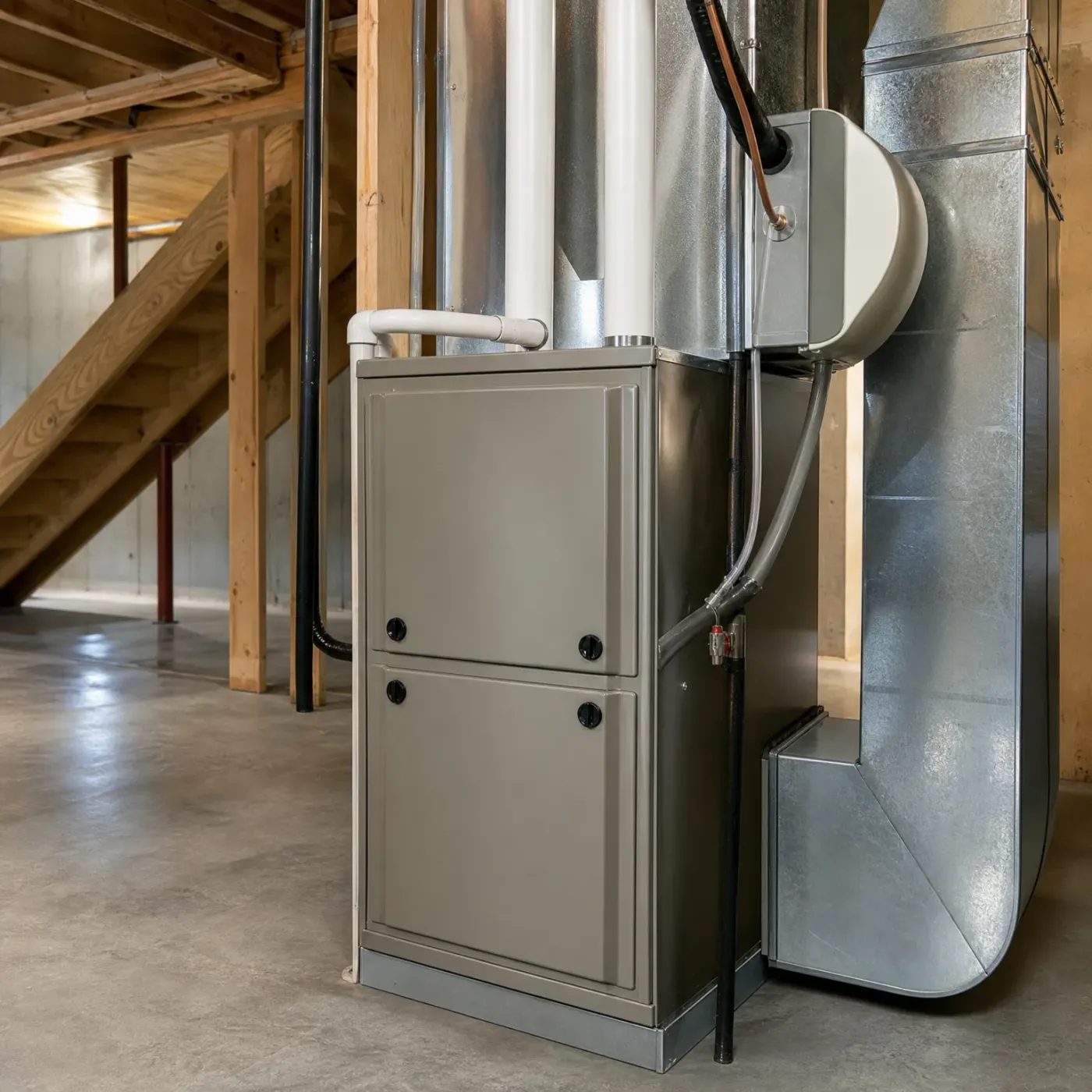
An older metal furnace with PVC and metal pipes stands on a concrete basement floor beside galvanized ductwork, with wooden stairs and a water tank in the background.

The pilot that won't hold

Dust and a buildup of soot around the burner and pilot assembly point to a thermocouple that's stopped reading the flame correctly, or a pilot orifice partly blocked. Either one keeps the gas valve from staying open once you let go of the button.

A man with gray hair and a beard wearing a dark green shirt jacket over a navy top sits on a gray sofa in a living room, looking to the side, with a window, potted plant and shelving in the background.
A gray-haired man in a navy button-up shirt over a white tee sits on a light gray sofa in a living room, looking off to the side, with a window, houseplant, framed picture and shelving behind him.
A man with gray hair, a beard and glasses, wearing a dark green sweater, sits on a gray sofa in a sunlit living room with a potted plant, table lamp and wooden sideboard behind him.
A man with grey hair and stubble in a dark sweater sits on a grey sofa indoors, looking off to the side, with a potted plant and a sunlit window behind him.

A thermocouple rod costs a few dollars

The part that senses the pilot flame and signals the gas valve to stay open is small and cheap. Most of the job is labor, not the part itself.

Get one local pro

One call, not five

A local contractor who works on furnaces all winter in Bonneville County knows what a dying pilot usually means before they walk in the door.

Get one local pro

What happens in your house when the pilot won't hold

You hold the button, let go, and the flame drops out within seconds. Or it holds for a day and then you walk past the furnace and the pilot is dark again. Either way the furnace stops firing, so the air coming out of your vents turns cool or stops altogether. You might smell a whiff of gas near the furnace right after it goes out, or notice a faint click as the gas valve tries to reopen and can't. If this keeps happening through an Idaho Falls winter, the house loses heat a little at a time until a room or the whole place is noticeably cold, and relighting it yourself over and over isn't a fix, just a way to keep losing time until someone finds what's actually failing.

  1. You hold the pilot button down to let gas reach the burner.

  2. The pilot flame lights and begins heating the thermocouple tip.

  3. The thermocouple must heat for about thirty seconds to signal the gas valve.

  4. The gas valve reads that signal and stays open once you release the button.

Relight It Yourself or Call for Repair

Fixing it yourself

  • You can pull the furnace manual and find the pilot relight steps, but a bent or dirty thermocouple looks the same as a bad one to someone who hasn't seen a dozen of them.
  • Cleaning the pilot assembly without shutting off the gas valve correctly is a real risk in a house that heats with gas all winter.
  • If the real cause is a cracked thermocouple, a draft in the vent, or a failing gas valve, relighting it again just buys you a few more cold nights before it quits again.
  • Every hour spent guessing is an hour the furnace sits cold while an Idaho Falls winter keeps going outside.
  • Parts for older furnaces aren't always on the shelf at a hardware store, so a wrong guess can mean a second trip and a second wait.

Calling a contractor

  • A contractor who services furnaces all winter in Bonneville County has likely seen this exact thermocouple or gas valve failure many times before.
  • They carry a meter to test the thermocouple's millivolt signal, so they know in minutes whether the part is weak or the problem is somewhere else.
  • You explain the problem once, to one licensed contractor, instead of calling around and repeating the same story to several companies.
  • A local contractor already knows which parts fit the furnaces common to homes here and can often have the right one on the truck.
  • Once it's fixed properly, the furnace relights and holds on its own again, without you standing at it with a lighter every few days.
A woman with shoulder-length graying hair, wearing a light knit cardigan over a striped shirt, sits in an upholstered armchair and looks off to the side, with a bookshelf and houseplant behind her.
A woman and a child with closed eyes sit wrapped together in a cream knitted blanket on a couch, with a lit lamp and shelves blurred in the background.
A gray furnace with sheet-metal ductwork, PVC venting and flexible conduit stands on a concrete basement floor beside wooden framing and a staircase.

One form, no calling around

A licensed pro who repairs furnaces in Bonneville County gets your request.

Describe your furnace job once, to one pro.

Find a licensed pro

No charge to send it. You decide if you hire them.

Why does a pilot light matter so much for winter here?

  • Winter nights average 15°F

    Winter nights average 15°F here, so a furnace that won't hold a pilot can mean a cold house for hours before anyone notices.

  • Heat runs September through June

    Heat runs here from September through June. A pilot problem that shows up once tends to show up again most weeks of that stretch.

  • 56% of homes heat with gas

    56% of homes in Bonneville County heat with gas, which means a bad thermocouple or a dirty pilot assembly is one of the most common furnace calls around here.

NOAA nClimDiv 1991-2020 · ACS 2020-2024

Waiting it out another night

You hold the button again, the flame catches, and the furnace runs for a few hours before it drops out again. Maybe you get up twice in the night to relight it, or you give up and pile on blankets until morning. The furnace itself is fine to leave alone like this for a short stretch, but a thermocouple that's failing doesn't fix itself by being reset. Each relight is a guess at how long the flame will hold this time, and on a night that drops to 15°F you may not get a warning before the house goes cold. Nothing about waiting makes the part work again.

Getting a contractor out to look at it

A contractor who works on furnaces through the winter here can tell within a few minutes whether the thermocouple is bent, coated with soot, or just worn out, and whether the pilot orifice or the gas valve itself is the real problem. That's the part that's hard to judge from a furnace manual: a thermocouple that looks fine can still be reading wrong. Once it's diagnosed, the fix is usually a short one, and you're not relighting a pilot at 2 a.m. anymore. You call once, one contractor comes out, and you get an answer instead of another night of holding a button down.

Winter nights average 15°F

Fifteen degrees is the average low here, not the coldest it gets. If the pilot drops out after midnight, there's nothing holding the furnace back from that cold until someone gets up and relights it by hand.

NOAA nClimDiv 1991-2020

A pilot that won't hold almost always comes down to a thermocouple that's worn out, bent out of the flame, or dirty, and sometimes a pilot orifice clogged enough to starve the flame. None of that is a guess once someone has the burner compartment open and the flame in front of them. A furnace tech who works Idaho Falls winters sees this same failure over and over, often several times a week once the cold sets in, and knows within a few minutes which of those it is on your furnace. That's the kind of call this is, one contractor who does this work all season, not a handful of companies bidding on a part they haven't looked at yet. You called because the flame won't stay lit. Once someone's checked the thermocouple, the orifice, and the gas valve signal, you'll know exactly why, and the furnace will hold its pilot the way it's supposed to.


An unfinished basement with bare concrete walls and floor, a small window at upper left, exposed joists overhead, and a furnace with sheet-metal ductwork and pipes along the right side.

Skip the search

Your request goes to one pro, not a list of companies.

RepairFurnace or heatingBonneville County, ID
Step 1 of 2

What ZIP code is the job in?