

An unfinished basement containing a gas furnace with ductwork in the foreground and miscellaneous stored items along the far concrete wall.

Furnace Repair in Twin Falls, ID

Tell us about the job

Takes about a minute. No obligation.

RepairFurnace or heatingTwin Falls County, ID
Step 1 of 2

What ZIP code is the job in?

Furnaces in Twin Falls County run from September clear through May, close to nine months of the year. Overnight lows average 21°F through December, January and February, and the furnace has to make up that difference every night it runs. That's a long season of steady work, not just a few cold snaps. The igniter, the blower motor, the heat exchanger, all of it cycles on and off far more than it would somewhere with a short winter. Parts wear down with use, and this much use catches up with them sooner. When something starts acting up, it's worth having someone actually find out which part gave out and why, rather than guessing.

9 months
September through May, your furnace is on duty
21°F
the average winter night it heats against
54%
of homes here heat with gas, so most furnaces here burn gas
19 winter storms
in ten years, the nights a failure hurts most
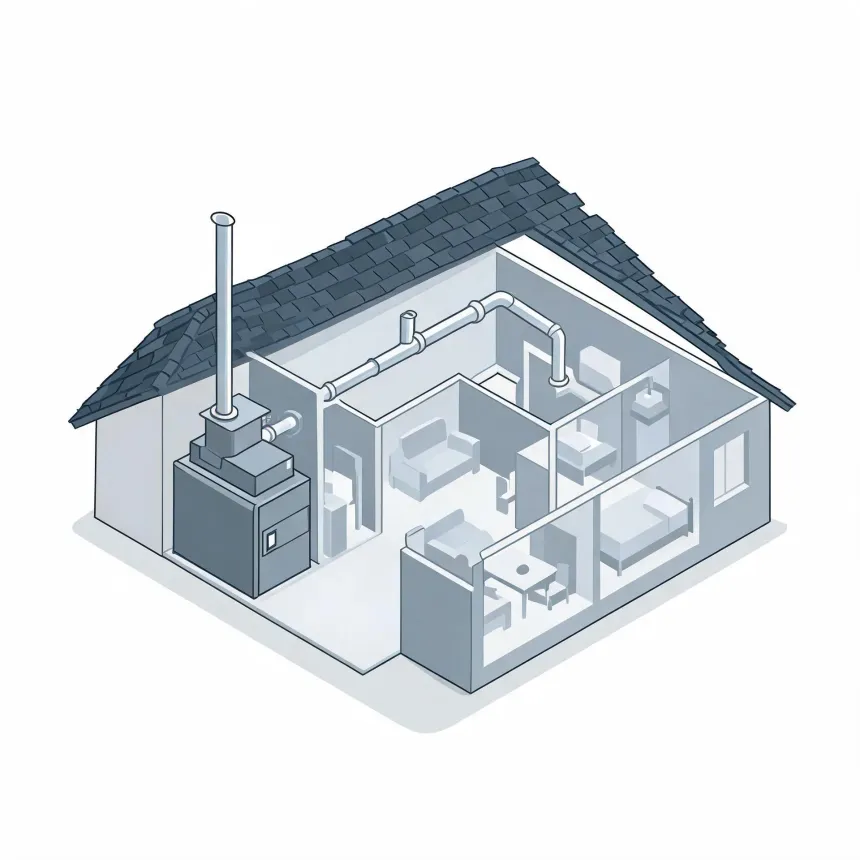
Isometric cutaway illustration of a single-story house showing interior rooms with furniture, ceiling ductwork, and a large furnace unit with a tall flue pipe in a corner room.
Your furnace works hardest from November through April.

NOAA nClimDiv, 1991–2020 normals

Furnaces in Twin Falls County start up again in September.

A furnace idle since spring tends to show its weak part in the first cold weeks, not in the deep of winter.

Twin Falls furnaces work hard for a livingNine months of heat a year, down to 21°F on winter nights

Half the houses in Twin Falls County were built in 1982 or later. If yours is one of them, the furnace itself is probably younger still, since most get replaced at least once over a house's life. A newer furnace usually isn't failing outright when something goes wrong. More often one part has worn out while the rest of the system is fine, the igniter or the blower motor, not the whole unit. That's worth knowing before you decide whether a repair makes sense. Fixing the part that quit is usually the right call when the rest of the furnace still has years in it.

Get it diagnosed properly

Your furnace works hard here, and that's usually what's behind the problem. Have it diagnosed properly so the fix lasts.

Find a contractor
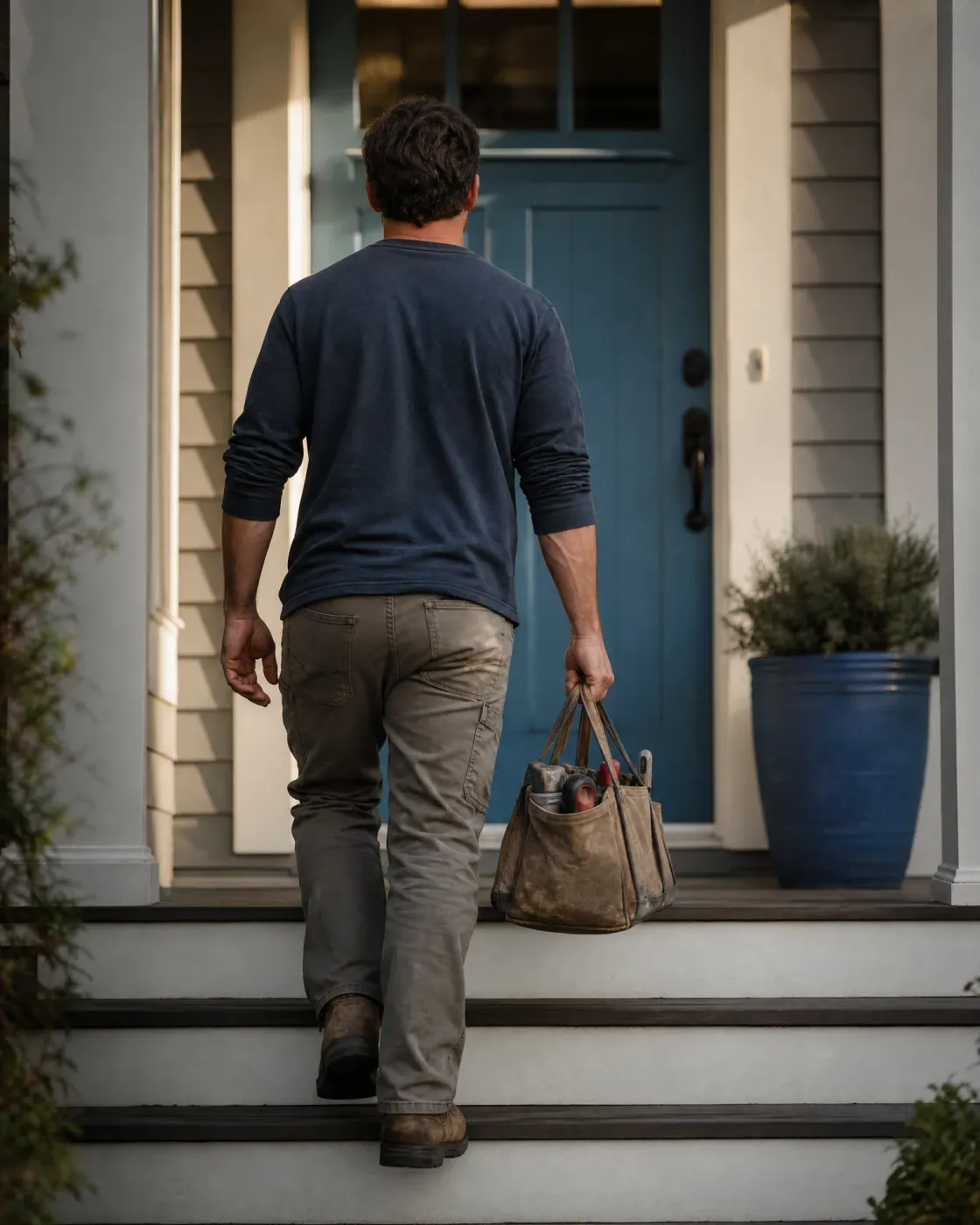
A man in a navy long-sleeve shirt and tan work pants, seen from behind, carries a canvas tool bag up light-colored porch steps toward a blue front door.
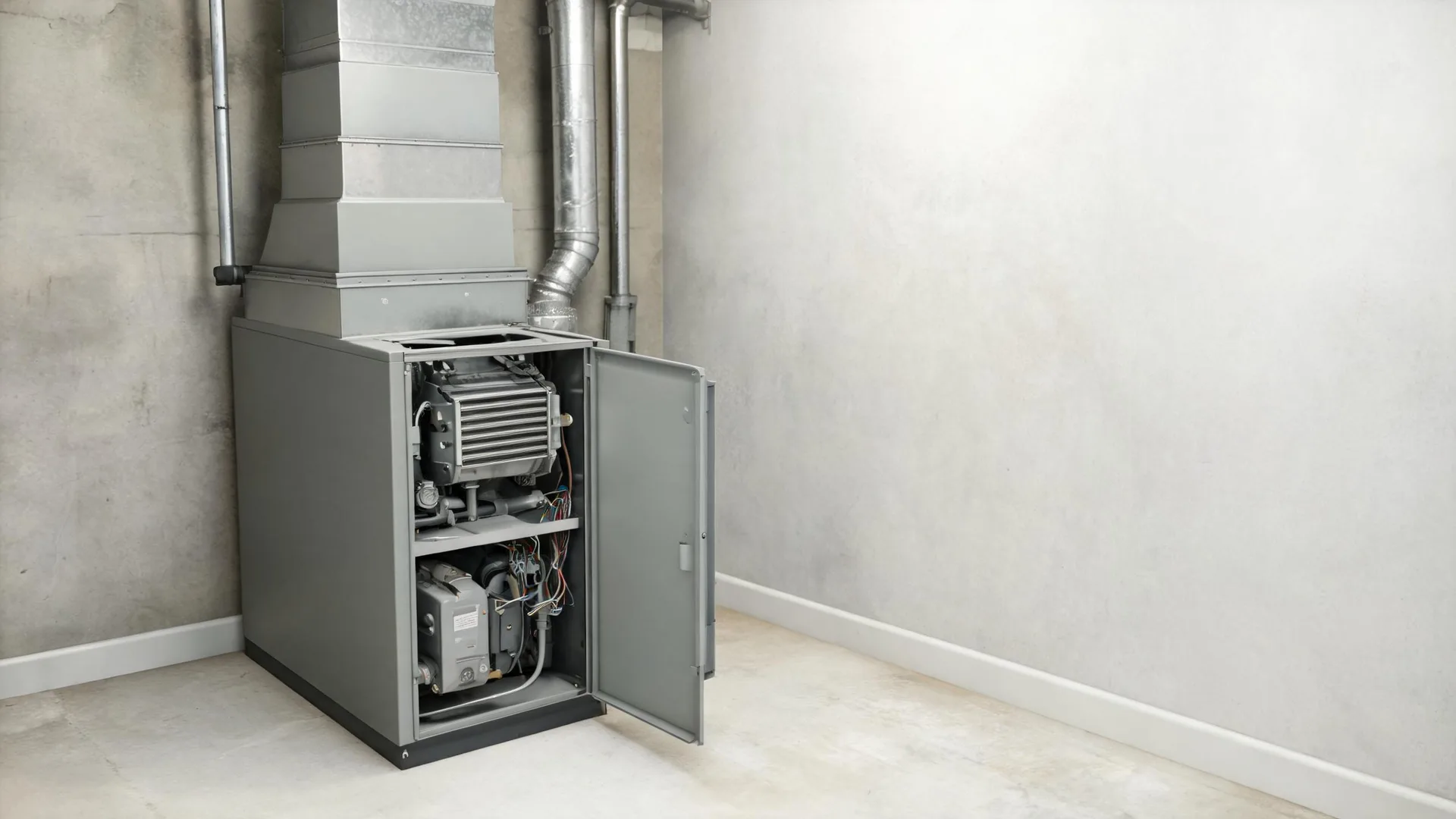
A gray high-efficiency gas furnace installed in an unfinished basement, surrounded by gas lines, a condensate drain, and sheet-metal ductwork.

What to check before you call

Before you pick up the phone, there's a few things worth checking yourself. Start with the thermostat. Make sure it's set to heat, not auto fan, and the set temperature is actually above room temperature. Check the air filter next. A filter clogged with dust chokes off airflow, and some furnaces will shut themselves down rather than run with the blower straining against it. Go look at the furnace itself. Most have a door switch, and if the panel isn't seated right, the furnace won't fire at all. Check the breaker it's on, and if it's tripped, reset it once. If it trips again, stop and leave that alone. Look at the vent pipe outside where it exits the house, and clear away anything blocking it, snow, leaves, a bird's nest. If your furnace has a standing pilot, see if it's lit. None of this fixes a cracked heat exchanger or a failed igniter, but it rules out the simple stuff before someone comes out to find the real problem.

Most failures are one part, not the system

An igniter cracks. A flame sensor coats over with residue until it can't sense the flame anymore. A blower motor's bearings wear out and seize. Each of these stops the furnace cold on its own, without anything else being wrong. Finding out which single part quit is most of the job.

The part that fails depends on how it's used

Parts that cycle, like the igniter and the blower motor, wear from the strain of starting and stopping over and over. Parts exposed to combustion, like the flame sensor and the heat exchanger, wear from heat and the byproducts of burning gas. A tech who knows which kind of wear they're looking at can usually spot the failing part fast, rather than replacing pieces until the furnace runs again.

A gray forced-air furnace with sheet-metal ductwork stands in an unfinished basement with exposed wooden joists, concrete walls, and a hanging incandescent bulb.

A new furnace would cut about $80 a year off heating for a typical Twin Falls County home.

  • A new high-efficiency furnace$340 a year
  • An older furnace$420 a year

Estimates for a typical Twin Falls County home, compared with an older unit built to the previous federal minimum, from EIA household energy data, Idaho fuel prices and NOAA climate normals. Your home will differ.

Repair makes sense when one part has failed and the heat exchanger is sound.

Replacement makes sense when the heat exchanger is cracked or the furnace keeps needing parts.

A diagnostic visit starts with questions. When does it act up, at startup, mid-cycle, or not at all. A tech will run it through a cycle and watch what it actually does rather than go on what it did yesterday. They'll pull the panel and check for a flame, check its color, check whether it stays lit or drops out a few seconds in. They'll test the igniter for continuity, check the flame sensor's signal, listen to the blower and feel for the bearings binding. Most of this is confirming or ruling out one part at a time, not swapping things to see what helps. By the time they tell you what's wrong, they've usually seen it with their own eyes, not guessed at it from the symptoms you described on the phone.