





An unfinished basement featuring exposed ceiling joists, a metal HVAC unit with round ductwork, a hanging light bulb, and scattered boxes and debris along the left wall.

Furnace Repair in Salmon, ID

Tell us about the job

Takes about a minute. No obligation.

RepairFurnace or heatingLemhi County, ID
Step 1 of 2

What ZIP code is the job in?

Furnaces in Lemhi County run about eleven months a year, August through June. That leaves one month where the system gets any real rest. The igniter, the blower motor, the heat exchanger, all of it is built to cycle on and off, not to carry a house through almost the whole calendar. With that much run time, something wearing out is rarely bad luck. It is more likely a part that reached its limit on schedule. Worth having someone identify the actual part before anything gets replaced, so the fix holds.

11 months
August through June, your furnace is on duty
13°F
the average winter night it heats against
24 winter storms
in ten years, the nights a failure hurts most
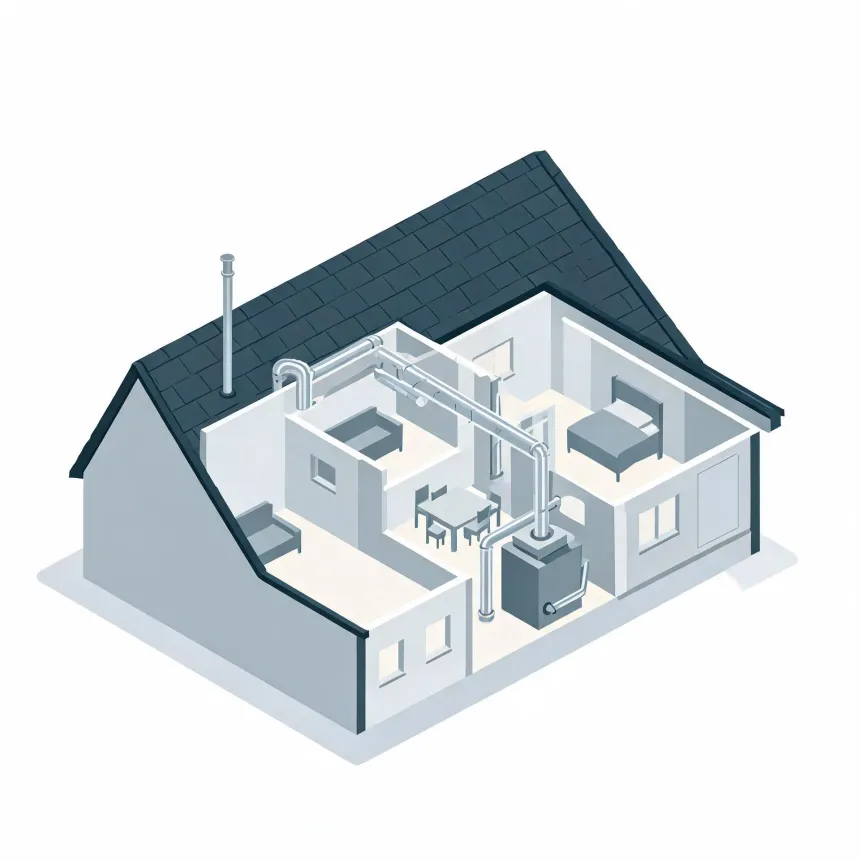
Isometric cutaway illustration of a single-story house with a dark shingled roof, showing interior rooms with furniture and a ducted furnace unit connected to metal ductwork and a roof flue.
Your furnace works hardest from October through April.

NOAA nClimDiv, 1991–2020 normals

August is when furnaces here come back on after the one month they get to sit idle.

A part that barely made it through June has had just one month off before that first cold start.

Electricity here runs $33.76 per million Btu, and this furnace burns it almost all year

Heat runs August through June
Winter nights average 13°F
Climate zone 6B

A furnace that's short cycling, struggling to reach temperature, or running constantly is spending electricity the whole time it does it. At $33.76 per million Btu, that waste shows up on the bill before it shows up as a breakdown. Most homes here heat with electric furnaces, so there's no gas bill to split the difference with. A strained blower motor or a heat exchanger that can't transfer heat the way it should just means more minutes of runtime to get the same warmth. Fixing it now stops the bleed. Waiting until it fails outright doesn't save you those months, it just adds a replacement on top of them.

Get the part identified before it takes something else with it

A furnace running eleven months a year does not leave much room for a worn part to wait. Have someone find out which one it is before you decide what to fix.

Find a contractor
A man in a dark T-shirt, backwards cap and brown work pants, seen from behind, climbs porch steps toward a blue paneled front door while carrying a canvas tool bag, with a potted shrub in a blue planter to the right.
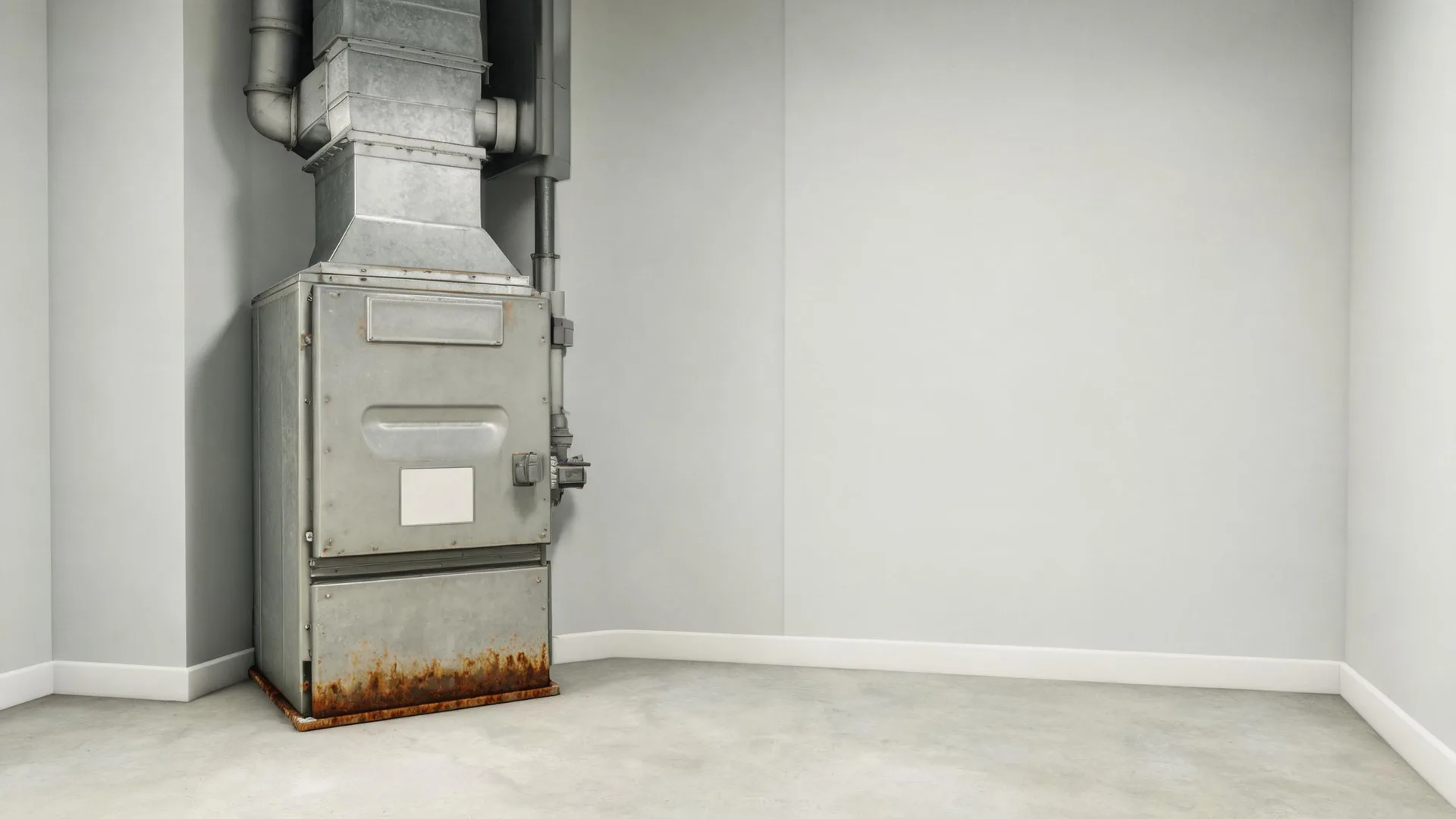
A gray high-efficiency gas furnace installed in an unfinished basement, surrounded by gas lines, a condensate drain, and sheet-metal ductwork.

What a Furnace Sounds Like Before It Fails

A furnace usually tells you something is wrong before it quits outright. It might take longer to warm the house than it used to, or run for a stretch, shut off, and kick back on a few minutes later. That short cycling is hard on the parts that start it up each time. A burner that won't stay lit, or lights with a bang instead of a steady catch, is worth a look. So is air coming out lukewarm instead of hot, or a blower that keeps running after the house is already warm. Some signs aren't about heat at all. A burning smell the first time it fires after sitting idle is normal for a few minutes and shouldn't linger. A musty or sharp smell that sticks around is not. Grinding, rattling, or a screech when the blower starts usually means a motor bearing or wheel is on its way out. None of these mean the whole system is done. They mean a specific part has worn to the point it can't do its job quietly or efficiently anymore, and it's easier to replace that one part now than to wait for it to take others with it.

A struggling part pulls others into it

A blower motor that's starting to go draws more current to spin the same wheel. A cracked heat exchanger lets heat escape that the system then tries to make up for by running longer. An igniter that's weakening takes more attempts to catch, and every failed attempt is wear on the gas valve and control board too. The longer a marginal part keeps working, the more it stresses the parts around it that were fine to begin with.
Running it anyway turns one repair into several

A furnace with a failing part doesn't fail evenly. It fails that part first, then the ones it dragged down with it. Shutting the system down at the first sign of trouble, a short cycle, a lukewarm stretch, a bang on startup, catches the problem while it's still one part. Keep it running through those signs and the repair call later on is for a blower wheel, a control board, and whatever started it all.

Most furnace failures trace back to a handful of parts that wear out doing their job, not to anything sudden or strange. The igniter cycles on every single heat call, so it's usually the first thing to go, especially the hot surface kind that gets brittle with age. Blower motor bearings wear down from spinning for hours at a stretch, and once they do, the motor pulls harder to keep the wheel turning. Flame sensors coat over with a thin film from normal combustion and stop reading the flame, so the system shuts itself off as a safety measure even though nothing is actually broken. A heat exchanger can crack from the stress of heating and cooling every cycle, and that one isn't optional to fix. Dirty filters and blocked vents don't fail on their own, but they make every one of those parts work harder than it should, which is usually what shortens their life in the first place.

Deciding whether to repair or replace comes down to what else is riding on that one part. A failed igniter or a bad flame sensor is a contained job. It's one part, swapped for a new one, and the rest of the furnace goes back to work like nothing happened. A cracked heat exchanger is a different question, because by the time it shows up, the furnace has usually been compensating for it for a while, and whatever else wore down during that stretch comes due around the same time. Age matters less than how the furnace has been running up to now. A furnace that's needed a handful of separate repairs in close succession is telling you something different than one that's run clean for years and hit its first real problem. The second one is worth fixing. The first one is worth asking whether the next part in line is already on its way out.