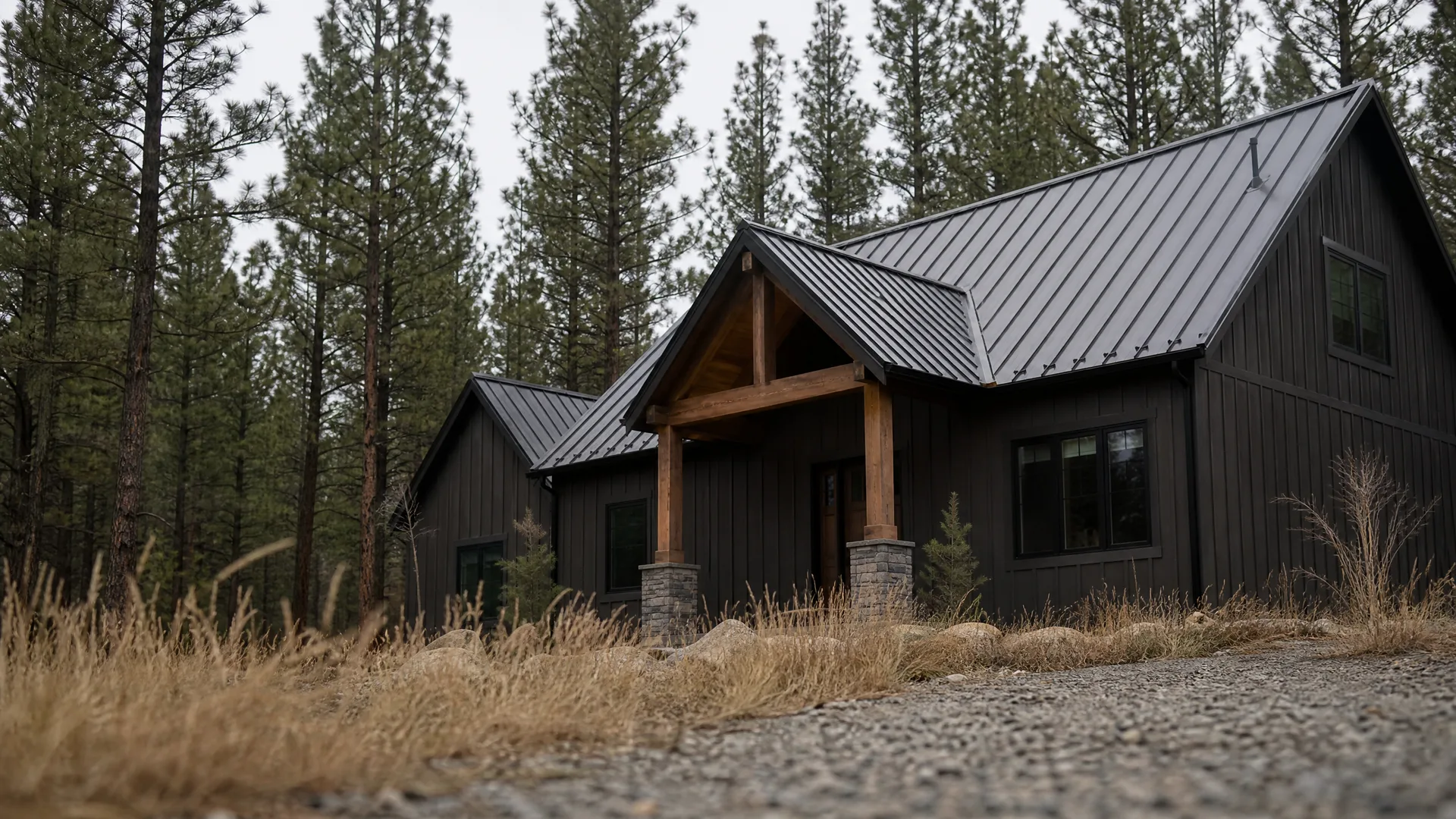
A dark-painted board-and-batten house with a standing-seam metal roof, timber entry porch and stone column bases, set among pine trees behind dry grass and a gravel drive.

Furnace Repair in Rexburg, ID

Tell us about the job

Takes about a minute. No obligation.

RepairFurnace or heatingMadison County, ID
Step 1 of 2

What ZIP code is the job in?

Most of the year, not a season

Furnaces in Madison County run from September through June. That's the igniter, the blower and the heat exchanger cycling on and off through 103 winter storms in the last ten years. A furnace asked to carry that long a stretch wears faster than one that only has to run a few months.
What that means for the fix

A furnace under this kind of load wears unevenly. The part that failed might be the one weak point, or it might be a sign something upstream has been working too hard to keep up. Worth tracing the actual cause before assuming the broken part is the whole story.

10 months
September through June, your furnace is on duty
14°F
the average winter night it heats against
54%
of homes here heat with gas, so most furnaces here burn gas
103 winter storms
in ten years, the nights a failure hurts most
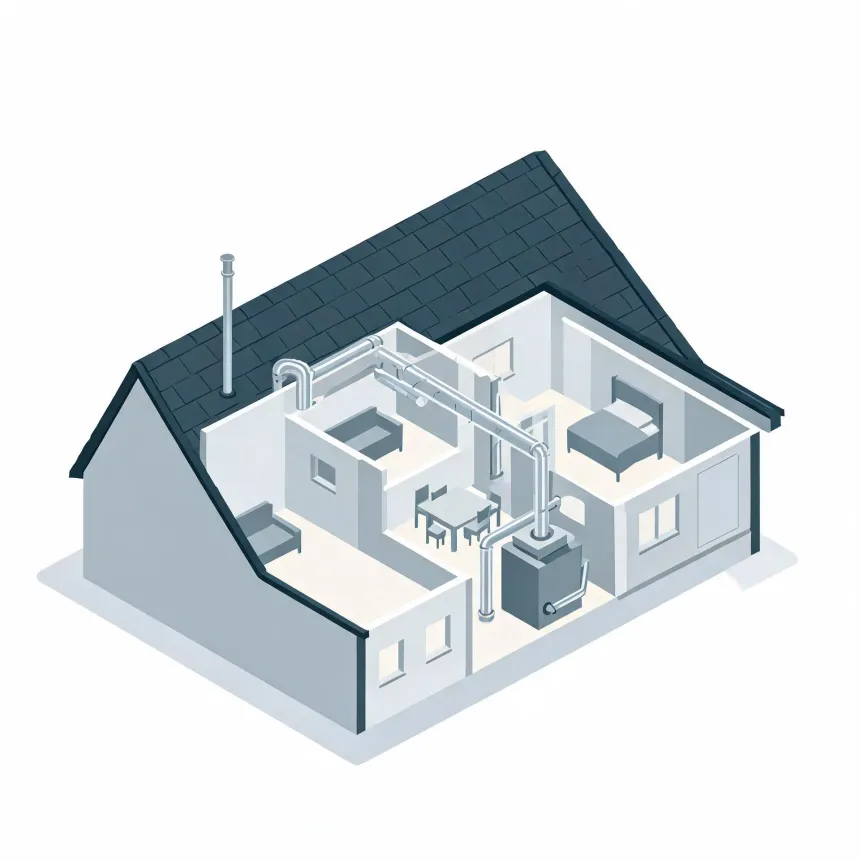
Isometric cutaway illustration of a single-story house with a dark shingled roof, showing interior rooms with furniture and a ducted furnace unit connected to metal ductwork and a roof flue.
Your furnace works hardest from November through April.

NOAA nClimDiv, 1991–2020 normals

Half the homes in Madison County were built in 2002 or later.

A furnace that age still has working life in it, which is a good reason to repair rather than replace.

Ten months of runtime means the weak spot fails in week one

Heat runs September through June
Winter nights average 14°F
103 winter storms from 2015 to 2024
A broken furnace costs more to run hereIdaho gas ran $8.25 per million Btu in 2024, and a furnace that's struggling burns more of it to keep up.

If your furnace came with a newer house, ask the technician to name the part that failed and fix that part. A cracked heat exchanger is worth weighing against the furnace's age. A dead igniter or a blower motor is not; those fail on furnaces of any age and get swapped out on their own. Since the rest of the system still has years in it, there's little reason to quote a full replacement over a problem like that. Get the actual cause named before agreeing to anything bigger than the repair in front of you.

Get the real cause found, not just the part that quit

A furnace running ten months a year wears unevenly, and the part that failed isn't always the only one affected. Have a technician trace what's behind it so the repair holds.

Find a contractor
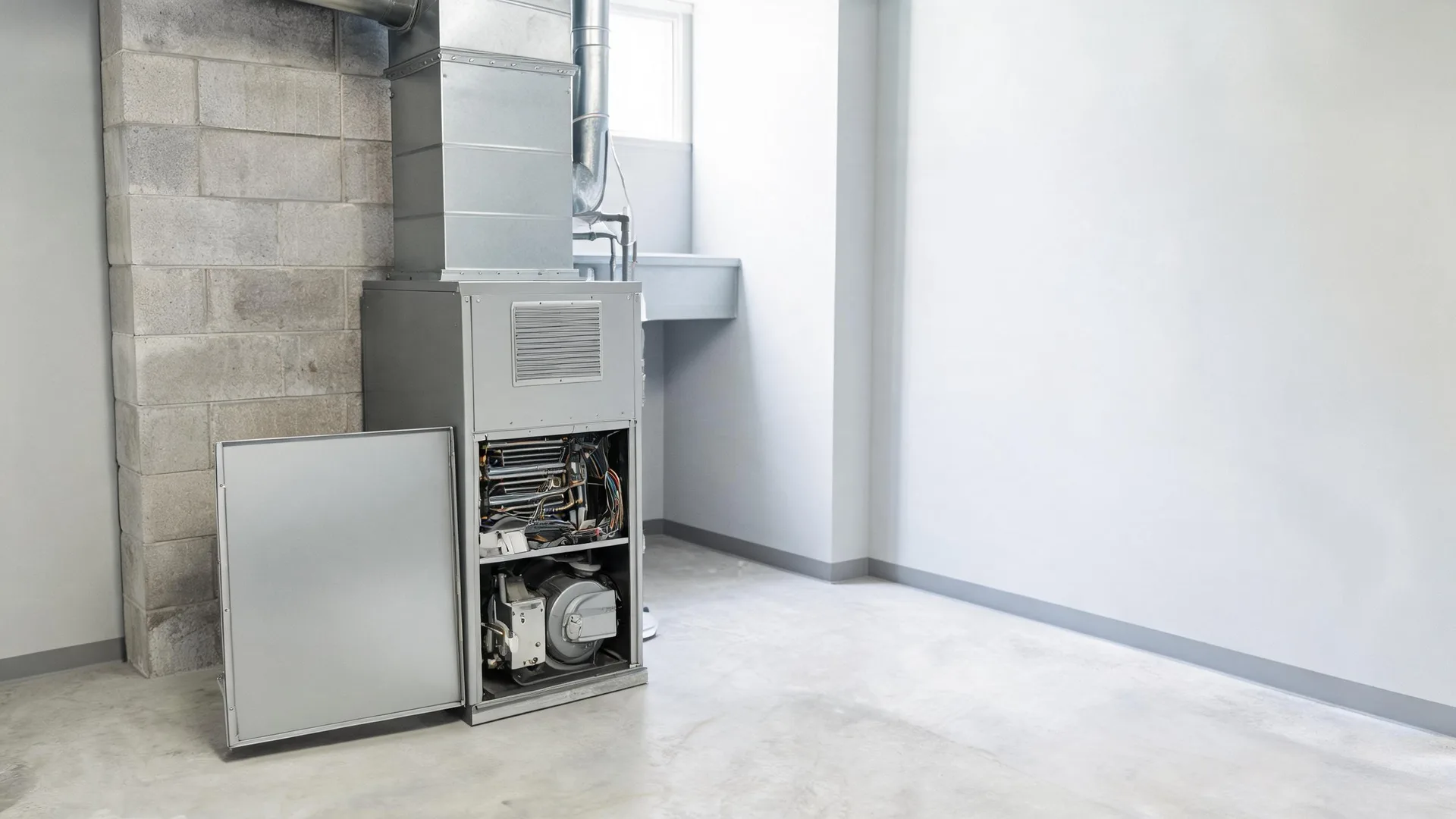
A gray residential gas furnace installed in an unfinished basement, connected to sheet-metal ductwork and PVC pipes.

Running it while it's broken rarely buys you time

A furnace that's struggling still tries to do the job. If the heat exchanger has a crack, it keeps firing anyway, and combustion gases ride along with the warm air going into the house. If the blower motor is weak, the furnace runs longer to push the same heat through the ducts, and the motor windings take more heat than they're built for. A clogged burner or a dirty flame sensor makes the furnace short cycle, shutting off and restarting over and over, and every restart stresses the igniter a little more until it fails outright. None of this gets better by waiting. A furnace doesn't rest and recover between cycles. It just keeps answering the thermostat with whatever it's got, and the part that's already struggling is the one doing the extra work.

What you can check yourself

Look at the thermostat first. Make sure it's set to heat and the set point is above room temperature, and swap the batteries if it uses them. Check the air filter and replace it if it's gray or caked, since a blocked filter starves the furnace of airflow and can shut it down on its own. Go to the breaker panel and look for a tripped breaker. If the furnace has a standing pilot, check whether the pilot light is lit. Clear anything blocking the vents and registers in the rooms that aren't heating.

What to leave alone

Don't open the burner compartment or touch the heat exchanger. Don't try to relight an electronic ignition system or hold down a gas valve to force a flame. If you smell gas, or the furnace is making a banging or screeching noise, turn it off at the switch or breaker and don't try to reset it yourself. Resetting a furnace that's tripping a safety switch over and over doesn't fix what's tripping it, and running it in that state is how a small failure turns into a bigger one.

An unfinished basement featuring concrete block walls, exposed floor joists, a bare concrete floor, and a forced-air furnace with a large metal exhaust duct in the corner.

A new furnace would cut about $100 a year off heating for a typical Madison County home.

  • A new high-efficiency furnace$420 a year
  • An older furnace$520 a year

Estimates for a typical Madison County home, compared with an older unit built to the previous federal minimum, from EIA household energy data, Idaho fuel prices and NOAA climate normals. Your home will differ.

Repair makes sense when one part has failed and the heat exchanger is sound.

Replacement makes sense when the heat exchanger is cracked or the furnace keeps needing parts.

A furnace burning more gas than it should doesn't show up as a separate charge. It just raises the bill every month it runs, and here that's most of the year. A weak blower motor or a furnace short cycling on a bad flame sensor works harder to put out the same heat, and it's pulling from gas priced at $8.25 per million Btu. That cost doesn't pause while you decide whether the repair is worth it. The sooner the actual fault gets fixed, the sooner the furnace goes back to burning only what the house needs.