





Illuminated timber-and-stone mountain cabins along a curved road at twilight, with lit trees and mountain peaks in the background.

Furnace Repair in Preston, ID

Tell us about the job

Takes about a minute. No obligation.

RepairFurnace or heatingFranklin County, ID
Step 1 of 2

What ZIP code is the job in?

A furnace in Franklin County runs about ten months of the year, September through June. That is most of the calendar, not just a stretch of deep winter. Franklin County saw 62 winter storms between 2015 and 2024, counting heavy snow, ice and blizzards, and each one means the furnace running long hours without a break. That kind of use wears on an igniter, a blower motor, a flame sensor, the parts that cycle on and off all day long. A furnace working this schedule shows problems sooner than one that only runs a few months a year. Worth having someone look at what's actually failing before it gets worse.

10 months
September through June, your furnace is on duty
16°F
the average winter night it heats against
62 winter storms
in ten years, the nights a failure hurts most
Isometric grayscale illustration of a cutaway house showing an interior furnace with a tall flue pipe and ductwork running to rooms under a partially lifted roof.
Your furnace works hardest from November through April.

NOAA nClimDiv, 1991–2020 normals

A furnace won't tell you it's struggling until it quits.

Check the filter, the thermostat batteries and the breaker before you pay someone to find the same thing.

September to June is a long run for a part that was already weak

Heat runs September through June
Climate zone 6B
Winter nights average 16°F

A cracked heat exchanger gets worse with every cycle because the metal keeps flexing under heat, and the crack opens a little more each time. A flame sensor coated in a thin layer of oxidation will sense weaker and weaker, until one day it stops sensing at all and shuts the furnace down. A blower motor with worn bearings has to work harder to spin, and that extra strain is what finally burns it out. Ignoring a short cycle problem means more wear on the igniter with every extra start. None of these get better by waiting. The part that's struggling now is the part that quits later, usually on the coldest night it has to work hardest.

Your furnace has earned a real look, not a quick patch

Ten months of heat a year, with 62 winter storms in the last decade keeping it running long hours, puts real wear on an igniter or a blower motor. Whatever's acting up in your furnace right now has a cause. Get it diagnosed and fixed properly instead of patched for the moment.

Find a contractor
A man in a dark jacket, cap and tan work pants climbs steps toward a blue front door, carrying a canvas tool bag with tools in its side pockets, beside a shrub in a blue planter.
A gray residential gas furnace installed in an unfinished basement, connected to sheet-metal ductwork and PVC pipes.

What a struggling furnace sounds and feels like before it quits

A furnace usually gives some warning before it fails outright. It might take several tries to light, or light with a bang instead of a soft whump. The air coming out of the vents might feel lukewarm instead of hot, which often points to a clogged filter or a failing blower rather than the burners themselves. A burner flame that burns yellow instead of blue means it isn't getting enough air to burn clean, and that's worth having looked at. Short cycling, where the furnace starts, runs a few minutes, and shuts off before the house warms up, usually means a sensor is telling it something is wrong even when nothing looks wrong. A grinding or squealing sound from the blower means the bearings are on their way out. A burning smell the first time it fires up after sitting idle is normal. A burning smell that doesn't go away is not. Any of these is easier to fix the day you notice it than the day the furnace won't start at all.

Most failures start with something small

A furnace rarely breaks all at once. A flame sensor collects a little oxidation, an igniter weakens with each spark, a capacitor loses its charge a bit more every time the blower starts. Dust and lint settle on parts never meant to run dirty. Any one of these can sit unnoticed for a long time before it causes an actual breakdown.
What that means for the repair

The thing stopping your furnace right now probably didn't fail today. It's been getting weaker for a while, and today is just when it crossed the line. A tech tracing the actual cause can usually tell how far along it was, and whether anything else nearby is close to the same point.

At some point a repair stops being the cheaper option, even though it still fixes the furnace. Age by itself isn't the test. The real question is what's failing and what it tends to bring with it. A blower motor or an igniter is a contained job, a single part doing a single thing, and replacing it tells you nothing about the rest of the furnace. A cracked heat exchanger is different. By the time it shows up, the furnace has been running with a compromised core, and the rest of the system has logged the same hours under the same strain. A tech who's seen the failure before can usually tell which kind you're looking at. That's worth more than guessing from how old the unit is.

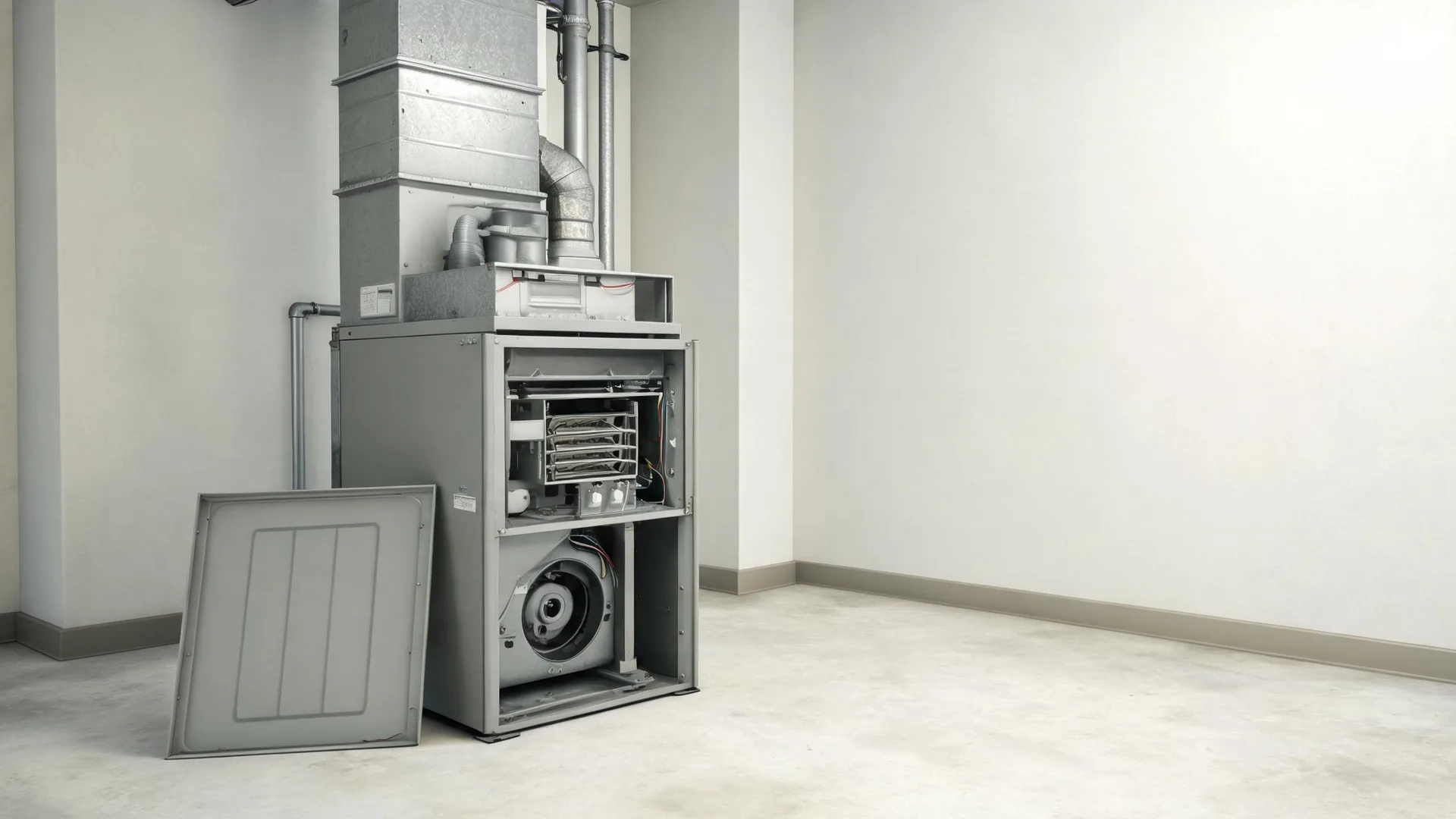
A diagnostic visit starts before any panel comes off. The tech asks what you noticed, when it started, and whether it's happened before, because that history points to certain parts faster than guessing does. Then the covers come off and the furnace gets watched through a full cycle: ignition, flame, blower start, shutdown. A multimeter checks the igniter for the right resistance and the flame sensor for the microamp signal it should be sending once it sees fire. Static pressure gets checked too, since a reading outside the normal range points to a duct or filter problem rather than a failing part. Whatever's actually wrong usually shows itself somewhere in that sequence, not from a single glance at the unit sitting cold.