






A gray forced-air furnace with metal ductwork stands in an unfinished basement with exposed wooden joists, concrete walls, and a single hanging light bulb.

Furnace Repair in Montpelier, ID

Tell us about the job

Takes about a minute. No obligation.

RepairFurnace or heatingBear Lake County, ID
Step 1 of 2

What ZIP code is the job in?

A furnace in Bear Lake County runs about ten months of the year, from September through June. That leaves a short stretch in summer where it gets to sit idle. The rest of the year it's cycling on and off, day after day, to keep up with winters that run hard and long. Between 2015 and 2024, winter storms hit this county 106 times, and each one means the furnace is working its hardest right when it can least afford to quit. That kind of use adds up on the igniter, the blower motor, the heat exchanger, all of it. Whatever's going wrong with yours now, it's worth having someone look at the actual cause instead of guessing.

10 months
September through June, your furnace is on duty
12°F
the average winter night it heats against
106 winter storms
in ten years, the nights a failure hurts most
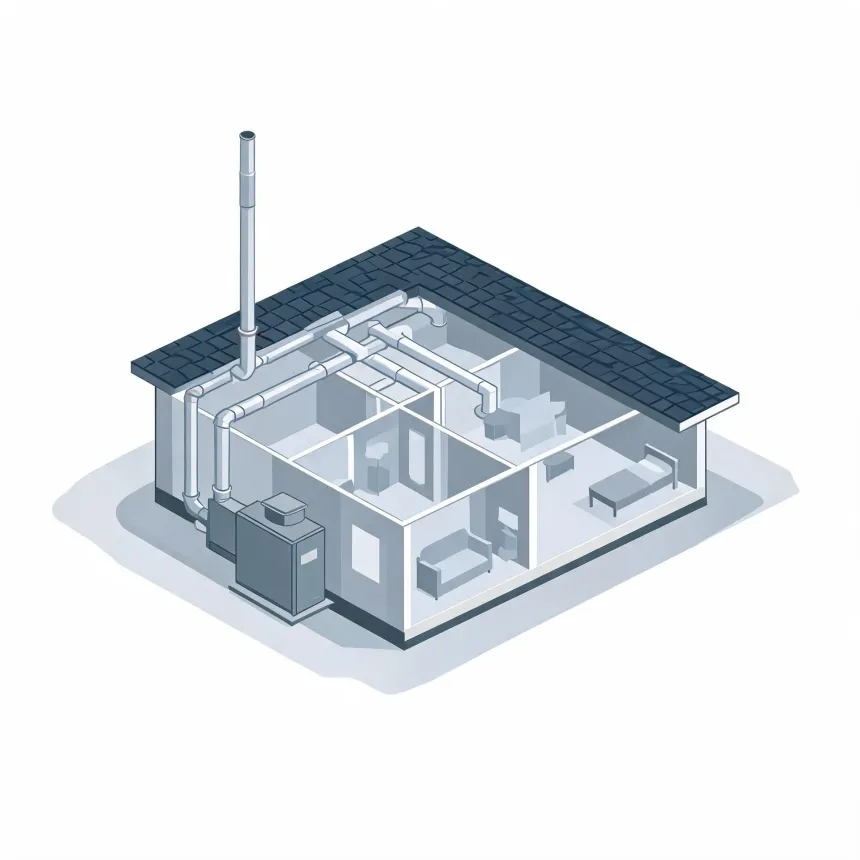
Isometric cutaway illustration of a single-story house with a dark shingled roof, showing interior rooms with furniture, a ducted air distribution system, a tall vertical flue pipe, and a gray furnace unit outside the wall.
Your furnace works hardest from October through April.

NOAA nClimDiv, 1991–2020 normals

The igniter is the part that fails most, because it heats up and cools down every single cycle.

A furnace that short cycles all winter puts that igniter through more of those cycles than one that runs steady.

Gas costs $8.25 per million Btu here, and this furnace burns it from September through June

Heat runs September through June
Winter nights average 12°F
106 winter storms from 2015 to 2024
September Is When It Gets TestedHeat starts running in September here, and a weak part usually shows itself in the first cold week.

Before calling anyone, check the thermostat first. Make sure it's set to heat and the set temperature is actually above room temperature, and swap the batteries if it uses them. Go look at the air filter next. A filter clogged with dust chokes off airflow, and a furnace starved for air can overheat and shut itself down as a safety measure. Check that the furnace switch, the one that looks like a light switch near the unit, hasn't been bumped off, and check the breaker panel for a tripped breaker. If the furnace has a standing pilot, see whether the pilot light is actually lit. None of this requires opening the cabinet or touching the burners. If the furnace still won't run after all that, the problem is inside the unit, and that's a job for someone with the tools to test it safely.

Get the cause checked, not just the symptom

Your furnace doesn't get much downtime here, and that pace is likely what's catching up with whatever it's doing now. Getting the actual cause checked, instead of just the symptom, is what makes a repair hold through the next storm.

Find a contractor
A man in a dark long-sleeved shirt and tan work pants, seen from behind, carries a canvas tool bag up porch steps toward a blue paneled front door of a house with light lap siding and a potted flowering plant.
A gray residential gas furnace installed in an unfinished basement, surrounded by ductwork, a metal flue pipe, and a gas supply line.

Running It Longer Rarely Fixes It

A furnace that's struggling doesn't fail all at once. A cracked heat exchanger starts small, and running it longer just keeps flexing metal that's already compromised. A blower motor with worn bearings will keep pushing air until it seizes, and it tends to take the control board with it when it goes. Even something as simple as a dirty flame sensor gets worse with use, since every cycle adds another layer of residue until the furnace stops recognizing its own flame. Shutting it down at the first sign of trouble is usually what keeps a repair a repair instead of a replacement.

What you'll actually notice

A furnace heading for trouble rarely just quits. It cycles more often than it used to, running short bursts instead of steady stretches. The air coming out of the vents feels cooler than it should. You might hear a boom at startup, a rattle from inside the cabinet, or a screech from the blower. Some rooms stop getting warm while others are fine. A smell like something burning or faint exhaust in the house are signs to stop and call, not signs to wait out.

Why it matters which sign it is

Each sign points somewhere different, and that's what the tech is listening for. A screech is usually the blower motor's bearings going. A boom at startup points to delayed ignition, often a dirty burner. Short cycling can mean a clogged filter, a cracked heat exchanger, or a flame sensor that's stopped reading the flame. Telling the contractor exactly what you're hearing or smelling, and when it happens, gets them to the actual part faster instead of starting from scratch.

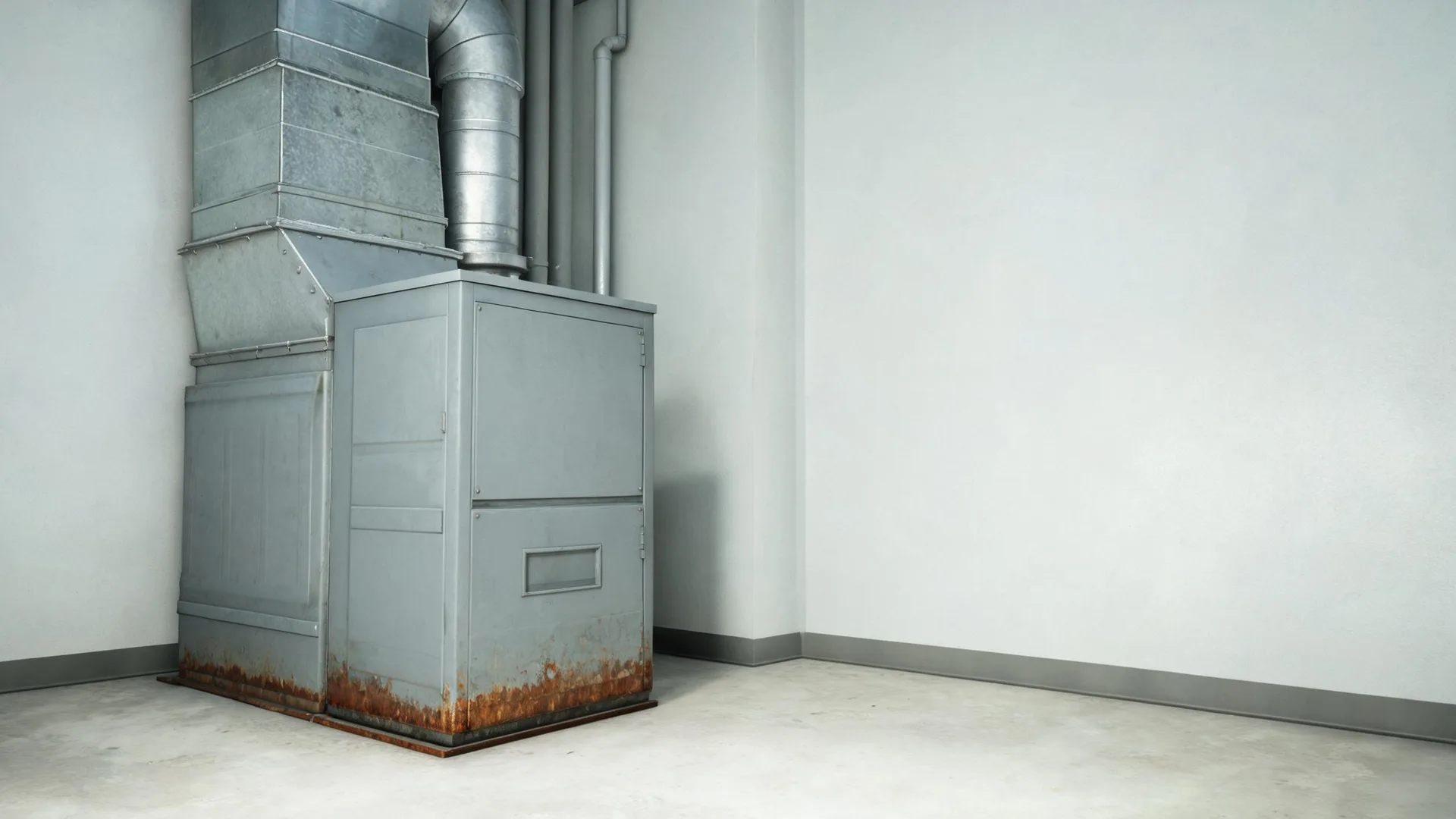
An unfinished basement featuring concrete block walls, exposed floor joists, a bare concrete floor, and a forced-air furnace with a large metal exhaust duct in the corner.

A new furnace would cut about $110 a year off heating for a typical Bear Lake County home.

  • A new high-efficiency furnace$450 a year
  • An older furnace$560 a year

Estimates for a typical Bear Lake County home, compared with an older unit built to the previous federal minimum, from EIA household energy data, Idaho fuel prices and NOAA climate normals. Your home will differ.

Repair makes sense when one part has failed and the heat exchanger is sound.

Replacement makes sense when the heat exchanger is cracked or the furnace keeps needing parts.

A repair is worth making when the rest of the furnace is sound and the failed part is a known, bounded fix: an igniter, a flame sensor, a capacitor, a control board. Swap the part and the furnace goes back to being exactly as reliable as it was before. The heat exchanger is the one part that changes the math. Once it's cracked, the furnace is burning gas inside a chamber that's no longer sealed, and that's not a wear item you replace on its own, it usually means the furnace as a whole is done. Pattern matters more than age. A furnace that's needed one repair in its life is in a different position than one that's had several callbacks over a couple of winters, even if this particular failure looks minor on its own. If a tech recommends replacement, ask what they found wrong, specifically, and whether it's the kind of thing that tends to bring other parts down with it. A clear answer means they looked. A vague one means they're guessing too.