



An unfinished basement containing a gray HVAC furnace with ductwork, exposed wooden joists, a concrete floor, and miscellaneous clutter in one corner.

Furnace Repair in Kamiah, ID

Tell us about the job

Takes about a minute. No obligation.

RepairFurnace or heatingLewis County, ID
Step 1 of 2

What ZIP code is the job in?

Half the homes in Lewis County were built in 1965 or earlier. If your furnace came with a house that old, it's probably not the original unit, but it may well be the second one, installed decades back. A furnace that age is worth a second look before you put much into fixing it. Ask the technician how many years they think it has left. A cracked heat exchanger or a limit switch that keeps tripping on an old furnace often means repair isn't the better call.

10 months
September through June, your furnace is on duty
23°F
the average winter night it heats against
15 winter storms
in ten years, the nights a failure hurts most
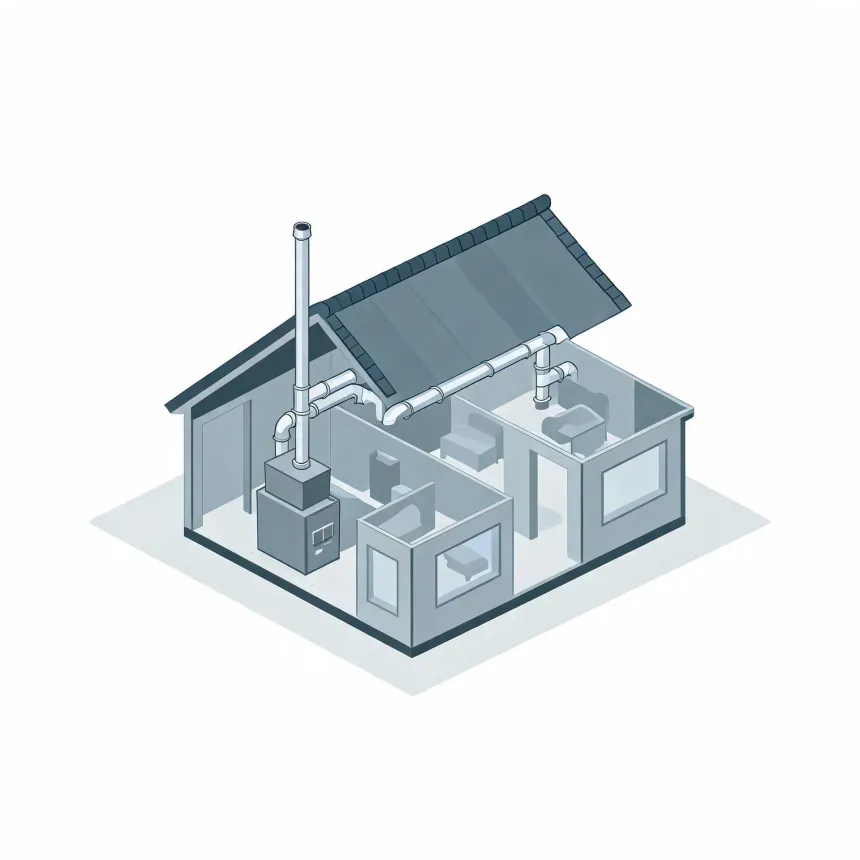
Isometric grayscale illustration of a cutaway house showing an interior furnace with a tall flue pipe and ductwork running to rooms under a partially lifted roof.
Your furnace works hardest from October through April.

NOAA nClimDiv, 1991–2020 normals

A cracked heat exchanger gets worse every time the burners fire.

Shut the furnace off and call for repair before running it again.

Electricity here runs $33.76 per million Btu, and this furnace fires from September through June

Heat runs September through June
Winter nights average 23°F
Climate zone 5B
The first cold snap finds the weak partFurnace here runs September through June, about ten months of the year

Ten months of heating a year does not leave a furnace much time to rest. Most of the country gets a break in spring and fall. Here the burners are firing again within a few weeks of shutting off for the season. That matters most on the cold nights, when it has to hold a steady 23°F outdoor low for weeks at a stretch without a break to recover. A part that would last years of normal cycling wears down faster under that kind of load. When something finally gives, it is usually the end result of all that running, not a one-off fault, so it is worth having someone trace the actual cause instead of just replacing whatever failed.

Ask what it's worth fixing, not just what's wrong

Before paying for a repair, ask the technician for a straight answer on how much life the furnace has left. On a unit that old, that number matters more than what's wrong with it this time.

Find a contractor
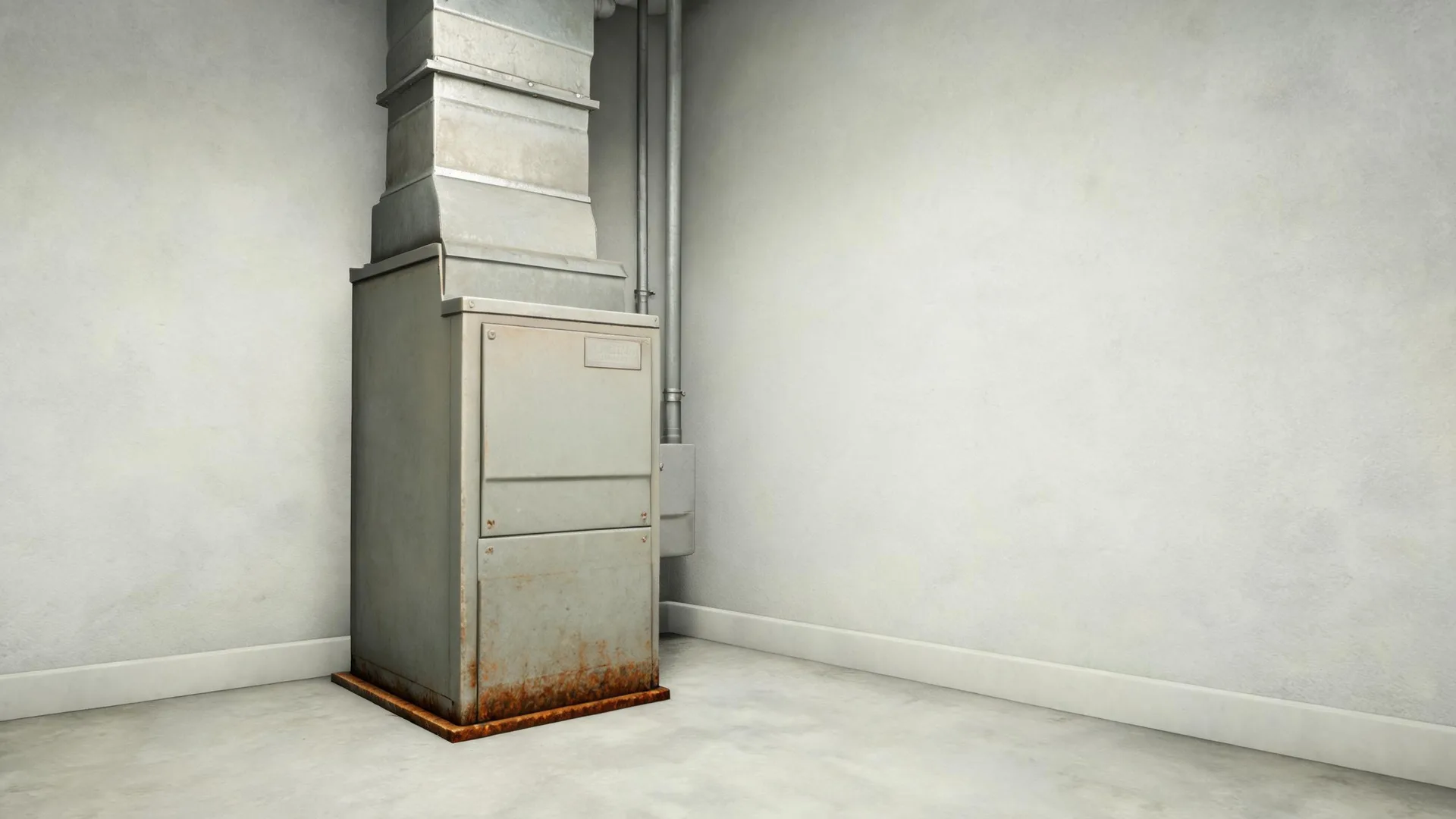
A gray high-efficiency gas furnace installed in an unfinished basement, surrounded by gas lines, a condensate drain, and sheet-metal ductwork.

What you can rule out yourself

Before anyone comes out, check the thermostat batteries and make sure it's set to heat, not just on. Look at the filter. If it's gray and matted, swap it, because a blocked filter can starve the burners of air and trip the limit switch. Check the breaker and the furnace switch, the one that looks like a light switch on or near the unit itself, since it's easy to bump off. If you have a standing pilot, see if it's lit. If you smell gas anywhere in the house, skip all of this, leave, and call the gas company before anyone calls for repair.

Most failures start with the igniter or flame sensor

A hot surface igniter weakens with age and eventually stops glowing hot enough to light the burners. A flame sensor coated with residue tells the control board no flame is present even when there is one, so the system shuts down as a safety measure. Both are common, both are replaceable, and neither means the furnace itself is at the end of its life.
Some failures point to the furnace itself, not a part

A cracked heat exchanger or a blower motor that's seized up shows up in a furnace that has been running hard for years. These aren't a quick swap the way an igniter or a flame sensor is. When the technician finds one of these, the question changes from what's wrong this time to whether the furnace is still worth repairing at all.

Short cycling is one of the clearest signs something's wrong. The furnace fires up, runs for a short stretch, then shuts off before the house warms up, and it repeats that cycle all night. That usually points to a flame sensor losing its signal or a limit switch tripping because airflow is restricted somewhere. A furnace blowing cool or lukewarm air instead of hot is another one, and it often means the igniter is weak or the gas valve isn't opening the way it should. Listen for a boom at startup too. A delayed ignition like that means gas is building up before it catches, and it's harder on the heat exchanger every time it happens. Any burning or metallic smell beyond the first few minutes of a heating cycle is worth paying attention to as well.

A diagnostic starts before the panel comes off. The technician asks what the furnace was doing, whether it was short cycling, blowing cool air, making noise at startup, and when that started. Then they pull the panel and watch it run through a full cycle, because some problems only show up at ignition or only after the blower has been running a few minutes. They'll check the flame itself, a steady blue flame means the burners are getting the right mix of air and gas, while a flickering yellow one points to something else going on. Voltage gets tested at the igniter, the flame sensor gets cleaned or swapped if it's coated, and the pressure switch and limit switch get checked since both can shut the system down without any failure in the burners at all. If the furnace is old and the problem points to the heat exchanger, that gets inspected closely, because that's the part that decides whether this is a repair or a harder conversation about replacing the unit.