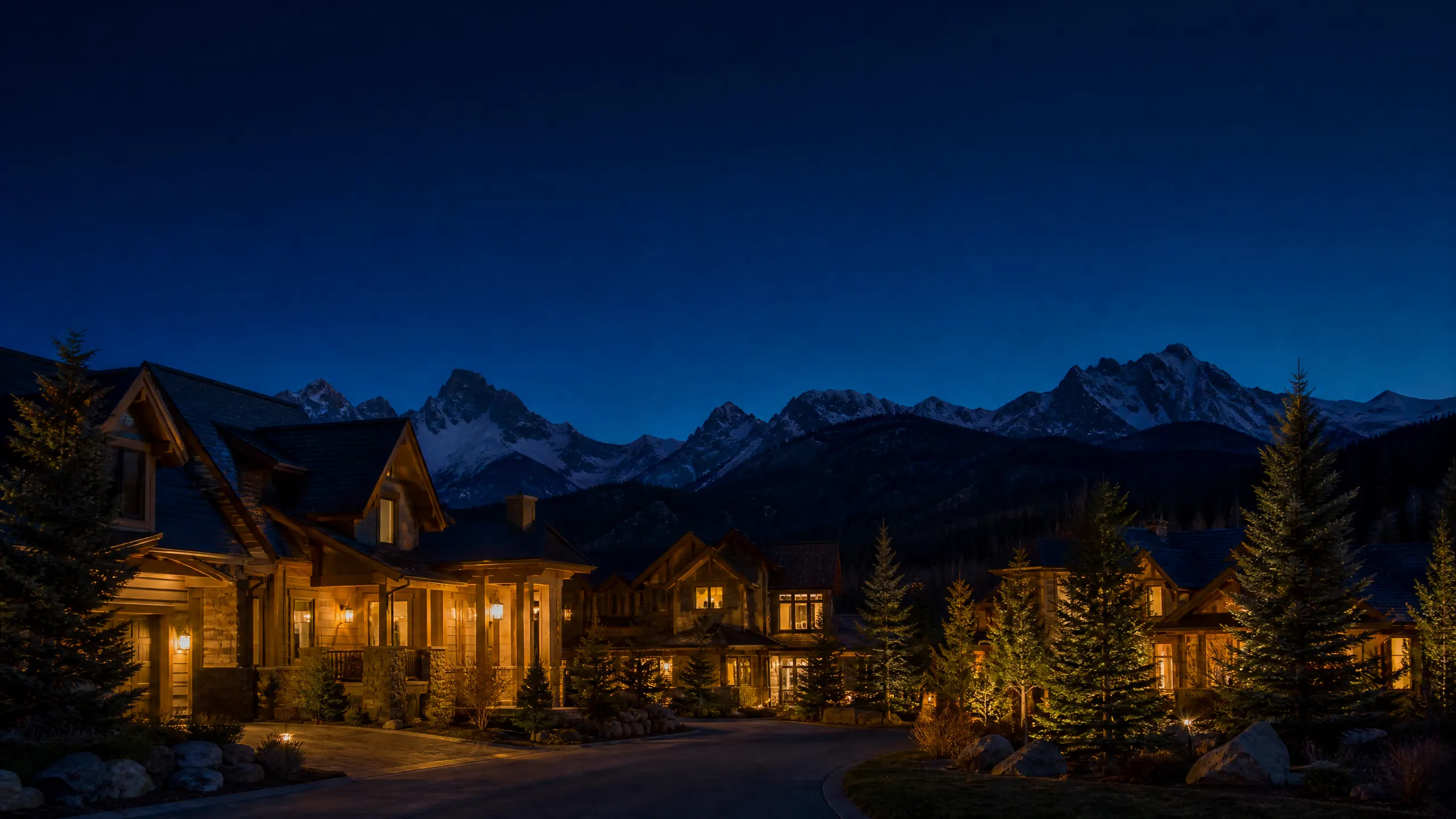



Illuminated timber-and-stone luxury homes photographed at twilight with snow-capped mountains visible in the background.

Furnace Repair in Horseshoe Bend, ID

Tell us about the job

Takes about a minute. No obligation.

RepairFurnace or heatingBoise County, ID
Step 1 of 2

What ZIP code is the job in?

A tech starts by asking what the furnace is doing, or not doing, before anything gets opened up. Short cycling, no heat, a burner that won't light, a blower that won't shut off, each of those points down a different path. From there it's a look at the igniter or pilot, the flame sensor, the pressure switch, and the limit switch, checking each against what it should read rather than guessing. Static pressure across the filter and ductwork gets checked too, since a furnace starved for airflow will trip safety switches even when every part is fine on its own. Burner flame tells its own story. It should be steady and blue, not yellow or lifting off the burner. Once the fault is found, the tech explains what failed, why, and what it takes to fix it before any work starts.

10 months
September through June, your furnace is on duty
18°F
the average winter night it heats against
42 winter storms
in ten years, the nights a failure hurts most
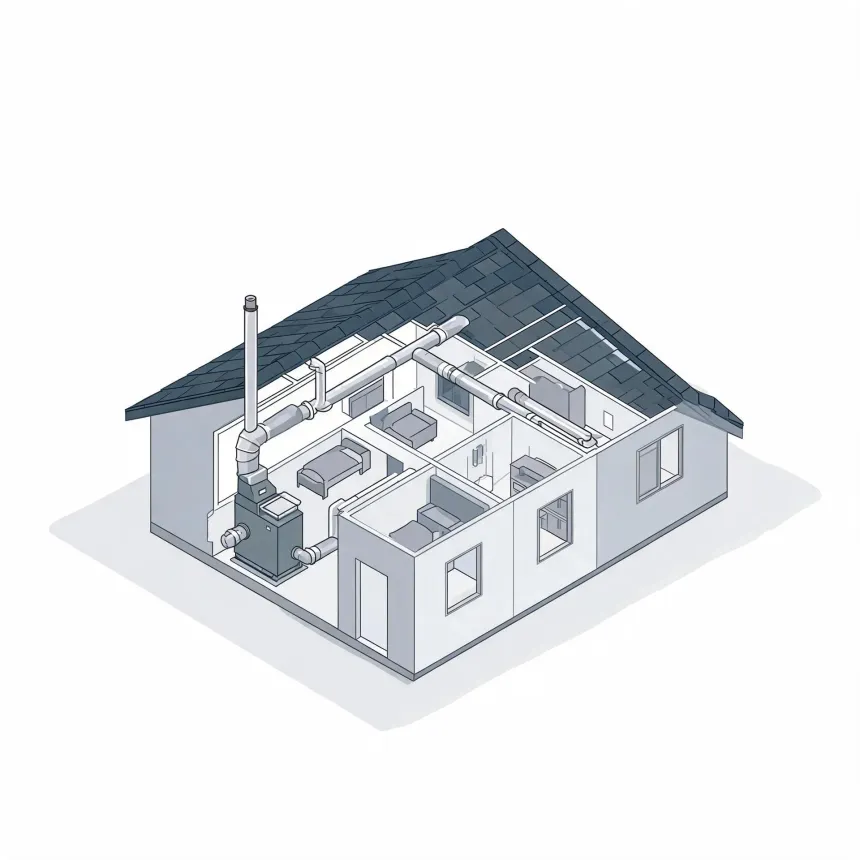
Isometric cutaway illustration of a single-story house showing interior rooms with furniture, ceiling ductwork, a furnace unit with a tall flue pipe, and a dark shingled roof.
Your furnace works hardest from October through April.

NOAA nClimDiv, 1991–2020 normals

Furnaces in Horseshoe Bend start running in September, after sitting idle since June.

The first cold snap finds whatever part was already failing, so early September is when breakdowns show up.

Half the houses here date to 1991 or later, so the furnace behind the wall is probably younger too

Half the homes here were built by 1991
Heat runs September through June
Winter nights average 18°F
Ten months of heat a yearFurnaces here run September through June, with winter lows averaging 18°F.

If the furnace is original to the house, it's probably not old. A unit that age is worth repairing rather than replacing in most cases, since the parts that fail, an igniter, a flame sensor, a pressure switch, are inexpensive on their own and don't mean the rest of the system is going. Ask the tech how old the unit actually is before deciding anything. If the house changed hands since it was built, there's no way to know from the outside whether the furnace was swapped out at some point, so that's worth asking too.

Get it looked at early

Problems tend to show up in the first weeks of the season, when the load hits a part that was already weak.

Find a contractor
A gas furnace with attached ductwork, gas piping, and condensate lines installed in a concrete-block basement.

What actually gives out

A furnace doesn't wear out all at once. One part gives out while the rest of the system is still fine, and that part is almost always one that moves or sparks. The igniter glows hot every single cycle, and because it's ceramic, repeated heating and cooling eventually cracks it. The flame sensor sits right in the burner flame every time the furnace runs, and over time it picks up a film that keeps it from sensing the flame at all. The inducer motor spins at the start of every cycle, and its bearings are usually what finally gives out. None of this comes from one bad winter. It's what happens after thousands of ordinary cycles, on and off, season after season.

What you can check yourself

Check the thermostat is set to heat and the setpoint is above room temperature. Look at the furnace switch, the one that looks like a light switch near the unit, and make sure it's on. Check the breaker. Check the filter, since one packed with dust can choke the airflow enough to shut the whole thing down. If the furnace has a standing pilot, see if it's lit.
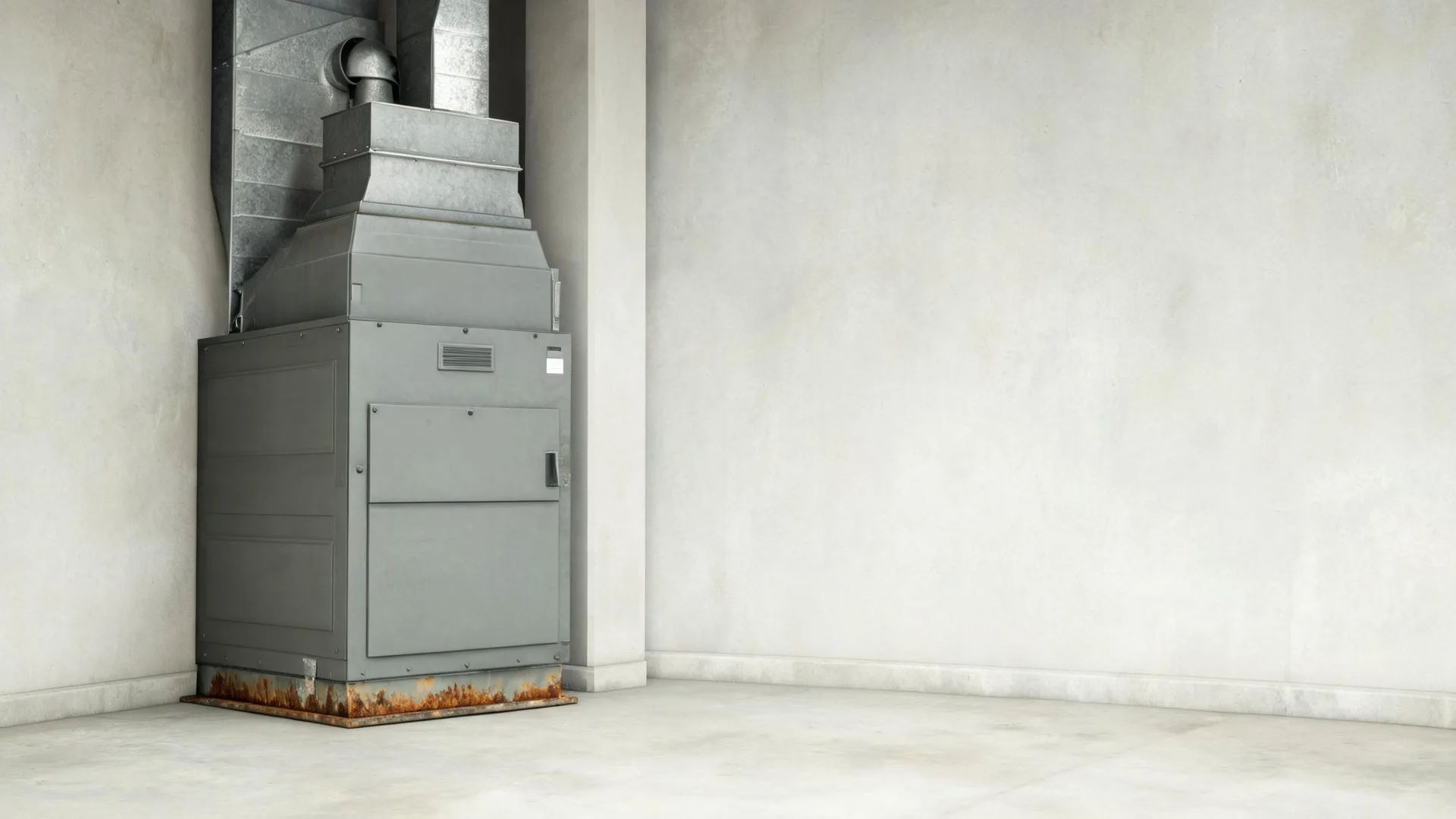
What to leave alone

Don't pull the panel off the furnace and start testing parts. The burner compartment runs on gas and line voltage, and the limit switches inside are there to shut things down safely when something's wrong, not to be reset by hand. If the furnace is flashing an error code on a light board, write down the pattern for the tech instead of guessing what it means.

A furnace rarely fails without warning. It usually makes noise about it first. A burner that won't light on the first try, or lights and then drops out, is often the igniter or flame sensor losing the fight before it's lost for good. A blower that keeps running after the house is warm points at a limit switch or the fan control, not the thermostat. Short cycling, where the furnace fires, runs a couple minutes, and quits, is the kind of thing a dirty flame sensor or a clogged filter causes long before a bigger part fails. A furnace that used to run quiet and now bangs, rattles, or squeals at startup is telling you something in the inducer motor or blower assembly is wearing out. Cold air out of the vents when the system is clearly running, not just short of heat but actually blowing cold, usually means the burners aren't lighting at all. None of these mean the whole system is done. They mean one part reached the end of what it could do, and the furnace is telling you which one.

Most furnace calls end with one part swapped out, not a new furnace. The question only turns to replacement when the parts failing start adding up, or when the heat exchanger itself is cracked, since that's the one part that isn't worth repairing at any age. A cracked heat exchanger means combustion gas can mix into the air the blower pushes through the house, and that's a safety call, not a cost call. Short of that, age by itself doesn't condemn a furnace. A unit that's needed a few small repairs over its life has usually just been running, the same as a car that's needed brakes and a battery. What matters more is whether the parts giving out are the cheap, expected ones or whether the cabinet, the exchanger, or the blower motor itself is going. A tech who's opened the panel can tell you which kind of wear this is.