


Heat pump vs furnace in Boise County, Idaho

Quote Both Systems

Serving Boise County homes

A person's arm in a navy sleeve reaches to adjust a round white wall-mounted thermostat above a light switch, with an open tool bag below and a living room with a sofa in the background.

Tell us about the job

Takes about a minute. No obligation.

New system or replacementBoise County, ID
Step 1 of 3

What kind of equipment?

Which costs less to run in Boise County?

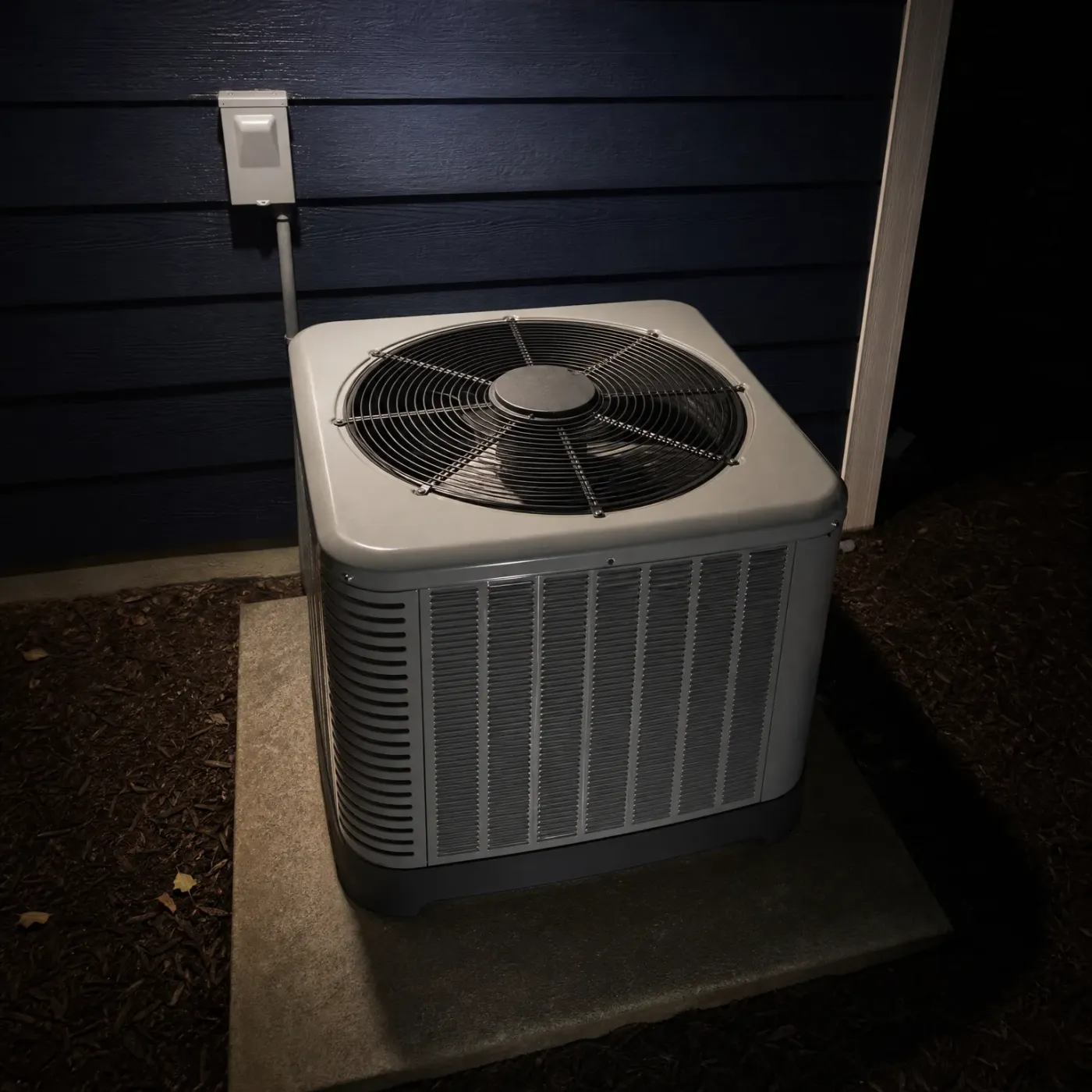
An outdoor air conditioning condenser unit with a top-mounted fan grille sits on a concrete pad beside a dark blue lap-sided wall with a small electrical disconnect box and conduit above it, surrounded by mulch at night.

Heat pump

To heat your home here$1.54per 100,000 Btu

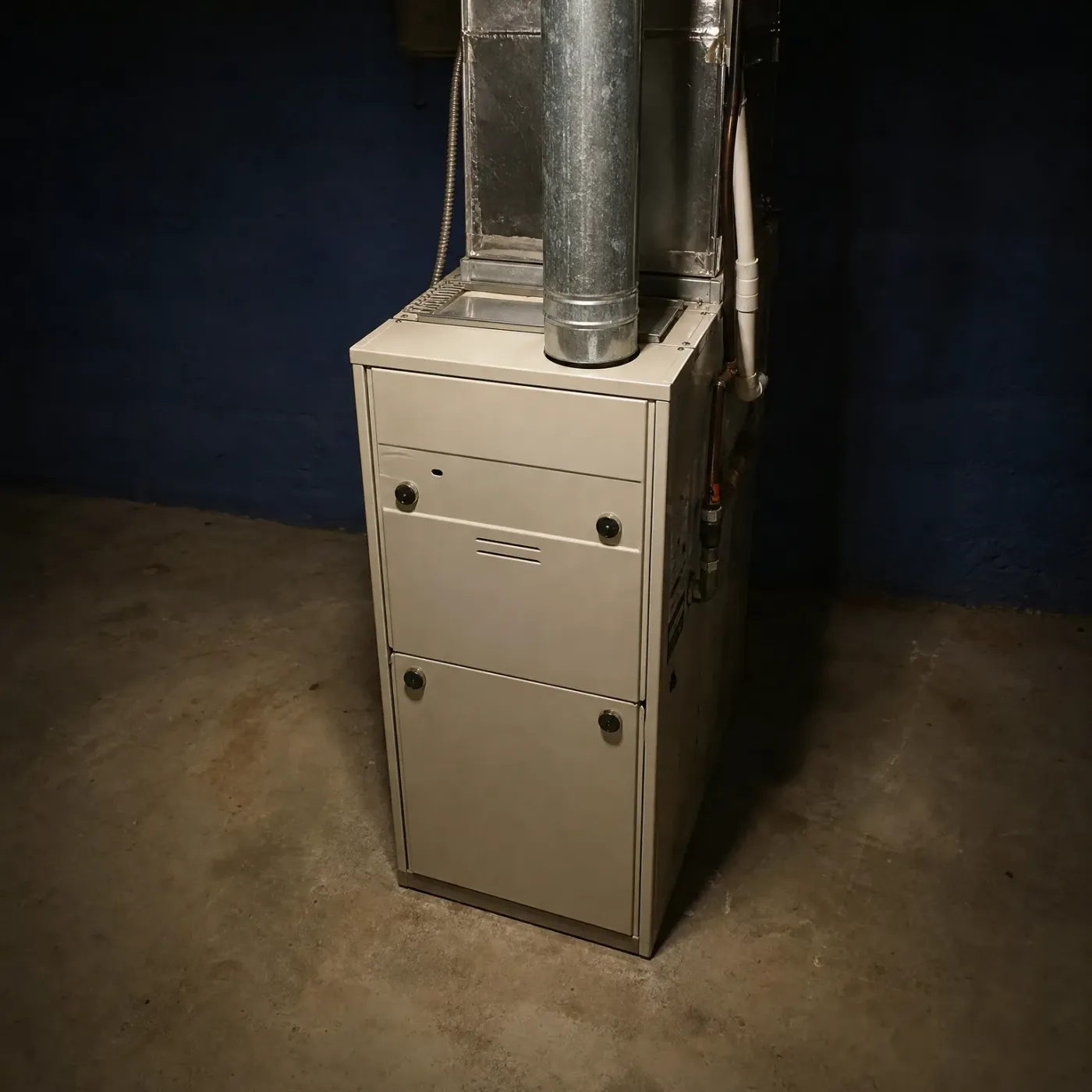
A beige residential furnace stands on a concrete basement floor against a dark blue painted wall, with galvanized metal ductwork and a flue pipe rising from its top and white pipes running along its right side.

Furnace

To heat your home here$1.03per 100,000 Btu

At Idaho's gas and electricity prices, a gas furnace makes the same heat as a heat pump for at least 32% less.

Btu stands for British thermal unit, the standard measure of heat energy.

Where does a heat pump shine?

  • Heats and cools in one system

    One machine handles the heat in winter and the cooling in summer. There's no second system to buy or keep up.

    Living room with a cream sofa holding navy and blue cushions and a grey fringed throw, a wooden coffee table with a glass vase of greenery, a dark blue built-in shelving unit, a stone column, and a large window looking onto a green garden.
  • Steady, even comfort

    A heat pump runs long and low instead of blasting on and off. Rooms hold an even temperature all day.

    A golden retriever sleeps on a woven rug in a living room with a navy armchair holding an open book and gray throw, a lit fireplace, a wooden sideboard with a lamp, and a window showing snow outside.
  • No gas line, nothing burning in the house

    There's no gas line to the unit and no flame anywhere in it. Carbon monoxide isn't part of the picture.

    A kitchen island with a white marble-look countertop holding a black glass cooktop, a dark kettle, a blue mug and a striped towel, with navy cabinets, a marble backsplash, a wood shelf of dishes, and a window showing evergreen trees.

Where does a furnace shine?

  • Strong, steady heat in hard cold

    Winter nights in Boise County average 18°F through December, January and February. A furnace burns gas to make heat, so it keeps putting out warm air all night without losing ground to that kind of cold.

    A two-story dark blue wood-sided house with white trim and a covered porch, lit windows at dusk, surrounded by deep snow, bare trees and a small lit evergreen, with a shoveled path and lamp post in front.
  • Proven, simple, easy to get serviced

    Parts are easy to find and most repairs are routine. Getting one fixed rarely means waiting on a specialist.

    A gloved hand holds a white pleated air filter in a basement utility area with a furnace, ductwork, and shelving holding storage bins and towels.
  • Pairs with any central AC

    Most central air systems are built around a furnace. The two share the blower, the ducts and the thermostat.

    A floor air vent set into dark hardwood flooring near a white curtain and window, with a gray mug of coffee on a wooden table and a potted green plant in the foreground.

Can a heat pump handle winter here

Your winter low here averages 18°F, and about 180 nights a year drop to freezing or below. That matters because a standard heat pump starts losing ground before it gets anywhere near 18°F. Below 40°F its heat output falls short of its rating. Below about 35°F it often needs a backup heat source to keep up. Here, every single one of those 180 freezing nights falls below both marks.

That doesn't rule out a heat pump. It means the machine has to be the right kind. A unit carrying the ENERGY STAR Cold Climate designation has to prove, under third party testing, that it still makes at least 1.75 units of heat for every unit of electricity at 5°F, and that it holds onto at least 70 percent of its 47°F capacity at that temperature. A standard heat pump built to the federal minimum was never tested to do that. A field test of prototype cold climate heat pumps in occupied homes backs this up: backup heat covered only a small share of the load between 0°F and 35°F, and the homes rarely ran on backup heat alone unless it dropped below 0°F. That only happens about 7 nights a year here. A furnace, by contrast, is built for exactly this. It doesn't lose capacity as it gets colder outside, so the 18°F average and the occasional 0°F night are just another night's work for it.
Snow-covered front porch of a dark blue house with heavy timber posts and trusses, a light wood front door with glass panes, a stacked firewood rack, dark painted railings, and wooden steps, with snowy conifers in the background.

What this means for your utility bill and your AC

Running cost favors the furnace here, and by a real margin. At Idaho's prices, a heat pump built to the federal minimum costs $1.54 to make 100,000 Btu of heat. A gas furnace built to the same federal minimum does it for $1.03. That is gas at $8.25 per million Btu against electricity at $33.76. The furnace wins on running cost every month it operates, and it operates about 10 months a year here.

But a furnace only heats. Boise County needs cooling for one month, July, with about 35 days a year reaching 90°F or above. A furnace does nothing for you those days. It has to be paired with a separate central air conditioner, while a heat pump handles both heating and cooling in the same system. So the choice isn't simply which machine is cheaper to run. It's whether you'd rather pay less to heat the ten months that matter most here and run a separate AC for July, or pay more to heat but get your cooling built into the same box. Either way, if a cold climate heat pump is the one under consideration, it should be sized and checked against these numbers specifically, not against what a standard heat pump can do.

Sources: NOAA nClimDiv · NOAA 1991–2020 seasonal normals · PNNL Building America guide · PNNL-37127 field study · ENERGY STAR product criteria · EIA SEDS 2024 · 10 CFR 430.32

A navy blue two-story house with white trim, a covered front porch and steps, surrounded by deep snow, a white picket fence, snow-covered evergreens and bare trees, with snowy mountain peaks under a clear blue sky behind.

Common questions about heat pumps and furnaces

  • Can a heat pump heat a house through an Idaho winter?

    Yes, but check what kind. A standard heat pump falls below its rated output once it's under 40°F outside, and the overnight low here averages 18°F through December, January and February. A cold climate model, the kind rated ENERGY STAR Cold Climate, holds onto most of its capacity at 5°F and is built for nights like the ones you get here.

  • Do I need backup heat with a heat pump here?

    Most homes with a standard heat pump need it here. The overnight low drops to freezing or below on about 180 nights a year, and a standard heat pump often needs backup heat once it's under about 35°F outside. That covers more than half the nights you'll run heat here.

  • Will a heat pump keep my house cool enough here?

    Yes. Cooling only runs one month here, July, and the afternoon only reaches 90°F or hotter on about 35 days a year. A heat pump is a central air conditioner in the summer months, so it handles the kind of heat this county actually sees.

  • Is a heat pump cheaper to run than a furnace in Boise County?

    No, a furnace costs less to run at today's prices. A gas furnace makes the same heat here for about $1.03 per 100,000 Btu, against about $1.54 for a heat pump. That's Idaho's average gas and electricity prices working against the heat pump, since electricity runs well above gas per Btu here.