



A twilight street scene featuring illuminated timber-frame and stone houses with a mountain range visible in the background.

Furnace Repair in Coeur d'Alene, ID

Tell us about the job

Takes about a minute. No obligation.

RepairFurnace or heatingKootenai County, ID
Step 1 of 2

What ZIP code is the job in?

A furnace in Kootenai County runs about ten months a year, September through June. That's most of the year on, with only a short break in summer. Winter storms hit this county 655 times between 2015 and 2024, and every one of those sends the furnace into long, steady runs just to keep up. Parts that cycle on and off that much wear down faster than they would somewhere with a short, mild winter. A furnace acting up here is usually just worn from the work it's been doing, not a fluke.

10 months
September through June, your furnace is on duty
25°F
the average winter night it heats against
53%
of homes here heat with gas, so most furnaces here burn gas
655 winter storms
in ten years, the nights a failure hurts most
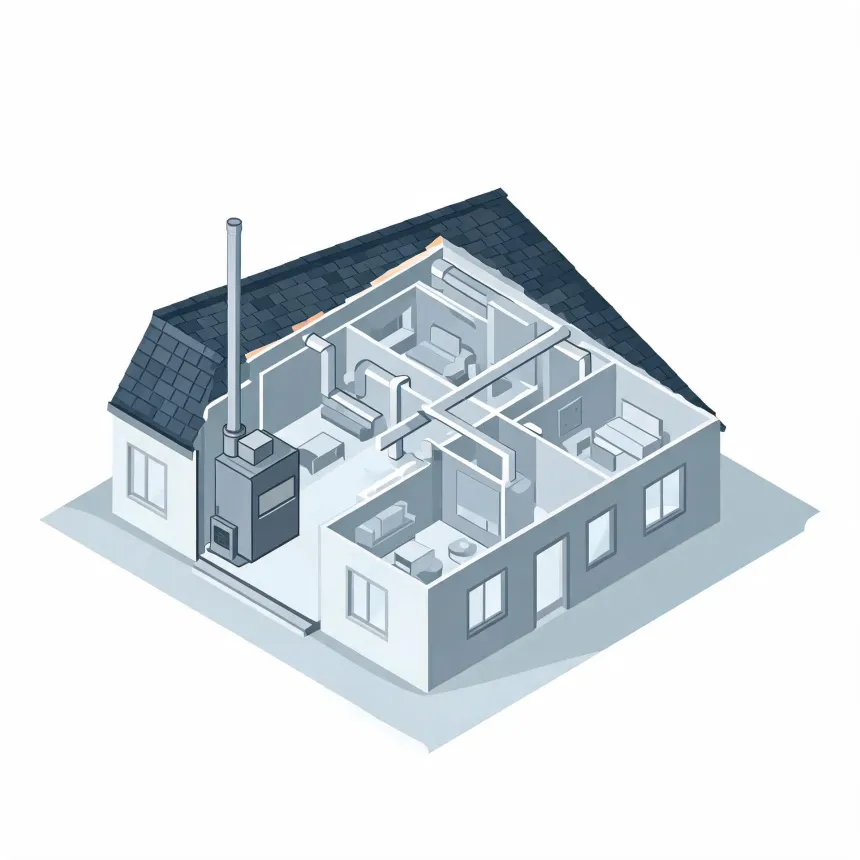
Isometric cutaway illustration of a single-story house showing interior rooms, ductwork, and a dark furnace unit with a tall flue pipe rising past the shingled roof.
Your furnace works hardest from October through April.

NOAA nClimDiv, 1991–2020 normals

Kootenai County logged 655 winter storms and 68 damaging wind events between 2015 and 2024.

A furnace can run fine and still need a look if the outdoor power line or vents took a hit in weather like that.

If the Furnace Came With a Newer House, Fix It

Half the homes here were built by 1996
Climate zone 5B
Heat runs September through June
September Is When Weak Furnaces QuitHeat switches on in September here, and that first real load finds whatever was already wearing thin.

If your furnace came with a newer build, age probably isn't what's wrong with it. A furnace that young failing is usually down to one part, an igniter, a flame sensor, a pressure switch, and those are quick fixes, not reasons to replace the unit. Worth checking when the system itself was installed, especially if you bought the house after it was built rather than new. A repair call will tell you fast whether it's a part swap or something more, and on a system this young, the part swap is the likely answer.

Worn From the Work It's Been Doing

Ten months of runtime a year doesn't leave much room for a part to fail quietly. A furnace working this hard tends to show the problem right away instead of limping along. Getting it looked at now means finding out whether it's one worn part or something bigger, before the next cold stretch asks more of it.

Find a contractor
A gray high-efficiency gas furnace installed in an unfinished basement, surrounded by gas lines, a condensate drain, and sheet-metal ductwork.

Before You Call Someone Out

Before you call, check the thermostat is set to heat and the setting is above room temperature. Go to the panel and make sure the breaker for the furnace hasn't tripped, and that any switch on or near the unit, it looks like a light switch, is in the on position. Check the filter. A filter clogged with dust can choke airflow enough to shut the whole system down or make it blow cool air. If the furnace has a standing pilot, see if the pilot light is actually lit. If it uses an igniter instead, you won't be able to check that yourself, but you can listen for it trying to start. Look at the vent pipe where it exits the house and make sure nothing is blocking it. Check any door or panel on the furnace cabinet is closed all the way, most units won't run with one open. If the furnace is short cycling, turning on and shutting off again fast, that's worth mentioning to whoever comes out, since it points to a different problem than a unit that won't start at all.

A Small Problem Doesn't Stay Small

A cracked heat exchanger, a failing limit switch, a blower motor straining on worn bearings, none of those get better with more run time. Heat moves through a system built to handle it in cycles, with pauses that let parts cool and reset. Keep it running past the point where it's struggling and the parts under the most stress stay under stress longer. A limit switch that's starting to misread temperature will trip more often the longer it runs hot. A cracked exchanger flexes every time it heats and cools, and it's that flexing that grows the crack.

Know When to Shut It Off

If a furnace is short cycling, smells like gas, or is tripping its breaker repeatedly, turn it off at the switch and don't try to run it until someone's looked at it. Forcing a system through a fault condition is how a cracked exchanger turns into a carbon monoxide problem, or a failing motor burns out completely instead of needing a bearing replaced. A unit that's merely blowing cool air or struggling to keep up usually isn't in that category. The difference is whether the furnace is failing to heat well or actively showing a fault, and that's worth sorting out before deciding whether it's safe to leave running until someone can get to it.

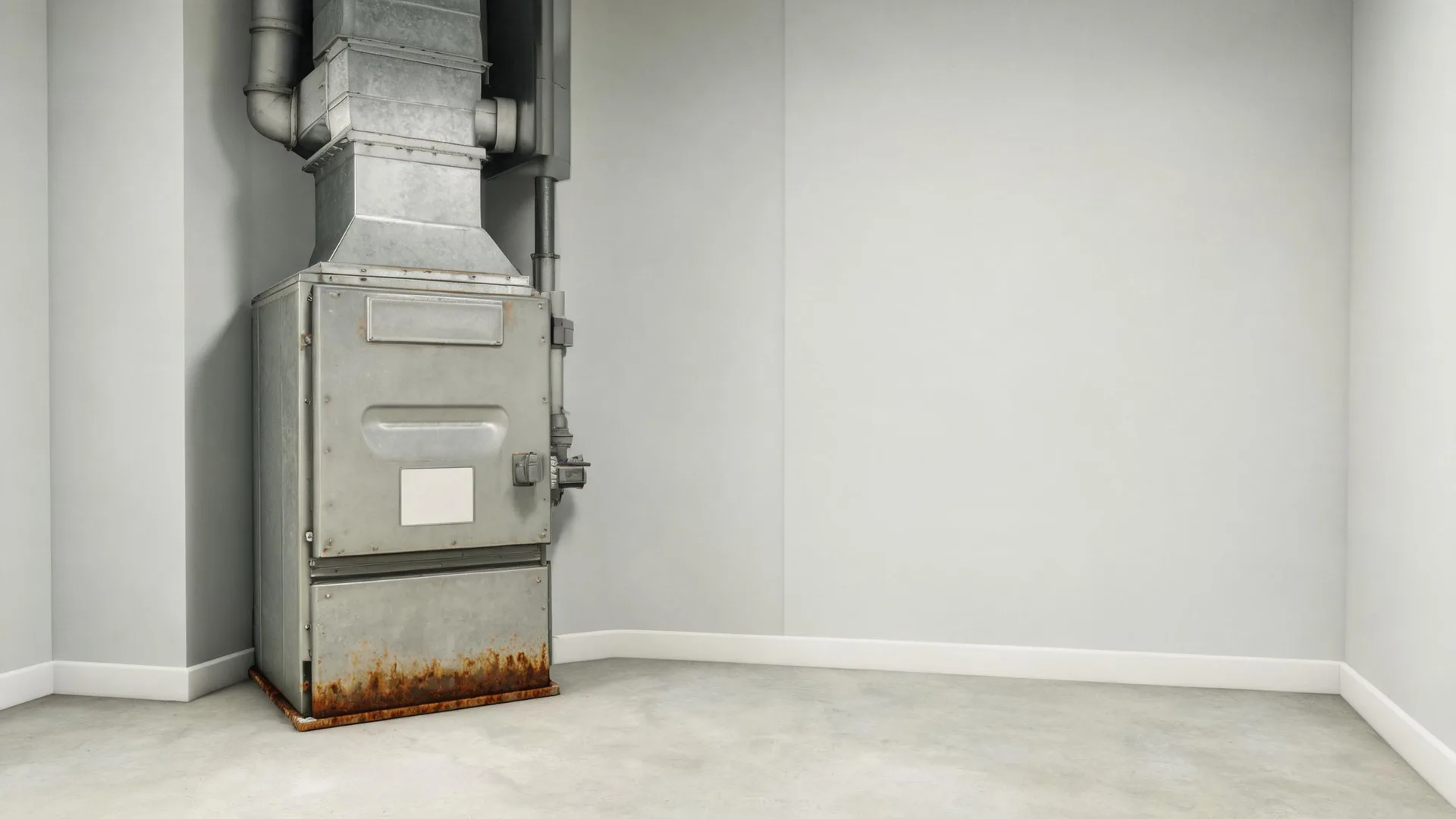
An unfinished basement interior showing a gray furnace unit beneath a bare incandescent bulb, surrounded by exposed joists, concrete walls, cardboard boxes, and utility pipes.

A new furnace would cut about $80 a year off heating for a typical Kootenai County home.

  • A new high-efficiency furnace$370 a year
  • An older furnace$450 a year

Estimates for a typical Kootenai County home, compared with an older unit built to the previous federal minimum, from EIA household energy data, Idaho fuel prices and NOAA climate normals. Your home will differ.

Repair makes sense when one part has failed and the heat exchanger is sound.

Replacement makes sense when the heat exchanger is cracked or the furnace keeps needing parts.

Hail and heavy wind can hit the outdoor vent and the power connection a furnace depends on, even though the furnace itself sits inside. A cracked vent cap or a line knocked loose doesn't always stop the unit from running. It just stops it from running safely. If your area took a hard storm recently and the furnace has been acting off since, that's not a coincidence worth ignoring. Have the vent pipe and connections checked along with whatever else is wrong, even if the complaint seems unrelated to the weather.