Illuminated timber-and-stone luxury homes along a residential street at dusk, with snow-capped mountains visible in the background.

Furnace Repair in Challis, ID

Tell us about the job

Takes about a minute. No obligation.

RepairFurnace or heatingCuster County, ID
Step 1 of 2

What ZIP code is the job in?

Your furnace doesn't get a break here

Custer County homes run heat every month of the year, not just in winter. Overnight lows average 11°F through December, January and February, so the furnace is working against real cold for a long stretch, and then gets called on again in the shoulder months most places would let it rest.

That changes what a repair call means

When a furnace runs this much, parts wear on a different schedule than the manual assumes. The igniter or blower motor that fails here may still have had plenty of life left by national standards. Worth having someone actually check what failed and why, rather than swap a part and hope.

11°F
the average winter night it heats against
140 winter storms
in ten years, the nights a failure hurts most
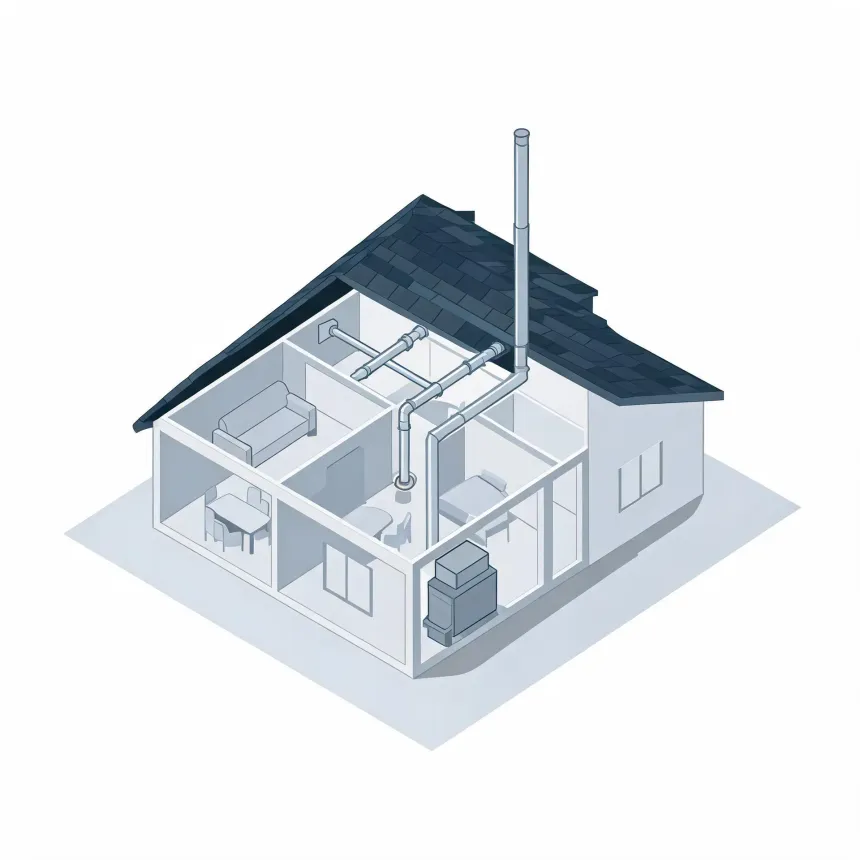
Isometric cutaway illustration of a single-story house showing interior rooms with furniture, ductwork and piping running to a tall vertical flue through the dark shingled roof, and a furnace-like appliance unit on the floor.
Your furnace works hardest from October through April.

NOAA nClimDiv, 1991–2020 normals

A cracked heat exchanger gets worse every hour the furnace keeps cycling.

Shutting it down when something smells or sounds wrong stops a bad part from taking the blower or the exchanger down with it.

Electricity here runs $33.76 per million Btu, and a struggling furnace burns more of it every month

Climate zone 6B
Winter nights average 11°F
140 winter storms from 2015 to 2024

A furnace that's short cycling, running constantly, or struggling to reach temperature is pulling power the whole time it does it. With electricity priced the way it is here, that shows up on the bill before anyone gets around to looking at it. Waiting a few weeks to see if it sorts itself out just means a few more weeks of a furnace working harder than it should to do the same job. Getting a tech out to look at it now is worth more here than it would be somewhere electricity costs less.

Get the real cause checked, not just the symptom

A furnace that runs heat every month of the year, through the kind of winters that bring storms this often, earns whatever has gone wrong with it. That's not a reason to guess at the fix. Have it checked properly so whatever failed doesn't take another part down with it.

Find a contractor
A man seen from behind in a dark jacket and tan work pants climbs wooden porch steps toward a dark blue front door, carrying a worn canvas tool bag in his right hand, with a potted shrub in a blue planter beside the entry.
A gray gas furnace with attached ductwork and piping installed in an unfinished concrete basement.

What the furnace is already telling you

A furnace gives warning before it quits outright. The flame should burn steady and blue through the viewing port. If it's flickering, yellow, or lifting off the burner, something's wrong with the air mixture or the burner itself. A furnace that short cycles, turning on and off every few minutes instead of running a full heating cycle, usually has a dirty flame sensor or a thermostat sensing problem it shouldn't. Banging or popping from the ductwork as it starts up often means the burners are delayed in lighting and gas is building before it catches. A burning or metallic smell in the first minutes of a cycle is worth paying attention to, especially if it doesn't fade. Weak airflow from the vents can mean a failing blower motor, not just a dirty filter. Any smell like rotten eggs means gas, and that furnace needs to be shut off and left off until someone looks at it. None of these fix themselves by running the furnace less or more. They tell you which part is struggling before it fails completely.

Most failures start with ignition or airflow

A gas furnace fails most often at the parts that move. The igniter cracks after enough heat cycles and stops glowing hot enough to light the burners. The flame sensor coats with a thin film from normal combustion and starts telling the control board no flame is present even when there is one. The blower motor wears at the bearings until it runs slow, loud, or not at all. Each of these is a wear part. None of them lasts forever, and none of them gives much warning before they quit.

What's behind the part matters more than the part

A failed igniter or a dead blower motor is usually the end result of something else going on. A clogged filter starves the system of airflow, which overheats the blower motor and can crack a heat exchanger over time. A dirty flame sensor is often just dust and age, but a sensor that fails again right after replacement points to a draft or venting problem feeding it. Swapping the part that failed without finding out why it failed means the next part goes the same way.

There are a few things worth checking before anyone comes out. Start with the filter. Pull it and hold it up to a light. If you can't see through it, airflow is restricted and the blower is working harder than it should. Check that the thermostat is set to heat and the temperature is actually above room temperature, which sounds obvious but gets missed. Look at the furnace switch, the one that looks like a light switch near the unit or at the top of the basement stairs, and make sure it hasn't been bumped off. If the furnace uses a pilot light, check whether it's lit. Beyond that, stop. Opening the cabinet, touching the gas line, or resetting the system repeatedly if it keeps shutting off is how a small problem turns into a part replacement.

A diagnostic call starts with questions before any panel comes off. When did it start acting up, and what does it do, short cycle, cold air, no heat at all. Then comes a check of the system from the thermostat down to the burners, because a code or a symptom usually has more than one possible cause behind it. The tech checks the flame, the ignition sequence, and the amp draw on the blower motor rather than guessing from what one part looks like. Airflow gets checked too, since a furnace starved for air can mimic a bad igniter or a failing control board. The goal is to find the part that actually failed and the reason it failed, not just the first thing that looks worn.