




Warmly lit timber-frame and stone houses line a street at dusk, with evergreen trees and a snow-capped mountain range in the background.

Furnace Maintenance in Lewiston, ID

Tell us about the job

Takes about a minute. No obligation.

Tune-up, service, or cleaningFurnace or heatingNez Perce County, ID
Step 1 of 2

What ZIP code is the job in?

Your furnace in Lewiston runs from September through June, about ten months of the year. Overnight lows average 26°F through December, January and February, and that kind of cold keeps a furnace cycling on for hours at a stretch. Winter storms hit this county often, heavy snow and ice and the occasional blizzard, the kind of weather that asks the most of an igniter or a blower motor right when you need them least. All that run time wears parts down faster than it would somewhere milder. A furnace that's been coasting along can hide a weak part until the first hard cold snap finds it.

Furnaces in Nez Perce County start running in September.

Book the maintenance check in August, before that first month puts the load on it.

Most of this county heats with gas

51.8% of homes heat with gas
Heat runs September through June
Winter nights average 26°F

A dirty filter chokes the airflow a furnace needs to run right. The blower has to work harder to push air through it, and that strain wears the blower motor down faster than it should. A furnace isn't built to run with restricted air, and over time that can scorch the heat exchanger from the inside. The blower wheel itself collects dust too, and a caked wheel moves less air even with a clean filter in place. None of this shows up right away. It just looks like a furnace running longer to heat the same rooms, until the day it doesn't run at all. Swap the filter when it looks gray, not on a fixed schedule, since how fast it loads up depends on the house.

Have it checked before the season starts, not after

A furnace that gets checked before September goes into a ten-month season with good parts. One that doesn't finds its weak spot on the first hard cold night, with a storm already on the way.

Find a contractor
A man in a beanie, dark jacket and tan work pants climbs porch steps toward a blue front door, carrying a canvas tool bag, with a potted shrub in a blue planter beside him.
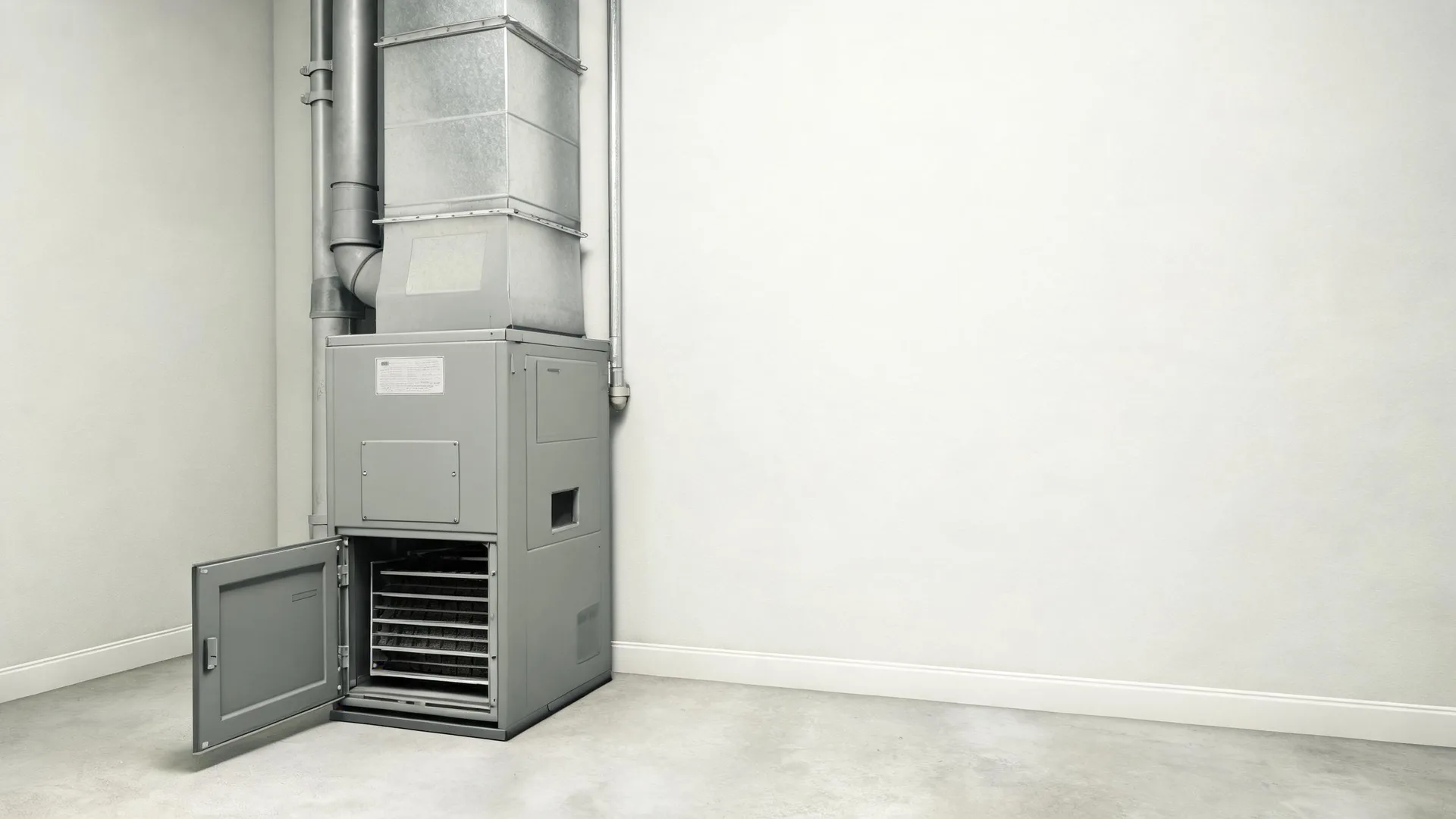
A gray high-efficiency gas furnace installed in an unfinished basement, surrounded by gas lines, a condensate drain, and sheet-metal ductwork.

Left alone, small wear becomes a dead furnace

Skip the yearly check and the furnace doesn't fail right away. It fails slower, in ways you can't see. A flame sensor collects a film from normal combustion, and a sensor coated like that starts misreading the flame as not there, so the furnace shuts itself off partway through a cycle. An igniter weakens a little more every season it runs without anyone looking at it, until the one cold morning it won't glow hot enough to light the gas at all. Burners drift out of adjustment too, burning less clean than they should, and that shows up as soot inside the cabinet before it shows up as anything you'd notice from a room away. None of this announces itself. The furnace still turns on, still blows warm air, right up until the part that's been quietly failing finally gives out.

Change the filter yourself

The filter is the one part of a furnace that's meant for the homeowner, not the contractor. Pull it and hold it up to the light. If you can't see through it, swap it. A clean filter protects the blower motor and the heat exchanger between visits, and it's the only maintenance that actually needs doing more than once a year.
Leave the rest to the visit

Don't open the cabinet to check the igniter or clean the flame sensor. Those parts sit close to live electrical connections and a gas valve, and cleaning them wrong can misalign something that was working fine. What you can do is watch for soot near the vent hood, listen for a new rattle or screech from the blower, and keep boxes and bins away from the unit so it gets air. Anything past that waits for the technician.

A furnace usually tells you before it quits outright. Short cycles are one sign, the burner lighting, running a couple minutes, then shutting off before the room warms up. That points to a flame sensor losing its read or a limit switch tripping early. A burner flame that's yellow or flickering instead of steady blue means it's not burning clean, and that's worth a look regardless of how the furnace is running otherwise. Listen for anything new too. A scrape or rattle from the blower wasn't there last season for a reason. And if the furnace is cycling on and off more often than it used to, something is making it work harder to hit the same temperature. Any one of these is reason enough to have it looked at before the part behind it fails all the way.

A tune-up starts with the furnace running, not off. The technician pulls the cover while it's firing and watches the burner flame, looking for steady blue instead of yellow or flickering. The flame sensor gets cleaned, since that film it collects is normal and expected every season, not a sign anything's wrong. The igniter gets checked for a weak glow before it becomes a no-glow. Gas pressure gets tested at the valve, because too high or too low both burn dirty even when the flame looks fine. The blower wheel gets inspected for caked-on dust, and the motor gets checked for play in the bearings. Someone also checks the vent hood and flue for a clear path out, since a blocked vent sends combustion gas somewhere it shouldn't go.