


Running as it should
A furnace in good shape fires on the first try and runs quiet. The flame behind the burner window burns steady and blue. Your gas bill holds about the same from one winter to the next, and every room in the house heats evenly.
Your new furnace project goes to an installer who works in Nez Perce County.
Find a furnace proA gas furnace in Lewiston lasts 15 to 20 years. The furnace works hard through cold winters here, and that steady cycling wears on the heat exchanger, the igniter and the blower motor over time. Most furnaces in this area run on gas, which tends to burn cleaner through the system than other fuels, and that helps some units reach the far end of that range. How long yours actually lasts depends on whether it was sized right for your house, how well it was installed, and whether it got regular service. A furnace that short-cycles, takes longer to heat the house than it used to, or needs a repair every winter is usually near the end, even if it hasn't hit 15 years yet. Past that point, replacement parts get harder to find and repairs cost more relative to what a new furnace would run. If your furnace came with the house, check the age on its data plate rather than guessing from how long you've lived there.
A furnace in good shape fires on the first try and runs quiet. The flame behind the burner window burns steady and blue. Your gas bill holds about the same from one winter to the next, and every room in the house heats evenly.

An older furnace takes a few tries to light, or clicks without catching. The burner flame turns yellow or flickers. Rooms far from the furnace stay cold, your gas bill climbs, and you start hearing a rattle or a screech when the blower kicks on.
Yours might be telling you something already. A burner that used to fire right up now clicks a few times before it catches. The blower kicks on louder than it used to, or it runs longer to reach the same temperature. You notice a room or two that never quite gets warm, so you shut the door and stop thinking about it. The gas bill crept up last winter and you blamed the cold snap, not the furnace. None of this means it's done. But a furnace working this hard to keep up is using more gas to do it, and if the heat exchanger is the part struggling, that's not something to leave alone through a Nez Perce County winter.

This is what a furnace looks like set up the way it should be. The ductwork fits tight, the gas line runs clean to the cabinet, and the PVC pipes vent the exhaust without strain. Nothing here is improvised.

This older unit has done its job for years, but the metal cabinet and flexible gas lines show its age. Furnaces like this one are closer to 20 years than 15, and a Lewiston winter will find whatever is left to fail.
Winter nights average 26°F
Winter nights average 26°F here, so the burner has to push harder and stay on longer to keep the house warm.
Heat runs September through June
Heat runs September through June in Nez Perce County, which means the furnace gets maybe two months a year to sit idle.
51.8% of homes heat with gas
51.8% of homes here heat with gas, same as yours likely does, so wear shows up first in the burner and heat exchanger.
NOAA nClimDiv 1991-2020 · ACS 2020-2024
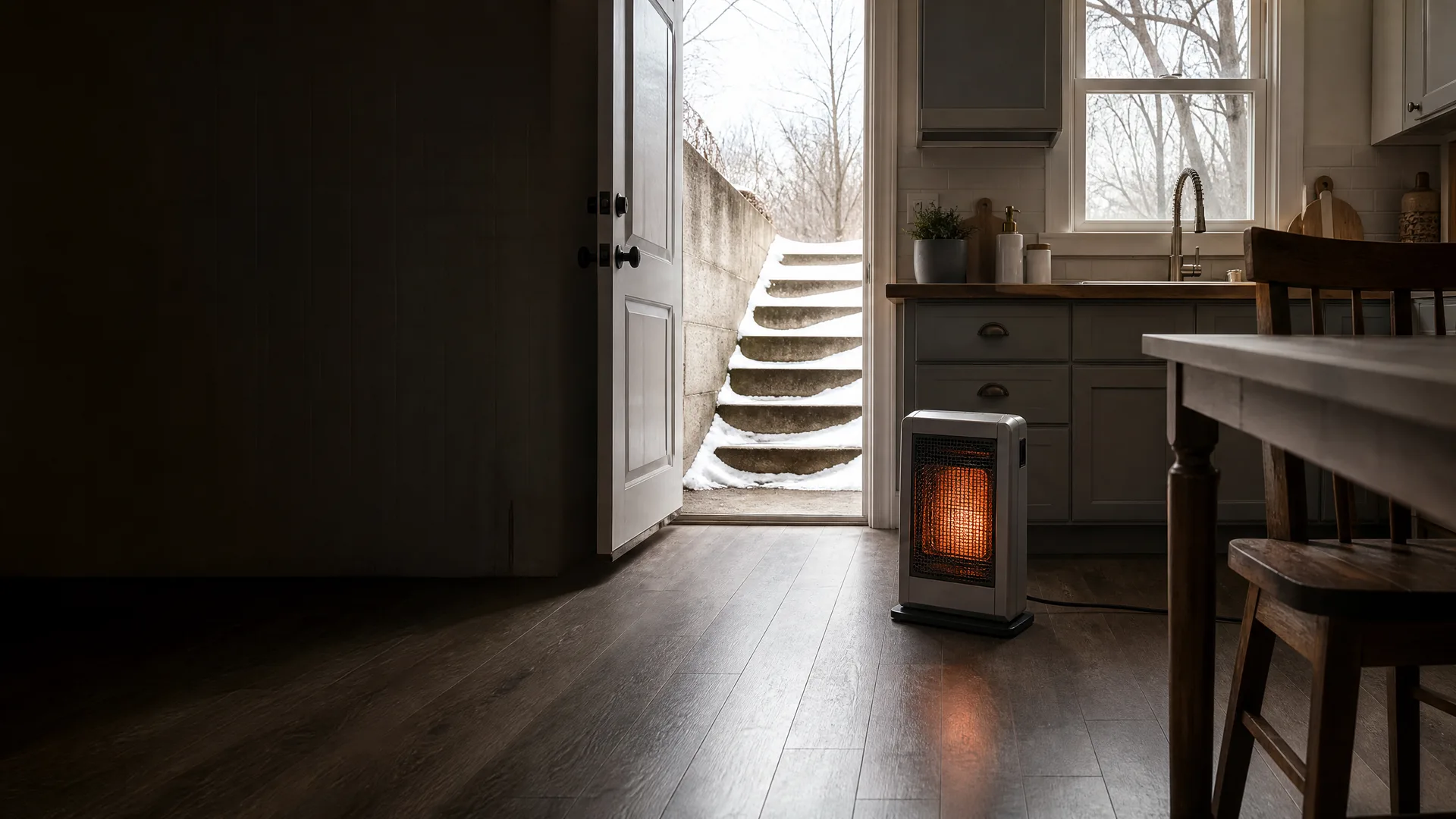
The space heater by the table has been running since before you came downstairs. It's late February, still dark enough at 7 a.m. that the kitchen window shows your own reflection more than the yard. The basement door is open behind you because the furnace cycled on twenty minutes ago and still hasn't caught up. You can hear it down there, running longer than it used to for this kind of cold. Nights have been in the 20s all week. You stand by the heater with your coffee and think about calling someone, then think about the dishes in the sink instead, and the thought passes until tomorrow morning does the same thing again.
A furnace that won't stay lit or keeps you running a space heater to make it through February isn't something to put off deciding on. Once you know yours is near the end of its 15 to 20 years, the next part is finding someone to put in the replacement, and that usually means calling a few companies, explaining the same thing to each one, waiting on quotes, and trying to judge who actually knows what they're doing. That's the part you can hand off. You already know your house, your furnace and what it's been doing lately. Someone who installs these in Lewiston every winter can take it from here.
The heat exchanger is the part that actually heats your air, and it's also the part that fails a furnace most often. Every time the burner fires, metal heats up and expands, then cools and contracts once the thermostat is satisfied. In Nez Perce County, where heat runs from September through June, that cycle repeats thousands of times a season. Over 15 to 20 years, the metal fatigues. Small cracks can form where the flexing concentrates stress. A cracked heat exchanger is why a furnace gets replaced rather than repaired, since it's sealed inside the cabinet and not built to be swapped out on its own.
Most homes in this area heat with gas, and that choice affects how long the furnace holds up. A gas burner reaches full heat the moment it ignites, so the blower motor and other moving parts aren't working as hard to make up for a slow start the way they would with electric resistance heat. Gas furnaces also tend to run fewer long cycles on the coldest nights, since the burner puts out more heat per minute than electric coils do. That lighter load on the motor and blower is part of why gas furnaces in Lewiston commonly reach the far end of that 15 to 20 year range rather than the near end.


Replace it now, before it fails
You skip the morning it won't fire on a day in the teens, and you get to pick the new furnace on your own schedule instead of whatever a dealer has sitting in the warehouse.
At 26°F, your furnace isn't just topping off heat lost through the walls. It's fighting a 40-plus degree gap to hold a 68°F house, night after night all winter. That's the load that wears down the heat exchanger and the igniter over 15 to 20 years.
NOAA nClimDiv 1991-2020

That's the span you can count on if yours was installed right and kept up. Where your furnace falls in that range depends on how it's been running, not just the year it went in. A unit that short cycles or struggles to stay lit in January is closer to the end than one that fires clean and holds a steady flame.
Once you know where yours stands, the work left is finding someone who can look at it and tell you straight whether to repair or replace, instead of calling around Lewiston and Nez Perce County to get a handful of guesses and no clear answer. A contractor matched to your situation can walk through what your furnace has left and what replacing it would involve, so you're not sorting through quotes on your own.





A local pro for your furnace installation
Describe the project once instead of to every installer.