What a furnace tune-up covers before an Idaho winter

Send the form, and lining up the furnace tune-up stops being yours to chase.

Tune-up, service, or cleaningFurnace or heatingIdaho
Step 1 of 2

What ZIP code is the job in?

A furnace tune-up before winter means a technician checks the parts that let your furnace run safely and keep up once it gets cold. That includes testing the igniter and flame sensor, checking the heat exchanger for cracks, cleaning the burners, checking gas pressure, and swapping or checking the filter. In Idaho, furnaces sit unused most of the summer, so dust settles in the burners and filter before the first cold snap asks the system to work hard again. A tune-up catches a weak igniter or a dirty flame sensor now, while it's a simple fix, instead of in January when it leaves you without heat on a cold morning. It also matters for safety: a cracked heat exchanger can let exhaust gas leak into the house, and that's not something you'd notice on your own. Most of what's checked takes a trained eye to catch early.

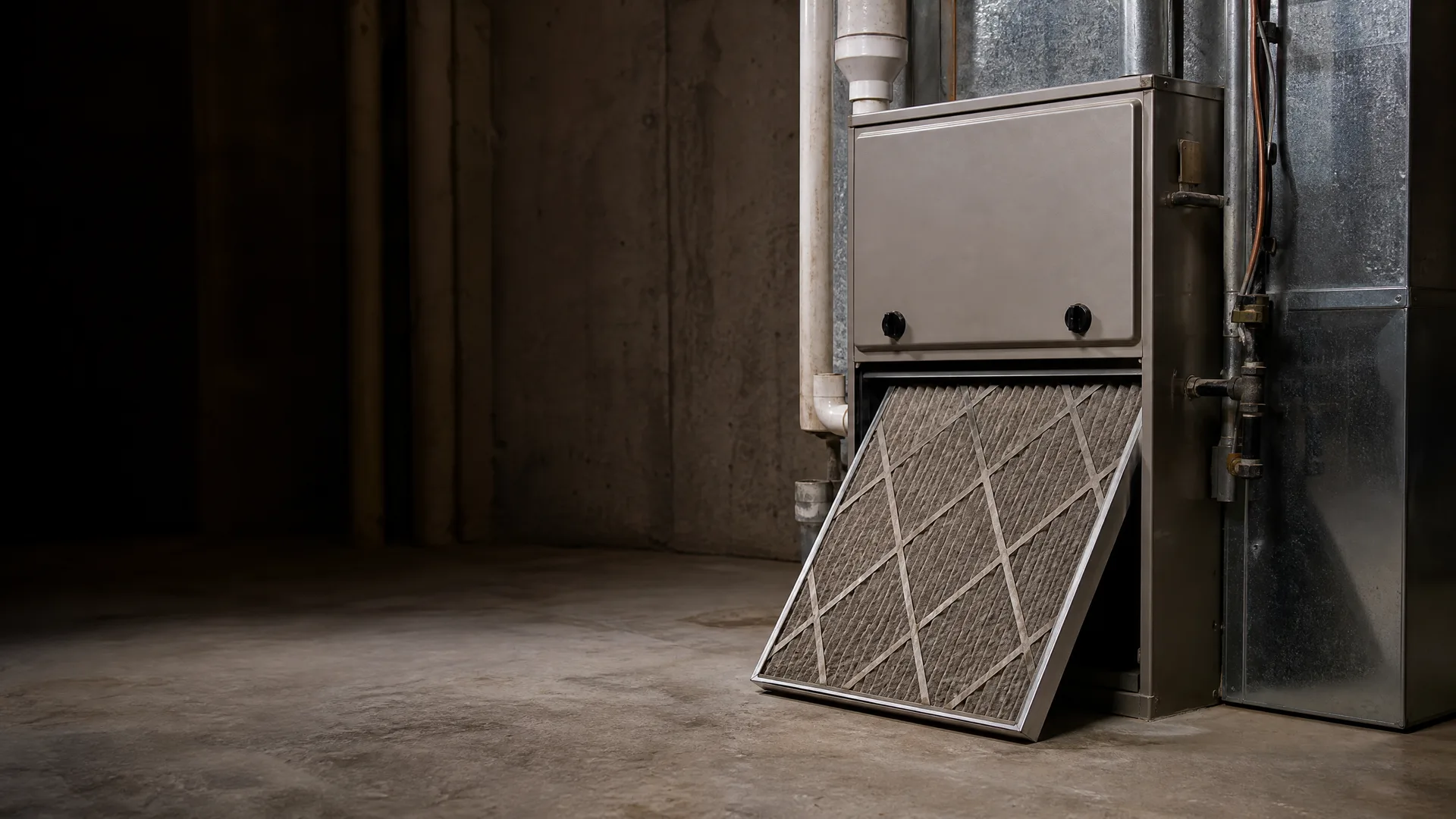
A dirty pleated air filter leans against a furnace with metal ductwork in a dim concrete basement.

You pull the filter out to check it before the first cold snap hits, and it stops halfway, stiff with a summer's worth of dust. It's late afternoon and the basement light is doing its best over the furnace, but you can already see it, grey across the whole face of it. You've had the AC running most days since May, pulling dry air through that same filter, and nobody thought about it again until now. You set it on top of the furnace and stand there a second, thinking about the burners underneath, and whether anything's been working harder than it should all summer to push air through that.
Is your furnace trying to tell you something?

Maybe it kicks on with a bang instead of a quiet whoosh. Maybe one room stays cold no matter where you set the thermostat, or the furnace runs longer than it used to just to get the house warm. You might notice a burnt dust smell the first few times it fires up, or a yellow tint to the flame instead of blue. None of that means you're stuck until spring. It usually means something small needs attention before it becomes something that leaves you without heat on a night when it's well below freezing outside, or running up your gas bill while it struggles to keep up.

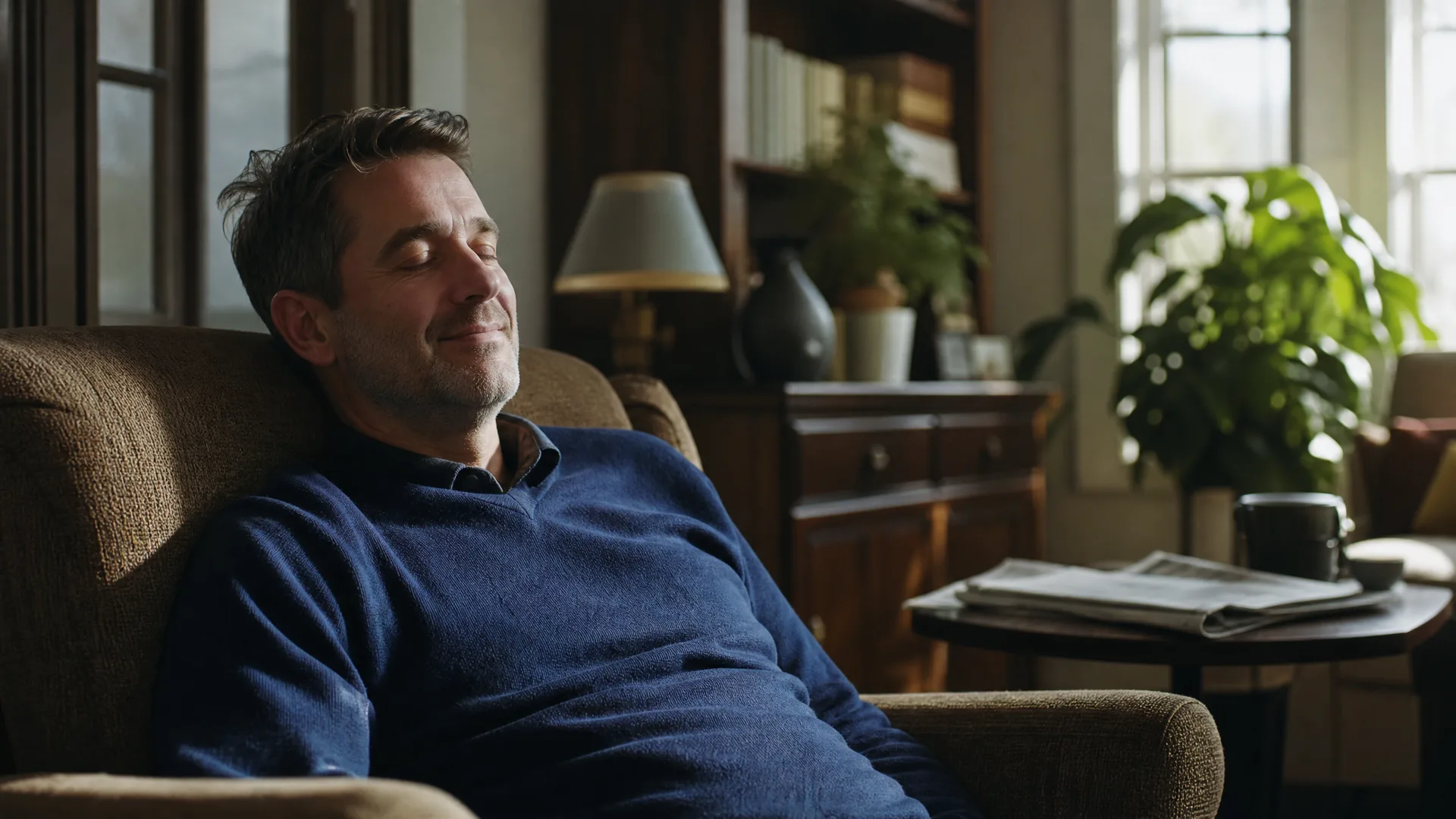
A man in a navy sweater reclines with closed eyes in a beige armchair in a living room, with a lamp, wooden cabinet, bookshelf, potted plant, and a side table holding a newspaper and mug nearby.
A man in a blue henley shirt reclines on a leather chair with his eyes closed, beside a window, a houseplant, a side table with a newspaper and a dark mug.
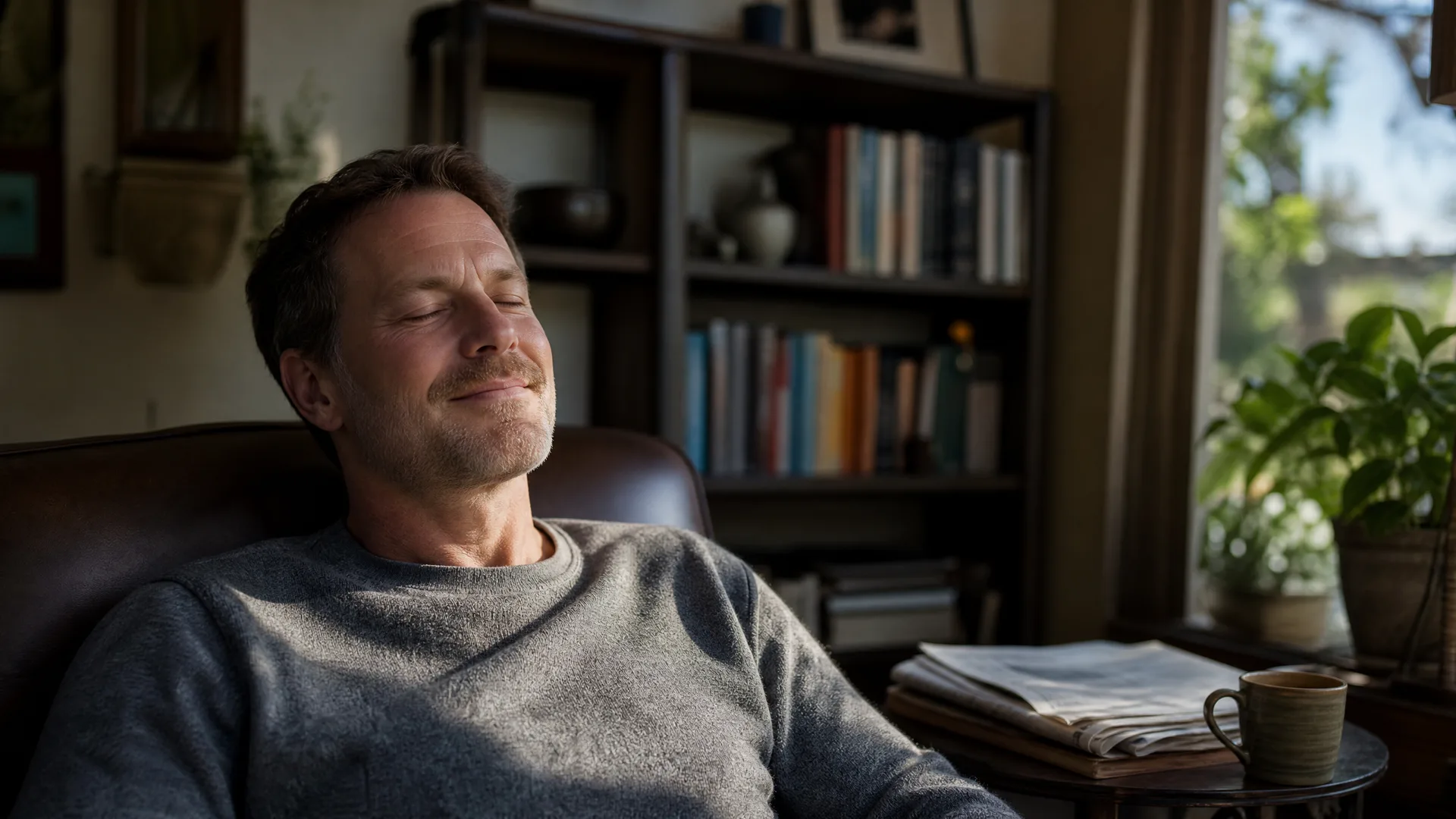
A man in a gray sweatshirt reclines with his eyes closed in a dark leather chair, with a bookshelf behind him and a side table holding folded newspapers, a mug, and a potted plant by a window.
A man in a blue sweater leans back on a brown leather chair with his eyes closed and a slight smile, in a room with bookshelves, framed pictures, a potted plant by a window, a folded newspaper and a dark mug on a table.
A gray high-efficiency furnace in a basement with white PVC vent pipes, sheet-metal ductwork, copper and black piping, a condensate pump, and insulated walls above a concrete floor.
A furnace that's had its yearly service starts clean and holds a steady flame, with the ductwork and drain lines doing their job out of sight.
A beige residential furnace stands on a concrete basement floor beside galvanized sheet-metal ductwork, a round flue pipe, copper gas piping, and a PVC condensate line, with a wood-paneled wall at right.
Left unchecked, a furnace like this one runs on worn parts and a dirty flue, and age starts to show before winter even gets hard.

What order does a tech actually check things in during a tune-up?

You want to know what actually happens when someone shows up to service your furnace, not just a list of parts. Knowing the order helps you follow along, or at least know what a thorough visit looks like versus someone who's in and out in ten minutes before an Idaho winter sets in.

Power off first, then a path from ignition to airflow

Work starts with the furnace off and the gas shut so the burners and heat exchanger can be checked without a flame running. From there it moves to ignition: the igniter gets tested, then the flame sensor, since a weak signal there is what causes a furnace to shut off a few seconds after starting. Next is the burner assembly itself, checked and cleaned if soot has built up. After that comes gas pressure, set to what the furnace is rated for. Only once the furnace runs does the check move to airflow, the blower motor, and the filter, since none of that matters if the furnace won't stay lit.

A beige furnace with two access panels stands against a concrete basement wall, with galvanized sheet-metal ductwork, a white PVC pipe, flexible conduit and insulated ducting around it.
Before you get your furnace maintenance
A gray furnace with white PVC vent pipes stands beside sheet-metal ductwork in a basement with a smooth concrete floor, exposed wood framing, and plastic sheeting on the walls.
After you get your furnace maintenance

Tune-Up Now or Repair Later

Tune-up done

  • A tech who works on furnaces every winter in this area has already seen what tends to fail first in yours.
  • The burners get cleaned and the flame sensor tested, so ignition happens on the first try instead of the third.
  • Gas pressure gets checked against what your furnace is rated for, so it runs at the output it was built for.
  • You find out about a cracked heat exchanger or a failing part before a January morning, not during one.
  • One licensed local contractor takes the call, so you're not fielding quotes from four companies at once.
  • The filter and ductwork get looked at too, so the warm air actually reaches the rooms it's meant to.

Tune-up skipped

  • A dirty flame sensor or worn igniter fails on its own schedule, usually the first hard freeze it has to work through.
  • Dust and soot built up over summer stay on the burners, so the flame burns uneven instead of clean.
  • A small gas pressure problem goes uncaught and the furnace works harder than it should all winter to keep up.
  • A cracked heat exchanger goes unnoticed until it's a safety problem instead of a repair.
  • You're calling around during the first cold snap, when every furnace company in Idaho is getting the same call.
  • Power here is cheap, but a furnace running dirty or out of adjustment still costs more to run than one that's been checked.
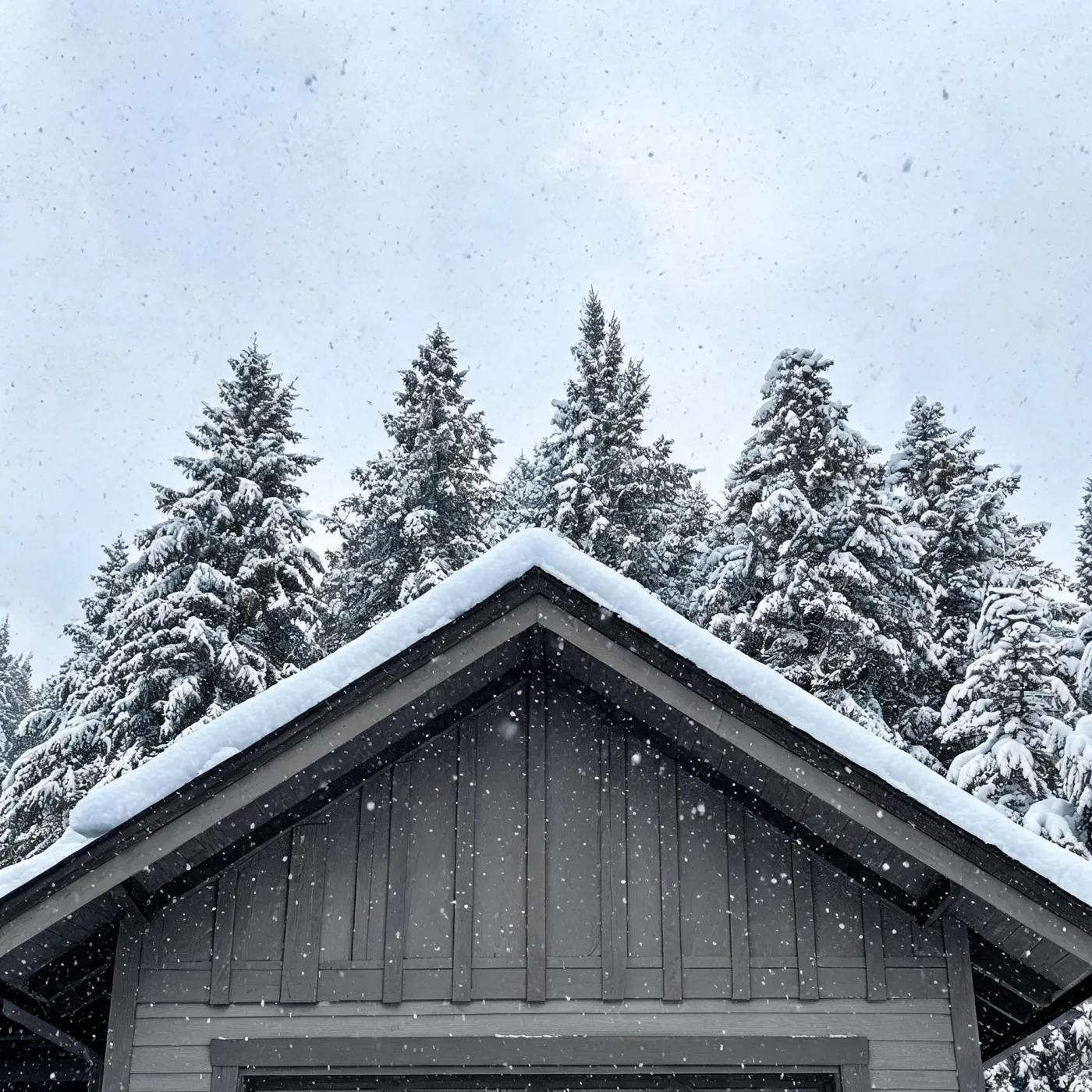
Snow-covered gable roof and gray vertical board siding of a building, with snow-laden conifers and falling snowflakes against an overcast sky.

Statewide, winter nights average 22°F, according to NOAA climate data, and Idaho basements and closets run colder than that once the furnace is the only thing fighting it. At that temperature your furnace isn't cycling on and off anymore. It's running long stretches just to hold the thermostat setting, and a dirty flame sensor or a weak igniter that limped through a mild October won't keep up once nights settle in that cold. That's when a furnace that was already struggling starts short-cycling or blowing cool air before it catches. A tune-up now catches that part before it fails on the night you need it most. The tech who comes out works on furnaces through Idaho winters every year and knows which parts give out first when temperatures drop into the 20s and stay there.

NOAA nClimDiv 1991-2020 county normals weighted by homes

Stop chasing a furnace pro

You've read what a tune-up covers and what it looks like when one gets skipped. The next step is getting a tech out to your furnace before the cold settles in for good. Idaho winters don't give a furnace much room for error once the nights sit in the twenties, and a furnace that's been fighting a dirty burner or a weak flame sensor all on its own is not where you want to find a problem. Send the request and it goes to one local contractor, someone who works on furnaces through winter here and has a good idea what tends to go first on units like yours. You're not fielding calls from five different companies trying to win the job. Once it's sent, finding someone to look at your furnace stops being something you have to manage. That's worth doing now, while the furnace is still idling along, not after it quits on a cold morning.

A dark high-efficiency furnace on a concrete pad in a basement, connected to galvanized ductwork, white PVC vent pipes, and copper and black gas piping, with concrete walls and wood framing nearby.

Serviced and running right

This is a furnace that's had its yearly check. The burners are clean, the flame is steady, and the exhaust pipe is doing its job carrying gas out instead of letting it sit. Nothing here is straining, so it won't be the thing that fails on the coldest night.

A gas furnace with a louvered upper panel stands on a concrete pad in a basement, flanked by sheet-metal ductwork, white PVC and metal pipes, and insulated columns.

Running on borrowed time

This furnace hasn't been looked at in a while. The drain line and flue are still hanging on, but a cracked heat exchanger or a clogged line doesn't announce itself ahead of time. By the time you hear it or smell it, you're already without heat.

Winter nights average 22°F statewide

At 22 below zero overnight, your furnace is running most of the night just to hold the thermostat setting, not cycling on and off like it does in October. Any part that was already marginal, a weak igniter or a clogged burner, gets found out on nights like that.

NOAA nClimDiv 1991-2020 county normals weighted by homes

A tune-up catches a cracked heat exchanger or a failing igniter while the furnace is still off or running light, before the first hard freeze asks more of it.

Skip it, and the same problems surface on a night when the furnace is running flat out to hold the thermostat setting, which is exactly when a part gives out and the house goes cold.

A gray-haired man with a beard in a blue button-placket shirt reclines on a couch with his eyes closed, beside a sunlit window with a green plant.
A woman in a cream knit sweater sits in an armchair with her eyes closed near a window showing yellow autumn foliage, with a mug on a round wooden side table beside her.

Before the cold sets in

  • A tune-up checks the parts that keep your furnace safe and able to keep up once the nights turn cold.
  • Skipping it means any weak part, an igniter or a clogged burner, gets found out on the coldest night instead of a mild one.
  • A local tech who services furnaces here every winter already knows what tends to fail first in yours.
  • Sending one request means one tech comes out, not a string of calls from companies that don't know your furnace.
  • The furnace that gets checked now is the one that holds steady when it's running all night at 22 below.

A furnace tune-up comes down to one thing: a technician looks at your furnace while it's easy to look at, instead of waiting for it to fail while it's hard to reach. The igniter gets tested, the burners get cleaned, the heat exchanger gets checked for cracks, gas pressure gets set where it should be. None of that is complicated work, but it's work that matters more in Idaho than almost anywhere, because once the nights sit at 22 below, your furnace doesn't get a break to show you something's wrong. It just runs, and whatever was already weak gives out.

That's the case for doing this now rather than in January. A tech who works on furnaces around here every winter has a good idea what tends to go first, because they've already seen it go in the house down the street. You call once, and that's the one person who shows up, not three different companies working off a form that went out to all of them. They look at your furnace, not a furnace.

By the time the hard freeze hits, you want to already know where you stand. A furnace that's been checked holds its flame and keeps the house warm without strain. One that hasn't is a guess, and winter here isn't a season that rewards guessing.

Interior corner with a white-trimmed window overlooking green shrubs and trees, a framed artwork on a pale wall, and a woven basket holding a fringed linen throw on a wood floor.
Corner of a white horizontal-siding house with a white downspout running from the roof gutter to a mulched bed of shrubs, beside a mown lawn and leafy trees in low sunlight.
Corner of a house with board-and-batten siding, a shingled roof, and a dark gutter and downspout, with shrubs in the foreground and conifers and bare trees against a hazy sky behind.
A dark round planter holding a white-flowering hydrangea sits on a concrete porch between a stacked stone wall, a wooden post, and a dark vertical board-and-batten wall beside a window.
A dark wood front door with a divided-light glass panel above stone steps, flanked by white columns, shingle siding, a woven basket planter with a draped throw, dried hydrangea blooms, and trimmed shrubs with fallen leaves on the paving.

It's off your list after this

The pro who reaches out is licensed in Idaho.

Send my request

There's no charge for the request.