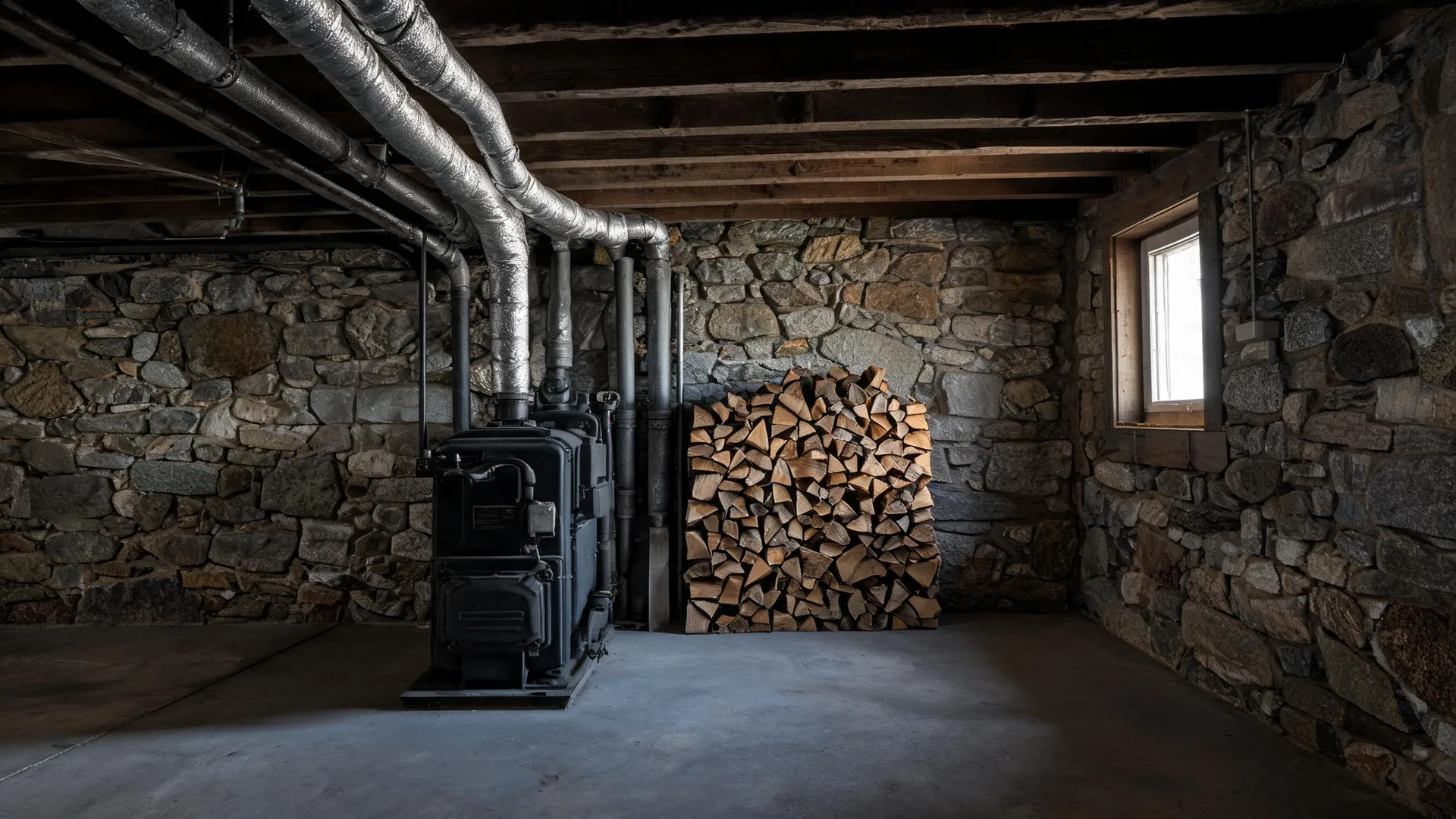
Electricity here runs $33.76 per million Btu
Idaho's electricity cost homes $33.76 per million Btu in 2024. Most furnaces in Lemhi County run on electricity, so that rate is what heats the house all winter.
Takes about a minute. No obligation.
Idaho's electricity cost homes $33.76 per million Btu in 2024. Most furnaces in Lemhi County run on electricity, so that rate is what heats the house all winter.
A furnace that converts power to heat well burns through fewer of those Btu to keep the house warm. One that doesn't will cost more at that same rate, heater after heater, all winter long.

NOAA nClimDiv, 1991–2020 normals
Furnaces here run from August through June, eleven months out of twelve.
July is the one month to get a new furnace in before it has to work.




Lemhi County falls under zone 6B in the 2021 energy code, so any furnace installed here has to work in that cold-climate category. Gas furnaces face their own floor regardless of location: units built on or after November 19, 2015 have to turn at least 80 percent of the gas they burn into heat. That minimum goes up to 95 percent for units built on or after December 18, 2028. A federal credit is available toward a qualifying new system. The zone rating does not pick the furnace for you, but it rules out anything that falls short of it.
This is the furnace that decides what $33.76 per million Btu costs on your bill every winter it's running. Get the install right and that rate works for you instead of against you.
Find a contractor
Eleven months of running a year doesn't leave much time for a furnace to sit idle and cool down. The blower cycles on and off for most of the year, and the parts that start it up, the igniter, the motor bearings, take that wear without a break. A furnace sized wrong for the house feels this fastest. One that's too small runs close to nonstop trying to keep up, and one that's too big short-cycles, starting and stopping more than it should. Either way the parts doing the work are the parts that give out first. Getting the size right for this house, and choosing a furnace built to hold up to that schedule, matters more here than it does somewhere that only heats for a few months.
Square footage gets you in the neighborhood, nothing more. The real number comes from a load calculation that weighs the walls, the windows, the ceiling height, how much of the house faces north, and how tight the place is sealed. Two houses the same size can need different furnaces because one loses heat twice as fast as the other. A contractor who skips this step and sizes off a chart is guessing at the single most important number in the job.
The instinct is to round up, since more heat sounds safer. A furnace that's oversized reaches the thermostat's setpoint fast, then shuts off before it's finished cycling the air through the whole house properly. Rooms stay uneven, the blower starts and stops more than it should, and every start wears the igniter and the motor a little more. A correctly sized furnace runs longer, steadier cycles, heats the house evenly, and puts less wear on the parts that are hardest to replace.
The equipment is only part of what you're paying for. Labor is most of an installation: running new gas or electric lines if the furnace changes fuel type or location, modifying the ductwork to match the unit's airflow, venting it correctly, and setting up the controls so it actually runs the way it's rated to. A furnace that gets dropped into an old duct system without any changes will never perform the way the one on paper says it should, because the ducts were sized for a different airflow. Permit and inspection requirements add work too, and they exist because a furnace that's vented wrong or wired wrong is a safety problem, not just an efficiency one. The cheapest quote is usually the one that skips steps somewhere in that list. Finding out which step got skipped later costs more than paying for it up front.
Installation day starts before anyone touches the old furnace. The contractor shuts off gas and power, then disconnects the ductwork, the vent pipe and the control wiring from the unit coming out. Taking out the old one usually goes fast. Setting the new one takes longer, because it has to sit level, line up with the existing ducts or the modified ones, and leave clearance around it for service access and combustion air. Gas lines get pressure tested before anything is fired up. Vent pipe gets checked for the right slope and the right clearance from anything that burns. Once it's connected, the contractor runs it through a full cycle, checking gas pressure, temperature rise across the heat exchanger, and whether the blower is moving the amount of air the unit needs. A furnace that fires up but never gets measured against its own specs might be running wrong in a way nobody catches until a bill or a breakdown points back to it.