Electricity here isn't cheap to burn through
Idaho homes paid $33.76 per million Btu of electricity in 2024. Most furnaces around Rupert run on electric heat, so that rate applies straight to your bill, all winter long.
Takes about a minute. No obligation.
Idaho homes paid $33.76 per million Btu of electricity in 2024. Most furnaces around Rupert run on electric heat, so that rate applies straight to your bill, all winter long.
Two furnaces can heat the same house and use different amounts of electricity doing it. With power priced the way it is here, that difference shows up every month, not just in the first winter.
NOAA nClimDiv, 1991–2020 normals
Heat goes on in September around Rupert.
Install this furnace in August and it's ready before the first cold morning, not during one.




Minidoka County falls under zone 5B in the 2021 energy code, a cool, dry zone where heating carries the bigger share of the work. Any gas furnace installed here has to meet the federal minimum for units built since November 19, 2015: at least 80 percent of the gas it burns turns into heat over the winter. That floor rises to 95 percent for furnaces built on or after December 18, 2028, so what counts as compliant is changing. A furnace sold today can land anywhere above that 80 percent line, and the ones higher up the scale waste less gas doing the same job.
Electric rates in Idaho apply to every furnace the same way, but not every furnace uses the same amount to heat this house. That gap is worth settling before installation, not after the first bill comes in.
Find a contractorNine months of run time a year wears parts down faster than a furnace running three or four. The blower runs longer. The heating element cycles more. None of that shows up on install day. It shows up two or three winters in, as a higher bill or a part that gives out early. Picking a unit built to handle that load, and having it sized right for this house, matters more here than in a place where the furnace sits idle half the year.
A furnace isn't just unbolted and carried off. The gas line gets capped or disconnected, the flue or vent connection comes apart, and the ductwork attached to the plenum has to be separated without tearing it. The electrical feed gets disconnected too. Each of those connections has to be undone correctly, not just pulled apart, so the new furnace has something sound to attach to.
Once the old cabinet is gone, the ducts, the flue, and the gas line are sitting there exposed. That's the only point anyone gets a clear look at their condition. A duct that's been leaking behind the old furnace, or a flue that's corroded, is easier to deal with right then than after a new furnace is sealed up against it.
Sizing a furnace comes down to a heat loss calculation, not the size of the unit it's replacing. A contractor measures the square footage, but also the window area, the insulation, the ceiling height, and how much of the house faces into the wind. All of that feeds into figuring out how fast the house loses heat on the coldest night it sees. That number tells you the output the furnace needs to put out, nothing more and nothing less. Too big and the furnace heats the house fast, shuts off, and starts again a few minutes later, which wears out the ignition system and never lets the house settle at a steady temperature. Too small and it runs flat out for hours trying to catch up, and still falls short when it's coldest. The right size sits right at the load the house actually has, so it runs long, steady cycles and shuts off when the work is done.
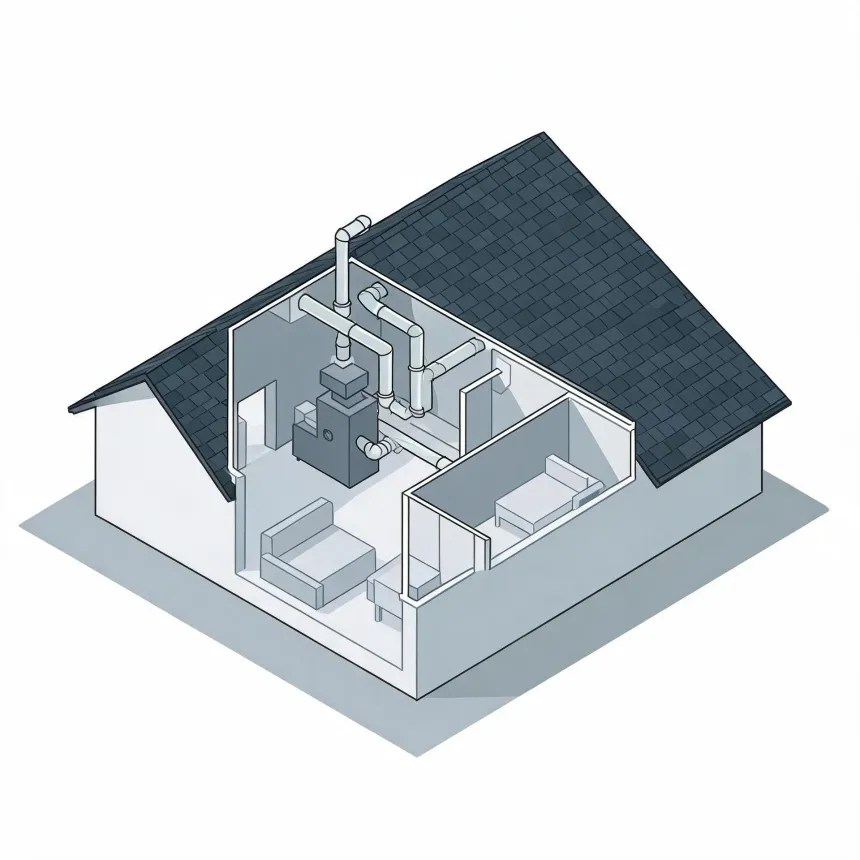
Installation starts with pulling permits and getting the new furnace into the house, which sometimes means it has to go through a doorway or down a stairway, not just into the mechanical room. Once it's set in place, the technician builds the connections in order: the supply and return ducts get fitted to the plenum, the flue or vent pipe gets run to the outside, the gas line gets connected and checked for leaks, and the electrical and thermostat wiring gets tied in last. Each joint gets tested before the next one is closed up, because a leak behind a sealed panel is a lot harder to find later. Once everything is connected, the furnace gets fired up and run through a full cycle while the technician checks the flame, the airflow at the registers, and the temperature rise across the unit against what the manufacturer specifies. That last check is what confirms the furnace is actually doing what it was sized to do, not just that it turns on.