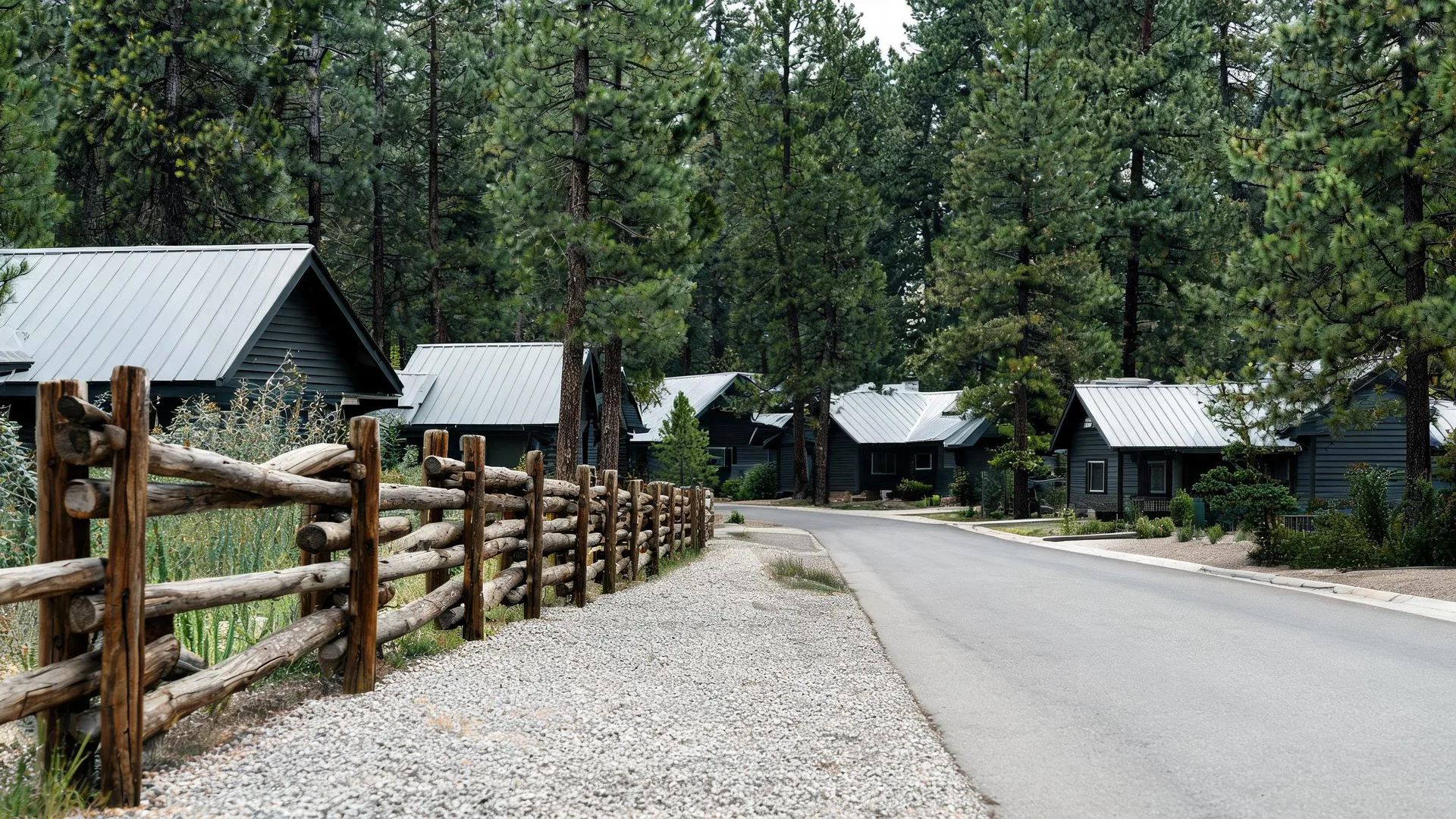





A paved road curves past dark-green cabins with metal gabled roofs among tall pine trees, with a rustic log fence and gravel shoulder in the foreground.

Furnace Installation in Mountain Home, ID

Tell us about the job

Takes about a minute. No obligation.

New system or replacementFurnace or heatingElmore County, ID
Step 1 of 2

What ZIP code is the job in?

Gas furnaces heat more than half the homes in Elmore County, and that's what most of Mountain Home runs. If your old furnace burned gas, putting in another gas furnace is usually the straightforward call. The gas line is already there, the vent is already there, and the ductwork is sized for it. Electric heat is the next most common here at about a third of homes, so a switch away from gas is not unheard of, but it means new wiring and sometimes new ductwork to go with it. A contractor can look at what you have and tell you which path actually makes sense for your house.

10 months
September through June, your furnace is on duty
21°F
the average winter night it heats against
53%
of homes here heat with gas, so most furnaces here burn gas
80% AFUE
the federal minimum any new unit must meet
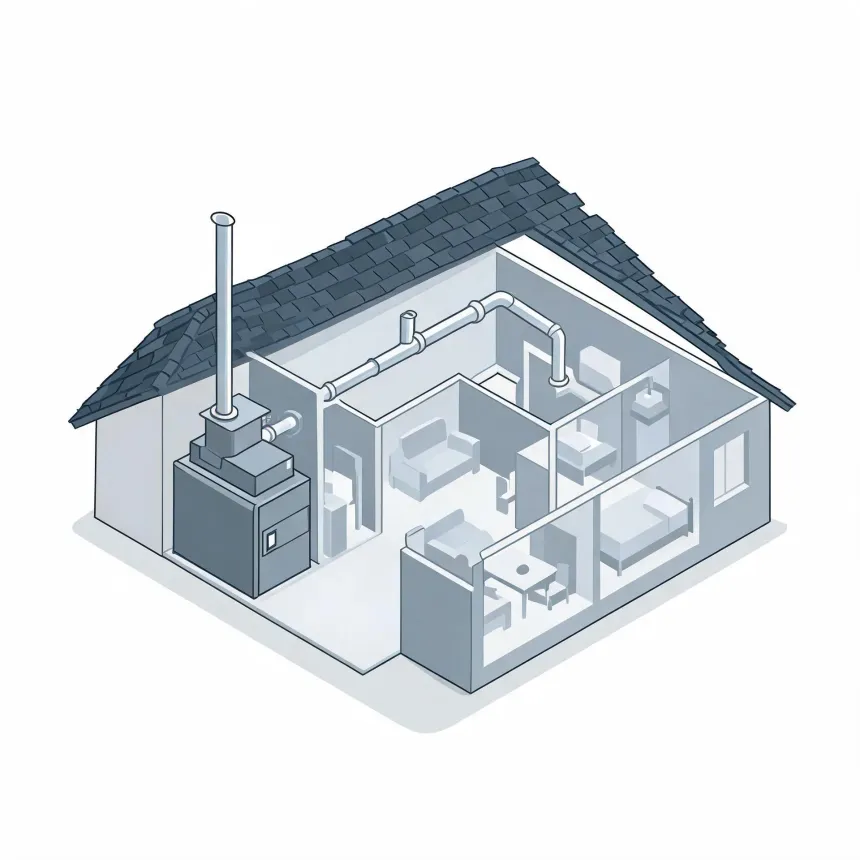
Isometric cutaway illustration of a single-story house showing interior rooms with furniture, ceiling ductwork, and a large furnace unit with a tall flue pipe in a corner room.
Your furnace works hardest from November through April.

NOAA nClimDiv, 1991–2020 normals

Natural gas in Idaho ran $8.25 per million Btu in 2024, well below what a lot of the country pays.

A high-efficiency furnace saves less here every month, so the furnace that holds up matters more than the one with the best rating on paper.

Ten months of heat, nights near 21, and a storm track record like this. A furnace here earns its keep.

Heat runs September through June
Winter nights average 21°F
84 winter storms from 2015 to 2024
Get it done before SeptemberHeat starts in September and runs through June here.

The AFUE number on the label tells you how much of the fuel it burns turns into heat for the house, and how much goes straight out the vent. A furnace rated higher wastes less gas doing the same job. That number is measured new, in a lab, and it drops over the years as the heat exchanger ages and dust builds up where air moves across it. A furnace that gets its filter changed and gets looked at every year holds its rated efficiency a lot longer than one that doesn't. The rating also has nothing to do with how big a furnace you need. A high-efficiency furnace sized wrong for the house still runs longer than it should, cycles too much, or leaves rooms uneven. The rating on the label only tells part of the story. Whether it's sized and installed right for the house it's heating tells you the rest.

Pick the furnace built to last, not the one with the best number on the label

Gas here is cheap enough that a high-efficiency model won't earn its keep fast. What matters more is a furnace sized right for your house and installed by someone who'll stand behind the work. Get a few contractors out to look at what you have now.

Find a contractor
A man in a navy long-sleeve shirt and tan work pants, seen from behind, carries a canvas tool bag up light-colored porch steps toward a blue front door.
A gray high-efficiency gas furnace installed in an unfinished basement, surrounded by gas lines, a condensate drain, and sheet-metal ductwork.

Sized wrong, it'll tell on itself fast here

Ten months of heat means this furnace is on call nearly all year, not just during a cold snap in January. Put that load on a unit sized wrong for the house and it shows up fast. Rooms that never even out. A blower running more hours than it should. Get the sizing right before you get the brand right. A contractor who runs a real load calculation on your house, not a guess based on square footage, is worth more than another point of AFUE.

A load calculation looks at the whole house

Square footage alone doesn't size a furnace. The contractor has to account for window count and orientation, ceiling height, how much insulation is in the attic and walls, and how much air leaks in around doors and framing. Houses the same size on paper can need different size furnaces once all of that gets factored in.

Oversized fails differently than undersized

A furnace too big for the house heats the air fast, shuts off, and leaves the room cold again before long. It never runs long enough to pull moisture out of the air or push heat evenly through the ductwork. A furnace too small just runs and runs, struggling to catch up on the coldest days. Either way the house ends up uncomfortable and the furnace wears out doing work it shouldn't have to do.

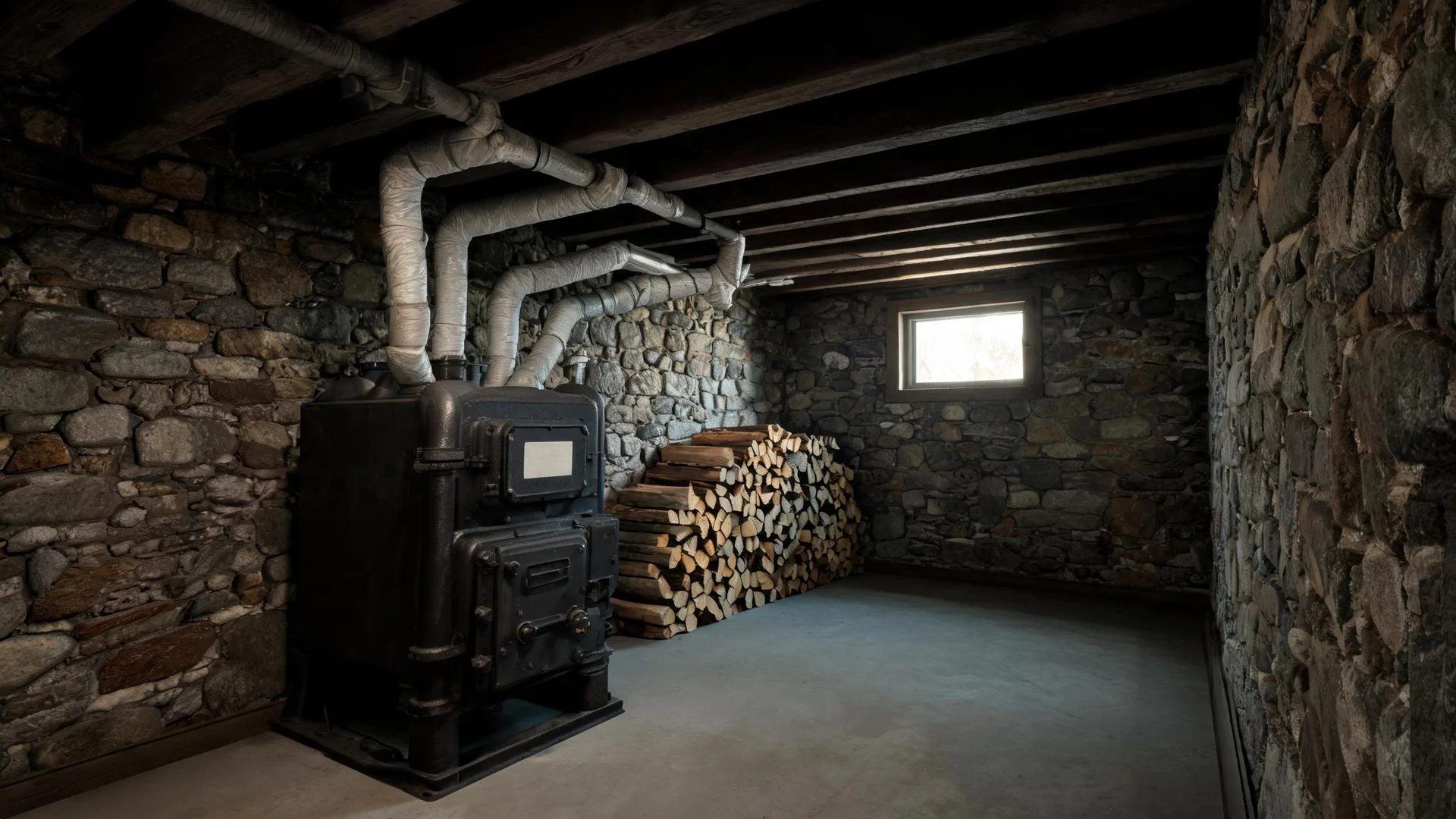
An unfinished basement containing a gas furnace with ductwork in the foreground and miscellaneous stored items along the far concrete wall.

A high-efficiency gas furnace would save about $70 a year to run in Elmore County compared with a gas furnace.

  • A high-efficiency gas furnace$350 a year
  • A gas furnace$420 a year

Estimates for a typical Elmore County home, from EIA household energy data, Idaho fuel prices and NOAA climate normals. Your home will differ.

Installation day starts with pulling the old furnace out, and that part usually goes fast. What takes the time is everything around it. The gas line gets checked for the right pressure and sealed at every joint. The vent gets matched to the new furnace, since a high-efficiency unit vents differently than an older one and sometimes needs a new line run through the wall rather than tying into the old flue. The ductwork gets looked at too. A new furnace connected to ducts that were never sealed right will just push conditioned air into the attic or crawlspace instead of the house. Once it's set and connected, a tech runs it through a full cycle, checks the gas pressure at the manifold, checks the temperature rise across the heat exchanger, and makes sure the blower speed matches the ductwork it's tied to. That last check matters as much as anything else done that day. A furnace running the wrong blower speed for its ducts will never heat the house the way it's supposed to, no matter how good the unit is.