
Furnace blowing cold air in Mountain Home, ID

Send it today

Cold air coming through the vents is not something to sit with once winter settles in around Mountain Home. Nights get cold here, and a furnace that won't heat is a problem that gets worse the longer it waits. You already know what comes next if you try to handle it yourself: searching for who's even available, calling a few numbers, explaining the same problem over and over, then weighing quotes against each other while the house stays cold. None of that has to be on you. Send the form and the search for someone qualified stops being your job. No more comparing names you don't know or waiting on hold to describe the same symptoms again. Elmore County runs on gas heat and cheap power, and a furnace blowing cold air is a repair job, not a mystery you have to solve alone. Let the finding part go.

Why is my furnace blowing cold air instead of heat?

You turned the heat on and felt cold air at the vents instead. In Mountain Home, with a cold night ahead, it's worth knowing whether this is something minor or something that leaves you without heat. A gas furnace runs through a startup sequence before warm air shows up, and a few common problems can interrupt that sequence partway through.

Most often, the furnace hasn't finished its startup cycle or the flame has failed to light

A gas furnace blows air before it burns gas, so a short burst of cold air when it first kicks on is normal. It becomes a problem when that air stays cold. Usually the igniter has failed to light the burners, or the flame sensor has shut the gas off because it didn't detect a flame. A dirty air filter can also starve the system of airflow and trigger a safety shutdown that stops heat production while the blower keeps running. A thermostat set to "fan" instead of "auto" will do the same thing, pushing air through the ducts with no burner running behind it at all. Since most homes here heat with gas, a lit pilot or working igniter matters more in Mountain Home winters than almost anything else in the house.

Gable end of a gray board-and-batten house with two windows and a snow-covered roof, surrounded by snow-laden conifers during falling snow.

21°F is the average overnight low here through December, January and February, according to NOAA climate data for Elmore County. At that temperature a furnace is not cycling on and off a few times a night, it is running long stretches to hold the house steady. Cold air at the vents on a night like that means the burner isn't keeping up or isn't lighting at all, and the gap shows up fast, a house that was warm at ten going cold by two. A furnace that's struggling at 40°F outside can still limp along. At 21°F it has no slack left to work with.

NOAA nClimDiv 1991-2020

Why is cold air still coming out of the vents?

You hear the furnace running, maybe even feel the blower pushing air, but what hits your hand at the vent is room temperature or cooler. You might notice the thermostat climbing slower than it should, or not moving at all while the system runs. Some rooms may feel colder than others. If the blower runs but no heat ever follows, the burner likely isn't lighting, which means no gas is being burned to warm that air in the first place. Left alone through a cold Mountain Home night, this isn't just discomfort. Pipes in unheated areas of the house can be at risk once the house starts losing ground against the outside temperature, and a furnace that quit trying to light is one that won't fix itself by morning.

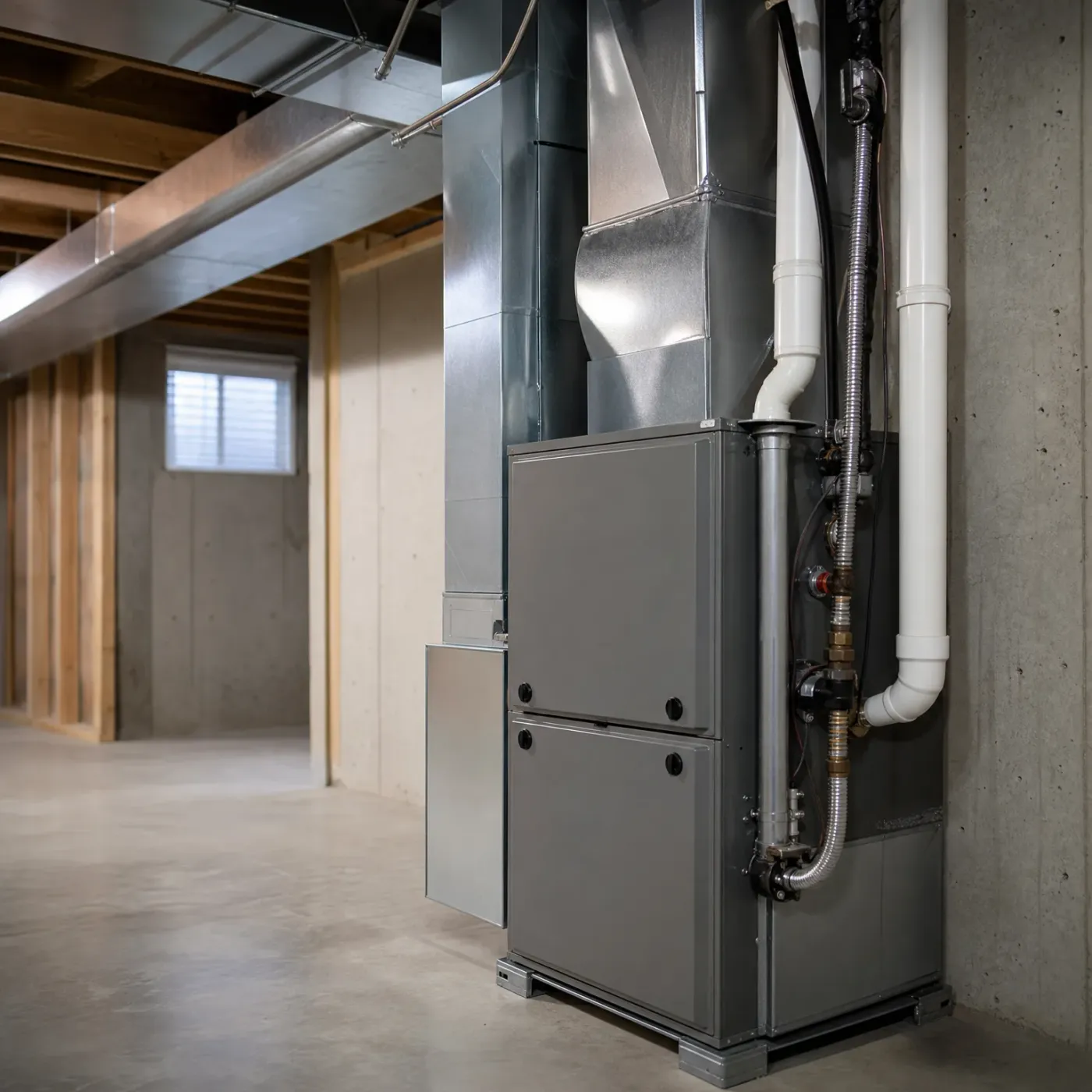
A gray high-efficiency furnace in a basement, connected to sheet-metal ductwork on the left and white PVC vent pipes above, with black gas and drain piping and an exposed wood-stud wall with OSB sheathing on the right.

Furnace running right

This is a gas furnace holding its own against an Elmore County night. The blower moves air steadily, the burners stay lit, and what comes out of the vents is warm enough to feel right away. No cold draft, no long wait, no guessing.


An older gas furnace with two louvered front panels stands on a concrete basement floor beside galvanized sheet-metal ductwork, pipes, and a weathered concrete wall.

Furnace in trouble

An older furnace like this one can still fire up and run the blower while failing to heat. The igniter might not be lighting the burners, or the gas valve isn't opening when it should. Air moves, but it never picks up any heat on the way.

A man in a gray knit sweater stands smiling and looking off to the side beside a white marble kitchen island, with a dining table, pendant light, and open shelving in the background.
A smiling man with short dark hair and stubble in a gray sweater sits at a stone-topped counter with a white ceramic mug, in a room with a framed picture, a plant, and shelves holding bowls.
A smiling man in a dark navy sweater sits at a wooden kitchen counter with a light ceramic mug, with white tile backsplash, open shelving and a window with potted plants behind him.
A smiling man with dark hair and a beard, wearing a dark green knit sweater, stands at a kitchen counter with a ceramic mug, with an open living room, sofa, armchair and large windows behind him.
A gray high-efficiency furnace in an unfinished basement, connected to sheet-metal ductwork and white PVC vent pipes along a concrete wall, with wood-framed walls and a small window in the background.

Send one request and you're done looking

Skip searching for a furnace pro and answer a few questions instead.

Send the request and finding a pro stops being your problem.

Hand it off

No fee to send it, and nothing to sign.

Two Ways Cold Air Shows Up

Short cycle, still cold

  • The igniter clicks and the burners catch, but the blower shuts off again before the house ever warms up.
  • A cracked heat exchanger or a dirty flame sensor can trip the limit switch and cut the burners short again and again.
  • If the furnace keeps restarting instead of holding a steady flame, the gas valve or the control board may be the reason.
  • Left alone, this pattern wears on the ignition system and can end with the furnace refusing to start at all on a hard night.
  • A contractor can check the flame sensor and limit switch before the part behind them fails outright.

Blower runs, no heat

  • Air is moving through the vents but none of it carries warmth, which usually points away from the blower itself.
  • A gas valve that never opens, a bad igniter, or a thermostat set to the wrong fan mode can all cause this.
  • If the thermostat is calling for heat and the furnace agrees by running, the fault is upstream of the blower, in the parts that make the heat.
  • Checking the thermostat setting costs nothing and rules out the simplest explanation first.
  • Past that, it takes a contractor to test the igniter and gas valve and find which one quit.
A gray high-efficiency furnace with white PVC vent pipes stands against a concrete basement wall beside sheet-metal ductwork, a small condensate pump on the floor, and exposed wood framing at left.

Furnace running right

This is what a furnace looks like when it's keeping up. The flue pipes carry exhaust out clean, the ductwork pulls warm air through the house, and the condensate line drains the way it should. Nothing here is fighting itself.

A gray sheet-metal furnace with flue pipe and adjacent ductwork stands against a stone basement wall on a concrete floor, with white PVC and metal pipes running nearby.

Furnace in trouble

Gas lines, flex tubing and condensate pipes all crowd a furnace that's working harder than it should. In an older mechanical room like this, a cracked line, a clogged condensate pipe or a failing part can be behind the cold air at your vents.

A metal furnace with louvered panels stands against a concrete basement wall, connected to sheet-metal ductwork and a round flue pipe, with wooden framing posts and a pipe nearby.
Before you get your furnace repair
A gray gas furnace stands on a concrete basement floor, connected to sheet-metal ductwork, white PVC vent pipes, and a yellow gas line, with plastic sheeting covering the walls.
After you get your furnace repair

A gas furnace doesn't just dump heat the moment it fires. The igniter has to prove it's hot enough, then the flame sensor has to see a flame within a few seconds, or the control board shuts the gas valve right back off. The blower doesn't start right away either. It waits on a delay, usually around thirty seconds, so the heat exchanger has a chance to warm up first. That delay is why a furnace can sound like it's running before you feel anything at the vents. If the flame sensor never sees a flame, the blower keeps moving air anyway, just room air that never passed over a heat source. A limit switch adds another way this goes wrong. If the heat exchanger runs too hot, the switch cuts the burners short and leaves the blower pushing air that never warmed. And if the thermostat fan is set to "on" instead of "auto," the blower runs continuously between heat cycles, so you feel air even on the stretches when the burners aren't lit at all.

How the heat cycle actually works

  • A gas furnace lights the burners only after the igniter proves hot enough and the flame sensor confirms a flame within a few seconds.
  • The blower waits on a delay, usually around thirty seconds, so the heat exchanger has time to warm up before air moves through the ducts.
  • If the flame sensor doesn't see a flame, the control board shuts the gas valve and the blower keeps running on room air alone.
  • A limit switch will cut the burners short if the heat exchanger runs too hot, which can leave the blower pushing air that never warmed.
  • Thermostats set to "fan on" instead of "auto" keep the blower running between heat cycles, so you feel air even when the burners are off.
  • A pilot or igniter that fails partway through its sequence can leave the blower running while the gas valve never opens at all.
A bearded man in a dark t-shirt sits on a light sofa, smiling and looking down toward a laptop screen visible at the bottom edge of the frame, with a blurred living space behind him.
A bearded man in a plaid flannel shirt stands indoors looking out a condensation-covered window at a snowy landscape, with a speckled mug on the sill and kitchen shelves behind him.

21°F average overnight low

That is the typical low for Mountain Home in January. A furnace stuck blowing cold air at that temperature does not warm the house back up on its own.

Hand off the search

Thirty second blower delay

A gas furnace waits to push air until the heat exchanger has warmed up. If that delay never ends in warm air, something ahead of the blower is not working.

Hand off the search

How much does Mountain Home really depend on its furnace?

  • Winter nights average 21°F

    Nights average 21°F here through December, January and February, so a furnace that quits does not leave you uncomfortable, it leaves you cold.

  • Heat runs September through June

    Heat runs here from September through June, about ten months of the year, which leaves a short window where a furnace problem can wait.

  • 53.4% of homes heat with gas

    53.4% of homes in Elmore County heat with gas, and a gas furnace blowing cold air needs a look at the burners and ignition, not just the thermostat.

NOAA nClimDiv 1991-2020 · ACS 2020-2024

A furnace blowing cold air is almost always one of a short list of things: a dirty flame sensor, a cracked heat exchanger, a bad igniter, a limit switch tripping before the burners can finish their job. Some of those a furnace tech sorts out in one visit. None of them get better while the blower keeps pushing room-temperature air through a house that's supposed to hold 21°F out at bay all night. You don't need to figure out which one it is before you call. You need someone who can look at the igniter, the flame sensor and the exchanger and tell you straight which part failed. That's the part that's usually the slog, finding a contractor who's licensed, has the time this week, and will give you a straight answer instead of a guess over the phone. Send the form once and that search is done for you. No calling around, no repeating what the furnace is doing to three different companies, no sorting through quotes on your own. Just someone who shows up knowing what you already told them.

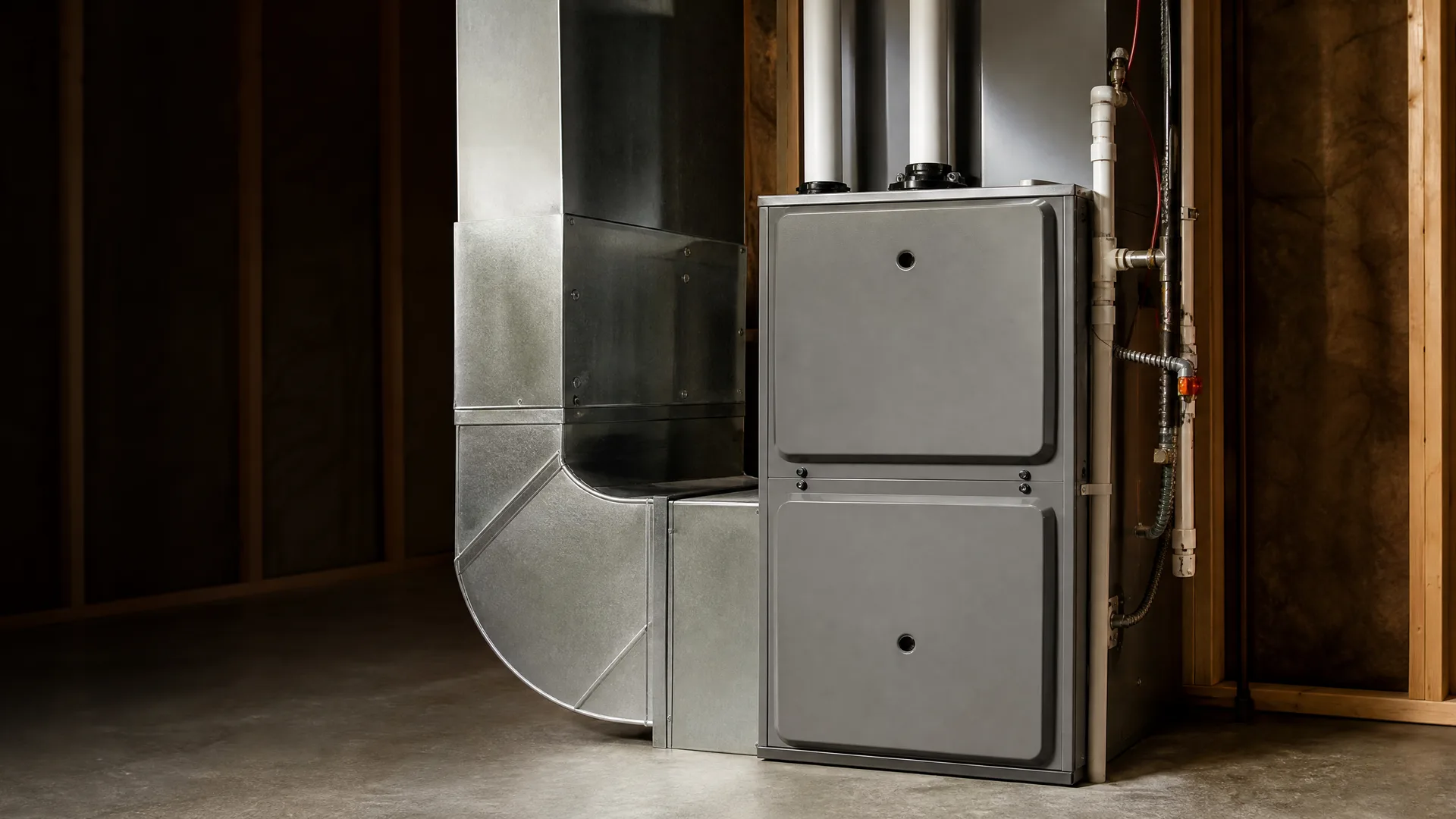
A gray high-efficiency furnace with two white PVC vent pipes stands in an unfinished basement beside galvanized sheet-metal ductwork, with insulated wood-framed walls and piping behind it.

Let someone else find the pro

RepairFurnace or heatingElmore County, ID
Step 1 of 2

What ZIP code is the job in?