
Illuminated timber-frame and stone houses along a residential street at night, with snow-capped mountains visible in the background.

Furnace Installation in Kamiah, ID

Tell us about the job

Takes about a minute. No obligation.

New system or replacementFurnace or heatingLewis County, ID
Step 1 of 2

What ZIP code is the job in?

The furnace itself is only part of what you're paying for. Sizing matters more than people expect. A unit too big for the house cycles on and off and never runs long enough to heat evenly. One too small runs constantly and still can't keep up. That means someone has to look at the house itself, not just swap in a new box. Ductwork is often the real driver of cost. If the existing ducts are undersized, leaky, or routed poorly, the best furnace on the market won't fix the comfort problem, and extending or sealing ductwork takes real labor. Venting matters too. A high-efficiency furnace vents differently than an older one, sometimes through a wall instead of a chimney, and that can mean new venting work. Gas and electrical hookups add to the job as well. Some furnaces need a dedicated circuit that an older house may not already have.

10 months
September through June, your furnace is on duty
23°F
the average winter night it heats against
80% AFUE
the federal minimum any new unit must meet
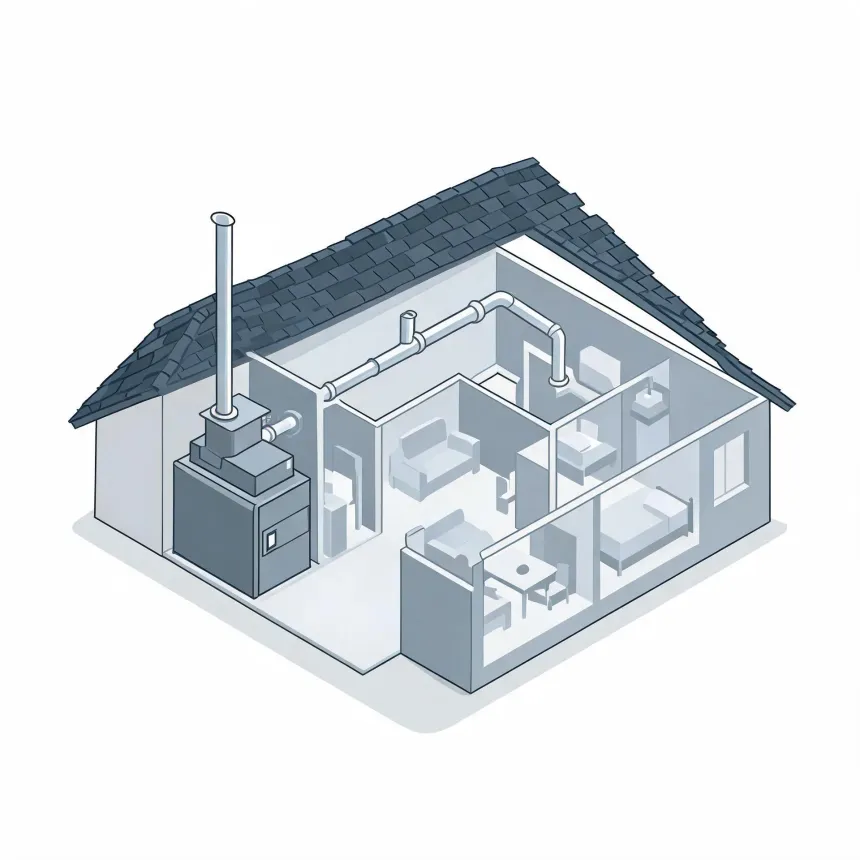
Isometric cutaway illustration of a single-story house showing interior rooms with furniture, ceiling ductwork, and a large furnace unit with a tall flue pipe in a corner room.
Your furnace works hardest from October through April.

NOAA nClimDiv, 1991–2020 normals

Electricity heats 47.9% of the homes in Lewis County, more than any other fuel.

An electric furnace install here is usually matching what the house already runs on, not switching it over.

Heat starts in September here, so get it done in August

Heat runs September through June
Climate zone 5B
Winter nights average 23°F

Furnace installation in Kamiah means sizing for a long season, not a mild one. Heat runs September through June here, about ten months of the year. Overnight lows average 23°F through December, January and February, so the furnace isn't cycling on for an hour and shutting off. It's running for most of the day and night across a long stretch of winter. A unit sized right for that load, based on the house itself and not a guess, will hold up. One sized wrong will run harder than it should, every one of those months.

Size the new furnace for the house you have, not the one in the catalog

Half the homes in Lewis County were built in 1965 or earlier. A furnace installed in a house that age has to work with the ductwork and venting already there, not with a blank slate. Getting the sizing and fit right the first time matters more than it would in a newer house built around modern duct runs.

Find a contractor
A man in a dark cap, dark shirt and tan work pants walks up wooden steps toward a blue front door, carrying a worn canvas tool bag in his right hand, with a potted shrub beside the entry.
A gray residential gas furnace installed in an unfinished basement, surrounded by ductwork, a metal flue pipe, and a gas supply line.

Ten months of work a year, so get the size right before it's installed

That long season is exactly why the sizing question matters more here than most places. A furnace that's a size off still has to get through ten months of work, and it won't do that quietly if it's wrong for the house. Ask whoever quotes the job to show you the load calculation, not just a number copied off the old unit's nameplate. That's what tells you the new furnace matches this house instead of a guess.

The old furnace gets disconnected and hauled off

Once the new furnace is set and running, the installer disconnects the gas line or electrical circuit from the old unit, pulls it out, and caps off anything no longer in use. The old unit doesn't get left behind as a backup. A furnace that's been pulled out can't be reinstalled safely, so removal is part of the job, not an afterthought.
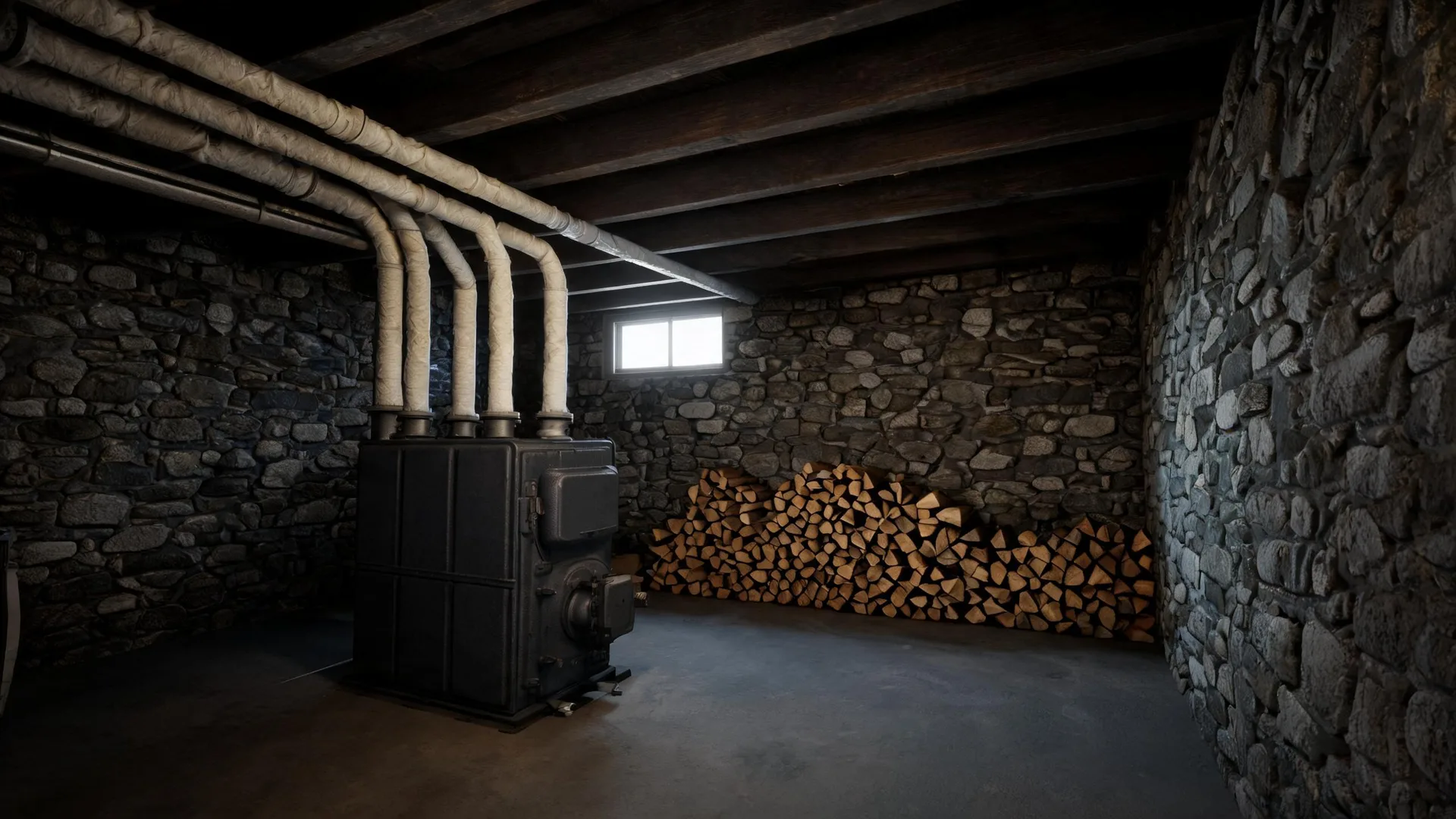
That's when any hidden venting or duct problems surface

Pulling the old furnace out is also when a installer can see the flue connection, the plenum, and the duct trunk that were hidden behind it. If a transition was patched years ago or a duct run was never sized right, this is the point where that gets caught, before the new furnace is tied into it.

A load calculation looks at the whole house. Square footage, ceiling height, window area, insulation, how many exterior walls each room has. Houses the same size can need different sized furnaces because one holds heat better than the other. This is the part a nameplate can't tell you. Copying the old furnace's size assumes the old one was right to begin with, and plenty weren't, especially if it was installed as a quick swap rather than sized from scratch. The calculation also accounts for the ducts already in the house, since a furnace has to move air through them, not just produce heat. Get the sizing wrong and no amount of good equipment fixes it.

Installation day runs in a set order. The installer sets the new furnace in place, usually in the same spot as the old one, then connects the ductwork, the gas line or electrical circuit, and the venting before anything gets powered on. Once it's hooked up, they test the ignition, check the gas pressure or electrical draw, and run the blower to see that air is moving through the ducts the way it should. A careful installer also checks the temperature rise across the furnace against what the manufacturer specifies for that model. That number tells them whether the furnace is firing correctly and whether the airflow through the ducts is enough to support it. A furnace that passes that check is actually set up to run the way it's supposed to, not just one that turns on.