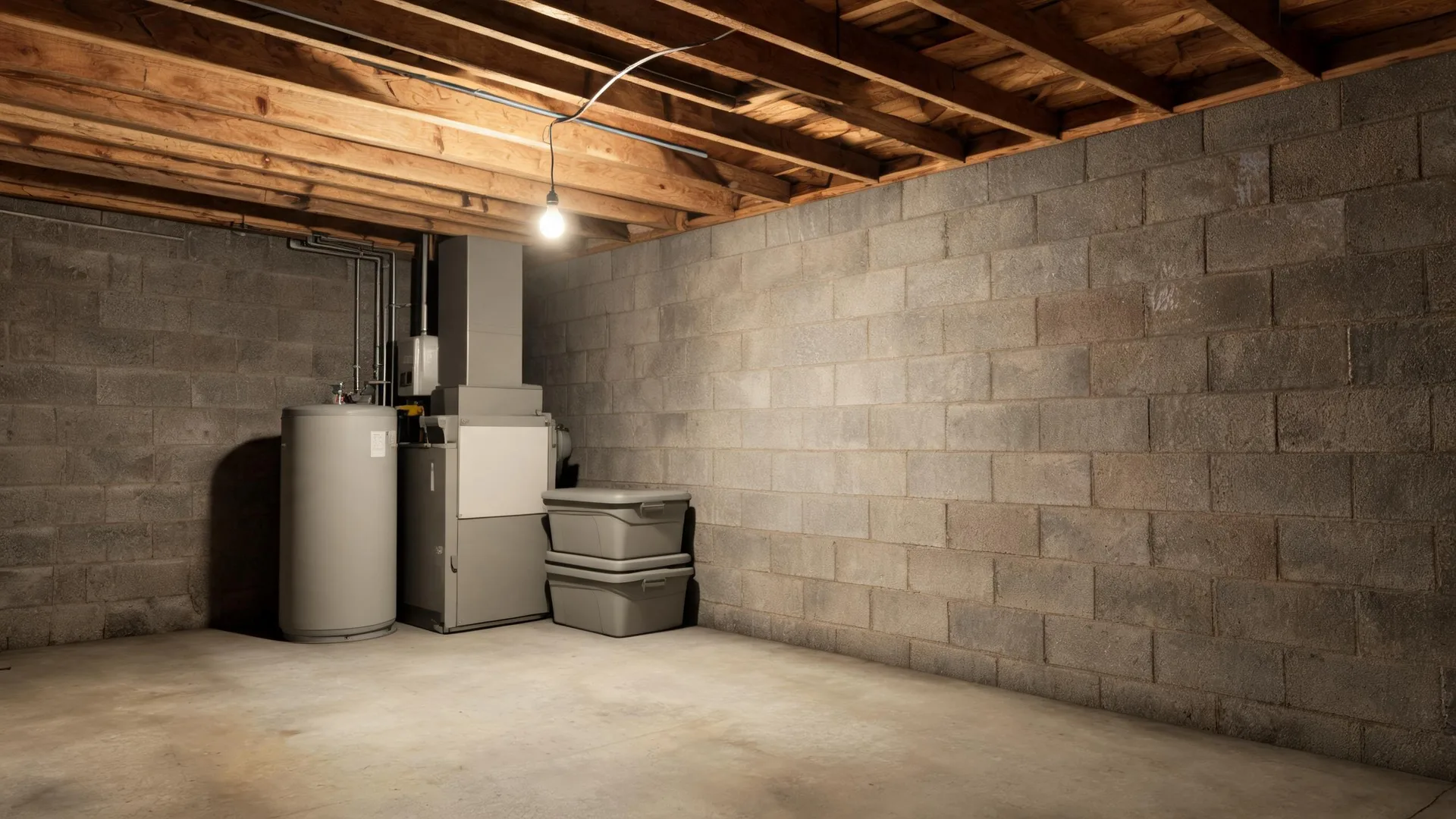
An unfinished basement featuring a forced-air furnace, exposed wooden ceiling joists, bare concrete walls, and miscellaneous items including cardboard boxes and coiled cables on the floor.

Furnace Installation in Hailey, ID

Tell us about the job

Takes about a minute. No obligation.

New system or replacementFurnace or heatingBlaine County, ID
Step 1 of 2

What ZIP code is the job in?

Zone 6B sets the floor

Blaine County falls under zone 6B in the 2021 energy code, a cold zone with a long heating season. A furnace going in here has to meet that standard, which rules out the lowest-efficiency units sold in warmer parts of the country.


The federal minimum is changing

Furnaces built on or after December 18, 2028 will have to hit 95.0 percent efficiency, up from the 80.0 percent required of units built before that date. A furnace installed now still needs to clear 80.0 percent, but the standard behind it is about to get stricter.

10 months
September through June, your furnace is on duty
14°F
the average winter night it heats against
80% AFUE
the federal minimum any new unit must meet
Isometric cutaway illustration of a single-story house with a dark shingled roof, showing interior rooms with beds and furniture, overhead ductwork, and a gray furnace with a tall flue pipe at the exterior wall.
Your furnace works hardest from November through April.

NOAA nClimDiv, 1991–2020 normals

Furnaces in Blaine County run from September through June.

Ten months of heat a year means an oversized or poorly matched furnace never gets a break to show it.

Ten months of heat a year means June is the month to get it done

Heat runs September through June
Climate zone 6B
Winter nights average 14°F

A furnace sized wrong here doesn't get much time to rest and recover. With ten months of heat a year, it's either running or about to be. Blaine County also saw 142 winter storms between 2015 and 2024, the kind of cold snap that pushes a furnace to its limit right when you need it most. An undersized unit struggles through those stretches. An oversized one short cycles, turning on and off instead of running a steady, even burn. Either way the furnace wears faster and the gas bill runs higher than it should. Get the sizing right at installation, matched to this house and not a stock number, and skip the unit that's cheapest up front but wrong for the load.

Meet the standard here

A new system here has to meet this region's minimum efficiency, which limits what can go in.

Find a contractor
A man in a cap, dark t-shirt and work trousers carries a canvas tool bag up porch steps toward a blue front door, with a tall planter and shrub beside the entry.
A gray residential gas furnace installed in an unfinished basement, surrounded by ductwork, a metal flue pipe, and a gas supply line.

What to ask before you compare the price tag

Two furnaces can carry the same efficiency rating and still perform differently once installed. Ask how the contractor arrived at the size, not just the brand or the number on the spec sheet. A proper load calculation looks at the house itself, square footage, windows, insulation, ceiling height, not a guess based on the old unit. A furnace sized off the last one just repeats whatever mistake was already there. Ask what happens to the ductwork too. A furnace is only as good as the air it can move, and new equipment pushing through old, leaky or undersized ducts won't deliver what the rating promises. Ask about the heat exchanger, since that's the part that fails and the one that matters most for how long the unit lasts. And ask what the warranty actually covers, parts versus labor, and for how long, because that difference shows up the day something breaks.

Bigger isn't better

A furnace too big for the house heats the air fast, hits the thermostat, and shuts off before it's pulled moisture out or warmed the walls and furniture. Then it has to fire again soon after. That start and stop wears the ignition system and the blower motor harder than a steady run would, and the house ends up with warm air in bursts instead of even heat.

How a load calculation works

A contractor figures the right size by working out how much heat the house actually loses, room by room, not by matching the old unit or going off square footage alone. The calculation accounts for window area, insulation, ceiling height, and how the rooms connect. Two houses the same size can need different furnaces depending on how they hold heat.

Installed cost comes down to what the job actually requires, not just the unit on the truck. Venting is part of it. A high-efficiency furnace vents through PVC pipe and needs a condensate drain, while an older-style unit vents through metal and doesn't, so switching from one to the other means new venting, not a swap. Ductwork is another piece. If the existing ducts are undersized or leaky, a contractor either has to modify them or the new furnace never delivers what its rating promises, and that work costs more than the furnace itself sometimes does. The gas line matters too. A bigger unit may need a larger line run to it, and fixing that is labor, not equipment. None of this shows up on the sticker price of the furnace. It shows up in what the installation actually takes once someone has looked at the house instead of just the brand name.

Installation day starts with the old furnace coming out, and that alone can take a few hours if the vent pipe or gas line has to come apart to get it clear. The contractor sets the new unit, then connects three separate systems to it: the gas line, the vent, and the ductwork, plus the electrical for the blower and controls. Each one gets tested on its own before anything runs together. Once it's hooked up, the furnace fires for the first time and the contractor checks the flame, the gas pressure, and the temperature rise across the heat exchanger against the manufacturer's spec. Low voltage wiring gets connected to the thermostat last, and that's when the system gets run through a full cycle, heat on, blower confirmed, heat off, to make sure it cycles the way it's supposed to. A combustion analyzer checks the exhaust for carbon monoxide before the job is called finished, since that reading is the one way to confirm the unit is burning clean and venting correctly.