
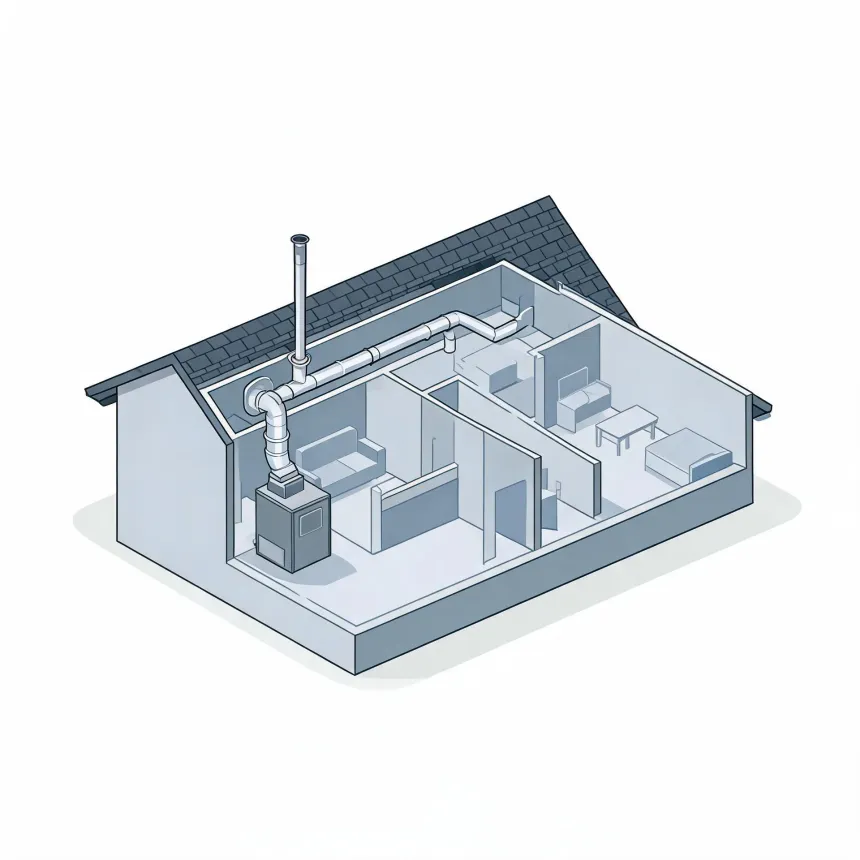


An unfinished basement featuring a grey forced-air furnace with metal ductwork, concrete block walls, exposed wooden joists, and a single hanging bare bulb.

Furnace Installation in Council, ID

Tell us about the job

Takes about a minute. No obligation.

New system or replacementFurnace or heatingAdams County, ID
Step 1 of 2

What ZIP code is the job in?

Taking out the old furnace is part of the job, not an afterthought. The installer disconnects the gas line and caps it, pulls the electrical, and detaches the venting before the cabinet comes apart. If the old unit is a working trade-in, some installers hold onto parts for scrap or resale, but most of it goes to be recycled for the metal. The ductwork usually stays, though the plenum connections often get rebuilt to fit the new furnace's dimensions, since cabinet sizes vary between models. Anything asbestos-related in older duct wrap or flue pipe gets handled separately, under its own rules, not tossed in with the rest of the teardown. A good installer walks through what they found once the old unit is open, since that's often the only time anyone gets a real look at the condition of the vent pipe and the connections behind it.

10 months
September through June, your furnace is on duty
19°F
the average winter night it heats against
80% AFUE
the federal minimum any new unit must meet
Isometric cutaway illustration of a single-story house showing interior rooms with furniture and a furnace connected to ductwork and a vertical flue pipe extending through the roof.
Your furnace works hardest from October through April.

NOAA nClimDiv, 1991–2020 normals

A bigger furnace isn't a safer bet, it short cycles and wears out its own parts faster.

Sizing comes from a heat loss calculation on the house, not from matching the old unit's number.

Heat starts again in September. August is the month to get this done.

Heat runs September through June
Winter nights average 19°F
48 winter storms from 2015 to 2024

Furnaces in Council run from September clear through June, ten months of the year. Overnight lows average 19°F through December and January, which means long stretches where the furnace is holding that gap on its own, not just taking the edge off. Winter here also brings heavy snow and ice, storms that have hit Adams County close to fifty times in the last decade. A furnace sized for this place has to carry that load without strain, through the coldest nights and the storms both. That comes from a unit matched to the house, not just whichever one is easiest to install.

Replace it before the season

Replace it before the season starts, so it happens on your schedule, not in a hurry.

Find a contractor
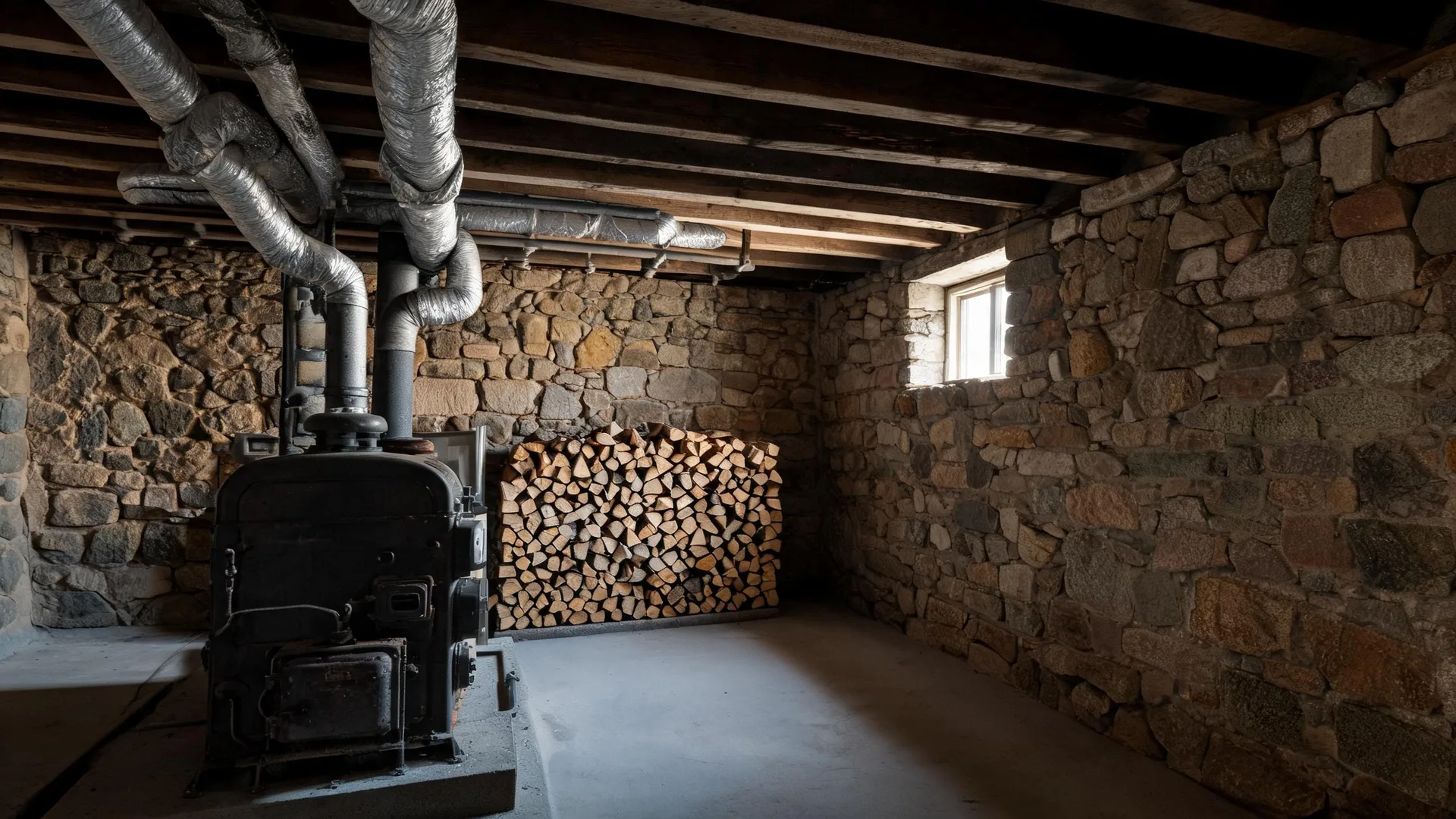
A gray residential gas furnace installed in an unfinished basement, surrounded by ductwork, a metal flue pipe, and a gas supply line.

Built for the hours it will actually run

Ten months of heating a year adds up to a lot of hours on a new furnace. When you're comparing quotes, ask what heat loss calculation the number is based on, not just what size matched the old unit. A furnace sized right for the house will run those long 19°F nights without straining, and it's worth more than a lower bid on a unit that's just a guess.

AFUE is about fuel, not heat output

The AFUE number on the label tells you how much of the gas burned turns into heat for the house versus how much goes out the flue. It has nothing to do with how big a space the furnace can handle. A high AFUE unit sized wrong for the house still won't heat it evenly, and a correctly sized one with a lower AFUE will still get the job done, just using more gas to do it.
The installation decides whether you get that number

A furnace only hits its rated efficiency when it's set up the way it was designed to run, with the right airflow across the heat exchanger and venting that matches the unit's specs. Undersized ductwork or a blocked return will pull the real efficiency below what's on the label, no matter how good that label looked at the store. The rating is a ceiling, and the installer's work decides how close the furnace actually gets to it.

Ask what stage of heat the furnace runs. A single stage unit is on at full fire or off, nothing in between. A furnace with a lower fire setting can hold steady through most of the season and only ramp up on the coldest nights, which means fewer times the burner cycles on and off. Ask about the blower motor too. A variable speed blower adjusts its airflow to match what the furnace is doing, where a fixed speed motor just runs at one setting regardless. Ask how the quote handles the vent pipe and gas line, not just the furnace cabinet, since a unit is only as good as what it's hooked up to. And ask what warranty covers the heat exchanger versus everything else, since that part is the most expensive thing in the cabinet to replace.

Once the new furnace is set and leveled, the installer runs new venting or connects to the existing flue, depending on what the unit needs. Gas line gets hooked up and pressure tested before anything is fired. A leak found after the fact means pulling the cabinet apart again. Electrical comes next. The control board, the blower motor, the igniter all get wired and checked against the furnace's own wiring diagram rather than guessed at. Then the installer fires the burner, watches the flame pattern, and checks gas pressure against the manufacturer's spec, not just whether it lights. Airflow gets checked too, static pressure across the system and temperature rise through the plenum, because a furnace can be wired right and gas right and still run poorly if the air moving across the heat exchanger is off. Before anyone leaves, the furnace should run a full cycle while someone's watching, not just a quick flame check.