






An unfinished basement featuring concrete block walls, exposed floor joists, a bare concrete floor, and a forced-air furnace with a large metal exhaust duct in the corner.

Furnace Installation in Burley, ID

Tell us about the job

Takes about a minute. No obligation.

New system or replacementFurnace or heatingCassia County, ID
Step 1 of 2

What ZIP code is the job in?

Electricity ran $33.76 per million Btu across Idaho homes in 2024. Most houses around Burley heat with it, so that number lands on every furnace in the county. A furnace that wastes heat burns through more of those expensive Btu to hold the same temperature. One that converts power efficiently does the same job on less. Over a winter here, that difference shows up directly on the bill.

10 months
September through June, your furnace is on duty
20°F
the average winter night it heats against
80% AFUE
the federal minimum any new unit must meet
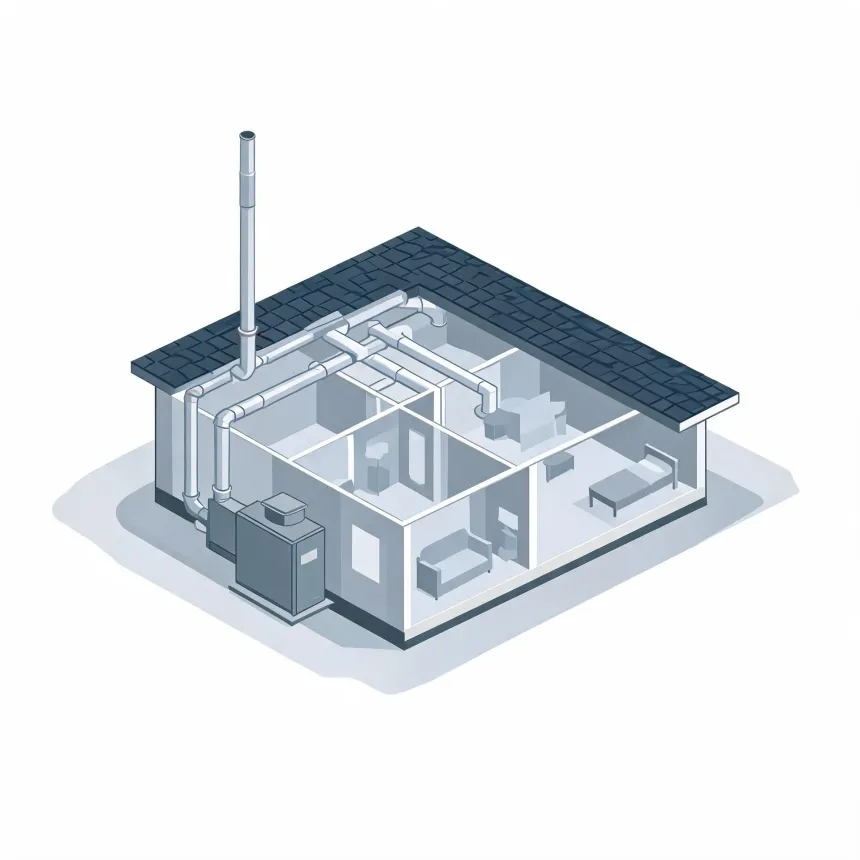
Isometric cutaway illustration of a single-story house with a dark shingled roof, showing interior rooms with furniture, a ducted air distribution system, a tall vertical flue pipe, and a gray furnace unit outside the wall.
Your furnace works hardest from November through April.

NOAA nClimDiv, 1991–2020 normals

Furnaces in Cassia County start running in September.

Get a new furnace installed by August and it's ready before the first cold night, not after it.

Most furnaces here run on electricity, so that's what a new one should run on too

61.3% of homes heat with electricity
Climate zone 5B
Heat runs September through June
Ten months of work a yearFurnaces around Burley run September through June, and winter storms hit Cassia County 55 times between 2015 and 2024.

Cassia County falls under climate zone 5B, a cool zone where heating carries the bigger load. Any furnace installed here has to meet the federal minimum for that zone. Furnaces built from November 2015 on have to turn at least 80 percent of the gas they burn into heat. That floor holds until December 2028, when new units have to hit 95 percent. A homeowner replacing a furnace now can still choose either standard, but one of them burns a lot less fuel to do the same job.

Choose efficiency now and the savings start with the first bill

Pick a furnace with a high efficiency rating and that $33.76 per million Btu buys more heat for the same money, all winter long.

Find a contractor
A man in a dark long-sleeved shirt and tan work pants, seen from behind, carries a canvas tool bag up porch steps toward a blue paneled front door of a house with light lap siding and a potted flowering plant.
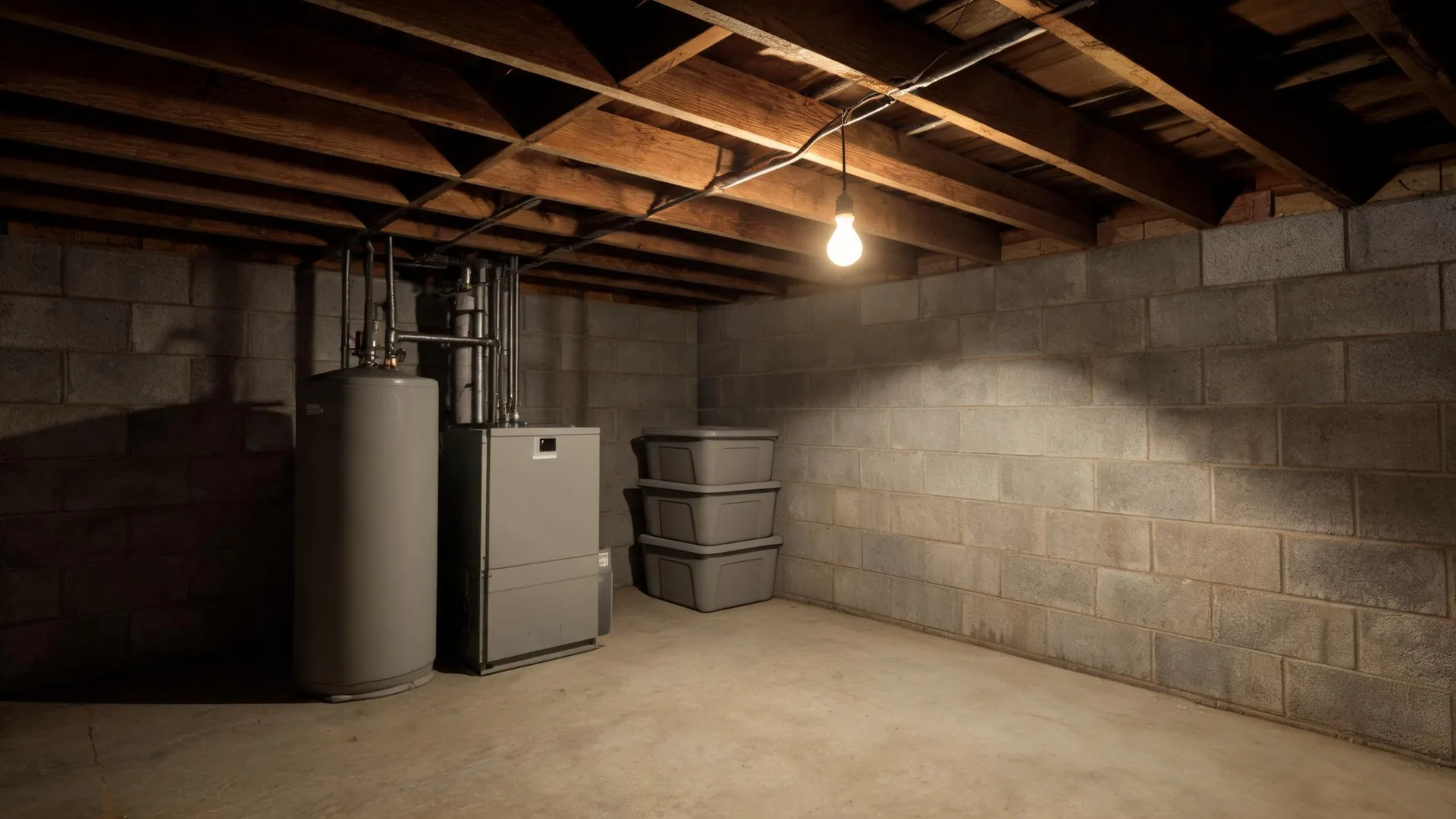
A gray residential gas furnace installed in an unfinished basement, surrounded by ductwork, a metal flue pipe, and a gas supply line.

A machine that runs this long needs to be sized right, not just bought cheap

Ten months of heat a year is a long duty cycle, and this one includes 55 winter storms over the past decade. A furnace sized too small for this county runs flat out trying to keep up on the worst nights, and the parts that push hard every day are the ones that fail first. Sizing has to match the house, not just the price tag on the unit. A contractor who runs a load calculation before installing anything will catch this. One who quotes a furnace off the square footage alone is guessing.

Size and ductwork decide most of the cost

A furnace has to match the heat loss of the house it's going into, and finding that number takes a load calculation, not a guess. If the ductwork already in place can't move the air a new furnace puts out, it has to be modified or replaced, and that work often costs more than the furnace itself. A straightforward swap into existing ducts that already fit is a different job than one that needs new duct runs or a bigger return.
The furnace itself is only one line item

Venting, gas line work if the fuel source is changing, electrical for the blower motor and controls, and a new thermostat all add to what goes into an installed system. A higher efficiency furnace often needs different venting than a standard one, since the exhaust runs cooler and can't always use the old flue. None of that shows up in the price tag on the unit, only in the full job.

Pulling the old furnace out is part of the job, not an extra. A contractor disconnects the gas line or the electrical feed, depending on what's heating now, and caps it safely before anything new goes in. The flue or vent connected to it gets checked too, since a new furnace often vents differently and the old path may not carry over. If the furnace sits in a closet or a tight mechanical space, getting the old cabinet out sometimes takes more care than setting the new one in. Most of what's left, the heat exchanger, the old blower, the cabinet itself, gets hauled off for scrap. None of it goes back in the house.

Installation day starts with the house, not the box. A contractor confirms the duct connections, the gas line, the vent path and the electrical feed all match what the new furnace needs before anything gets set in place. The new furnace goes in, gets leveled, and ties into the ductwork, the gas supply and the vent. Every joint and connection gets tested, gas line, vent, wiring, ductwork, since a leak in any one of them is a problem whether it's gas or just air escaping before it reaches a room. Once the system runs, a technician checks the flame, the airflow and the temperature rise across the heat exchanger to confirm the furnace is firing the way it should. The thermostat gets set up and tested last, after the furnace itself is already proven to work.