




Why your furnace smells like burning in Idaho

RepairFurnace or heatingIdaho
Step 1 of 2

What ZIP code is the job in?

A burning smell from your furnace usually means dust burning off the heat exchanger or burners, and that's normal for the first hour or so the first time you run it each fall. If it keeps up longer than that, or it smells sharp and electrical instead, something inside is overheating. A clogged filter can starve the system of air and make the heat exchanger run hotter than it should. A failing blower motor or a cracked belt can do the same by forcing the furnace to work harder to push air through the house. Dust sitting in the ductwork can also scorch when the heat finally kicks on after months of sitting idle. If the smell lingers past that first burn-off, or comes back every time the furnace runs, it is worth having someone look at it before winter sets in and you are depending on that furnace every day.

The gable end of a weathered vertical-board wooden building with a snow-covered roof, framed against snow-laden conifers and a pale sky with falling snowflakes.

Idaho winter nights average 22°F statewide, and your furnace answers by running long stretches, night after night, from first frost into spring. That kind of steady, hard running is exactly when dust and lint built up over a hot, dry Idaho summer gets scorched off the burners and heat exchanger, which is where that first burning smell comes from. The smell should fade within an hour once things burn clean. If a cold snap has your furnace cycling on and off all night and the smell lingers past that first hour, or comes back on a system that's already been running fine, pay attention. Source: NOAA.

NOAA nClimDiv 1991-2020 county normals weighted by homes

Normal Burn-Off or Electrical Fault

Dust Burn-Off

  • The smell fades within an hour of your furnace's first run of the season, as dust on the heat exchanger and burners finishes burning away.
  • It smells like dust or hot metal, not like wires or plastic melting.
  • It shows up once, at the start of the first cold snap, and doesn't return on the nights after.
  • Your furnace's flame looks steady and even, and it shuts off and restarts normally.
  • Nothing trips the breaker, and you don't smell it anywhere else in the house, like an outlet or a lamp.

Electrical Fault

  • The smell is sharp, like burning plastic or hot wire insulation, not like dust.
  • It shows up again on a later night, after that first hour has long passed.
  • The flame looks uneven, or the furnace shuts off on its own partway through a cycle.
  • You notice the smell near the furnace cabinet itself, or it travels through the vents into other rooms.
  • A breaker trips, or the furnace hums or clicks without lighting.
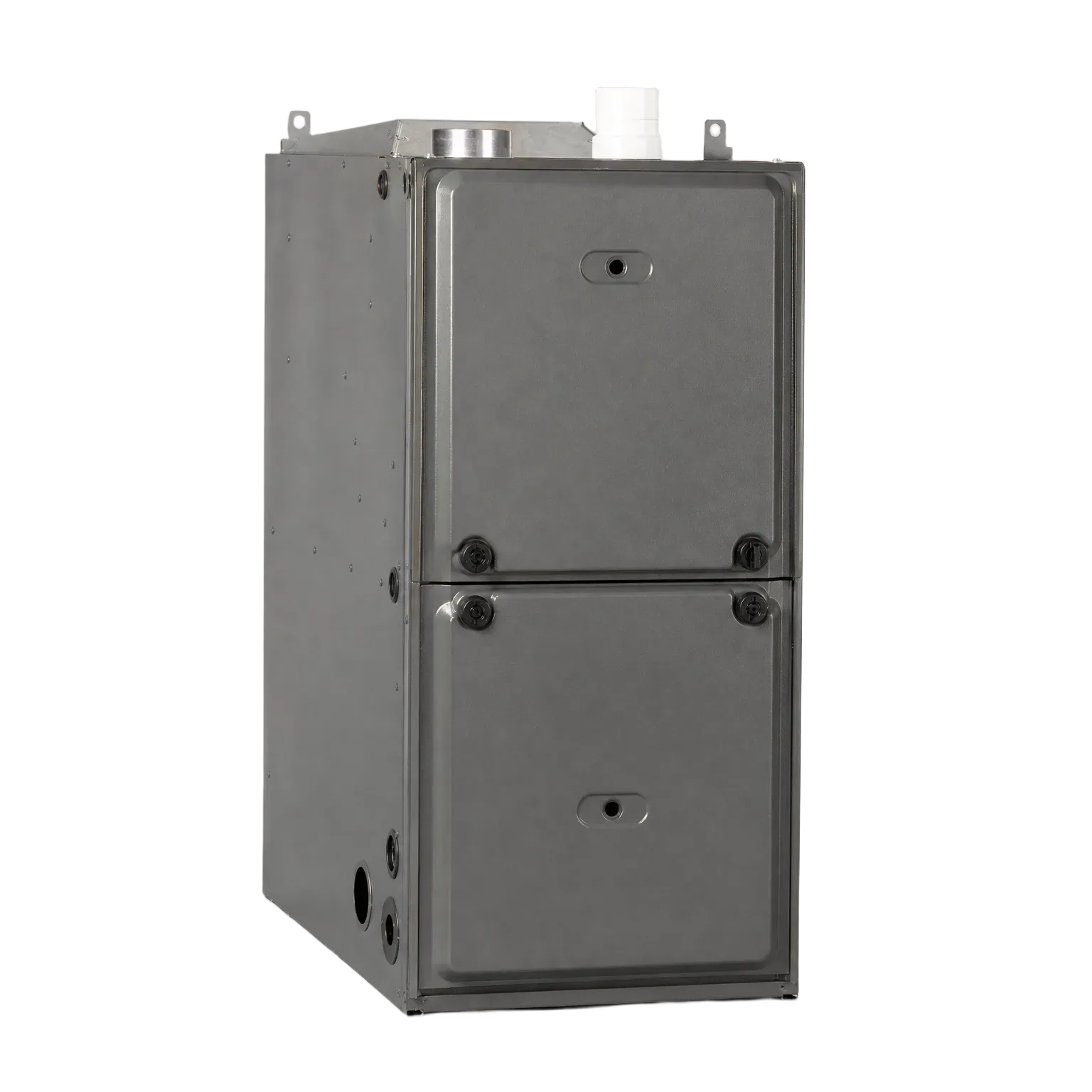
A gray high-efficiency furnace with two access panels stands in a bare basement corner, connected to sheet-metal ductwork, white PVC vent pipes, and flexible gas and electrical lines.

Where the smell starts

The heat exchanger is the metal chamber that separates the flame from the air blowing through your ducts. Dust that settled on it over the summer sits right where that air passes, so when the burners fire it up for the first time, the air carries the smell of it burning straight into every room. That's why it's a whole-house smell and not one you can trace to a single vent.

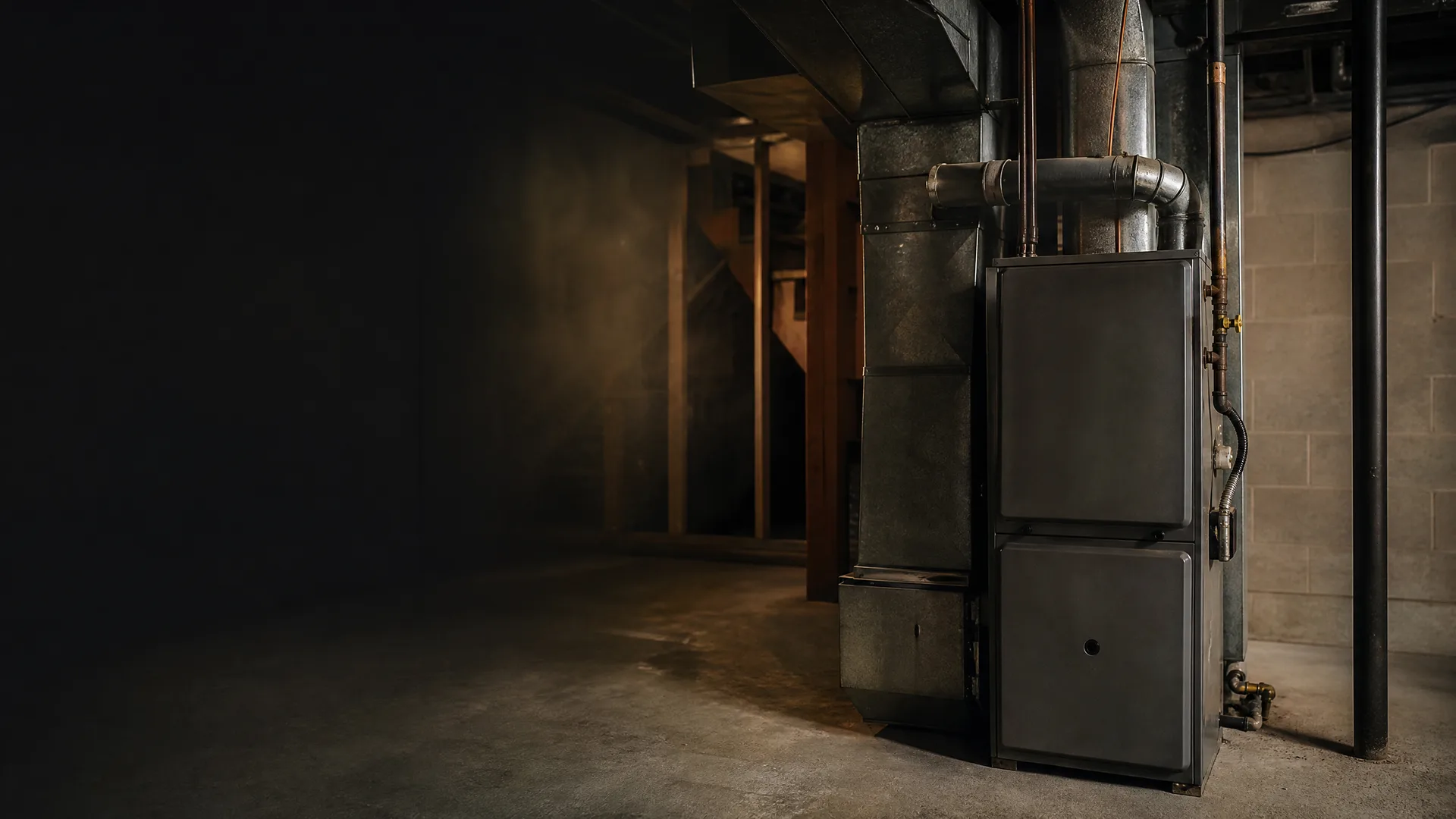
A gas furnace with metal ductwork, copper and yellow gas piping stands against a wall in an empty room with a bare concrete floor.

Why electrical smells are different

A burning dust smell comes from outside the cabinet, carried by the air moving through it. An electrical smell comes from inside, off a part that's overheating where it sits. That part might be a blower motor bearing, a frayed wire, or a circuit board, and none of those clear up on their own the way dust does. If the smell is sharp, like melting plastic, it's that kind of part, not dust.

A man in a dark blue shirt stands in an open front doorway of a stucco and wood-clad house, facing a blond woman seen from behind in the foreground on a stone walkway.

What that smell means for your house

If the burning smell lingers past that first hour, or changes to something sharp and plastic, your furnace is still running while something inside it overheats. Shutting it off at the thermostat stops that, but it also stops your heat, and on a cold Idaho night that's not a choice you want to sit with for long while you sort out who to call.

Finding someone who can look at it fast usually means working the phone yourself, explaining the smell and when it started more than once, then weighing quotes from whoever calls back first. You can skip that part. Tell the page what your furnace is doing and a contractor who handles this in your area will reach out to you directly, already knowing what you've described.

Interior corner with a beige sofa holding a dark green and a light cushion and a textured throw, a potted small-leaved tree beside a white-framed window, and a dark shallow bowl on a wooden coffee table in the foreground.
A beige high-efficiency furnace stands on a concrete basement floor beside sheet-metal ductwork, with white PVC vent pipes, flexible conduit and copper and steel piping running up a concrete wall to an electrical box.

Running clean

This is what your furnace looks like once the dust has burned off and the smell is gone. Air moves through the ducts, the flue carries exhaust up through the PVC pipe, and the gas line sits sealed at the shutoff valve. Nothing to smell, nothing to watch.


An older gas furnace with a louvered front panel stands on a concrete basement floor beside large sheet-metal ductwork, a metal flue pipe, copper piping and wood framing.

Something's wrong

Dust piled around the base and an older exhaust flue are both places trouble can start. If the smell hasn't faded or it's changed to something sharp, a cracked heat exchanger or a wiring problem could be why. That's worth a look before you run it again.

A woman with dark hair in a bun wearing a cream knit sweater sits on a gray sofa in a bright living room, looking off to the side.
A woman wrapped in a knit blanket sits on a gray sofa in a living room, looking toward a bright window with houseplants and an armchair in the background.
A woman in a gray cowl-neck sweater sits on a light sofa with cushions, smiling and looking to the side, with a kitchen and window visible behind her.
A woman with dark hair in a bun, wearing a light linen shirt, sits on a sofa and looks to the side, with a window, houseplants and a kitchen with pendant lights blurred behind her.

Smell fades within an hour

Dust burning off the heat exchanger clears on its own once the furnace has run a while. No need to shut it down or call anyone.

Get a local pro

Smell lingers or turns sharp

A burning smell that won't quit, or starts smelling like melting plastic, means something inside is overheating while it keeps running.

Get a local pro
A beige sheet-metal furnace with a louvered upper panel stands on a concrete basement floor, connected to galvanized ductwork, white PVC vent pipes, and a metal gas line with an electrical box.
Before you get your furnace repair
A gray high-efficiency furnace with white PVC vent pipes stands in an unfinished basement beside sheet-metal ductwork, gas piping, and insulated stud walls on a concrete floor.
After you get your furnace repair

Matched to your furnace job

Fill out one short form instead of calling around.

No fee to send it, and nothing to sign.

A furnace with sheet-metal ductwork and copper piping stands against a concrete block wall in a dim basement with a bare concrete floor.

The basement is cold enough that you can see your breath near the vent. It's November, past dinner, and the furnace hasn't kicked on in a few minutes, just sitting there dark. You flipped the switch at the top of the stairs to shut it down after the smell didn't let up, and now it's quiet except for the furnace ticking as it cools. A thin haze still hangs in the air by the cabinet, dust catching the light from the bare bulb overhead. Upstairs the house is starting to feel it, and you're standing here looking at the thing, waiting to see if it's safe to turn back on or if it needs someone to look at it first.

A gray high-efficiency furnace with white PVC vent pipes stands beside galvanized sheet-metal ductwork in a basement with a concrete floor, with a wooden staircase and railing at left.
A furnace running clean moves air through the ducts and vents exhaust out the PVC pipe, with the gas line sealed off at the shutoff valve.
An older gas furnace with louvered panels sits on a concrete pad in a basement, connected to sheet-metal ductwork and PVC and metal pipes, with a water heater and wooden stair framing in the background.
Once ductwork and gas lines connect to a furnace that keeps overheating, that's a repair, not something to wait out through another cold Idaho night.
  1. A technician checks the flame sensor and burners for scorched dust or debris.

  2. They inspect the heat exchanger for cracks or hot spots causing the smell.

  3. They test the blower motor and wiring for melted insulation or shorts.

  4. They confirm safe operation before leaving the furnace running.

What are you noticing in your own house right now

You're probably checking the vents in whatever room your family spends the most time in, trying to tell if the smell is fading or getting worse. Maybe you've turned the furnace off and now you're watching the thermostat drop a degree at a time, weighing whether it's worth waiting out or worth shutting down for the night. If it's just dust, the smell thins out and the house warms back up like normal. If it's gotten stronger, or turned sharp and chemical, or you've noticed the furnace cycling on and off faster than it used to, that's not dust anymore. Something in the furnace is overheating while it runs, and the longer that goes on, the more likely it damages a part that was fine an hour ago.

A gray furnace with sheet-metal ductwork, PVC vent pipes and a yellow gas line stands on a concrete basement floor beside wooden stair framing.

The furnace doing its job

Air moves through the sheet-metal ductwork, the flue carries exhaust out through the PVC pipe, and the gas line sits sealed at the shutoff valve. Copper piping and connections stay where they belong, nothing loose, nothing leaking. This is a furnace running the way it's supposed to all winter.

An older gas furnace with a louvered front panel stands on a concrete basement floor beside galvanized sheet-metal ductwork, a metal flue pipe, gas piping and a flexible conduit along a concrete wall.

The furnace in trouble

The same ductwork and gas pipes connect to a furnace that's overheating somewhere inside. From the outside it looks almost the same, sitting there on the concrete floor, flexible conduit running along the wall. What's different is what's happening past the panel, and that's not something to wait out.

Winter nights average 22°F statewide

At 22°F, your furnace isn't cycling on and off for an hour here and there. It's running long stretches most nights from December through February, and that kind of steady heat is what finishes burning off dust fast and also what pushes a cracked heat exchanger or bad wiring past its limit.

NOAA nClimDiv 1991-2020 county normals weighted by homes

A smiling older woman with gray hair in a cream knit sweater stands in a dimly lit kitchen beside a window showing snow outside, with a round loaf of bread on the counter in the foreground.
A woman and a child wrapped together in a thick knitted blanket on a sofa, both with eyes closed, with a lit table lamp and houseplant in the dim background.

Knowing which smell is which

  • A burning smell that clears within an hour of the first run each fall is dust, and it needs nothing from you.
  • A smell that lingers, returns, or turns sharp and electrical means something inside the furnace is overheating while it keeps running.
  • Shutting the furnace off at the thermostat stops the smell but leaves your house without heat on a cold Idaho night.
  • A technician checks the flame sensor, burners, and heat exchanger to find exactly what's causing the smell to persist.
  • Instead of searching for contractors and explaining the smell over the phone to one company after another, you answer a few questions once and a contractor who handles this reaches out to you.
  • You're left knowing which smell to wait out and which one means your furnace needs a repair before you turn it back on.

Dust on the heat exchanger and burners burns off in the first hour your furnace runs each fall, and once that smell is gone, it's gone for the season. That's the whole story for most Idaho homes when the furnace first fires up after a hot, dry summer. The smell to pay attention to is the one that doesn't fade, or changes character, something sharper, more like wires or plastic than dust. That's not a smell to wait out. It means heat is building up somewhere inside the furnace that shouldn't be building up, and the furnace is still running while it does.

Turning the furnace off at the thermostat will stop the smell, but on a night when it's 22°F outside, that also means no heat moving through the house until something gets fixed. A technician can check the flame sensor, the burners, and the heat exchanger and tell you within a visit which one is causing it. That's the part you can't do from the top of the basement stairs.

What you don't have to do is spend an evening calling furnace companies, describing the smell to each one, and waiting to hear back while your house gets colder. Answer a few questions about what you're noticing, and a contractor who handles this reaches out to you directly. Either way, you'll know what you're dealing with and what, if anything, it needs before you turn the furnace back on.

Dark standing-seam metal roofs of wood-sided buildings in the foreground, with a single spruce tree, grassy hills, conifer forest, and snow-streaked mountain peaks behind.

A furnace pro near you

Skip the calls

Sending the form costs nothing.

You already turned the furnace off once this winter to make the smell stop. Getting someone to look at it means you don't have to keep flipping that switch every time it turns cold in your house and warm again outside.