






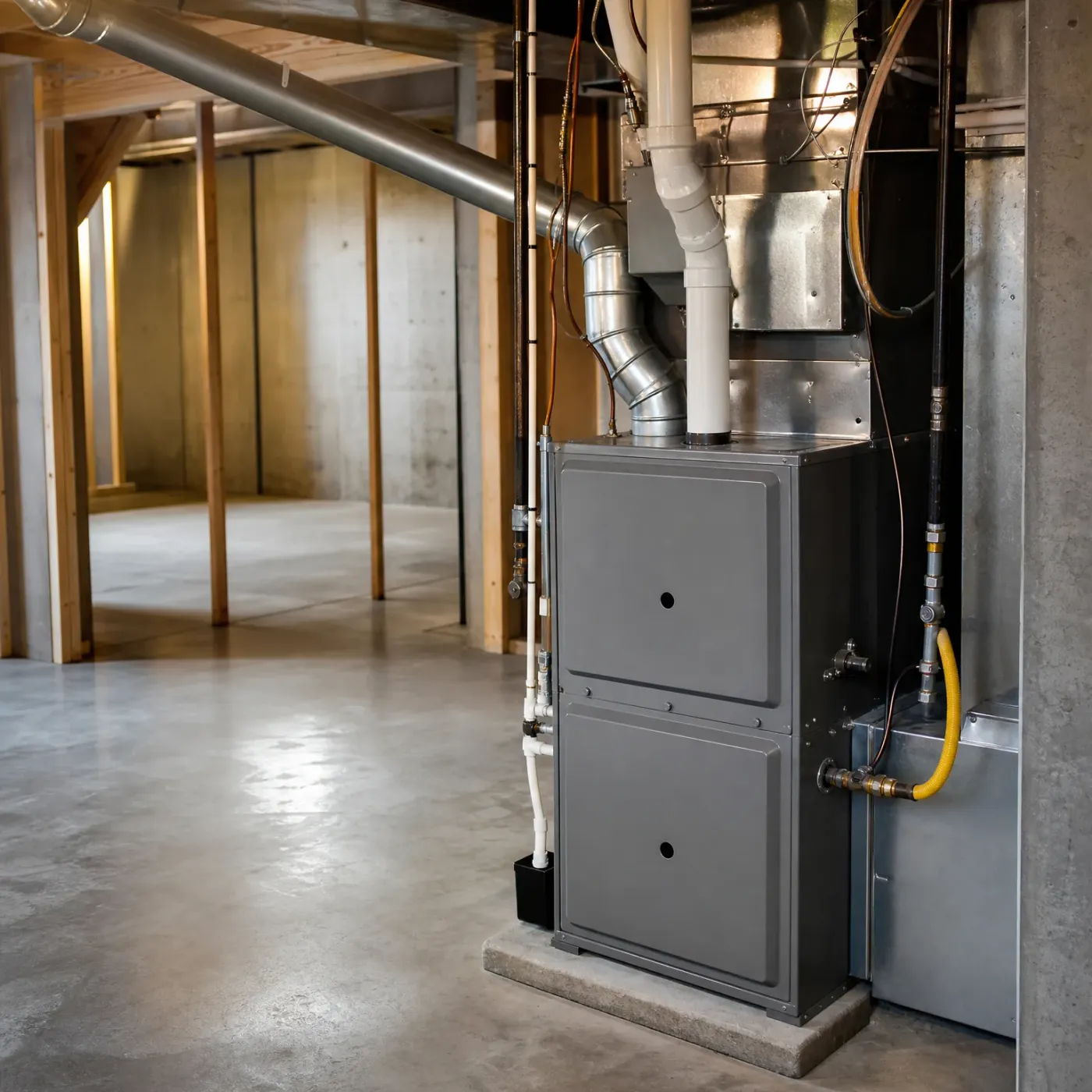




A gray high-efficiency furnace with two white PVC vent pipes stands beside galvanized sheet-metal ductwork in a dim basement with exposed joists and a concrete floor.

A local pro for your furnace repair

Signs of a cracked heat exchanger in Idaho

A cracked heat exchanger is the kind of thing you want caught before January, not during it. This page covers what to look for in your furnace, from the smell to the way the flame looks, and what it means for your house. If it's time to get a real look at your unit, you can skip the search and get matched with a contractor who'll reach out directly.

Find my pro

A cracked heat exchanger usually shows up as a smell before anything else, a sharp odor like formaldehyde that shows up when the furnace runs and fades when it stops. Some people notice headaches or nausea in the room where the furnace is, or a flame that burns yellow and flickers instead of standing steady and blue. Soot around the burner compartment is another sign, and so is a furnace that trips its limit switch and shuts off on its own partway through a cycle. The crack forms from years of the metal heating and cooling, expanding and contracting every time the furnace cycles on and off through an Idaho winter. Once it's cracked, exhaust can mix into the air the furnace is supposed to be heating and pushing through your house. That's carbon monoxide, and a furnace doing that needs to be looked at before the cold settles in for good.

A woman in a cream sweater with her hair in a bun laughs while seated at a stone counter holding a glass of red wine, in a dimly lit interior with a sofa, houseplants and a large window at night.
A woman with long dark hair in a cream knit sweater laughs while looking off to the side, seated in front of a dimly lit kitchen with an island, stools, open shelving and a potted plant, with a glass of red wine in the foreground.
A smiling woman with long dark wavy hair in a light knit sweater sits at a marble counter with a glass of red wine, with a dimly lit living room and kitchen in the background.
A smiling woman with long wavy brown hair in a beige sweater sits at a white marble counter with a glass of red wine, with a living room, dining table and kitchen cabinets behind her.

Why does a cracked heat exchanger smell like that?

You've caught that sharp smell near the furnace and you want to know what's actually causing it, not just that it's a bad sign. Understanding where the odor comes from helps you tell the difference between something worth a call and something you're imagining. You've got gas heat like most houses in Idaho, and you'd rather know what you're dealing with before you're relying on this furnace every day this winter.

The smell is exhaust gas leaking into the air your furnace is supposed to be heating, not burning

The heat exchanger is the metal chamber that holds the flame and the exhaust produced by burning gas. Air from your house passes around the outside of it and picks up heat, then gets pushed through your ducts. None of that air is supposed to touch the exhaust side. A crack in the metal lets the two mix, so a small amount of combustion exhaust rides along in the warm air coming out of your vents. That's the formaldehyde-like smell, and it's also why it shows up only when the blower is moving air, right when the furnace is running, and disappears once the burner shuts off and the exhaust stops flowing.

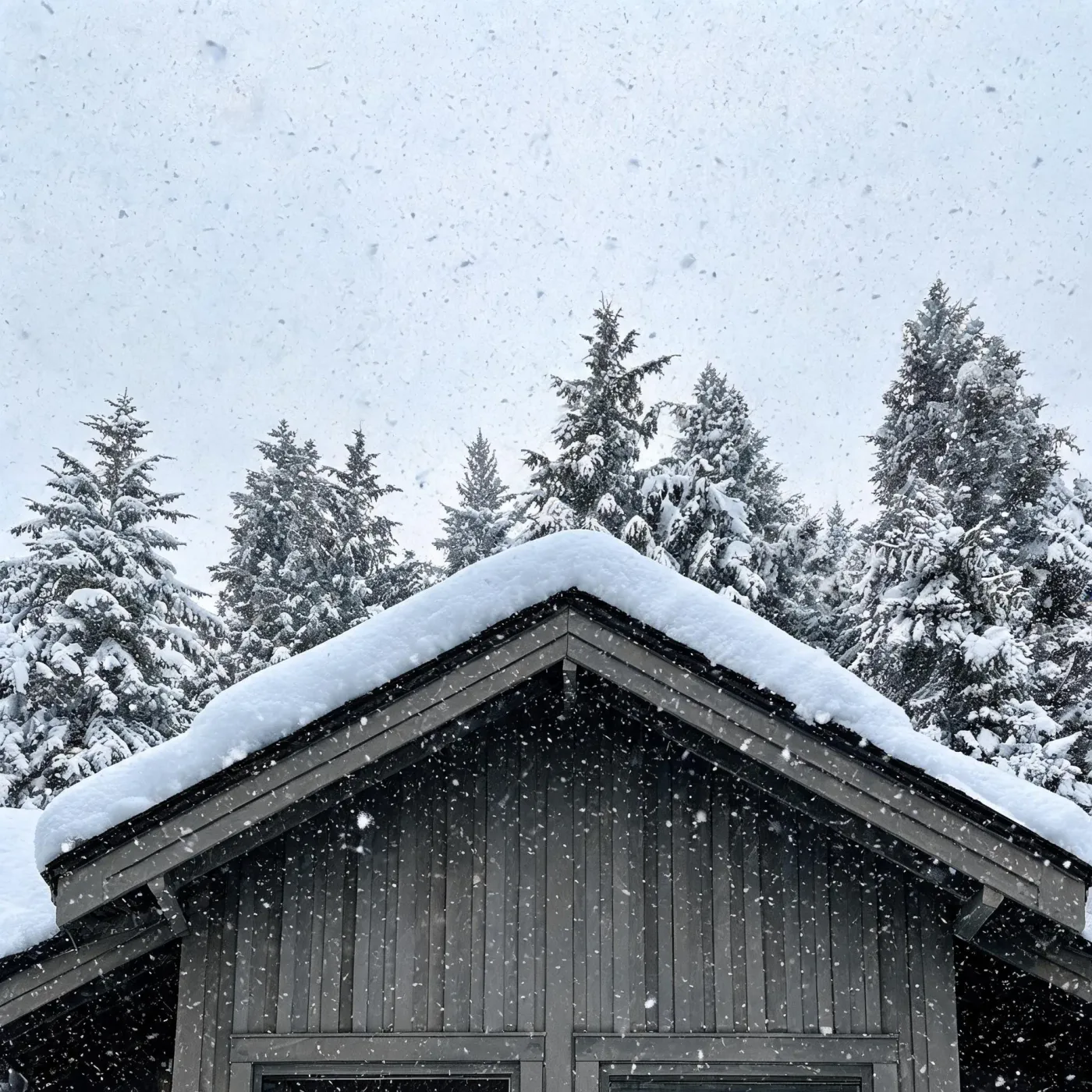
The gable end of a dark wood-clad building with a thick layer of snow on its roof, with snow-covered conifers and falling snowflakes behind it under a pale sky.

Winter nights average 22°F across Idaho, according to NOAA climate data. Your furnace is running long stretches to keep up, often most of the night without shutting off. That matters with a cracked heat exchanger, because the metal flexes more the longer and harder it runs, and a hairline crack opens wider under that kind of steady heat. It's also when you're most likely to notice the signs, since doors and windows stay shut and any odor or soot has nowhere to go. If the smell or the flame looks off on a cold night, that's the furnace telling you something, not the weather.

NOAA nClimDiv 1991-2020 county normals weighted by homes

What would you actually notice in your own house

Sit in the room with the furnace and pay attention to how you feel after it's been running a while. A headache that shows up most evenings and clears once you're outside or asleep somewhere else in the house is worth paying attention to. Look at the flame through the viewing window if your furnace has one. It should stand steady and blue. If it leans to one side, flickers more than usual, or turns yellow, that's worth noting alongside everything else. Check if the smell is stronger in one room than another, since that tells you something about where air is moving. None of this is normal wear. A cracked exchanger can let combustion gas into the air your household breathes, and that's the real risk behind all of it.

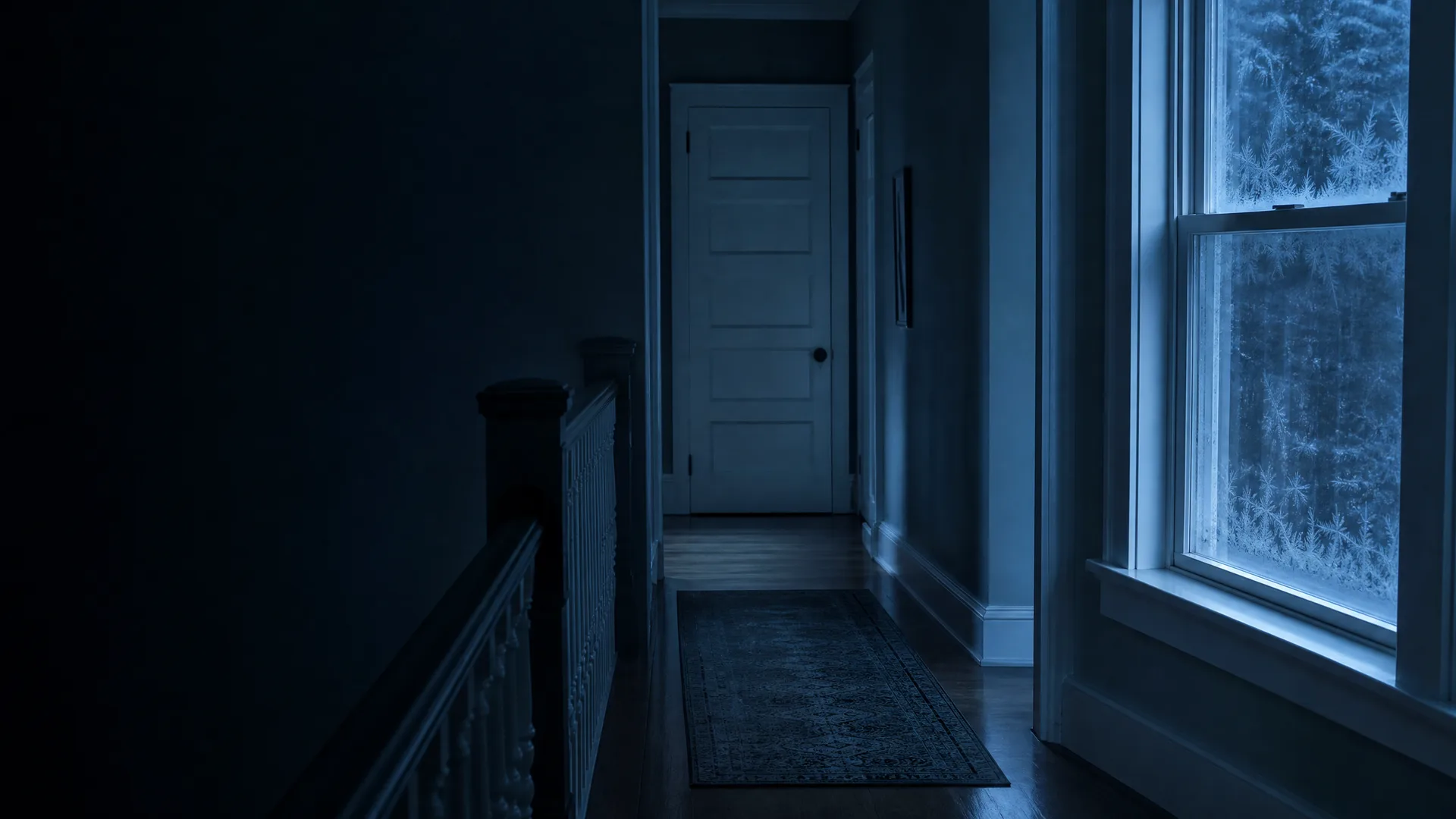
Dimly lit interior hallway at night with a closed white paneled door at the end, a long runner rug on a wood floor, a stair railing at left, and a frost-covered window admitting blue light at right.

You wake up without knowing why. The clock reads a little past 2. The house is quiet in the way it only gets on the coldest nights, when the furnace should be running hard to keep up with 22 degrees outside, and it is, somewhere below you. In the hallway the vent is silent, no air moving through it, and the window at the end of the hall has frost crawling up the inside of the glass. The light coming through it is thin and blue. You stand there a second, not cold exactly, just aware of the quiet where there should be sound, and the smell you can't quite place yet.

Get It Checked, or Wait It Out

Call a repair tech now

  • A cracked heat exchanger is a repair job, not a wait-and-see item, and most furnace techs can test for one with a combustion analyzer the same visit.
  • If the crack is confirmed, the furnace needs to stay off until it's fixed or the heat exchanger is replaced, even on a night it drops to 22 degrees.
  • A tech can check the flame and run a carbon monoxide test to rule out other causes of the smell or the headaches before assuming the worst.
  • Catching it now means you're not troubleshooting a furnace that won't turn on during the coldest stretch of the winter.
  • You avoid the work of researching the problem yourself, calling around to find someone who can test for this specific issue, and explaining the smell and symptoms more than once.

Wait and watch

  • The smell and the headaches don't go away on their own, and a cracked heat exchanger doesn't heal or get smaller over time.
  • Every night the furnace runs long to keep up with 22 degree lows, the metal flexes again, and a small crack tends to open further, not stay put.
  • Running a furnace with a confirmed crack risks carbon monoxide reaching the living space, not just the room where the furnace sits.
  • Waiting until the furnace fails outright usually means doing it on one of the coldest nights of the year, not on your own schedule.
  • Putting it off doesn't save you the call, it just moves the same search for a contractor to a worse night with less time to make it.
  1. Heat exchanger walls flex every time the furnace fires and shuts off.

  2. Thin spots in the metal split open after repeated expansion and contraction.

  3. The burner flame pulls through the crack instead of staying contained.

  4. Combustion gas leaks into the air stream headed through your ducts.

A gray furnace with two access panels stands on a concrete basement floor beside sheet-metal ductwork, with pipes, flexible conduit and an electrical box on the concrete wall to the left.
Before you get your furnace repair
A gray high-efficiency furnace stands on a concrete basement floor beside galvanized sheet-metal ductwork, white PVC vent pipes, copper and black piping, and unfinished wood stud framing.
After you get your furnace repair
A gray gas furnace on a concrete pad in an unfinished basement, connected to sheet-metal ductwork, white PVC venting, and a yellow gas line, with concrete walls and wood framing in the background.

Get the right pro for your furnace

Skip searching for a furnace pro and answer a few questions instead.

Say what's going on with your furnace, and a pro who works on them reaches out.

Answer a few questions

No charge to send it. You decide if you hire them.

A gray high-efficiency furnace with white PVC vent pipes stands beside sheet-metal ductwork and a water heater in an unfinished basement with concrete walls and wood framing.
A furnace burning clean draws air steadily through the burner, with a flame that stays blue and even the whole cycle.
A beige gas furnace with a metal flue pipe stands in a basement against concrete block walls, beside sheet-metal ductwork, copper and white plastic pipes, and a water heater at right.
A cracked heat exchanger can pull flue gas back into the airflow, turning a steady blue flame yellow and uneven.

Finding a crack takes more than a flashlight and a guess. A tech pulls the burner assembly first, because the exchanger isn't visible with it in place. From there it's usually a combustion analyzer, checking carbon monoxide at the supply vents to see if flue gas is getting into the air moving through your house. A borescope goes in next, a small camera that reaches past the burner compartment to look for splits along the metal. Some cracks only show themselves once the metal is hot, so the furnace might run for several minutes before any of this testing starts. A pressure test can catch what the others miss, a crack that stays shut at idle but opens once the blower and burners are both going. All of this means the furnace gets shut down partway through, then started back up carefully, since every extra cycle is what makes an existing crack worse. None of it is guesswork once a tech is actually in there looking.

How a tech actually checks

  • A cracked heat exchanger forces a furnace tech to pull the burner assembly to get a clear view of the metal.
  • A combustion analyzer reads carbon monoxide levels at the supply vents, which rise if flue gas is mixing into the air you breathe.
  • Techs also run a visual inspection with a borescope, a small camera that fits through the burner compartment to check for splits in the metal.
  • Some cracks only open once the exchanger heats up and expands, so a tech may run the furnace for several minutes before testing.
  • A pressure test can show a crack that stays closed at idle but opens once the blower and burners are both running.
  • The furnace has to be shut down during testing and restarted carefully, since repeated cycling is what widens a crack that's already there.
A smiling middle-aged man in a dark green sweater sits at a candlelit table with wine glasses and a plate of greens in a dimly lit interior.
A woman in a dark knit turtleneck sweater reclines on a couch under a cream knit blanket, looking down at an open book, with a lit table lamp and framed pictures behind her.

Why it gets worse over winter

The crack doesn't stay the same size all season. Every time the furnace fires, the metal around it heats up and expands, then cools and contracts when the burner shuts off. A thin spot that started as a hairline split widens a little with each cycle. On a night when your furnace barely shuts off to keep up with the cold, that's dozens of cycles, each one flexing the same weak spot. By February a crack that was barely measurable in November can be wide enough to pull a noticeable amount of flue gas into the air moving through your ducts.

Why gas furnaces are the ones at risk

A cracked heat exchanger is a problem specific to gas and oil furnaces, because the exchanger exists to keep the flame and combustion gases separate from the air blown through your house. Electric furnaces heat that same air with resistance coils instead, so there's no combustion happening and nothing for a crack to leak. If your home heats with gas, as most do here, the exchanger is doing that separating job every single cycle, all winter, and it's the one part of the furnace where a failure puts combustion gas directly into your air supply.

Winter nights average 22°F statewide

22 degrees is the average, which means plenty of nights drop colder than that. On those nights your furnace cycles on and off for hours straight, and a crack that stays small in October has far more chances to spread by February.

NOAA nClimDiv 1991-2020 county normals weighted by homes

What to do with what you've noticed

  • A sharp, formaldehyde-like smell near the furnace is still the clearest early sign of a cracked heat exchanger.
  • A flame that burns yellow and flickers instead of staying blue and steady points to the same problem.
  • Headaches or nausea that show up when the furnace runs and clear once you leave the house are worth taking seriously.
  • A combustion analyzer reading at the supply vents is the only way a tech can confirm what you're smelling or feeling.
  • At 22°F average overnight lows, Idaho furnaces cycle for hours at a stretch, giving a small crack more chances to widen before spring.
  • Once a crack is confirmed, the furnace needs to stay off until it's repaired.

You came here with a smell, a flame that doesn't look right, or a headache that only happens near the furnace. All three point the same direction. None of them tell you for certain what's happening inside the heat exchanger, and nothing short of a combustion analyzer can. That's the gap between noticing something and knowing something, and it's not one you can close from the living room.

Idaho winters don't give a small crack much time to stay small. Overnight lows averaging 22°F mean long burner cycles, night after night, and every cycle flexes the metal a little more. What you're deciding right now isn't whether to worry. It's whether to spend this week calling furnace companies, describing the smell to three different people, waiting on callbacks, and comparing quotes you don't have the background to judge, or whether to skip that and get matched with a contractor who already knows what a combustion analyzer reading at the supply vents can tell them.

The furnace needs to stay off until someone's confirmed what's going on and fixed it if there's a crack. That part doesn't change no matter how you get there. What changes is whether you spend the next few days tracking down who to call or whether that part gets handled for you, so the only thing left on your plate is answering the phone when the contractor reaches out.

A gray high-efficiency furnace with two access panels stands on a concrete basement floor, connected to sheet-metal ductwork and white PVC vent pipes, with wood framing and a gas line nearby.

A pro who works on furnaces

RepairFurnace or heatingIdaho
Step 1 of 2

What ZIP code is the job in?