
Why your furnace is blowing cold air in Idaho

Answer a few questions instead of calling shop after shop.

RepairFurnace or heatingIdaho
Step 1 of 2

What ZIP code is the job in?

Why is my furnace blowing cold air?

You turn the heat on and feel cold air coming out of the vents instead of warm. In Idaho winters that gets your attention fast, especially if you're already running the furnace most of the day. Before you assume something is badly broken, it helps to know this is usually one of a few specific things, some of them normal and some worth a call.

Usually the igniter failed, the flame sensor is dirty, or the thermostat fan setting is on

A furnace blows cold air for a handful of reasons. Right after it starts, you'll feel cool air for a few seconds while the burners light and the heat exchanger warms up, and that's normal. If it keeps blowing cold the whole time it runs, the igniter may have failed, or the flame sensor is too dirty to detect a flame, so the burners never light and only the blower runs. Check the thermostat fan setting too. If it's set to "on" instead of "auto," the blower runs constantly, including between heating cycles, which feels like cold air even when the furnace is working fine. A gas furnace that won't light at all needs a technician, since the igniter and flame sensor aren't something to troubleshoot further on your own.

  1. You call for heat and the thermostat sends power to the control board.

  2. The inducer motor starts and pulls air through to clear the heat exchanger.

  3. The igniter heats up or the pilot lights the burners.

  4. Gas flows to the burners and the flame heats the heat exchanger.

Short Delay or Something Wrong

Cold air from a short delay

  • The blower can kick on a few seconds before the burners light, so what you feel first is room air, not a fault.
  • If warm air follows within half a minute or so, the furnace is working through its normal startup.
  • A dirty flame sensor can make the burners shut off right after they light, so the blower keeps pushing air that never got hot.
  • A cracked or failing igniter stops the burners from lighting at all, and the blower runs on by itself.
  • A thermostat set to "on" instead of "auto" runs the blower constantly, including the stretches between heating cycles when no flame is burning.

Cold air that stays

  • If the air never warms up at all, the gas valve may not be opening, and the burners aren't lighting.
  • A furnace that overheats will shut its burners off as a safety measure but can keep blowing air until the blower motor shuts down too.
  • A clogged filter restricts airflow across the heat exchanger, which can trip the high limit switch and cut the flame.
  • If the pilot light has gone out on an older system, no flame means no heat no matter how long the blower runs.
  • Gas supply trouble, whether from the meter or a closed valve inside the house, will stop the burners with no warning on the thermostat.
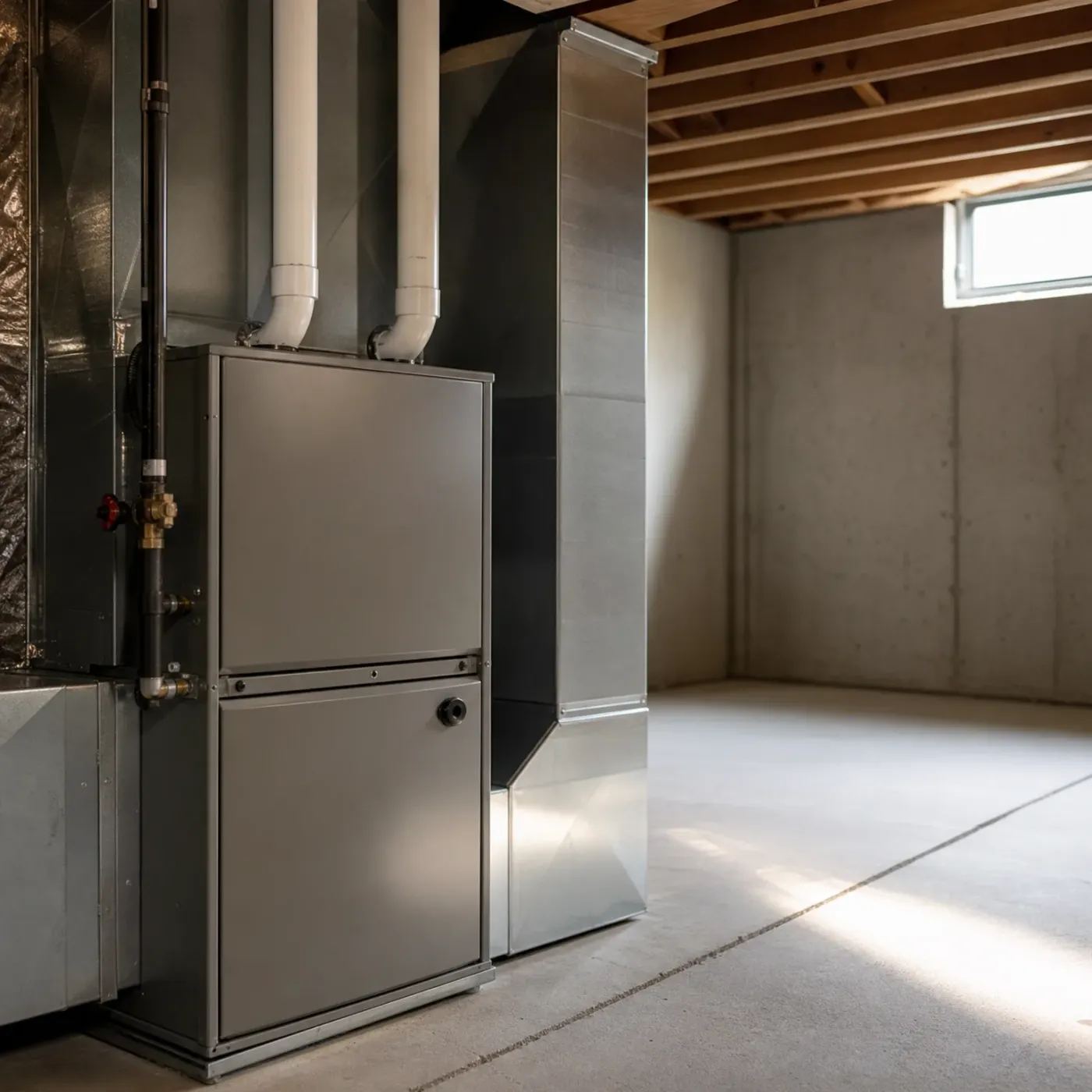
A gray high-efficiency furnace with two PVC vent pipes stands in an unfinished basement beside sheet-metal ductwork, a framed and plastic-covered wall, and a bare concrete wall with vertical pipes.

Running the way it should

Warm air moves through the ductwork and the burners stay lit until the thermostat is satisfied. The flue pipes vent exhaust outside, the gas line feeds the burners steadily, and the furnace cycles on and off without you noticing anything but the heat.


A gray furnace cabinet in a basement, connected to galvanized sheet-metal ductwork and white PVC pipes, against a concrete wall with exposed metal piping and insulation overhead.

Sitting on a call

A furnace that won't hold a flame or keeps shutting off mid-cycle needs a technician, not a guess. A local contractor who services this equipment all winter can look at the igniter, the flame sensor, or the inducer motor and tell you which one quit.

A smiling woman with dark shoulder-length hair in a cream V-neck sweater sits at a marble counter with a glass of red wine, with a kitchen and softly lit living room behind her.
A woman in a dark green sweater laughs while seated at a marble kitchen island with a glass of red wine, with open shelving, cabinets and a living room visible behind her.
A woman with long dark hair in a cream knit sweater laughs while looking off to the side, seated at a counter with a glass of red wine, in a dimly lit living room with a sofa, lamp, framed pictures and houseplant behind her.
A smiling woman with long dark hair in a beige sweater sits at a marble kitchen counter with a glass of red wine, with a dimly lit living room behind her.
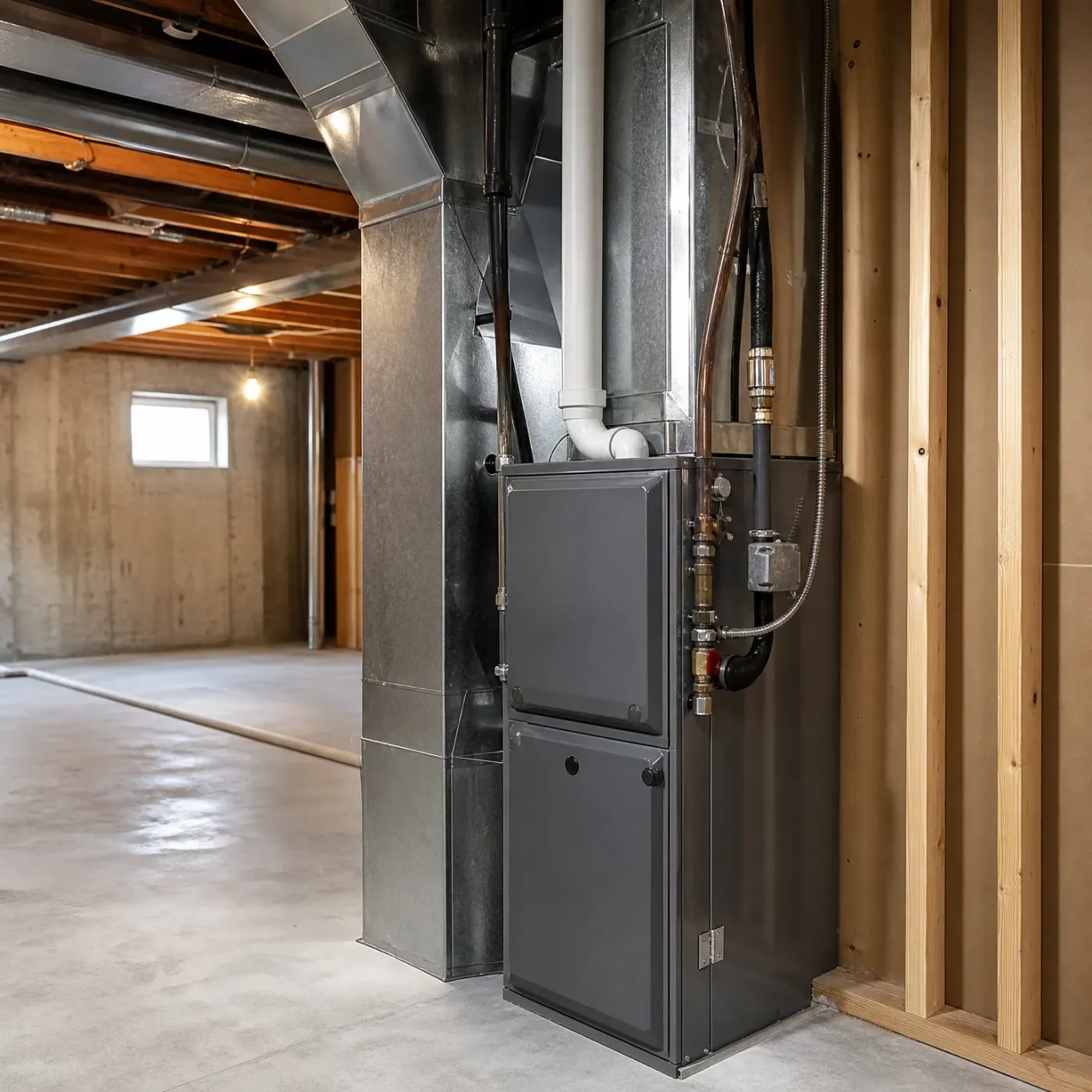
A gray furnace with copper and flexible piping stands against a wood-framed wall in an unfinished basement, connected to galvanized sheet-metal ductwork and PVC venting, with a concrete floor and exposed joists.

No phone calls to make

Your request goes to one pro, not a list of companies.

Describe your furnace job once, to one pro.

Skip the search

No fee to send it, and nothing to sign.

A gray metal furnace with two white PVC vent pipes stands on a concrete floor beside galvanized sheet-metal ductwork in a basement or utility space with wood framing.
Before you get your furnace repair
A gray furnace cabinet in a basement with sheet-metal ductwork, white PVC vent pipes, and black gas piping against a concrete wall and wood-framed partition on a bare concrete floor.
After you get your furnace repair

Why the blower runs without heat

The blower and the burners are run by separate parts of the control board. If the igniter fails or the flame sensor can't detect a flame, the board shuts the gas valve down as a safety measure, but it often leaves the blower running. That's why you can get a steady stream of cold air instead of a furnace that just stops. The fan doing its job while the burners don't is a sign pointing at ignition, not airflow. A furnace that's actually off doesn't push air through the vents at all.

What a flame sensor actually does

The flame sensor is a thin metal rod that sits in the burner flame and proves to the control board that gas is actually igniting. If it's coated with soot or corrosion, it can't read the flame even when one is there, and the board cuts gas to the burners within seconds. The blower keeps running on the fan setting it was given. This is a common failure point precisely because the sensor sits in open flame every time the furnace runs, so it wears before most other parts do.

A smiling bearded man in a navy crewneck sweater sits at a dinner table with a glass of red wine, plates and glasses in the foreground, in a dimly lit room with a lamp and framed picture behind him.
A woman in a dark gray sweater reclines on a light sofa with eyes closed and a slight smile, under a textured gray blanket with an open book resting on her lap, with a lit table lamp and plant in the background.

Cold air blowing all night

If the burners won't stay lit, the blower keeps pushing room temperature air through the house while you sleep, and the thermostat never sees enough heat to shut off.

Reach a local pro

A furnace that won't restart

Some safety lockouts need a reset a thermostat can't do. Leave it alone too long and you're troubleshooting a cold house instead of one fan running wrong.

Reach a local pro

51.6% of homes statewide heat with gas

More Idaho homes heat with gas than with anything else, and yours is probably one of them. When a gas furnace blows cold air, the problem is almost always on the burner side, the igniter, the flame sensor, or the gas valve, not the blower itself.

ACS 2020-2024 5-year B25040

A gas furnace with two gray access panels stands against a plain wall in a basement, connected to sheet-metal ductwork, white PVC vent pipes, and a yellow gas line.

Living with a furnace stuck blowing cold

You keep checking vents with your hand, trying to catch warm air that isn't coming. The thermostat says the furnace is running, so you leave it alone and hope it corrects itself, but it doesn't. You start calling around in the evening after work, explaining the same thing to each contractor, waiting on callbacks, trying to find someone who can look at it before the cold really sets in.

A gray high-efficiency furnace in a basement corner with white PVC vent pipes, copper and black gas piping, and sheet-metal ductwork beside a plain white wall and wooden stair framing.

Getting it looked at directly

One request gets you matched with a licensed contractor local to your part of Idaho, someone who works on furnaces all winter and knows the igniter and flame sensor are where this usually starts. You explain it once. No comparing quotes from three different companies, no repeating the story on a second call. Just a technician who can get to the burner side of the problem and get your furnace actually heating again.

A furnace blowing cold air almost always comes down to the burner side, the igniter, the flame sensor, or the gas valve, not the blower. That's the short version, and it's enough to know what you're dealing with before anyone touches the unit. What you need now is someone who can look at your furnace, tell you which of those it is, and fix it before another cold night goes by. A local contractor who works on furnaces all winter has seen this exact complaint many times and knows where to check first. You'll get matched with one contractor, not a handful, so you're not fielding calls from five different companies while you're trying to get warm air back in the house. That contractor is licensed to do the work and already knows the equipment that shows up in homes around you. The cold air isn't a mystery anymore. What's left is getting it fixed.

A gray furnace with PVC vent pipes and sheet-metal ductwork stands against a wall in an unfinished basement with concrete floor and walls, exposed wood joists, and a small window.

Skip the search

Find a licensed furnace pro

Only one pro gets your request, so you hear from one company.

You're not committing to anything by asking.