A twilight street scene featuring illuminated timber-frame and stone houses with a mountain range visible in the background.

Heat Pump Repair in Nampa, ID

Tell us about the job

Takes about a minute. No obligation.

RepairHeat PumpCanyon County, ID
Step 1 of 2

What ZIP code is the job in?

Winters here are cold, not brutal

Nampa gets down to a 25°F overnight low on average through December, January and February. That's cold enough for a heat pump to work for its keep, but it's not the kind of deep, sustained cold that wears out a compressor fast.

So a repair is usually the right call

A heat pump that hasn't been run into the ground by extreme weather is more likely to have years left in it. When something goes wrong here, age or a skipped tune-up is the more common cause, not a system worked past what it can handle.

8 months
October through May, your system heats
3 months
June through August, it cools
25°F
the average winter night it heats against
89°F
the average summer afternoon it cools against
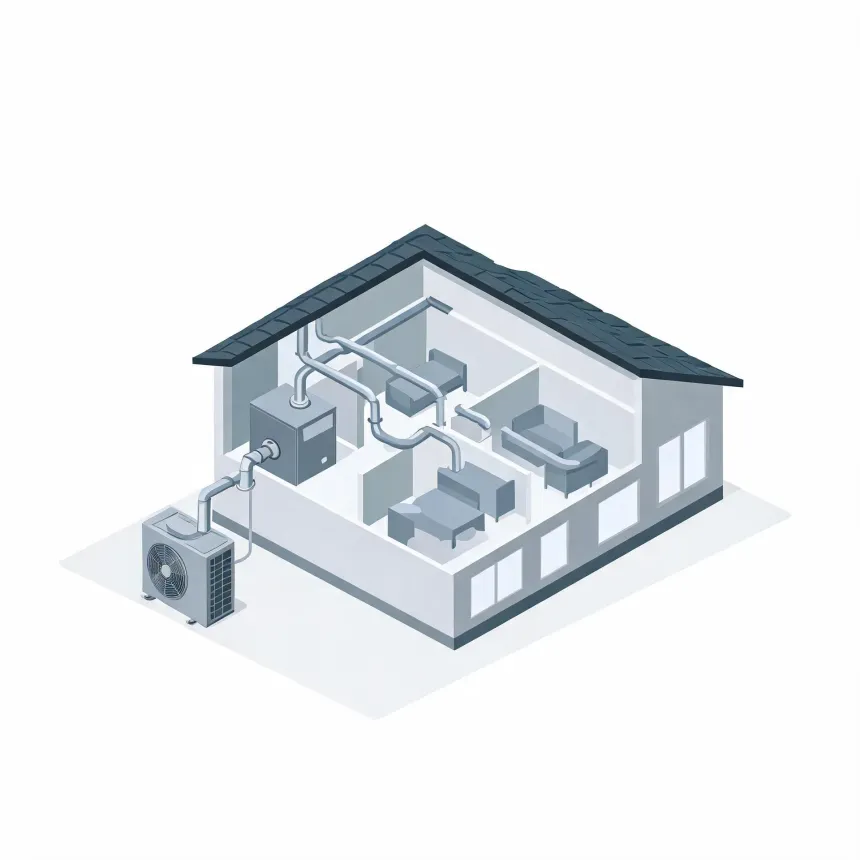
Isometric cutaway illustration of a single-story house showing an indoor air handler, branching ductwork through rooms with furniture, and an outdoor condenser unit connected by a line outside the wall.
Your system heats October through May and cools June through August.

NOAA nClimDiv, 1991–2020 normals

Half the homes in Canyon County were built in 1999 or later.

A heat pump that came with a newer house usually hasn't earned a replacement yet.

A newer home usually means a repairable heat pumpHalf the homes in Canyon County were built in 1999 or later, well within a heat pump's working life.

Before anyone comes out, check the thermostat is set to heat and the setting is a few degrees above room temperature. Go to the outdoor unit and look at the coil. If it's caked in ice or buried in leaves and debris, that alone can stop a heat pump from heating right. Check the indoor filter too. A clogged filter chokes airflow and can cause the whole system to run weak or short cycle. Check the breaker panel for a tripped breaker while you're at it. None of this fixes a bad compressor or a refrigerant leak, but it rules out the simple stuff first.

It's usually worth repairing

It has an easier job here than in most places, so your heat pump is often in decent shape. Repair is usually worth it.

Find a contractor
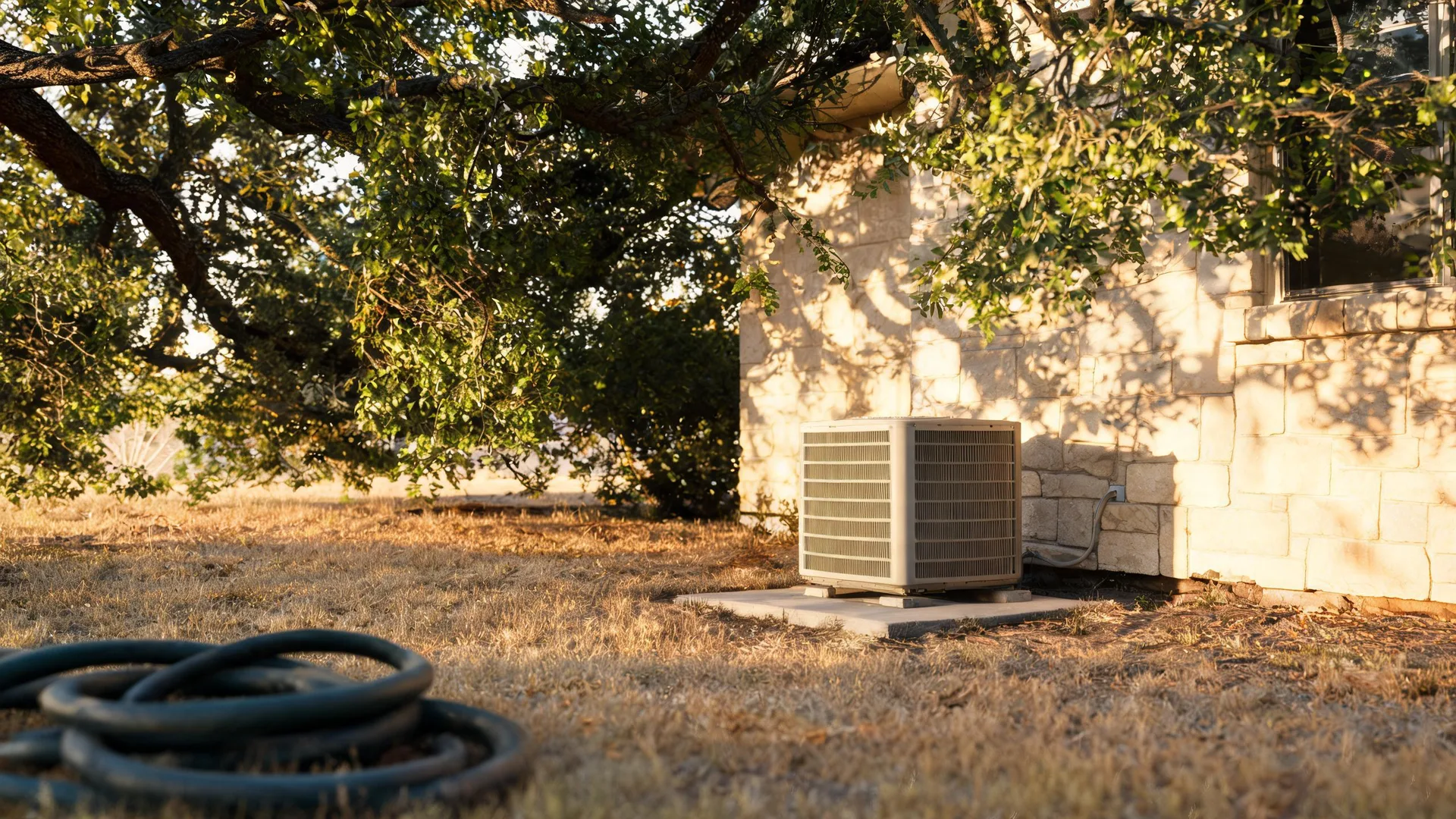
A gray outdoor HVAC unit mounted on a concrete pad beside a house with gray lap siding and a stone foundation.

Running it while something's wrong rarely buys you time

A heat pump that's struggling doesn't fail all at once. It keeps running in a way it shouldn't, and that's what does the damage. A refrigerant leak gets worse the longer the compressor keeps trying to pump a full charge through a system that's lost some of it. A failing capacitor makes the compressor or fan motor draw more current to start, and that strain shortens the life of whatever it's connected to. Ice on the outdoor coil blocks airflow, so the system works harder to move heat that isn't getting through, and that extra load lands on the compressor. None of these fix themselves by staying on. The part under strain stays under strain until it quits, usually at the worst possible time.

The reversing valve is a common point of failure

The reversing valve is what switches a heat pump between heating and cooling, and it fails in a way that's easy to miss. It can get stuck partway, so the system blows air that's barely warm, or it can send refrigerant the wrong direction entirely. Either way the symptom looks like several other problems, which is why it needs someone who can test it rather than guess.

Most other failures trace back to the compressor or what protects it

A heat pump's compressor rarely just quits on its own. It usually gets pushed there by something else first, a low refrigerant charge, a failed capacitor, a fan motor that's stopped moving air across the coil. Any of those make the compressor work harder than it's built for, and damage done there doesn't reverse. Catching the smaller failure early is what keeps it from reaching the compressor at all.

Most heat pump trouble shows up in how the air feels. In heating mode it should feel warm. If it's running but barely taking the chill off the room, something's already wrong. Hissing or bubbling near the indoor or outdoor unit means refrigerant is escaping where it shouldn't. A unit that short cycles, turning on and off in quick bursts instead of running a full cycle, is usually struggling with airflow or a failing part trying to start under strain. Ice building up on the outdoor coil when it's not in defrost is another sign. So is a system that runs and runs without ever reaching the set temperature. Grinding, clicking or buzzing that wasn't there before means a motor or relay is on its way out.

Age and history matter more than any single symptom when you're deciding whether to fix a heat pump or start over. A system that's been maintained, that's had its filters changed and its coils cleaned, usually has a straightforward problem with a straightforward fix. One that's been neglected tends to fail in a way that points to something bigger, a compressor strained past its limit or a coil so corroded it won't hold refrigerant. The question isn't just what broke, it's whether this is the first real failure or the latest in a string of them. One repair on an otherwise sound system is just maintenance. A system that keeps needing attention is telling you something different, and at some point the honest answer is that you're paying to keep patching the same machine instead of paying once for one that works.