Running quiet
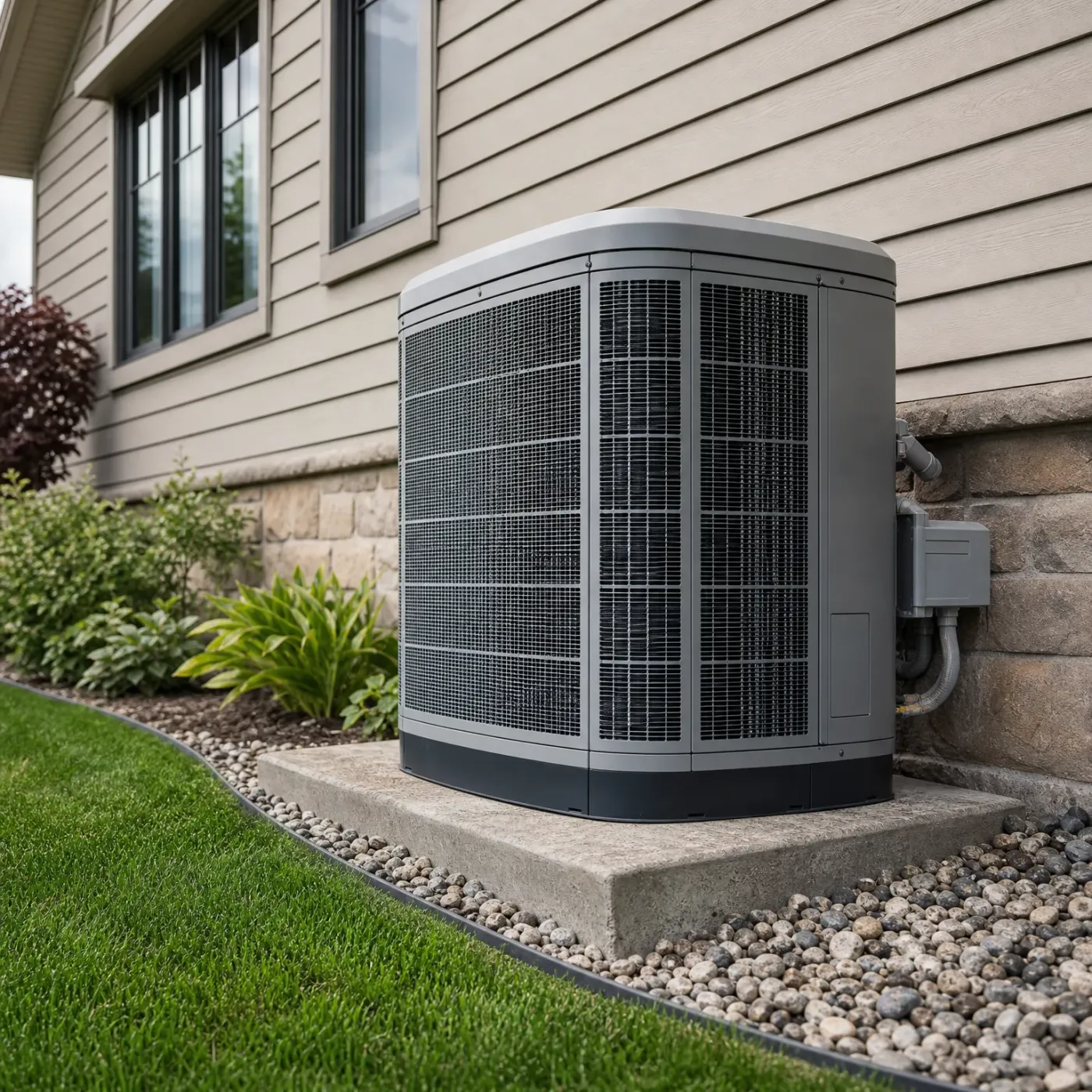
This is what a healthy unit sounds like: a steady hum when it kicks on, then nothing you notice. The pad is clean, the lines run straight to the wall, and the fan turns without ticking or grinding. Nothing here is loose.
Your heat pump has been running fine all summer, and now it's making a noise you can't ignore, a bang, a rattle, a screech, or a loud buzzing. You want to know if this is something to worry about before winter sets in, or if it's just the unit doing its job a little louder than usual. In Nampa, where this system is likely handling both your summer cooling and part of your heat, a sound like this is worth paying attention to.
A bang or clank when the unit starts or stops usually means a loose part inside the cabinet, sometimes a panel, sometimes a compressor mount working itself free. A high-pitched screech points to a worn bearing in the fan motor. A buzzing hum can mean a failing capacitor or a contactor struggling to close. Rattling is often debris caught in the outdoor fan, something that happens easily here with how dusty Canyon County summers get. None of these fix themselves, and most get louder and more expensive the longer they run. Since your heat pump likely carries real weight during Nampa's cold winters, a problem that affects the compressor or fan motor is worth catching before you need the heat and the unit can't keep up.

You're out before sunrise, heading to the car, and you hear it before you see it: a low buzzing from the side yard where the outdoor unit sits. The cold snapped hard overnight, well below freezing, the kind of morning Canyon County gets a handful of times each winter. You walk over and find the whole cabinet coated in ice, thick over the coils, a crust of it on the fan guard. The sound is coming from inside that ice, the fan straining against it or the compressor laboring under a load it wasn't built for. Your breath fogs in the porch light. The unit keeps buzzing, steady and wrong, while the rest of the yard stays silent and dark.
Winter nights average 25°F
Nights in the 20s mean your heat pump is pulling heat from cold air for hours at a stretch, and strain shows up as noise.
Heat runs October through May
Eight months of run time wears parts down faster than a system that rests most of the year. A noise now is wear catching up with it.
Cooling runs June through August
Three months of cooling gives the unit a break, but come October it switches back to heat mode and any worn part makes itself known.
NOAA nClimDiv 1991-2020
A rattle that shows up once, during a hard freeze, and goes away by afternoon is worth watching but not worth a service call yet. Write down when it happens.
A noise that shows up every time the unit kicks on, or gets louder over a few days, means a part is failing. That one needs a contractor before it quits on a cold night.




A heat pump moves heat out of outside air, and outside air below freezing holds less of it. The system runs longer to pull the same warmth into your house, and the compressor works under more load the colder it gets. That load shows up as sound before it shows up as anything else. A part that was quiet at 50 degrees can rattle or buzz at 25 because it's being asked to do more. This is also why a noise tied to defrost cycles matters: the unit reverses itself briefly to melt frost off the outdoor coil, and a worn reversing valve or a fan losing balance will announce itself right at that switch.
If frost builds up faster than the defrost cycle clears it, ice can form around the fan blade or the coil itself. A fan blade clipping ice makes a sharper, more irregular sound than normal operation, and it tends to get worse hour over hour rather than staying steady. Check the outdoor unit in daylight for visible frost or ice past what melts off on its own within an hour or two. A thin coat that clears is normal in Canyon County's cold snaps. A thick buildup that doesn't clear points to a defrost control or airflow problem worth having looked at before it strains the compressor.


The pro who gets in touch is licensed in Idaho and works in Canyon County.
Get matched with someone who does this kind of work in Canyon County.
You only hire the pro if you want to.
Right now it's a sound, nothing more. But a bang or screech that keeps showing up means a part is working loose or wearing down, and the outdoor unit doesn't fix itself. Left alone through a Canyon County winter, a loose part can turn into a failed one, and that's the morning your heat pump doesn't come on at all and the furnace has to carry the whole house alone, if your home has one. You might also notice the sound get worse after a cold night, or a smell of hot metal or burning dust near the unit. None of that means tonight's an emergency. It means the part making the noise is telling you something before it quits.

This is what a healthy unit sounds like: a steady hum when it kicks on, then nothing you notice. The pad is clean, the lines run straight to the wall, and the fan turns without ticking or grinding. Nothing here is loose.

This unit has seen some winters. The cabinet shows weather, and a unit this age is more likely to have a fan blade knocking its housing or a compressor mount that's worn through. Noise like that gets worse left alone, not better.
At 11.78 cents per kilowatt-hour, running your heat pump through a cold snap doesn't hit your bill the way it might elsewhere. That's worth knowing before you decide whether a noise is worth a service call. A noisy compressor working under strain still draws power either way, and a part wearing down won't fix itself just because the electricity is cheap.
EIA-861 2025
A heat pump that bangs, rattles or screeches is telling you something is loose, worn, or working harder than it should. The cold is part of why. Below freezing, your system pulls heat from air that has little to give, so it runs longer and the compressor and fan carry more load. That load is where a small issue turns into a sound you notice. The question is whether it's a one-time thing or a pattern. A noise tied to the coldest hour of the morning, gone by afternoon, is worth writing down and watching. A noise that shows up every cycle, or gets louder over a few days, is a part on its way to failing rather than a system adjusting to the cold. You can check your own unit against what healthy sounds like: a steady hum at startup, a fan that spins freely, nothing ticking or grinding, the lines running straight and the pad underneath it clean and level. If what you're hearing doesn't match that, it's worth having someone look before the next hard freeze, not after. Power here is cheap enough that running the system harder isn't what costs you. What costs you is a worn part that gets ignored until it fails on the coldest night of the year, when a heat pump has the least room to work with and you have the least patience to wait on a fix.


A noise that repeats or grows louder is a part working loose or wearing down, and a Canyon County winter won't let it heal on its own. A local contractor who works on heat pumps all season knows what a hard freeze does to a compressor or fan motor, and what sound usually means which part. Get matched with one licensed contractor near Nampa, and only that one reaches out, so you're not sorting through calls to find someone who'll actually look at it before the next cold snap.
The pro who reaches out is licensed in Idaho.
Asking costs nothing, and the choice to hire stays yours.