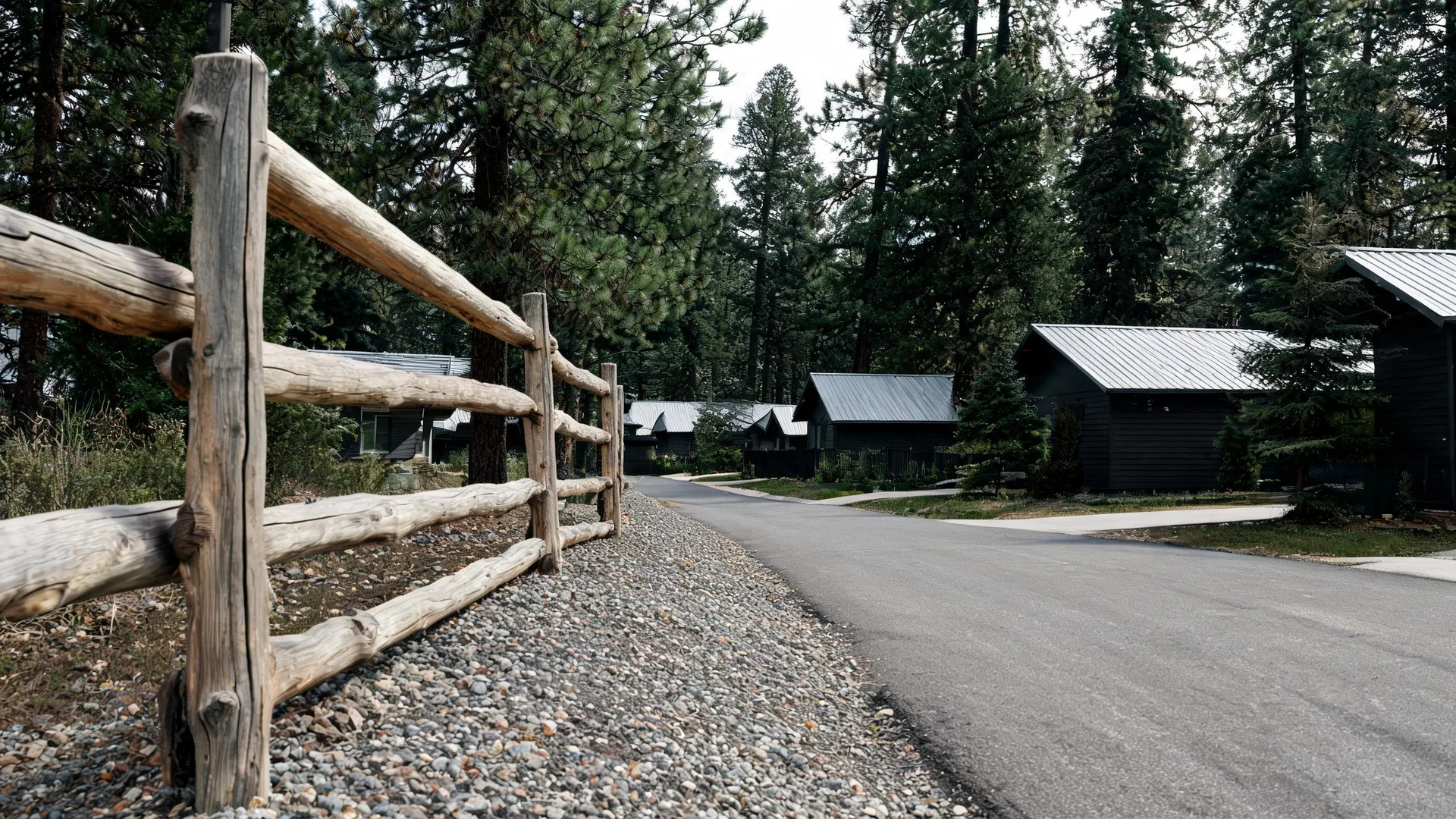




A paved road bordered by gravel and a weathered split-rail log fence curves past dark-sided cabins with metal roofs among tall conifer trees.

Heat Pump Repair in Lewiston, ID

Tell us about the job

Takes about a minute. No obligation.

RepairHeat PumpNez Perce County, ID
Step 1 of 2

What ZIP code is the job in?

Winter nights in Nez Perce County average 26°F, which is a steady, moderate load for a heat pump, not the kind of deep cold that pushes a system to its limit night after night. The weather trouble here comes in events instead, wind and winter storms that hit hard but pass. That's a different kind of stress than the grinding, day-in day-out demand a heat pump faces in colder parts of the country. So when a heat pump here starts acting up, it's rarely because the machine has been worn down by its surroundings. More often something specific has gone wrong, a part failed or aged out, and that's usually worth fixing rather than replacing.

10 months
September through June, your system heats
2 months
July through August, it cools
26°F
the average winter night it heats against
82°F
the average summer afternoon it cools against
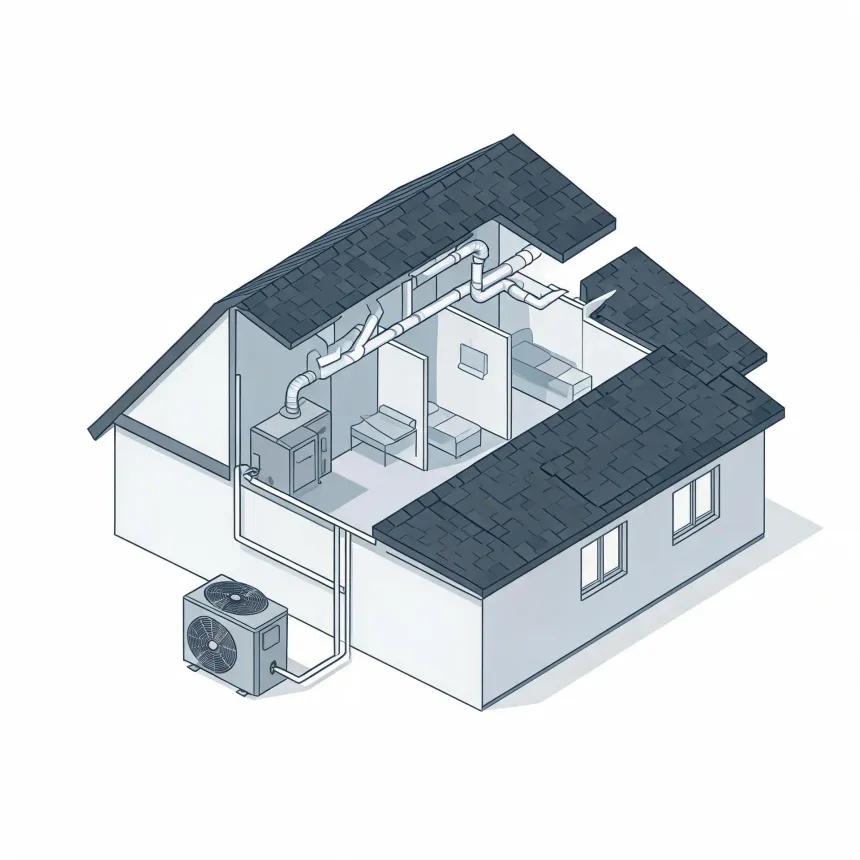
Isometric line illustration of a cutaway single-story house showing interior ductwork, an indoor air handler unit, and an outdoor condenser connected by refrigerant lines, with a dark shingled roof.
Your system heats September through June and cools July through August.

NOAA nClimDiv, 1991–2020 normals

A heat pump doesn't fail all at once. Most of the time one part gives out and the rest of the unit is fine.

Replace the part that's actually bad and the compressor that's still good keeps running for years.

Half the homes here are old enough that the heat pump may be older than the house's second owner

Half the homes here were built by 1973
37 damaging wind events from 2015 to 2024
29 winter storms from 2015 to 2024

That's worth knowing before you decide whether to repair or replace. A heat pump that's been spared the kind of grinding cold other regions see has less reason to be worn out from the inside. So if yours is short cycling, blowing air that's not warm enough, or tripping a breaker, get someone out to look at the actual part before you write the whole unit off. Wind and winter storms can knock loose a connection or damage an outdoor unit directly, which is a different problem than years of hard running, and often a simpler one to fix. Have the contractor check the outdoor unit for storm damage first, especially after the last wind event came through.

Find out what's actually wrong before you decide what it's worth fixing

Half the homes in Nez Perce County were built in 1973 or earlier. If yours is one of them, there's no way to tell from the street how old the heat pump actually is. Before paying for a repair, ask the contractor what part failed and what that tells you about the rest of the unit.

Find a contractor
A gray heat pump outdoor unit mounted on a concrete pad next to the stone-accented exterior wall of a house.

What to check yourself before the truck shows up

Before anyone comes out, walk around the outdoor unit and look for anything pressed against it, branches, leaves, ice built up on the coil. Clear a space around it so air can move through. Check the breaker if the indoor unit isn't responding at all, it may have simply tripped. Look at the thermostat setting and make sure it's actually calling for heat and not stuck in a mode it shouldn't be in. Change the air filter if you can't remember the last time you did, a clogged filter chokes airflow and can make a fine system act like a failing one. If the outdoor fan isn't spinning at all while the indoor blower runs, that's worth telling the contractor before they arrive. None of this fixes a bad capacitor or a refrigerant leak, but it rules out the easy stuff first.

A failing part rarely fails cleanly

A capacitor that's going weak doesn't just quit. It makes the compressor pull harder to start each cycle, and that extra strain is what finally kills it for good. A refrigerant leak is the same story. A system low on charge runs longer to make the same heat, and the compressor ends up working oiled for less refrigerant than it needs. Small problem, running machine, bigger problem.

Short cycling wears on more than your patience

A heat pump that shuts off and restarts over and over, instead of running a normal cycle, is usually hunting around a problem like a bad sensor or an airflow restriction. Every one of those restarts is hard on the compressor and the start components. Left alone, a unit that short cycles for weeks puts more wear on itself than one that ran correctly for a full season.

A heat pump in trouble usually tells you in one of a few ways. It blows air that feels cool instead of warm, because the reversing valve is stuck or the system is low on charge. It runs and runs without the house catching up to the thermostat, which points to a duct problem, a charge problem, or a compressor that's lost some of its capacity. It makes a noise it didn't used to make, a click that repeats, a buzz from the outdoor unit, a hard clunk when it switches between heating and defrost. Ice builds up on the outdoor coil and stays there instead of clearing during the normal defrost cycle. The breaker trips more than once, which is the system telling you a part is drawing more current than it should, not a fluke. Any one of these is worth a call before it turns into a no-heat morning.

A diagnostic starts outside, at the unit itself, not with a guess. The contractor hooks up gauges and checks the refrigerant charge, because a system low on charge can act a lot like a failing compressor. They'll pull the access panel and test the capacitor and the contactor directly instead of just looking at them, since those are the parts that wear out first under ordinary use. Static pressure gets checked on the duct side to see if the system is straining to move air through a restriction. They'll run the unit through a full cycle, including a defrost cycle if conditions call for one, and watch how it responds rather than just how it sounds. Whatever part failed usually tells a good contractor something about what else on the unit is worth checking before it fails too.