

Running clean
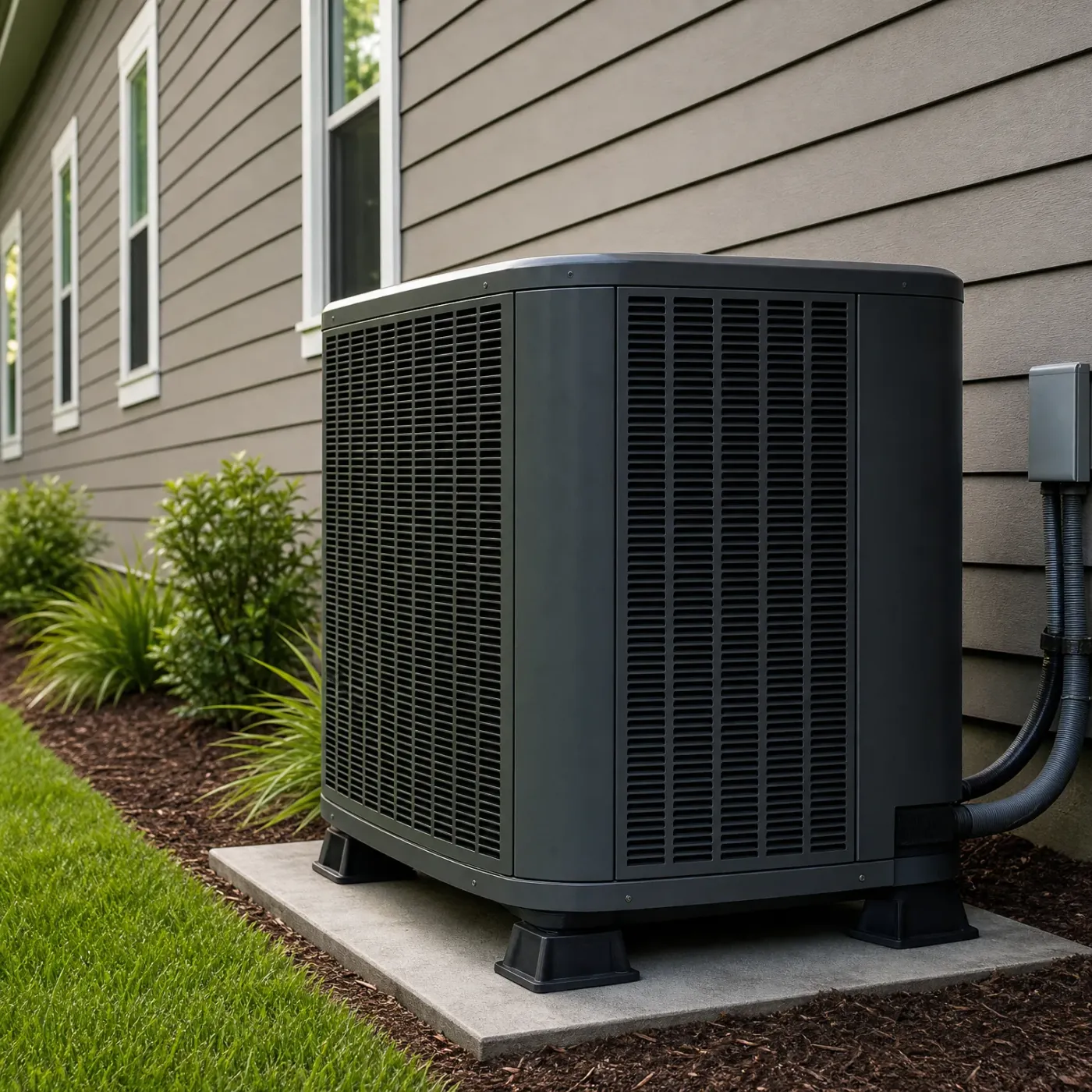
This is what a heat pump should look like year round: coil clear, cabinet free of debris, lines intact. Air moves through it the way it's supposed to, so it doesn't have to work past what the compressor was built for.
Your heat pump tune-up request goes to a pro who covers Nez Perce County.
Find a pro near meYour heat pump works harder than a regular furnace setup because it handles both your winter heat and your summer cooling. With Lewiston running hot, dry summers and cold winters, that system is on the job most of the year. Knowing how often it needs a checkup helps you keep it running before something breaks down when you need it most.
A heat pump should get checked once a year. Because it runs double duty, heating your home through the cold months and cooling it through the hot ones, it logs more hours than a standard AC or furnace alone. Spring is the better time to schedule it here, ahead of the stretch of hot, dry summer days when the system shifts into cooling mode and stays there. A technician checks refrigerant charge, the outdoor coil, electrical connections and the reversing valve that switches the unit between heating and cooling. Skipping this lets small problems, like a coil losing efficiency or a connection working loose, turn into a breakdown in July or a system that struggles to keep up when a cold snap hits.




Winter nights average 26°F
Nights drop to 26°F on average in December and January. That's well below freezing, so the system is pulling heat from cold outside air most winter nights, not mild ones.
Heat runs September through June
Heat runs September through June, about ten months of the year. A tune-up checked against that schedule matters more than one checked against a typical furnace.
Cooling runs July through August
Cooling only runs July and August here. The same unit that works ten months in heat mode gets two months to switch jobs entirely, twice a year, every year.
NOAA nClimDiv 1991-2020
Skip the tune-up and you'll likely notice it first in January, when the heat pump is straining to pull warmth out of 26°F air and can't keep the house where you want it. A coil clogged with dust makes the system run longer to do the same job, and that shows up on your power bill even though power here is cheap. In summer the same neglect shows up as a system that runs and runs on a hot, dry afternoon without actually cooling the house down. Heat pumps have a reversing valve and defrost cycle a standard furnace and AC setup doesn't, and those are the parts most likely to fail quietly, costing you comfort before they cost you a breakdown. Since most homes here heat with gas and use the heat pump less, a problem can sit unnoticed for months because nobody's relying on it hard enough, in the shoulder seasons, to catch it early. By the time it fails outright, you may be down to backup heat on the coldest night of the year.


A tune-up isn't a quick look and a sticker on the unit. It follows a sequence, and each step catches something different. The reversing valve gets checked first, since that's what lets the system switch between heating your house and cooling it, and it has to shift without sticking. Refrigerant charge gets measured against the exact spec for your system, because even a slightly low charge means the heat pump pulls less warmth out of cold air and has to run longer for the same result. The outdoor coil gets cleaned, since dirt on the fins blocks heat transfer the same way insulation would. The contactor and electrical connections get checked too, because a worn contactor is a common reason these systems fail to start on a cold morning. Then the defrost cycle gets tested, since a heat pump that can't clear frost off the coil loses capacity right when a Lewiston winter is asking the most of it. Last, airflow across the indoor coil gets measured, because low airflow makes the compressor work harder than it should.


A licensed pro who works in Nez Perce County gets your request.
Get matched with a pro who does heat pump tune-ups in Nez Perce County.
No charge to send it. You decide if you hire them.

A heat pump has to defrost its outdoor coil through the winter, reversing itself briefly to melt off frost before going back to heating your house. That switch depends on the reversing valve and a defrost sensor doing their job every time. Every cycle is a small mechanical event, and with nights at 26°F most of December and January, this system runs that cycle often. A tune-up checks that the defrost control is triggering correctly, so the system doesn't get stuck in defrost or skip it when the coil needs it.

Your heat pump moves air across an indoor coil and an outdoor coil, and both have to stay clear for the system to transfer heat the way it's built to. Dust on the indoor coil cuts airflow into the house. Frost or dirt buildup on the outdoor coil cuts how much heat the system can draw from outside air. A technician cleans both and checks the blower is moving air at the right volume, since a heat pump pulling cold winter air depends on that airflow more than a furnace does.
At 11.95 cents a kilowatt-hour, running your heat pump here doesn't cost much compared to most places. That's worth protecting. A neglected coil or a low charge makes the unit draw more power to push out the same heat, so a cheap rate stops helping you once the system has to work harder for it.
EIA-861 2025

This is what a heat pump should look like year round: coil clear, cabinet free of debris, lines intact. Air moves through it the way it's supposed to, so it doesn't have to work past what the compressor was built for.

Dust and weather build up on the cabinet and the coil underneath it. The unit still runs, but it's pulling heat through a layer that blocks airflow, and that shows up as a weaker house and a harder-working system.

A heat pump in Nez Perce County earns its keep both ways, pulling warmth out of 26°F nights in January and cooling the house through August. A yearly tune-up is what keeps it able to do that without straining the reversing valve, the defrost sensor, or a coil that's gone to dust. That's the whole answer. The rest is making sure it happens.
A local contractor who works on these systems all year knows what tends to fail on a heat pump running this hard in this county, and what to check before it does. Once you're matched, it's one contractor reaching out to you, not several companies competing for the callback. That's someone who can look at your specific system and tell you where it stands.


A pro who works on heat pumps