




A gravel road lined with a rustic log fence on the left and a row of dark-clad gabled cabins with metal roofs on the right, surrounded by pine forest.

Heat Pump Installation in Lewiston, ID

Tell us about the job

Takes about a minute. No obligation.

New system or replacementHeat PumpNez Perce County, ID
Step 1 of 2

What ZIP code is the job in?

Just over half the homes in Nez Perce County heat with utility gas, and most of the rest run on electricity. A heat pump works alongside a gas furnace or replaces straight electric heat, so either way you're not starting from nothing. If your home already has gas, a heat pump can take over most of the heating load and let the furnace handle the coldest stretches. If you're on electric heat now, the swap is more direct, since a heat pump moves heat instead of generating it the way baseboard or resistance heat does. Either way, the install depends on what's already feeding your current system, so that's the first thing to check.

10 months
September through June, your system heats
2 months
July through August, it cools
26°F
the average winter night it heats against
82°F
the average summer afternoon it cools against
Isometric line illustration of a cutaway house showing interior rooms with furniture, a furnace or air handler with overhead ductwork, and an outdoor condenser unit connected by lines outside the wall.
Your system heats September through June and cools July through August.

NOAA nClimDiv, 1991–2020 normals

Nez Perce County sees winter storms and damaging wind, but overnight lows only average 26°F through December, January and February.

A heat pump sized for a mild winter average doesn't need to be the top-tier model to hold up here.

Half the homes in Lewiston were built by 1973, and a heat pump has to work with that house, not a new one

Half the homes here were built by 1973
37 damaging wind events from 2015 to 2024
29 winter storms from 2015 to 2024

August is the month to get this done. Heat season here runs from September through June, so a heat pump installed in August gets tested by cold weather almost right away, while there's still time to fix anything that needs fixing before you're relying on it every day. Wait until September and you're scheduling around whatever opening a contractor has left, not around what works for you. Summer here only runs July and August, so there's no long run of hot weather to install around first. Getting it in before September means the system is already proven out by the time you need it most.

Zone 5B sets the floor for what can go in

Any heat pump installed here has to clear federal minimums of 14.3 SEER2 and 7.5 HSPF2, and Nez Perce County's cool, dry climate puts it in zone 5B, where heating is the bigger job for the equipment. That narrows the field before you even start comparing brands.

Find a contractor
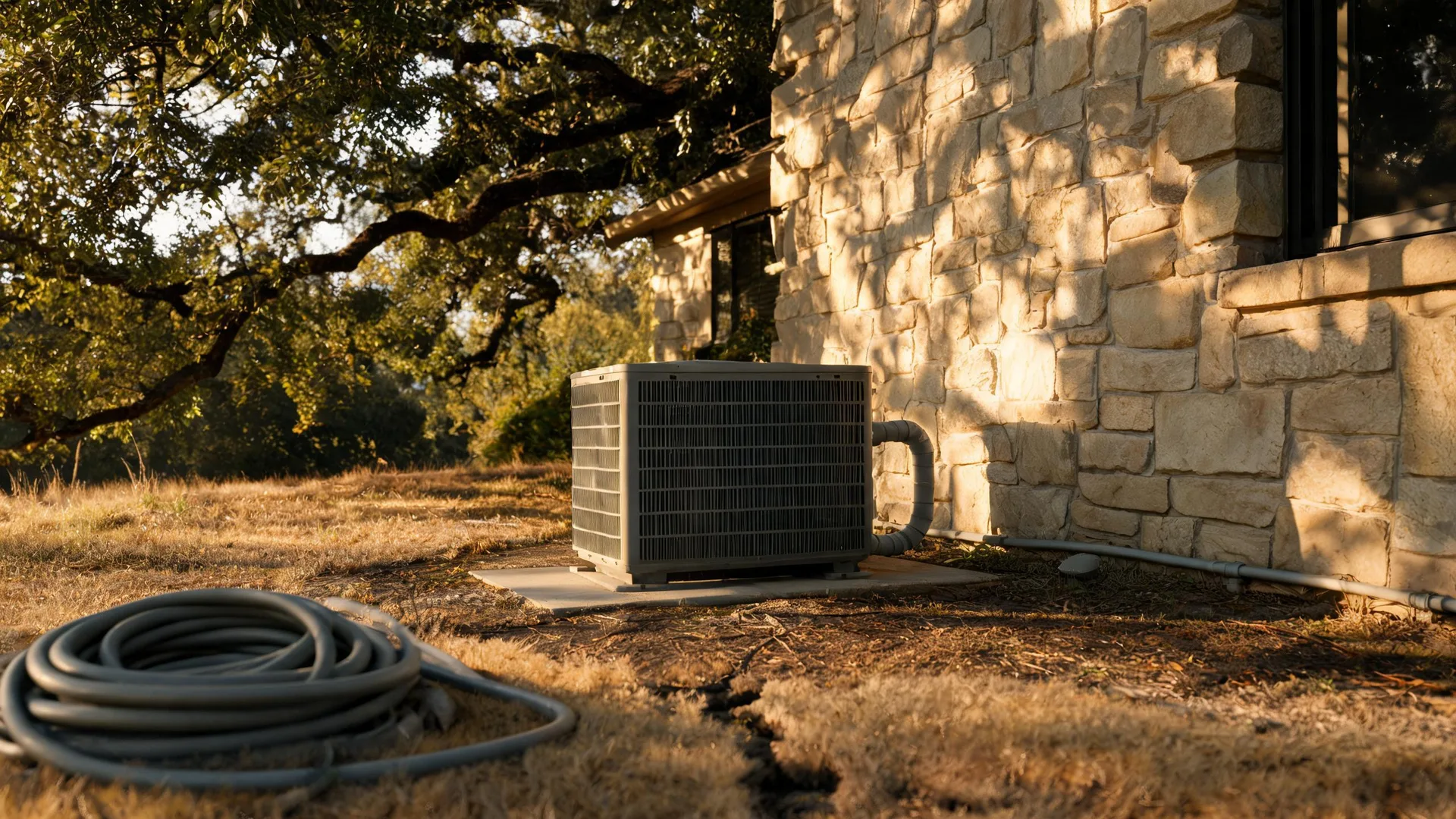
A gray outdoor HVAC unit mounted on a concrete pad beside a house with gray lap siding and a stone foundation.

What you're paying for isn't the unit, it's making it fit

The install itself is where the money goes, not the equipment sitting in the yard. A heat pump needs a place to pull heat from and a place to put it, and getting the lines, the pad, and the electrical right the first time costs more up front than doing it fast and cheap. Ductwork is usually the biggest variable. If what's already there is sized for a furnace blowing hot air in short bursts, it may need rework to handle a heat pump running longer at a gentler output. Electrical capacity matters too, since a heat pump draws differently than straight resistance heat or a gas furnace's blower motor, and the panel has to be able to feed it. Where the outdoor unit sits affects the job as well. It needs clearance to pull air through the coil without choking on snow or debris, and running line sets farther from the house means more refrigerant, more labor, more places for a joint to fail. None of this shows up in a brochure. It shows up when someone's actually in the crawlspace or up in the attic figuring out what's there and what has to change to make the new system work with it.

Ask for the heating output at low temperatures, not just the rating label

Every heat pump loses capacity as the outdoor air gets colder, but how much it loses varies between models. Units with the same efficiency rating can perform very differently once the temperature drops. Ask what the unit actually puts out in cold weather, not just what it's rated at in mild conditions, since that number tells you whether it can carry the load on its own or whether the backup heat is doing more of the work than you'd expect.
Ask what happens when the compressor can't keep up

Every heat pump has a point where it can't pull enough heat from outside air to keep the house comfortable, and something else has to cover the gap. Some systems use electric resistance coils built into the air handler, others hand off to a furnace already in place. Ask which one applies here and how the system decides when to switch over, because that's what determines comfort on the coldest days and how the new system actually wires into what's already there.

The old furnace or heat pump doesn't have to come out before the new one goes in. Most installs run the new equipment alongside the old system right up until the switchover, so there's no stretch of days without heat. If a gas furnace is staying in place as backup, it just gets disconnected from doing the main work and left wired in for the coldest days. If the old system is straight electric resistance or a worn-out heat pump, it comes out once the new lines and wiring are run and tested. Whoever hauls it off should also deal with the refrigerant in the old unit properly, since it can't just be vented to the air. If the old ductwork is staying, it gets inspected and sealed up before the new unit ever runs air through it, since leaks that didn't matter much with a furnace blowing hot air hard will waste real capacity on a heat pump running long and steady.

Install day starts outside, not in. The outdoor unit gets set on a pad, leveled, and the line set run back to the house, and that line has to be brazed, pressure tested, and pulled down to a vacuum before any refrigerant goes in. A joint that leaks slow will show up as weak heat months later, not on day one, so that pressure test matters more than it looks like it does. Indoors, the air handler or coil gets tied into the ductwork or, if it's a ductless setup, mounted and run back to the outdoor unit through a wall. Electrical is its own piece of the day, running a dedicated circuit and setting the disconnect, separate from whatever the old system used. Once everything's connected, the system gets charged, started up, and checked against its target pressures before anyone calls it done.