A gas furnace and sheet-metal air handler unit installed in an unfinished concrete basement.

Furnace Repair in Weiser, ID

Tell us about the job

Takes about a minute. No obligation.

RepairFurnace or heatingWashington County, ID
Step 1 of 2

What ZIP code is the job in?

Nine months of runtime

A furnace in Washington County runs from September through May. That's most of the year asking the igniter, the blower motor and the heat exchanger to cycle on and off, day after day. A machine that works this long each year wears faster than one that only runs a few months.


Storms add their own strain

Washington County saw 85 winter storms between 2015 and 2024, with heavy snow and ice part of that count. A furnace has to work harder to keep up when it's fighting that kind of cold outside. When something goes wrong, it's worth finding the actual cause instead of guessing, so the repair holds the next time a storm comes through.

9 months
September through May, your furnace is on duty
22°F
the average winter night it heats against
85 winter storms
in ten years, the nights a failure hurts most
Isometric cutaway illustration of a house showing interior rooms with furniture, a furnace unit with a tall flue pipe outside, and ductwork running through the attic.
Your furnace works hardest from November through March.

NOAA nClimDiv, 1991–2020 normals

Furnaces here start running in September, a month earlier than most places.

A weak part that made it through last spring often fails in the first cold snap.

Electricity here runs $33.76 per million Btu, and a struggling furnace burns more of it every month

Climate zone 5B
Heat runs September through May
Winter nights average 22°F

A furnace that's short cycling, limping along on a cracked heat exchanger, or running with a dirty flame sensor isn't just failing slowly, it's pulling more power the whole time it does. That shows up on the bill before the furnace actually quits. Most homes in Washington County already heat with electricity, so a part that's struggling doesn't hide. Waiting on a repair here costs something every week it's put off. Getting a tech out while the furnace is still running, instead of after it stops, is the cheaper call.

Get the real cause found before it gets worse

A furnace that's worn from nine months of runtime and a few hundred storms doesn't usually quit all at once. It shows up as a strange noise, a short cycle, a room that won't heat. A tech who checks it now can tell you which part is wearing out before it leaves you without heat on a cold morning.

Find a contractor
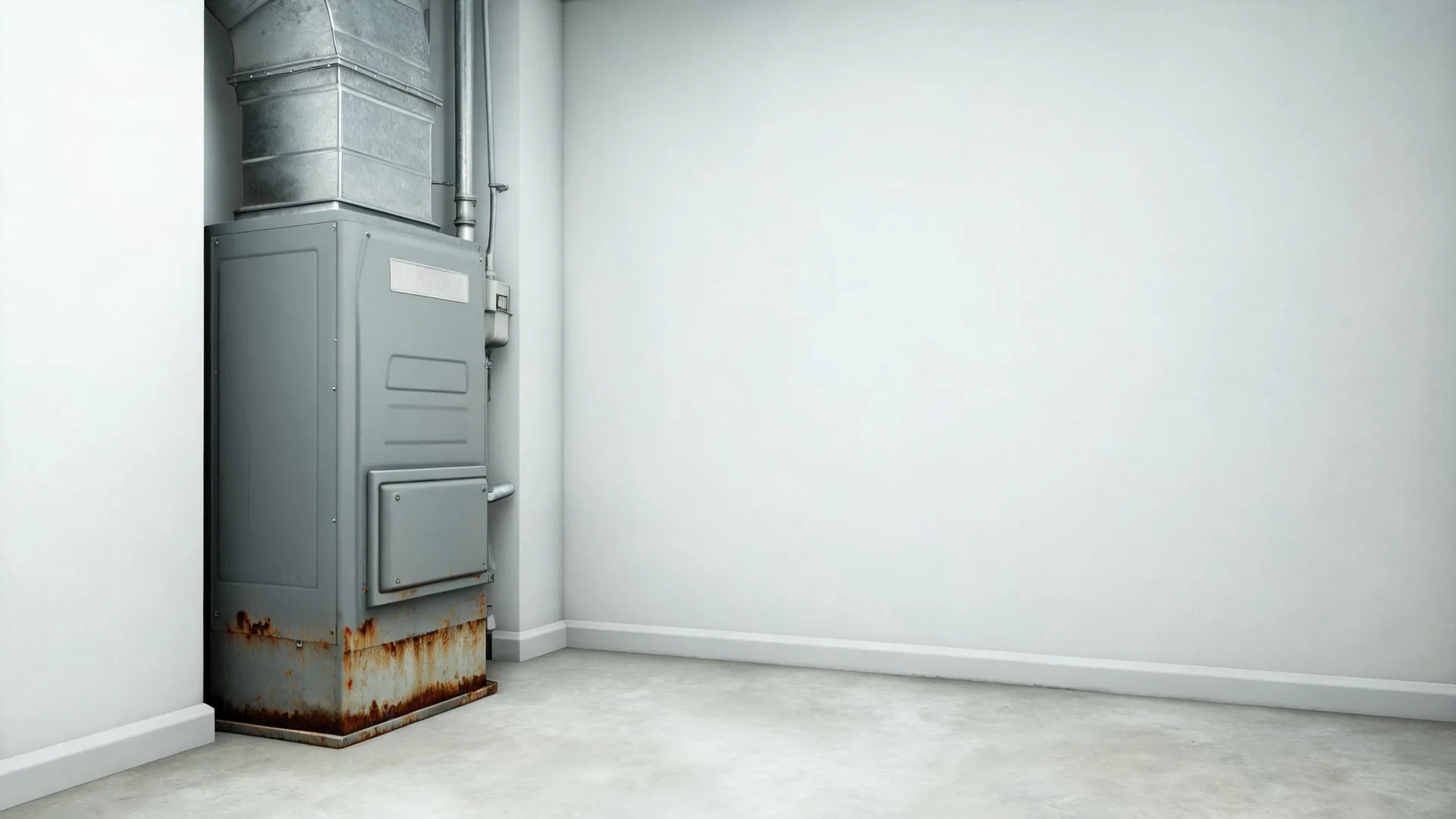
A gray residential gas furnace installed in an unfinished basement, connected to sheet-metal ductwork and PVC pipes.

What the furnace is already telling you

A furnace usually tells you something is wrong before it quits outright. It starts a cycle, shuts off too soon, then kicks back on a few minutes later. That's short cycling, and it's often a flame sensor coated in residue or a filter choked enough to trip the limit switch. A furnace that runs long and steady instead of cycling normally might have a thermostat problem or a blower that's lost speed. Listen for sounds that weren't there before: a screech from the blower motor, a rattle from a loose panel, a boom at startup that means gas is building before it lights instead of catching right away. A pilot or igniter that won't hold, or a burner flame that's yellow instead of blue, both mean combustion isn't happening the way it should and that needs a look before the furnace is used again. None of these mean the furnace is done. They mean a part is wearing out faster than the rest, and the furnace will keep telling you about it until someone finds which one.

Most failures start with airflow

A furnace needs air moving through it to stay within its limits. A clogged filter, a blocked vent, or a blower wheel caked with dust all choke that airflow down. The heat exchanger overheats, the limit switch trips, and the furnace shuts off before it should. Left alone long enough, that same overheating is what cracks a heat exchanger for good.

Ignition parts wear from repetition

The igniter and flame sensor do their job every single cycle, which is also why they're usually the first things to go. An igniter has a short life built into it from the start, and it eventually just stops glowing hot enough to light the gas. A flame sensor doesn't wear out the same way, it gets a film of residue on it from normal combustion, and once that film is thick enough the sensor can't tell the control board a flame is there. Either failure stops the furnace from firing at all.

A furnace that's struggling doesn't do itself any favors by continuing to run. Heat builds up somewhere it shouldn't, whether that's a restricted heat exchanger or a blower motor pulling hard against a clogged wheel, and that heat has to go somewhere. Run it long enough in that state and a hairline crack in the heat exchanger spreads instead of staying put. A blower motor bearing that's starting to whine will grind further with every hour it keeps turning. Even a dirty flame sensor gets worse the longer it sits coated in residue, because each cycle adds another layer on top of the last one. None of these fix themselves by running more. The furnace keeps cycling because that's what it's built to do, not because the part in trouble is getting any better.

A diagnostic visit starts with questions, not tools. A tech wants to know what the furnace is doing, when it started, and whether it happens on every cycle or just some. Then comes a look at the filter and the airflow, since so many problems trace back there before anything else gets checked. From there it's the ignition sequence, watching the furnace try to light and fire, checking whether the flame is steady and the right color, whether the igniter glows the way it should or the sensor picks up what it needs to. A combustion check and a look at the heat exchanger usually follow, since that's where a furnace hides the problems that matter most. The point of the visit is to find which part is actually failing, not to guess from the symptom alone, because a short cycle can come from three or four different causes and only one of them is the real one.