A dark-painted board-and-batten house with a standing-seam metal roof, timber entry porch and stone column bases, set among pine trees behind dry grass and a gravel drive.

Furnace Repair in Pocatello, ID

Tell us about the job

Takes about a minute. No obligation.

RepairFurnace or heatingBannock County, ID
Step 1 of 2

What ZIP code is the job in?

Ignition parts wear out first

The igniter and flame sensor take the most cycling of any part in the furnace, since they fire up and sense flame every single heat cycle. The igniter is brittle and eventually cracks. The flame sensor builds up a coating over time and stops reading the flame even when the burners are lit. Both are common reasons a furnace shuts down or won't start at all.

What that means for the repair

A furnace that fires and quickly shuts off is usually the flame sensor, and cleaning or replacing it is a quick fix. A furnace that won't fire at all points more toward the igniter, or possibly the control board behind it. Either way the fix is straightforward once the part is confirmed, so it's worth having someone check before assuming the whole system is failing.

10 months
September through June, your furnace is on duty
18°F
the average winter night it heats against
59%
of homes here heat with gas, so most furnaces here burn gas
79 winter storms
in ten years, the nights a failure hurts most
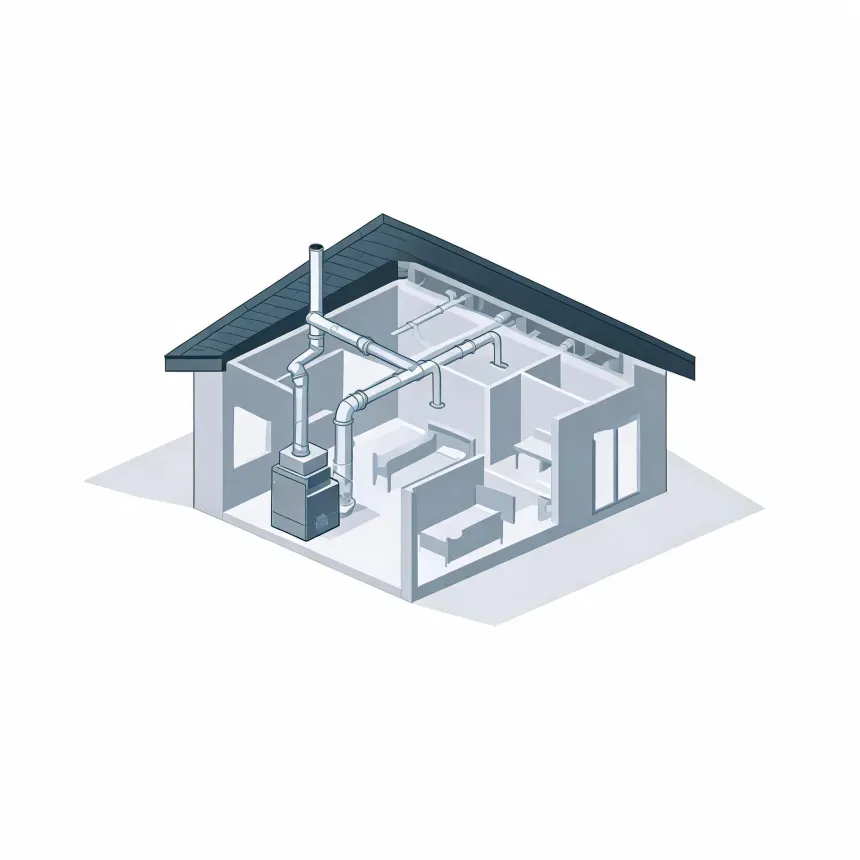
Isometric cutaway illustration of a small single-story house showing interior rooms, a furnace unit with a flue, and connected ductwork running below the dark gabled roof.
Your furnace works hardest from November through April.

NOAA nClimDiv, 1991–2020 normals

A thermostat set to heat and a breaker that's still on rule out the two most common reasons a furnace won't start.

Check both before calling, since a tripped breaker or a thermostat bumped to cool looks exactly like a dead furnace.

Ten months of heat a year wears a furnace down faster

Heat runs September through June
Winter nights average 18°F
79 winter storms from 2015 to 2024
The first cold week finds the weak partFurnaces in Bannock County start running in September, and whatever didn't survive summer sitting idle shows up fast.

A furnace usually tells you something is wrong before it quits for good. Short cycling is one of the clearest signs, where it fires up, runs a few minutes, and shuts off before the house warms up. Cold air coming out of the vents when the system is running points to a different problem, often in the burners or the heat exchanger. A burner flame that looks yellow or flickers instead of burning steady blue is worth paying attention to, since a healthy flame holds its shape. Rattling, booming at startup, or a squeal as the blower spins up are all sounds a furnace shouldn't make once it's warmed up and running normally. Any of these on their own is worth a call. More than one at a time usually means the problem is past the point of waiting.

Get the worn part found before it takes the furnace down with it

Ten months of heat a year adds up to a lot of cycles on these parts, and that's usually what's behind a furnace acting up here. A proper diagnosis finds which part is actually worn before anything gets replaced, so the fix holds.

Find a contractor
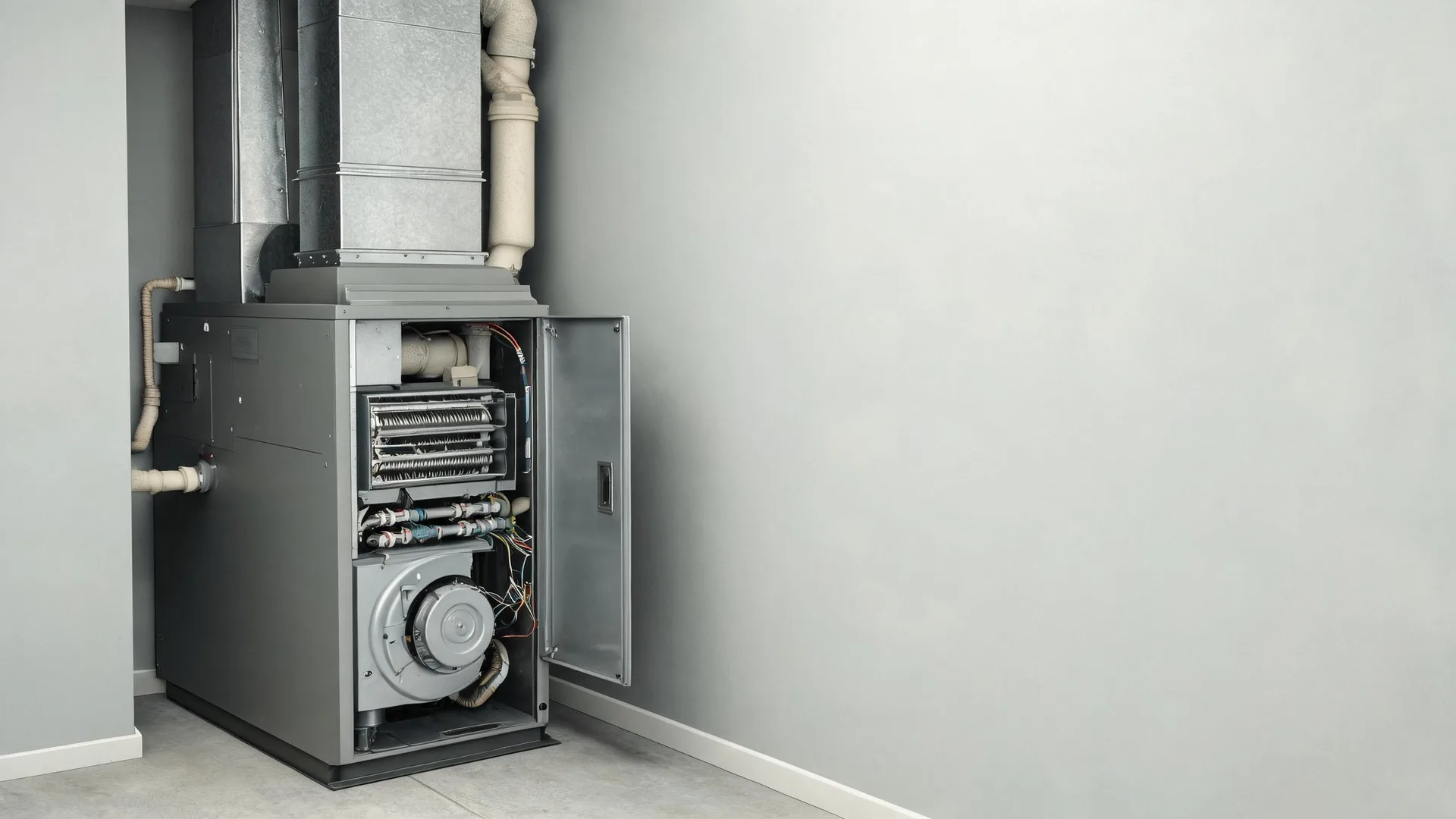
A gray gas furnace with attached ductwork and piping installed in an unfinished concrete basement.

Running it through a problem rarely ends with just that one part

A cracked heat exchanger is the clearest case. Heat makes metal expand, and a crack that's barely open when the furnace is cold can pull wider open once the burners have been running a while. Keep the furnace cycling on that crack and it only gets bigger. A blower motor with a failing bearing works the same way. It might run rough but still move air early on, and most people let it ride. Run it long enough and the bearing seizes, and then the motor goes with it. Even something as simple as a clogged filter follows this pattern. Restricted airflow makes the heat exchanger run hotter than it should, and heat is exactly what stresses a crack into spreading. The longer a known problem keeps running, the more parts around it end up paying for it.

What decides it is the heat exchanger

Most furnace parts can be replaced on their own: the igniter, the blower motor, the control board, even the gas valve. A cracked heat exchanger is different, because it means replacing the furnace is usually the better call, especially on an older unit where other parts are likely close behind it.

Age changes what a repair is worth

A furnace nearing the end of its expected life can still be repaired, but each fix is a bet that the next part holds too. On an older unit, a technician will often lay out both the repair cost and what a new furnace would run, so the choice is informed rather than automatic.

An unfinished basement featuring a forced-air furnace, exposed wooden ceiling joists, bare concrete walls, and miscellaneous items including cardboard boxes and coiled cables on the floor.

A new furnace would cut about $90 a year off heating for a typical Bannock County home.

  • A new high-efficiency furnace$380 a year
  • An older furnace$470 a year

Estimates for a typical Bannock County home, compared with an older unit built to the previous federal minimum, from EIA household energy data, Idaho fuel prices and NOAA climate normals. Your home will differ.

Repair makes sense when one part has failed and the heat exchanger is sound.

Replacement makes sense when the heat exchanger is cracked or the furnace keeps needing parts.

A diagnostic visit starts with the thermostat and the breaker, then moves to actually watching the furnace run through a full cycle. A technician wants to see it try to ignite, catch, and hold flame, since a lot of problems only show themselves at one of those moments. Flame color and shape get checked, along with how long the igniter glows and whether the flame sensor is reading properly once the burners light. The blower gets listened to on startup and while running, because a bearing going bad sounds different from a wheel that's just dirty. Static pressure and airflow often get measured too, since a restriction elsewhere can look like a failing part when the part is actually fine. The goal is to find the one thing actually causing the symptom, not to start swapping parts and see what helps.