



Stacked firewood along the dark vertical-board exterior wall of a house, with two outdoor condenser units, a gravel path, dry grass and pine trees under an overcast sky.

Furnace Repair in Mountain Home, ID

Tell us about the job

Takes about a minute. No obligation.

RepairFurnace or heatingElmore County, ID
Step 1 of 2

What ZIP code is the job in?

Furnaces around Mountain Home run September through June. That's ten months of the year, not just a cold snap in January. Overnight lows average 21°F through December, January and February, so the furnace is holding a big gap between outside and inside for most of a night, every night. Add in the winter storms this county sees, 84 of them in the last ten years, and the furnace is working through wind and snow load on top of the cold. A furnace running that many hours a year wears down faster than one that only kicks on a few months at a time. If something's acting up now, there's a real reason for it, and it's worth having someone find the actual cause instead of guessing.

10 months
September through June, your furnace is on duty
21°F
the average winter night it heats against
53%
of homes here heat with gas, so most furnaces here burn gas
84 winter storms
in ten years, the nights a failure hurts most
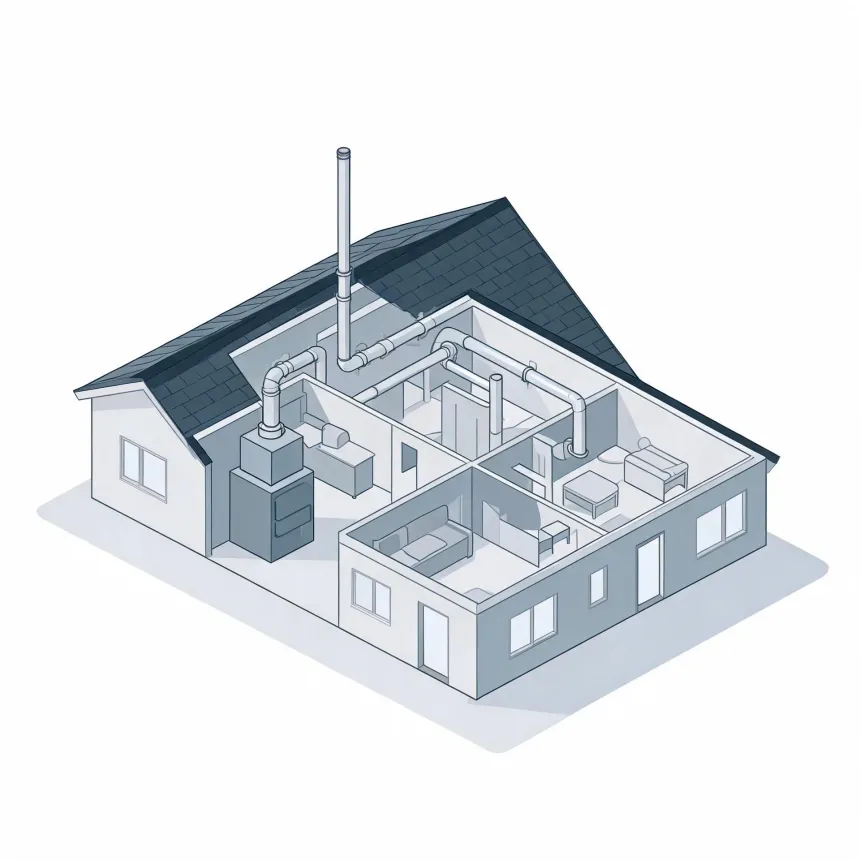
Isometric cutaway illustration of a single-story house showing interior rooms with furniture, a furnace unit connected to ductwork and a tall flue pipe extending through the roof.
Your furnace works hardest from November through April.

NOAA nClimDiv, 1991–2020 normals

Furnaces here start running in September.

August is when a weak part gets found before it fails on the first cold night.

A furnace that came with a newer house still has years of life in it, even one that works this hard

Half the homes here were built by 1988
Heat runs September through June
Winter nights average 21°F
Ten months of runtime wears a furnace downHave a repair diagnosed right the first time, not guessed at.

A furnace that came in with the house here is often not that old. If yours is original to a newer build, a repair makes sense before anyone talks about replacing it. A worn igniter or flame sensor is a normal fix on a furnace that still has years ahead of it. That holds whether the house is site-built or one of the mobile homes in the county, as long as you know roughly when the system went in. Worth checking the install date before deciding how far to take a repair.

Get it diagnosed properly

Your furnace works hard here, and that's usually what's behind the problem. Have it diagnosed properly so the fix lasts.

Find a contractor
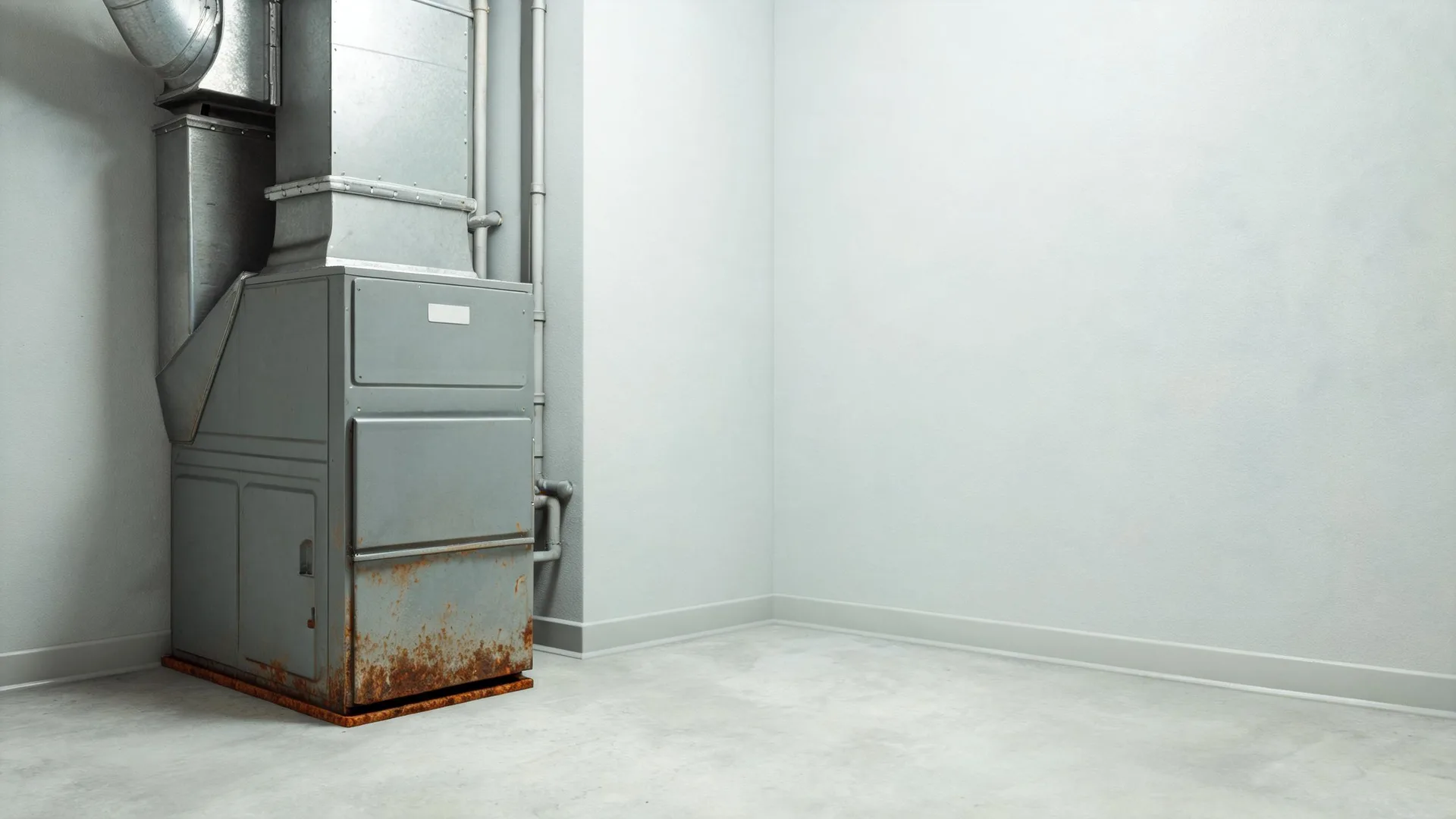
A gray residential gas furnace installed in an unfinished basement, surrounded by ductwork, a metal flue pipe, and a gas supply line.

What a struggling furnace sounds and acts like

A furnace that's struggling usually tells you before it quits outright. Short cycling is one of the first signs, where it fires up, runs briefly, and shuts off before the house warms up. That's often a flame sensor coated with residue, so the flame lights but the sensor can't confirm it's burning and cuts the gas. A furnace that runs but blows cool air can mean a failing igniter, weak enough to light the burners sometimes and not others, or a limit switch cutting the blower off early. Listen at startup and shutdown too. A bang when the burners light usually means gas is pooling before it catches, often from a dirty burner. A screech from the blower points to a motor bearing wearing out. A burning dust smell the first time the furnace fires after sitting idle is normal and should clear fast. If it lingers, or turns sharp like hot metal, shut the system down and have it looked at. Watch the thermostat as well. If the house never quite reaches the set temperature, or some rooms stay cold while others are fine, the furnace may be running without keeping up, which points to airflow or a heat exchanger not transferring heat the way it should.

A cracked heat exchanger gets worse every hour it runs

Metal that's already split keeps flexing with every heat cycle, and the crack opens wider. Left alone, it goes from a repair to a full replacement, and it can let combustion gas into the air the blower is pushing through the house.

A dirty flame sensor can strand you with no heat at all

A sensor coated with residue still works for a while, cutting the gas late each cycle. Run it long enough and it stops sensing the flame at all, and the furnace won't fire the next time you need it.

A gray forced-air furnace with sheet-metal ductwork stands in an unfinished basement with exposed wooden joists, concrete walls, and a hanging incandescent bulb.

A new furnace would cut about $80 a year off heating for a typical Elmore County home.

  • A new high-efficiency furnace$350 a year
  • An older furnace$430 a year

Estimates for a typical Elmore County home, compared with an older unit built to the previous federal minimum, from EIA household energy data, Idaho fuel prices and NOAA climate normals. Your home will differ.

Repair makes sense when one part has failed and the heat exchanger is sound.

Replacement makes sense when the heat exchanger is cracked or the furnace keeps needing parts.

A diagnostic visit starts before any panel comes off. A tech asks what you've noticed, when it happens, whether it's every cycle or just some. Then the cover comes off and the burners get watched through a full cycle, startup to shutdown, because a lot of faults only show up at one end of that. A multimeter checks the igniter for resistance instead of just looking at it, since a hairline crack won't always show. The flame sensor gets pulled and looked at under light, not just wiped and put back. Static and airflow get checked too, because a furnace can test fine sitting still and still struggle once air is moving through it. The goal is to find which part is actually failing, not the first thing that looks worn, so the fix holds instead of coming back in a month.