

Illuminated timber-and-stone luxury homes along a residential street at dusk, with snow-capped mountains visible in the background.

Furnace Repair in Moscow, ID

Tell us about the job

Takes about a minute. No obligation.

RepairFurnace or heatingLatah County, ID
Step 1 of 2

What ZIP code is the job in?

Furnaces around Moscow run from September through June. That's ten months of the year the burner and blower are doing something, not just a few cold snaps. Latah County also saw 251 winter storms between 2015 and 2024, heavy snow and ice that push the thermostat up and keep the system running longer on the days it matters most. A furnace that runs that much wears parts faster than one that only kicks on a few months a year. When something starts acting up here, it's usually not bad luck. It's a system that's been working harder than most, finally showing it.

10 months
September through June, your furnace is on duty
25°F
the average winter night it heats against
251 winter storms
in ten years, the nights a failure hurts most
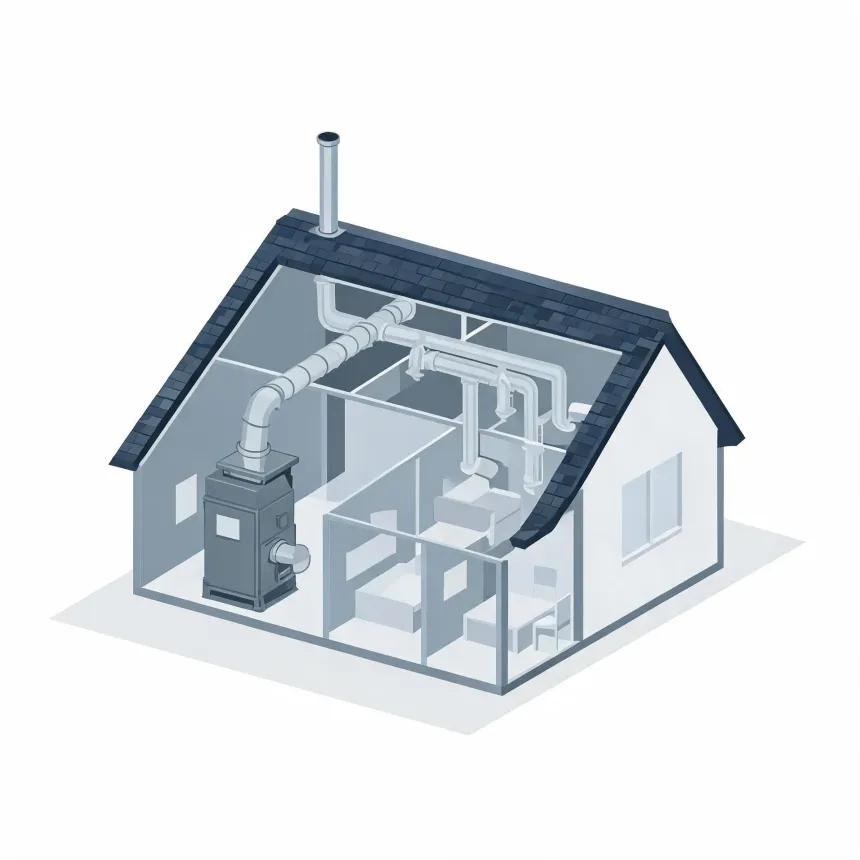
Isometric cutaway illustration of a small house showing a gray furnace unit with a flue pipe through the roof and branching ductwork running to rooms with simple furniture.
Your furnace works hardest from October through April.

NOAA nClimDiv, 1991–2020 normals

Half the homes in Latah County were built in 1980 or later.

A furnace that came with a newer house has fewer years of that hard use behind it, even if it's starting to show wear now.

September is when a furnace around here shows what it's been hiding all summer. The burner hasn't fired since spring, and the first cold morning asks it to run for hours instead of minutes. If an igniter was already cracked or a flame sensor already coated, that's when it quits, not later once winter settles in. Waiting until the overnight lows drop toward freezing just means diagnosing the same problem in a house that's gotten cold inside. Getting it looked at as soon as the heat goes on catches the weak part while it's still just acting up instead of out.

Get the real cause fixed, not just the symptom

A furnace that runs ten months a year doesn't fail at random. It fails at the part that was already weak, and running harder just gets it there sooner. Have the cause found and fixed properly, so the repair holds for the rest of the season.

Find a contractor
A man in a cap, long-sleeved shirt and work pants carries a canvas tool bag up porch steps toward a dark blue front door, beside a blue ceramic planter.
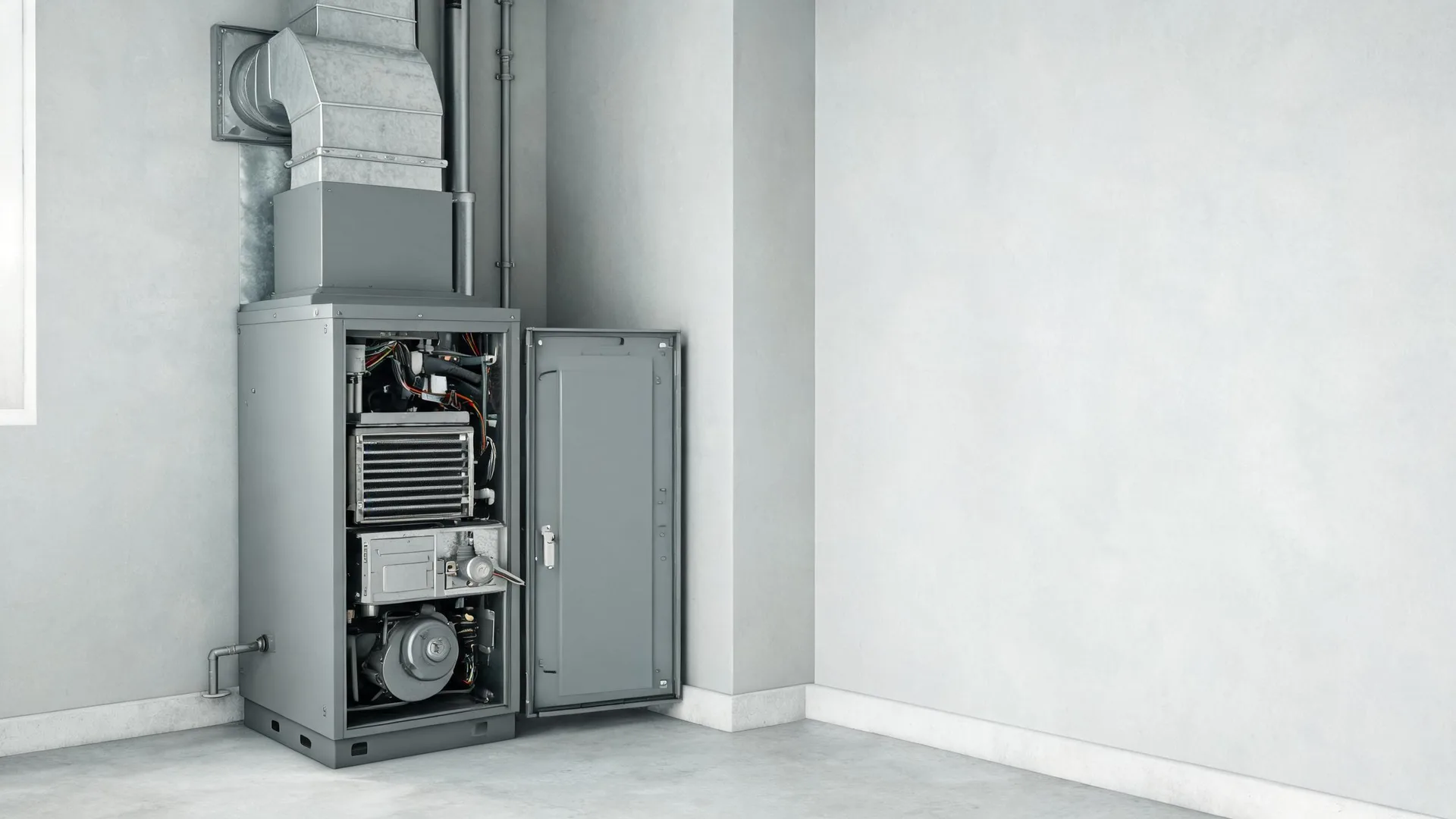
A gray gas furnace with attached ductwork and piping installed in an unfinished concrete basement.

What the Furnace Is Telling You

A furnace gives warning before it quits outright. The blower might run but the air coming out feels lukewarm, which usually points to the burner not firing right or a restricted gas valve. Short cycling, where it fires up and shuts off again within a couple minutes, often means a cracked heat exchanger tripping the limit switch, or a flame sensor too coated to hold a signal. A clicking igniter that never catches is either the igniter itself failing or a dirty flame sensor telling the control board to shut things down for safety. Banging or popping from the ductwork when it starts usually means the burner is delayed in lighting and gas is building up before it catches. A burner flame that looks yellow instead of blue is worth attention on its own, since it points to incomplete combustion. None of these get better by running the furnace less. The part that's struggling keeps struggling every time it's asked to work, and it's usually the same part that finally gives out.

What's safe to check yourself

Look at the thermostat first. Make sure it's set to heat and the set point is actually above room temperature, since a bumped switch or dead battery can look exactly like a broken furnace. Check the air filter next. A filter clogged with dust chokes airflow, and that alone can cause a furnace to overheat and shut itself off on a limit switch. Walk over to the furnace and check that the switch on or near it, the one that looks like a light switch, is flipped on. Someone doing laundry nearby can knock it off without noticing. If the furnace uses a standing pilot, see if the pilot light is lit. If it's out, most units have a reset button or relight instructions printed right on the access panel.
What to leave alone

Don't open the burner compartment or touch the gas valve. A furnace that smells like gas, even faintly, means leaving the house and calling the gas company before calling anyone else. Don't keep resetting a furnace that trips off repeatedly. The limit switch or flame sensor is shutting it down on purpose, and forcing it to restart over and over doesn't fix what's wrong, it just runs the weak part harder. If the breaker for the furnace keeps tripping, that's an electrical fault, not something to reset and ignore. Anything past the filter and the switch is a job for someone who can test the gas valve, the flame sensor and the heat exchanger safely.

Furnaces don't usually fail from one big thing breaking. They fail from small parts wearing down the same way every time they run. The igniter gets brittle after enough heat cycles and eventually cracks instead of glowing. The flame sensor builds up a thin coat of oxidation every time it sees a flame, until it can't sense one anymore and shuts the burner down. Blower motor bearings wear from spinning hours at a time, and a motor that's worn will run louder before it quits outright. The heat exchanger is the one part that doesn't give much warning. It expands and contracts every cycle, and over enough cycles metal fatigues and cracks. None of this is damage from a single bad day. It's the ordinary cost of a furnace doing its job, one ignition cycle after another, for as long as it's asked to run.

Electricity in Idaho ran $33.76 per million Btu in 2024, and most homes around Moscow heat with it. That rate is low next to a lot of the country, but it doesn't stay low once a furnace is struggling to do its job. A cracked igniter or a flame sensor coated with buildup makes the burner cycle longer or fire more often to reach the same temperature on the thermostat. Every one of those extra cycles runs through the meter. A furnace that's limping along doesn't fail quietly on the bill, it shows up there every month until the part that's actually wrong gets fixed.