


An unfinished basement featuring a grey forced-air furnace with metal ductwork, concrete block walls, exposed wooden joists, and a single hanging bare bulb.

Furnace Repair in Malad City, ID

Tell us about the job

Takes about a minute. No obligation.

RepairFurnace or heatingOneida County, ID
Step 1 of 2

What ZIP code is the job in?

Your furnace in Malad City runs about ten months a year, September through June. Through December, January and February the overnight low here averages 18°F, so it's rarely coasting even on a mild day. Winter storms roll through the county often enough that the furnace is usually working hardest right when the weather turns worst. That kind of schedule wears an igniter or a blower motor down faster than it would somewhere milder. When something starts acting up, it's worth finding out exactly what's failing and why before calling it fixed.

10 months
September through June, your furnace is on duty
18°F
the average winter night it heats against
38 winter storms
in ten years, the nights a failure hurts most
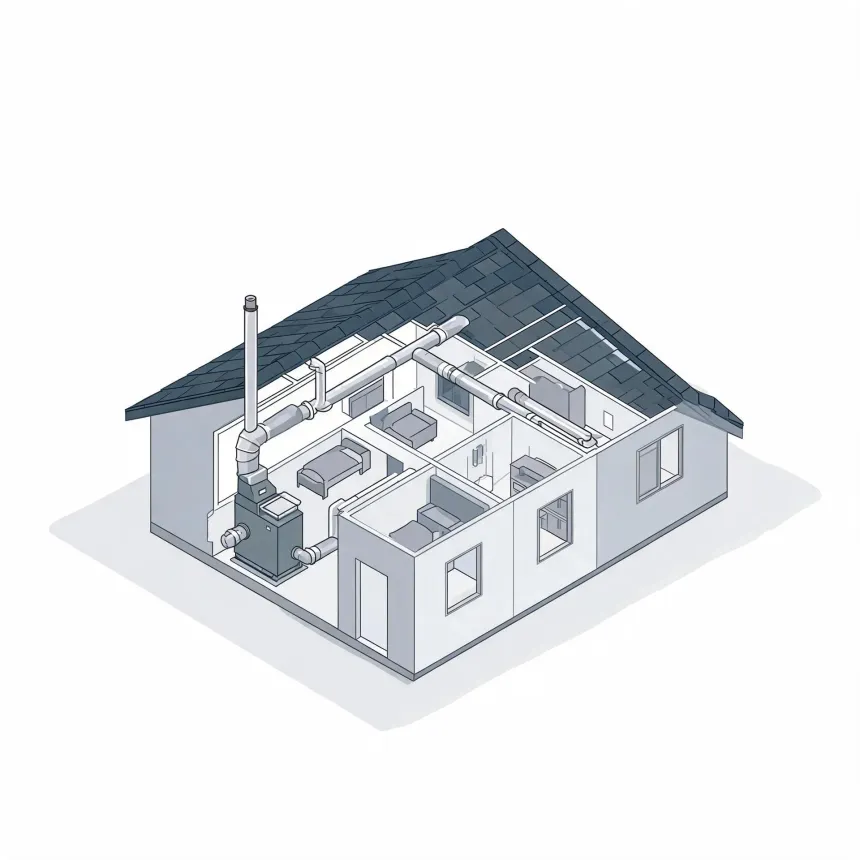
Isometric cutaway illustration of a single-story house showing interior rooms with furniture, ceiling ductwork, a furnace unit with a tall flue pipe, and a dark shingled roof.
Your furnace works hardest from November through April.

NOAA nClimDiv, 1991–2020 normals

Half the homes in Oneida County were built in 1971 or earlier.

A furnace that's original to a house that old is worth asking about, not just fixing.

September is when a weak furnace shows itself

Heat runs September through June
Winter nights average 18°F
38 winter storms from 2015 to 2024
Propane here runs $26.48 per million BtuThat's the 2024 Idaho rate, and a furnace that's struggling burns through it faster.

A furnace that's struggling doesn't fail cleanly. A cracked heat exchanger gets worse with every cycle of heating and cooling, and the longer it runs, the bigger the crack. A blower motor straining on worn bearings will keep pulling itself toward failure, usually at the worst time, not the most convenient one. Even something as simple as a dirty flame sensor can lead to repeated ignition attempts that stress the igniter until it fails too. Shutting the furnace off and calling someone when you first notice the short cycling or the odd smell almost always means a smaller repair than waiting it out.

A struggling furnace costs more here every month it runs

Propane in Idaho runs $26.48 per million Btu, and a furnace burning more of it than it should will show up on every bill until someone looks at it. Getting the repair done now means paying for propane to heat the house, not to fight a bad igniter or a cracked heat exchanger.

Find a contractor
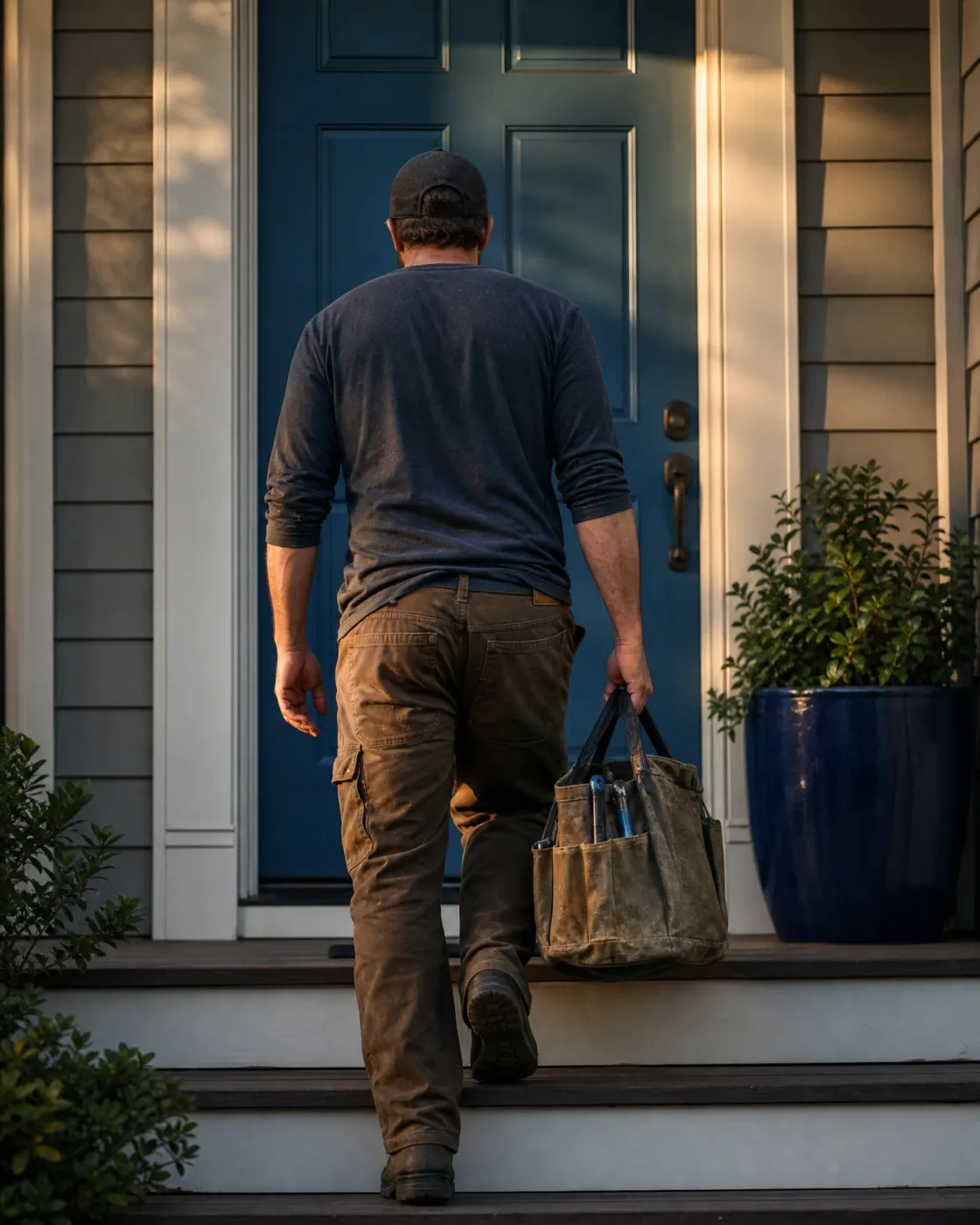
A man in a cap, dark long-sleeved shirt and brown work pants carries a canvas tool bag up porch steps toward a blue front door, with a shrub in a blue planter beside it.
A gas furnace with attached ductwork, gas piping, and condensate lines installed in a concrete-block basement.

Ask what's left in it before you fix it

If a repair tech finds a furnace that's original to the house, ask straight out how many years it's got left before you sign off on the repair. A cracked heat exchanger or a failed blower motor on a unit that old is a different conversation than the same failure on a furnace installed five years ago. Get the honest answer before deciding what to fix.

Most failures start small

A furnace rarely quits outright. It usually starts with one worn part, a flame sensor coated in residue, an igniter gone brittle, a limit switch tripping early, and the symptoms show up as short cycling or a furnace that tries to light and gives up. Catching it at that stage is a straightforward repair.

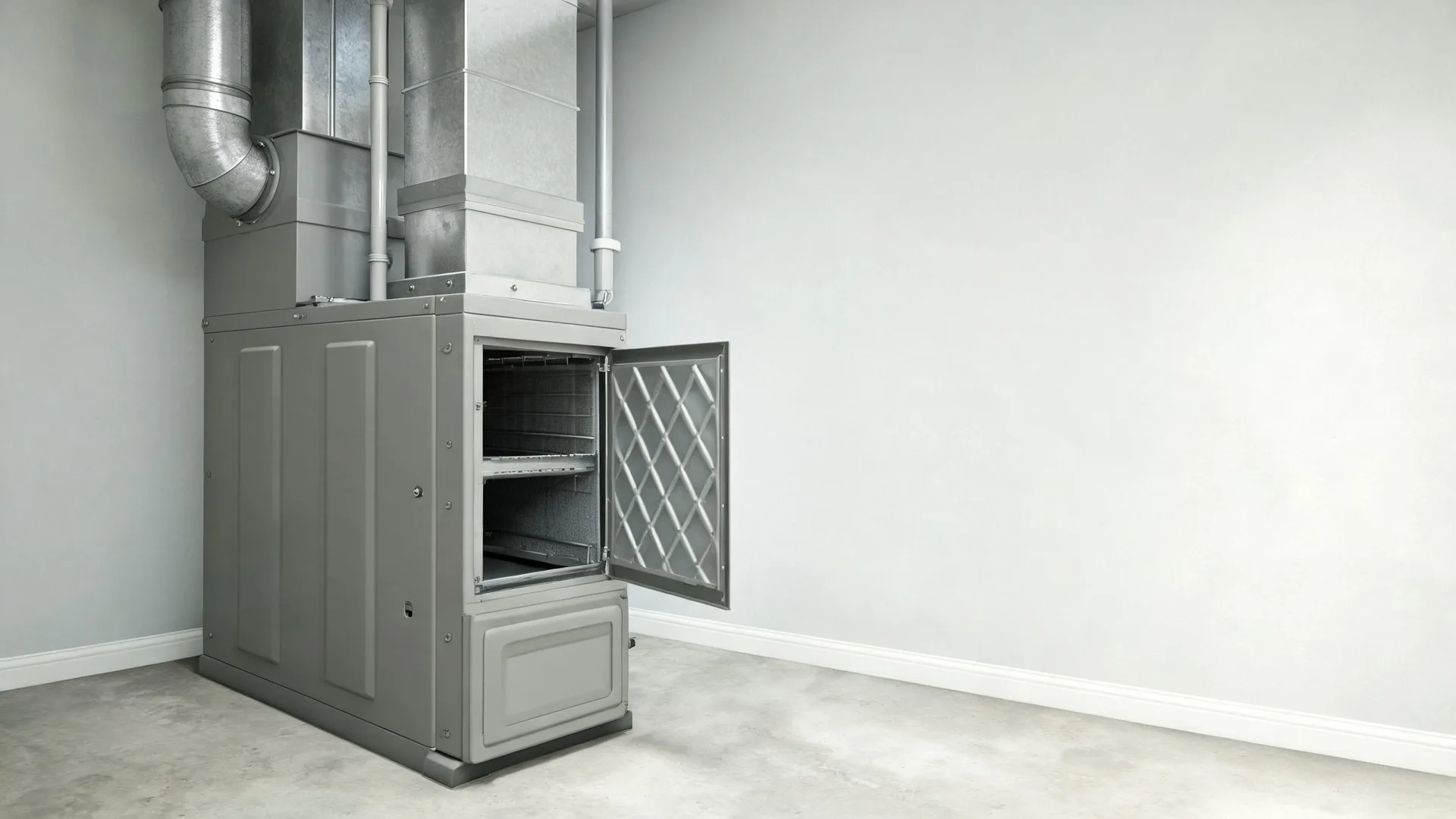
Ignore it and the failure spreads

A furnace left to run rough doesn't stay contained to one part. A failing igniter means more ignition attempts, which stresses the control board. A blower motor on worn bearings runs hotter and pulls more current until something else gives. What starts as one bad part can take a second part down with it if it keeps running.

An unfinished basement containing a metal furnace with ductwork, exposed wooden joists on the ceiling, cardboard boxes, a coiled cable, and a single hanging incandescent bulb.

A new furnace would cut about $290 a year off heating for a typical Oneida County home.

  • A new high-efficiency furnace$1,190 a year
  • An older furnace$1,480 a year

Estimates for a typical Oneida County home, compared with an older unit built to the previous federal minimum, from EIA household energy data, Idaho fuel prices and NOAA climate normals. Your home will differ.

Repair makes sense when one part has failed and the heat exchanger is sound.

Replacement makes sense when the heat exchanger is cracked or the furnace keeps needing parts.

A diagnostic visit starts with watching the furnace try to do its job. The tech turns up the thermostat and watches the sequence happen. Does the inducer motor spin up first. Does the igniter glow and the gas valve open behind it. Does the flame sensor hold that flame once it catches. Wherever that sequence stops is usually where the problem is. From there it's testing, not guessing. Pulling the flame sensor to check for residue, testing the igniter for continuity, checking the blower motor's amp draw against what it should be. A cracked heat exchanger gets checked too, since that one is about safety, not just heat. By the end the tech should be able to name the part that failed and explain why it failed, not just confirm that the furnace isn't working.