


A paved road curves past dark-green cabins with metal gabled roofs among tall pine trees, with a rustic log fence and gravel shoulder in the foreground.

Furnace Repair in Lewiston, ID

Tell us about the job

Takes about a minute. No obligation.

RepairFurnace or heatingNez Perce County, ID
Step 1 of 2

What ZIP code is the job in?

Half the homes in Nez Perce County were built in 1973 or earlier. If your furnace came with a house that old, it's probably not the original unit. But nobody may have told you when it was last replaced, so it could be older than it looks. A furnace nearing the end of its life shows it in small ways first. It runs longer to reach the same temperature. The burner cycles more than it used to. Before you pay for a major repair, ask the contractor how much life is really left in it.

10 months
September through June, your furnace is on duty
26°F
the average winter night it heats against
52%
of homes here heat with gas, so most furnaces here burn gas
29 winter storms
in ten years, the nights a failure hurts most
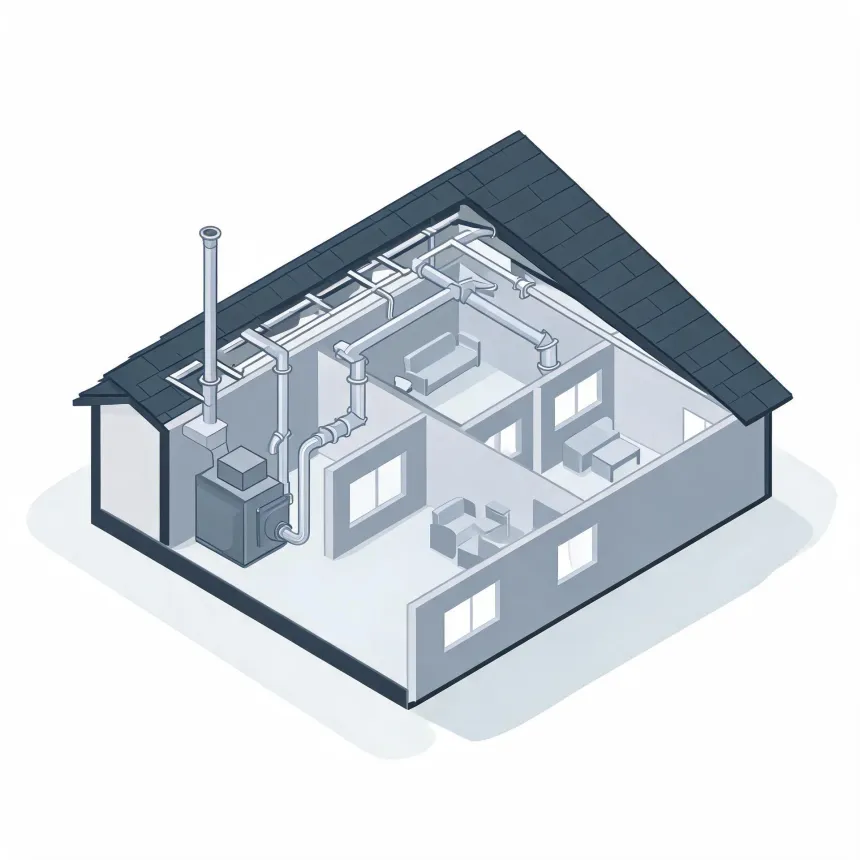
Isometric cutaway illustration of a single-story house showing interior rooms, a furnace unit with flue pipe, and branching ductwork running through the ceiling space under a dark shingled roof.
Your furnace works hardest from November through April.

NOAA nClimDiv, 1991–2020 normals

A few checks are safe to do yourself before anyone comes out.

Check the thermostat batteries, the furnace switch, and the breaker first, because sometimes the fix is that simple.

Ten months of heat means September is when a weak furnace gets found

Heat runs September through June
Winter nights average 26°F
29 winter storms from 2015 to 2024
Ten months of heat means September is when a weak furnace gets foundLows average 26°F by December, so a furnace that struggles in fall won't hold up through winter.

A repair call is a good time to ask that question, not after the furnace quits for good. Find the data plate inside the cabinet door and get the age and model number to the contractor before they diagnose anything. If nobody alive remembers it being installed, a cracked heat exchanger or a failed control board may not be worth fixing at all. On a newer unit, a repair is usually a clear yes. On an old one, it's a real decision, and the age on that plate is what you're deciding against.

Ask how much life it has left

If your system came with an older house, it may be near the end of its life. Ask how much life it has left before paying for a big repair.

Find a contractor
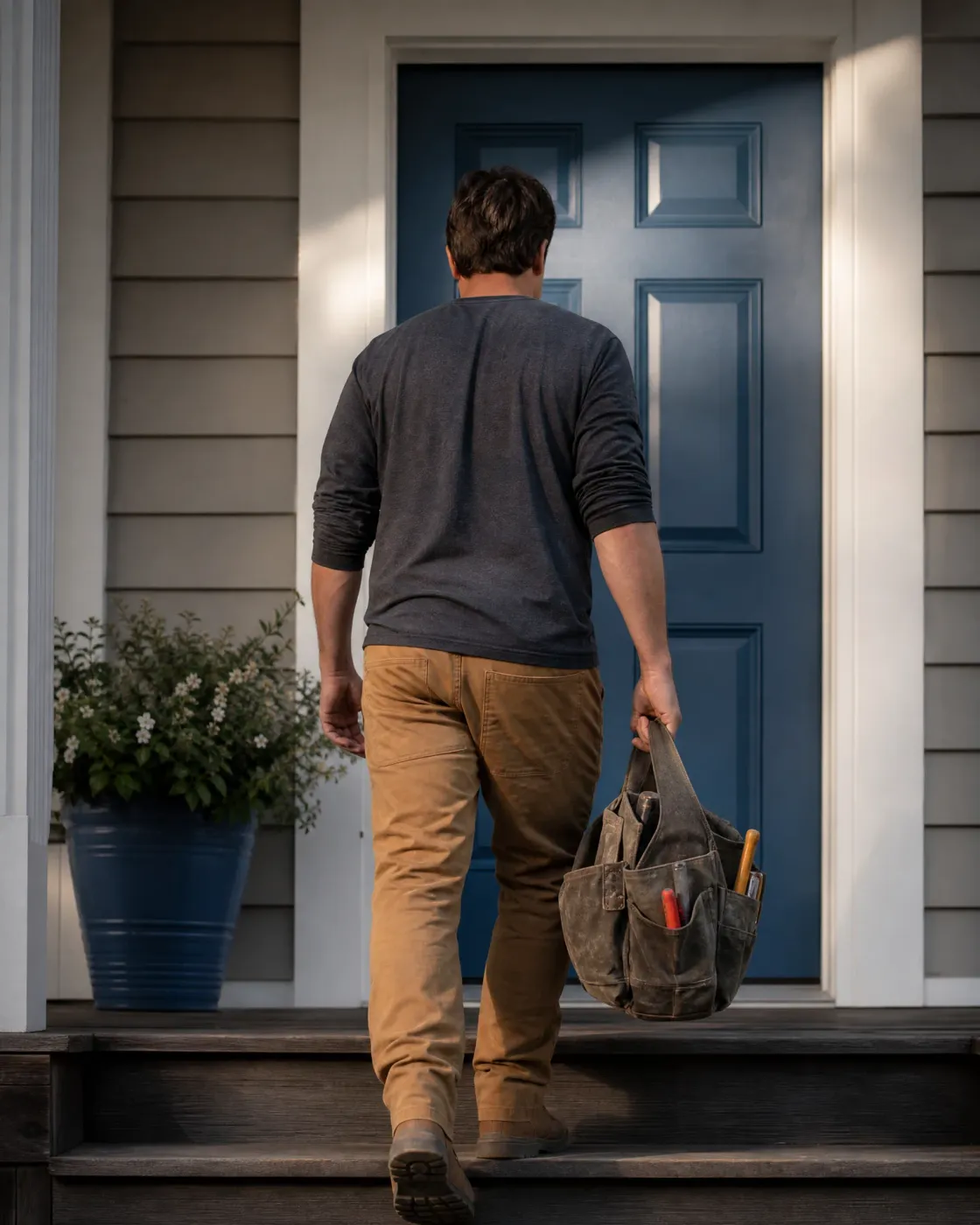
A man in a dark long-sleeved shirt and tan work pants, seen from behind, carries a canvas tool bag up porch steps toward a blue paneled front door of a house with light lap siding and a potted flowering plant.
A gray residential gas furnace installed in an unfinished basement, surrounded by ductwork, a metal flue pipe, and a gas supply line.

What a failing furnace sounds and feels like before it quits

A furnace usually tells you something is wrong before it quits outright. The burner takes longer to light, or it tries a few times before it catches. The blower runs but the air coming out isn't as warm as it should be. You notice a burning smell that wasn't there before, or the opposite, a smell that was always faint and is now strong. Some furnaces start short cycling, where the burner fires, runs a few minutes, and shuts off before the house warms up. Others do the reverse and run long stretches without ever seeming to catch up. A furnace that makes a new sound, a bang on startup, a screech from the blower, a rattle that wasn't there last year, is worth a call before that sound turns into a part failing outright. None of these mean the same thing on every furnace, but none of them are normal either.

Most failures start with the igniter or flame sensor

The igniter has to get hot enough to light the burner, and it weakens with age until it stops glowing enough to catch. The flame sensor works the other way. It watches for the flame and tells the control board to shut off gas flow if it doesn't see one. A sensor coated with residue reads that as no flame even when the burner lit fine, so the furnace shuts itself down a few seconds in. Both parts are small, both fail from ordinary wear, and both stop a furnace cold without damaging anything else.

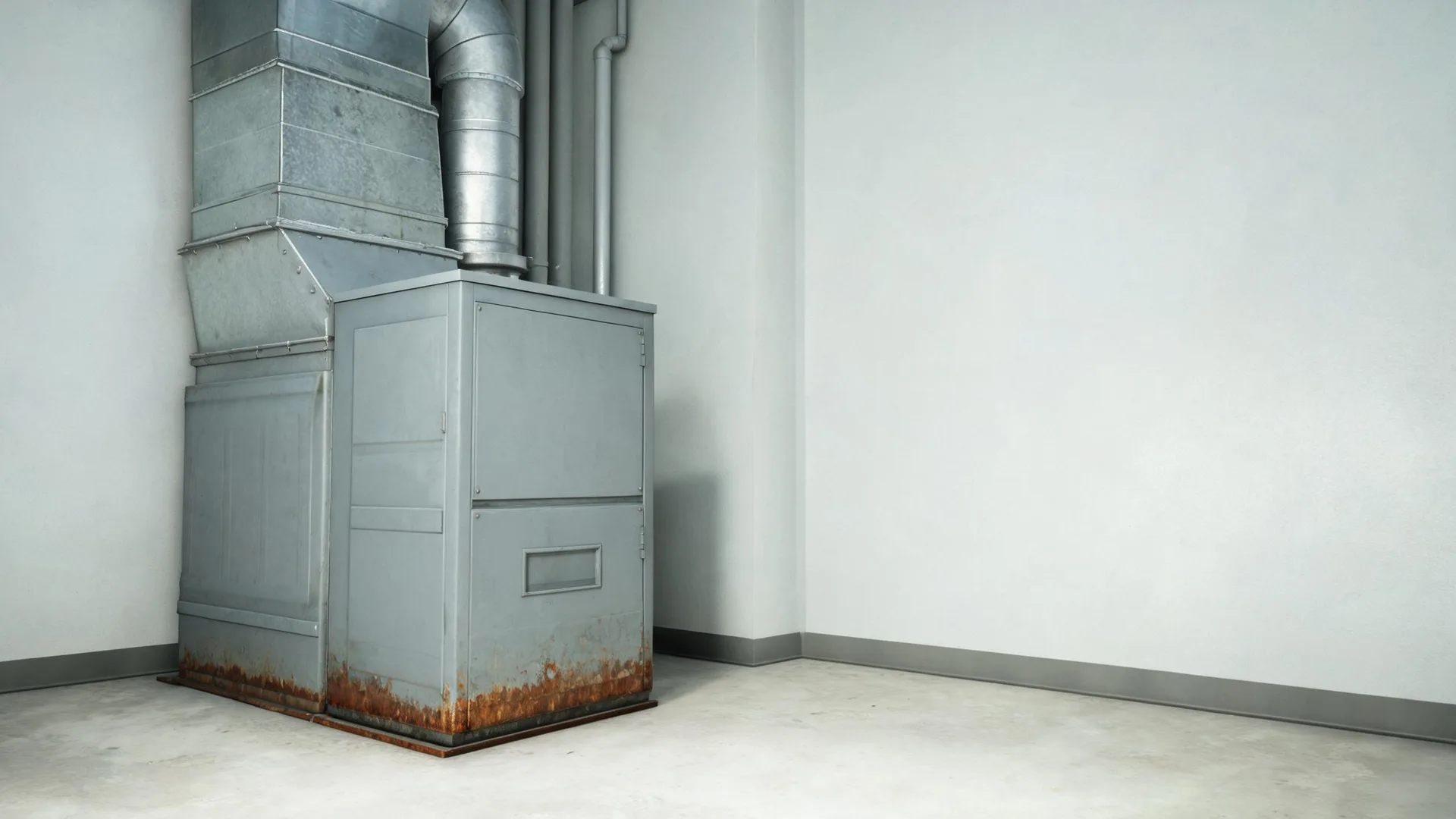
The heat exchanger is the one that ends the conversation

The heat exchanger is the metal chamber that separates the burning gas from the air blowing through the house, and it cracks from the same heating and cooling cycle it goes through every time the furnace runs. A cracked exchanger lets combustion gas mix into the air supply, which is a safety problem, not a comfort one. A contractor who finds a crack there won't patch it. The exchanger gets replaced or the furnace does, and on an older unit that question usually decides the whole repair.

A gray forced-air furnace with metal ductwork stands in an unfinished basement with exposed wooden joists, concrete walls, and a single hanging light bulb.

A new furnace would cut about $80 a year off heating for a typical Nez Perce County home.

  • A new high-efficiency furnace$310 a year
  • An older furnace$390 a year

Estimates for a typical Nez Perce County home, compared with an older unit built to the previous federal minimum, from EIA household energy data, Idaho fuel prices and NOAA climate normals. Your home will differ.

Repair makes sense when one part has failed and the heat exchanger is sound.

Replacement makes sense when the heat exchanger is cracked or the furnace keeps needing parts.

A diagnostic call starts before any panel comes off. The contractor asks what you noticed, when it started, and whether it happens every cycle or just sometimes, because that narrows down what to test first. Then the cabinet comes open and they check for power at the board, watch the ignition sequence start to finish, and look at the flame itself. A weak or uneven flame points one direction, a board that won't call for heat at all points another. Some of it is testing with a meter, checking that the right voltage shows up where it should. Some of it is just watching the furnace try to run and seeing where the sequence breaks down. By the end they can tell you what failed and whether it's one part or a sign the whole unit is tired.