




An unfinished basement featuring concrete block walls, exposed floor joists, and a metal forced-air furnace with ductwork near a central pillar.

Furnace Repair in Kellogg, ID

Tell us about the job

Takes about a minute. No obligation.

RepairFurnace or heatingShoshone County, ID
Step 1 of 2

What ZIP code is the job in?

Furnaces in Shoshone County run nine or ten months a year, September through June. That's most of the calendar. A system built to cycle on and off through a normal winter is instead running close to year round here, and the parts inside it, the igniter, the blower motor, the heat exchanger, don't get much of a break between seasons. Add in the weather itself. Shoshone County has seen 189 winter storms between 2015 and 2024, and every one of those puts extra demand on a furnace right when it can least afford to quit. That kind of workload is exactly why problems tend to show up earlier here than the manual would suggest. When something's off, it's worth having a contractor look at the actual cause instead of guessing.

10 months
September through June, your furnace is on duty
22°F
the average winter night it heats against
52%
of homes here heat with gas, so most furnaces here burn gas
189 winter storms
in ten years, the nights a failure hurts most
Isometric cutaway illustration of a small house showing a furnace unit connected to ductwork running through the interior and attic, with a chimney on the shingled roof and simple furniture in the rooms.
Your furnace works hardest from October through April.

NOAA nClimDiv, 1991–2020 normals

Furnaces here start running in September.

A furnace that sat idle since June finds out fast if something was already going bad.

Half the homes in Shoshone County were built in 1959 or earlier

Half the homes here were built by 1959
Climate zone 5B
Heat runs September through June
A struggling furnace costs you every month it runsNatural gas ran $8.25 per million Btu in Idaho in 2024, and a furnace that's not running right burns more of it than it should.

If the furnace in your house is original to the place, or close to it, that matters before you spend money on a repair. Half the homes in this county were built in 1959 or earlier, and a furnace that old has already run through more winters than the manual accounted for. A cracked heat exchanger or a blower motor on its way out isn't worth sinking money into on a furnace that's near the end anyway. Ask the contractor straight out how many more winters they'd expect from this unit if it gets fixed now. If the answer is short, that money is better spent on a new system.

Find out what's actually wrong with it

Get the actual cause checked before you pay to fix the wrong thing. A furnace running nine or ten months a year through storm after storm doesn't fail for no reason, and a contractor who looks at what's really going on can fix it so it holds.

Find a contractor
A man in a cap, navy T-shirt and brown pants carries a waxed canvas tool bag up the steps toward a blue front door of a shingled house, beside a potted shrub.
A gray gas furnace with attached ductwork and piping installed in an unfinished concrete basement.

What to check before you pick up the phone

Before you call anyone, check the thermostat first. Make sure it's set to heat, not fan, and that the temperature is actually set above room temperature. A dead or miscalibrated thermostat battery stops a furnace cold and looks exactly like a bigger problem. Next, go look at the filter. Pull it out and hold it up to a light. If you can't see light through it, that's enough to choke the airflow, trip a safety switch, and shut the whole system down. Check the air vents and return grilles around the house too. If furniture or boxes are blocking them, the system can overheat and cut out on its own. Go to the furnace itself and look for a flashing light on the control board, usually visible through a small window on the front panel. Count the flashes. That code points to a specific fault, and knowing it before you call saves time. Check that the switch on the furnace itself, and the one on or near it that looks like a regular light switch, are both on. That second one gets bumped off by accident more often than people expect. If the furnace uses a standing pilot, see if the pilot light is actually lit. If it's gas and you smell gas, stop checking and get out. Don't relight anything yourself. Last, check the breaker panel. A tripped breaker can look like a dead furnace, and resetting it is safe to try once. If it trips again right away, stop and leave it alone.

The signs rarely show up as a dead furnace

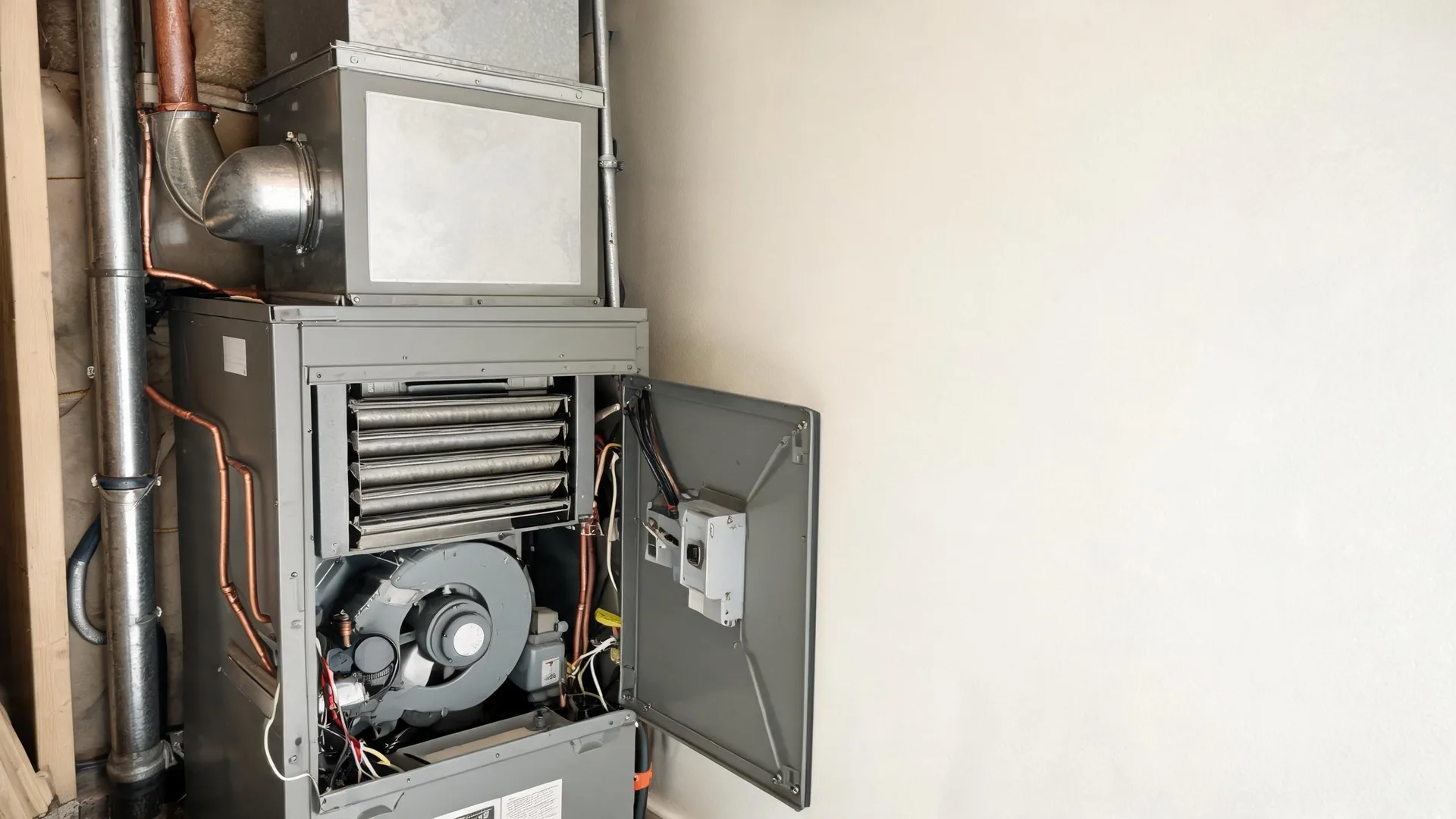
Most of the time it's smaller than that. A burner flame that's yellow instead of blue. A blower that kicks on louder than it used to, or runs longer than it needs to before the air feels warm. Short cycling, where the furnace fires up, runs a couple minutes, and shuts off before the house warms at all. A smell of gas or something burning when it starts. Rooms that used to heat evenly now have cold spots. Any one of these means something inside is already struggling, even if the furnace still technically runs.

Waiting turns a repair into a bigger one

A furnace that's cutting out on its own is usually doing it on purpose, through a safety switch that trips when something downstream isn't right. Ignore that enough times and the part causing it, a cracked heat exchanger, a failing igniter, a blower motor pulling too much current, gets worse under the same strain instead of better. The furnace that's merely annoying this month is the one that leaves you without heat the next cold snap. Getting a contractor to look at it while it's still running, even poorly, gives them more to diagnose than a furnace that's already quit.

A gray forced-air furnace with ductwork stands in an unfinished concrete basement surrounded by storage items and clutter.

A new furnace would cut about $100 a year off heating for a typical Shoshone County home.

  • A new high-efficiency furnace$410 a year
  • An older furnace$510 a year

Estimates for a typical Shoshone County home, compared with an older unit built to the previous federal minimum, from EIA household energy data, Idaho fuel prices and NOAA climate normals. Your home will differ.

Repair makes sense when one part has failed and the heat exchanger is sound.

Replacement makes sense when the heat exchanger is cracked or the furnace keeps needing parts.

Gas here cost $8.25 per million Btu in 2024, and that's the state average, not what a struggling furnace actually burns. A furnace short cycling or running long to make up for weak heat is pulling gas the whole time it does it. That cost shows up on the next bill whether the furnace gets looked at or not. Fixing what's wrong stops the waste at the source. Waiting doesn't lower the price of gas, it just means paying more of it for less heat.