




A gray forced-air furnace with metal ductwork stands in an unfinished basement with exposed wooden joists, concrete walls, and a single hanging light bulb.

Furnace Repair in Homedale, ID

Tell us about the job

Takes about a minute. No obligation.

RepairFurnace or heatingOwyhee County, ID
Step 1 of 2

What ZIP code is the job in?

Furnaces around Homedale run about ten months a year, September through June. That only leaves a short stretch in summer when the burner and blower actually sit idle. Ten months of cycling on and off wears down an igniter or a blower motor faster than it would somewhere that only needs heat half the year. Owyhee County saw 72 winter storms between 2015 and 2024, counting heavy snow, ice and blizzards, and a furnace has to work hardest exactly when one of those hits. If yours is making a new noise or struggling to keep up, that kind of use is usually why. Getting the actual cause diagnosed, instead of guessing, is what makes a repair hold.

10 months
September through June, your furnace is on duty
21°F
the average winter night it heats against
72 winter storms
in ten years, the nights a failure hurts most
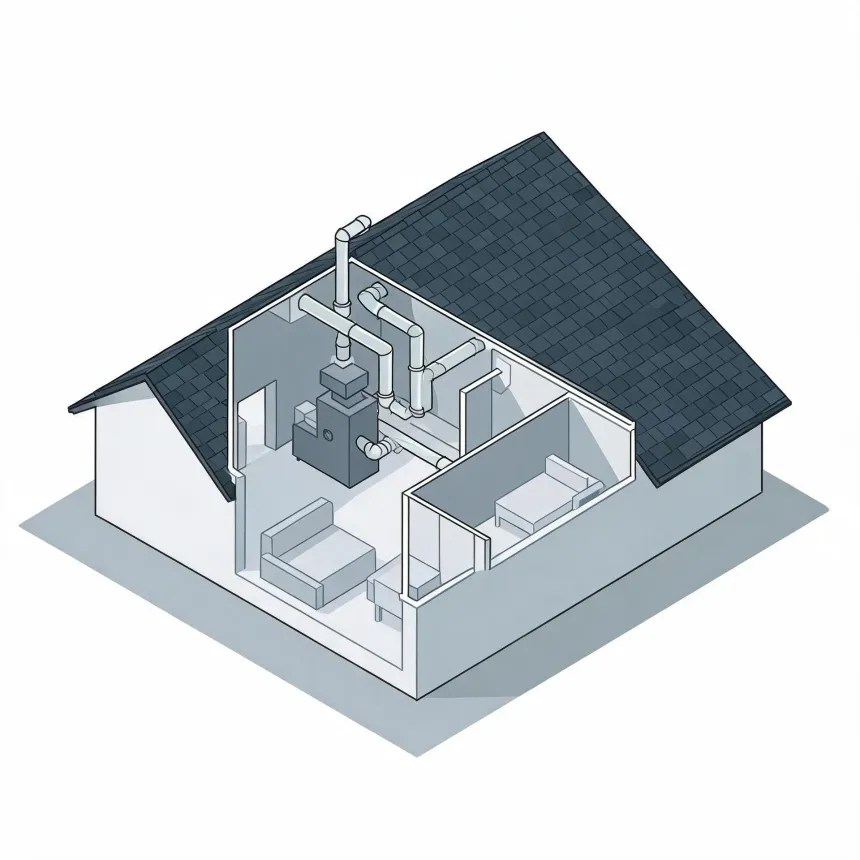
Isometric cutaway illustration of a single-story house with a dark shingled roof, showing interior rooms with furniture and a furnace connected to ductwork.
Your furnace works hardest from November through April.

NOAA nClimDiv, 1991–2020 normals

September is when furnaces around Homedale go back to work after their shortest break of the year.

A part that was already worn from last season is the one most likely to fail in those first weeks back.

Electricity here runs $33.76 per million Btu, and this furnace runs most of the year

Climate zone 5B
Heat runs September through June
Winter nights average 21°F

A furnace that's cycling on and off most of the year and costing more to run with every hour it's on is not one to leave alone. A worn igniter or a weak blower motor does not get cheaper to fix by waiting. It just keeps pulling power while it struggles, and the struggle gets worse. If yours is short cycling, running longer than it used to, or making a noise that is new, that is the time to have it looked at. A technician can tell you whether it is a single part failing or something that points to the whole unit nearing the end of its life.

Get the real cause diagnosed, not guessed at

A furnace that runs ten months a year and takes the brunt of 72 winter storms doesn't wear evenly. One part goes before the rest, usually the igniter or the blower motor, and it tends to go right when a storm is asking the most of it. A technician can tell you which part it is and whether the rest of the unit is good for more years.

Find a contractor
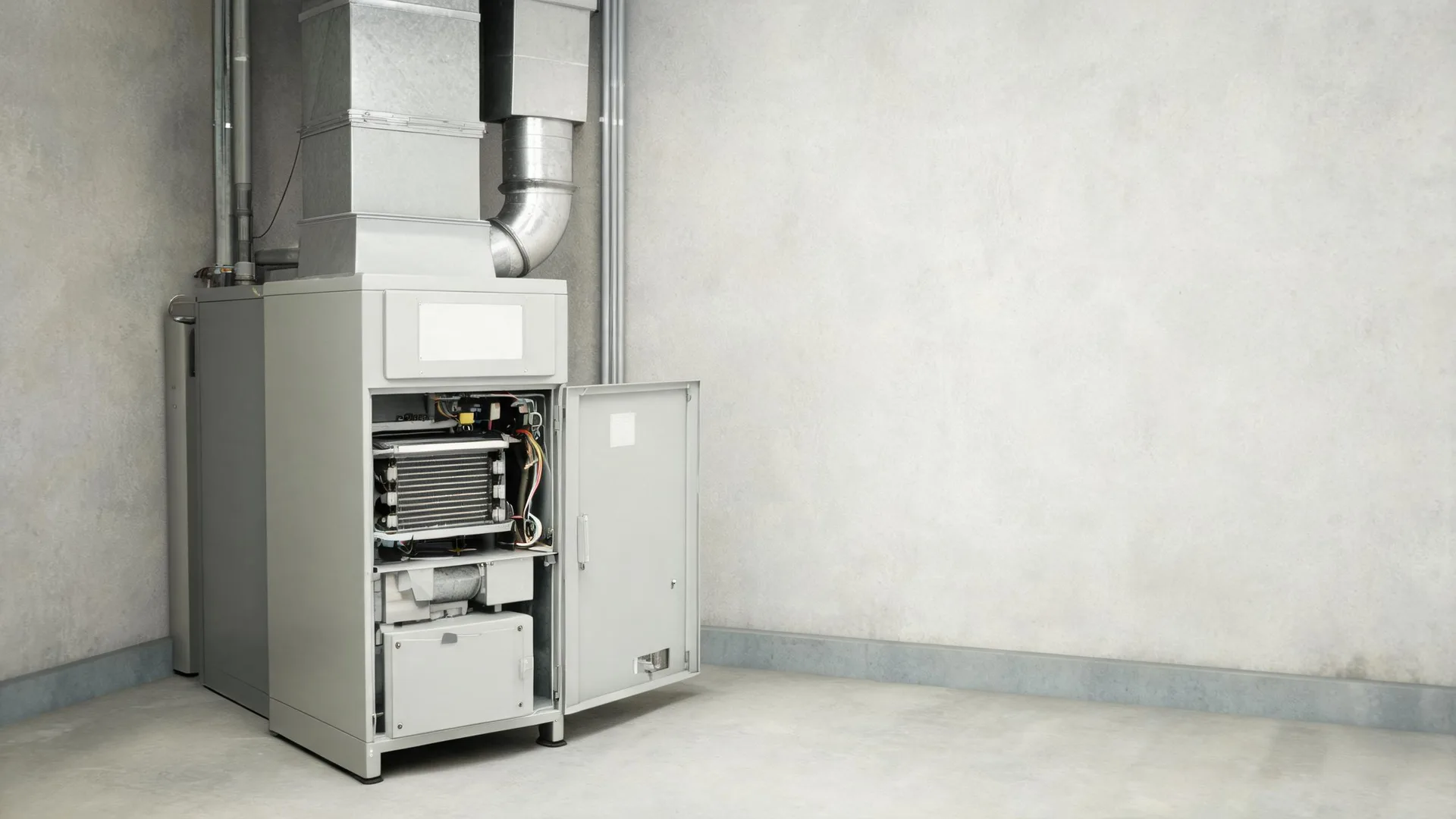
A gray high-efficiency gas furnace installed in an unfinished basement, surrounded by gas lines, a condensate drain, and sheet-metal ductwork.

What to check before you call

Before anyone comes out, there are a few things worth checking yourself. Start with the thermostat. Make sure it's set to heat, not just fan, and that the temperature you want is actually higher than the room. Dead batteries in the thermostat will stop a furnace cold, and that's a two-minute fix. Next, check the air filter. A filter clogged with dust chokes off airflow, and a furnace that can't breathe will overheat and shut itself down as a safety measure, or short cycle trying to compensate. If you can see light through it, it's fine. If you can't, swap it. Go look at the furnace itself and make sure the power switch, the one that looks like a light switch on or near the unit, is flipped on. It gets bumped more often than people expect. If your furnace runs on gas, check that the gas valve is open and that nothing tripped at the breaker panel. Listen to how it's running. A furnace that clicks but never lights, or lights and then shuts off after a few seconds, is telling you something specific, and that's worth mentioning to whoever comes to look at it. What you shouldn't do is take the front panel off and start poking at the igniter or the flame sensor. Those parts are fragile and the diagnosis isn't always obvious from looking at them. A clean filter, a working thermostat, and power getting to the unit are the things you can rule out yourself. Everything past that is a job for someone with the right tools.

A furnace rarely fails all at once

Most furnace trouble starts as a small change before it becomes a breakdown. A flame that looks yellow instead of blue, a burner that smells faintly of gas for a few seconds at startup, a blower that runs longer than it used to, a cycle that ends and starts again within minutes. Each of these points to one part working harder than it should, usually the igniter, the flame sensor, the blower motor or the heat exchanger. Catching it at this stage is what keeps one worn part from taking out the rest of the unit.
What the sound and the smell are telling you

A bang when the burners light means gas is building up before ignition catches, which points to a dirty burner or a failing igniter. A screech or grinding from the blower means a motor bearing is wearing out. A burning smell that doesn't fade after the first few minutes, unlike the dust smell of a furnace's first run, means something is overheating that shouldn't be. None of these get better if you wait, and a furnace that keeps running with a cracked heat exchanger or a failing motor is one small step from a bigger repair or a safety problem.

A furnace that's struggling doesn't stop on its own. It keeps cycling, trying to hit the temperature on the thermostat, and every cycle leans harder on whatever part is already failing. A blower motor with a bad bearing will run anyway, until the bearing seizes and takes the motor with it. A cracked heat exchanger gets worse under heat, not better, because the metal keeps expanding and contracting around the same weak spot. Low airflow from a clogged filter makes the burner run hotter than it's built for, and that heat stresses the ignition parts and the exchanger both. A furnace will keep trying to do its job long after one part has stopped doing its job well, and that's exactly the stretch where a cheap repair turns into a replaced motor or a cracked exchanger that isn't safe to run at all.

Age is the first thing to weigh, but it isn't the only thing. A furnace in its first half of life is usually worth repairing almost no matter what broke, because the rest of the unit has years left to use that repair. One past the middle of its expected life is a different question, especially if the failed part is the heat exchanger or the control board rather than something smaller. Those two are often priced close to a full replacement, since so much of the labor is the same either way. A second or third repair inside a short span is worth noticing too. It usually means the unit is wearing down generally, not that it just had bad luck twice. The condition of the rest of the system matters as much as the part that quit. A blower motor fails on its own and says little about the burners or the exchanger. A cracked exchanger, on the other hand, often shows up alongside other parts that are tired for the same reason. A technician who's actually looked at the unit can tell you which situation you're in, and that's worth more than any rule of thumb.