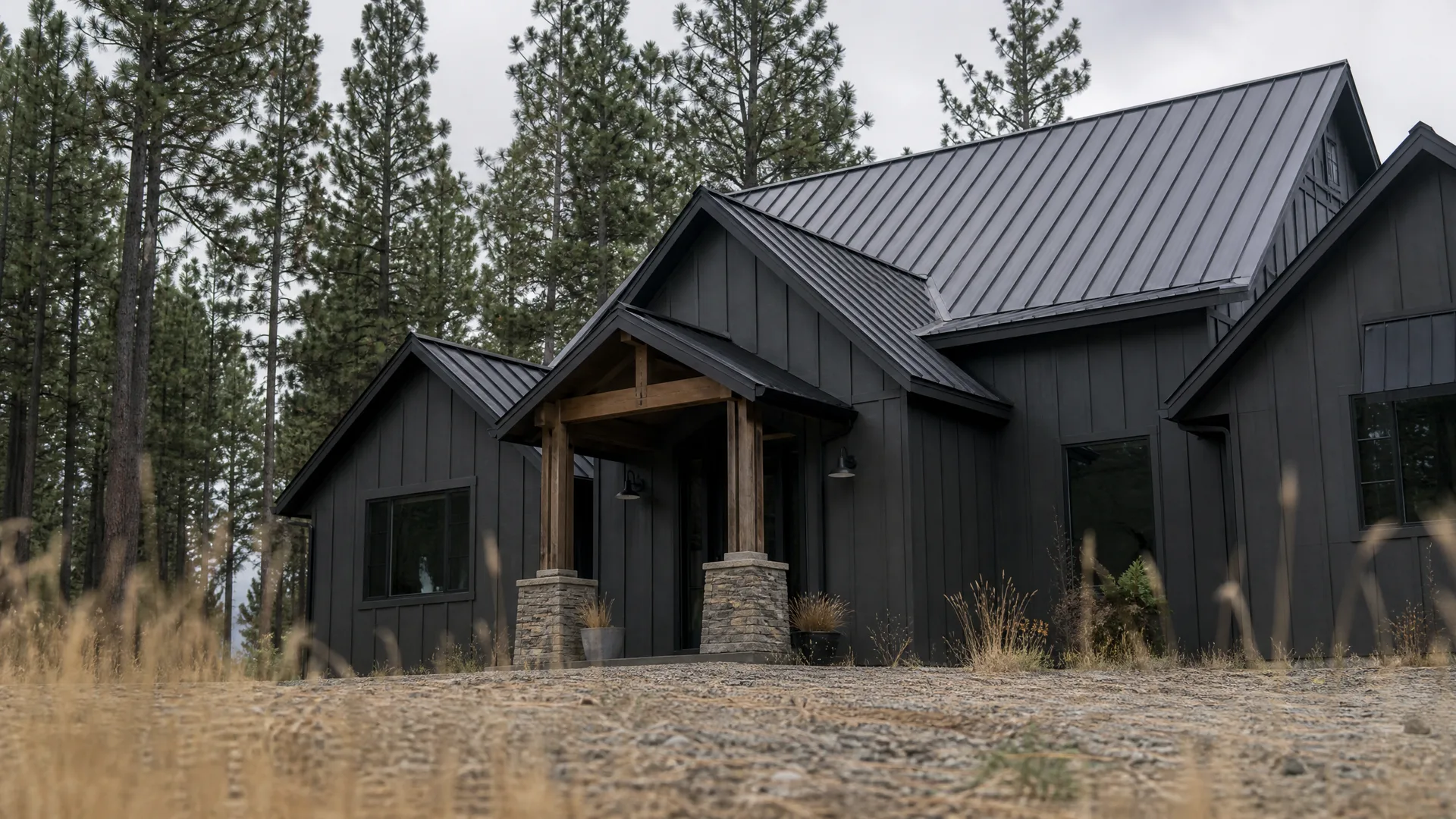




A single-story black board-and-batten house with a dark standing-seam metal roof, timber entry porch posts on stone bases, set among tall pine trees with dry grass in the foreground under an overcast sky.

Furnace Repair in Hailey, ID

Tell us about the job

Takes about a minute. No obligation.

RepairFurnace or heatingBlaine County, ID
Step 1 of 2

What ZIP code is the job in?

Your furnace in Hailey runs about ten months a year, September through June. That's most of the calendar, not just a few cold weeks. Overnight lows average 14°F through December, January and February, so when it does run, it's working against real cold, not a mild chill. Blaine County has seen heavy snow and ice storms well over a hundred times in the last decade, and those are the stretches when a furnace gets pushed hardest. That kind of runtime wears on an igniter or a blower motor sooner than it would somewhere milder. If something's acting up now, there's usually a reason, and it's worth finding out what it is before it gets worse.

10 months
September through June, your furnace is on duty
14°F
the average winter night it heats against
142 winter storms
in ten years, the nights a failure hurts most
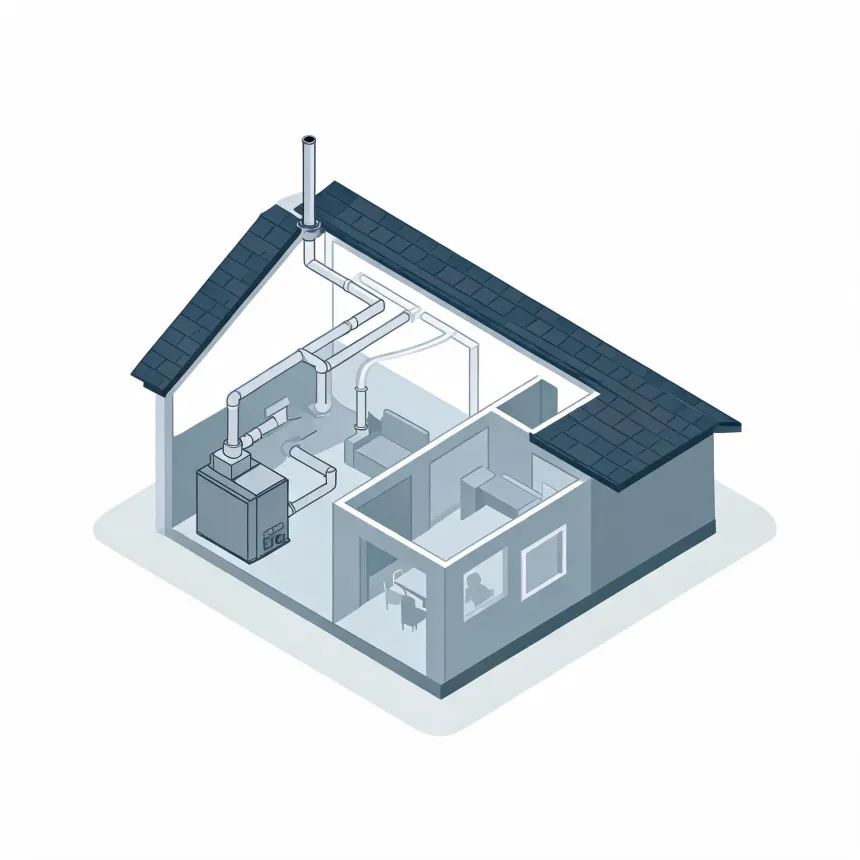
Isometric cutaway illustration of a single-story house showing interior rooms, a furnace unit with connected ductwork, and a flue pipe extending through the dark shingled roof.
Your furnace works hardest from November through April.

NOAA nClimDiv, 1991–2020 normals

A cracked heat exchanger gets worse every time the furnace fires.

Running it more now just means more heat cycles working that crack open further.

Ten months of heat means September is when the weak parts fail

Heat runs September through June
Winter nights average 14°F
142 winter storms from 2015 to 2024

Half the homes in Blaine County were built in 1987 or later. If yours is one of them, your furnace probably came with a newer house too. That heavy runtime from the winter above still happens every year, but a furnace that age still has plenty of working life left in it. So if yours is acting up now, age alone usually isn't the reason. Something specific went wrong, a part that failed ahead of schedule or a connection that worked loose, and that's worth fixing rather than treating as a sign the whole system is done.

Get the cause found, not just the symptom treated

A furnace running this many months, against cold like this, doesn't act up for no reason. Something specific is wearing or failing, and a proper diagnosis finds which part it is before the cold stretch ahead asks more of it.

Find a contractor
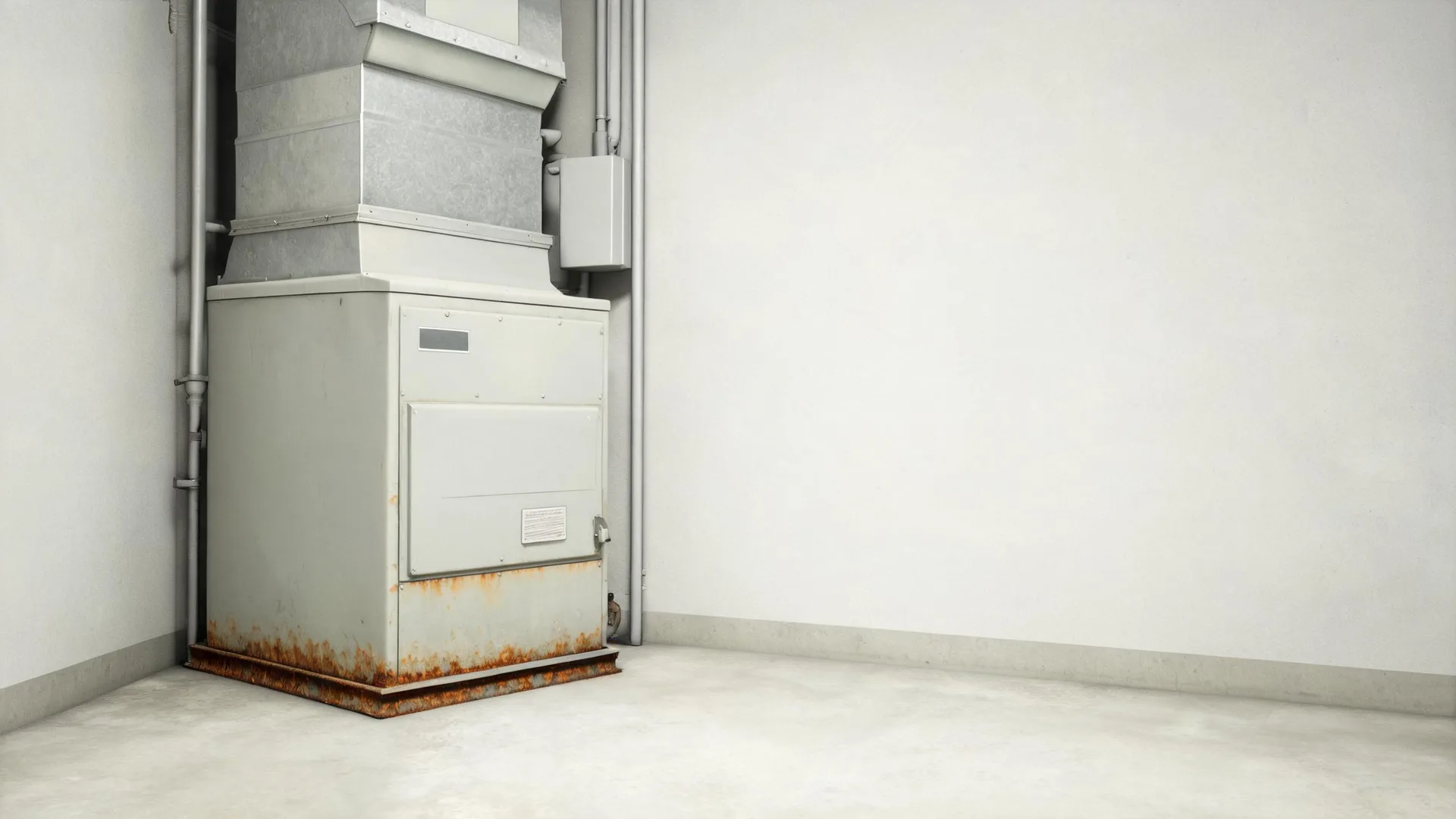
A gray residential gas furnace installed in an unfinished basement, surrounded by ductwork, a metal flue pipe, and a gas supply line.

Plenty of hours left on the clock

That same runtime shows up here in the time-lapse, day into night, all year. A furnace that came with a newer house isn't logging those hours on borrowed time. So if something in this one is cycling wrong or falling behind, call it in for repair and expect a straight answer about which part failed. There's no reason yet to plan around replacement.

The igniter takes the brunt of it

Every heat cycle heats it up and lets it cool back down, and that repeated stress is usually what ends its life, not one bad event. A hot surface igniter gets brittle over time and eventually cracks. A furnace that won't start reliably, or needs a few tries before it catches, is often right at that point.
A failing part rarely stays quiet

A blower motor losing strength shows up as weak airflow or warm spots a room away from the vent. A cracked exchanger shows up as soot, a strange smell, or a flame that looks different than it used to. Catching the sign early is what keeps a worn part from taking the ignition system or the control board down with it.

A furnace that's struggling usually tells you before it quits outright. Short cycling is one of the clearest signs. It fires up, runs for a bit, then shuts off before the house ever warms up. That can mean a clogged filter choking off airflow, or a flame sensor too dirty to prove the flame is lit. Cool air blowing from the vents, or air that never feels quite warm enough, often points to a failing blower motor or a gas valve not opening all the way. A furnace that clicks over and over but won't catch is usually down to the igniter or that same flame sensor. Listen for anything new too, a screech from the blower, a bang when it starts up, a hum that wasn't there before. None of these mean the furnace is done, but none of them fix themselves either.

A diagnostic visit starts with the complaint, not the furnace. What is it doing, and when does it do it. Short cycling, no heat, a strange noise, a smell. That shapes where the technician looks first. From there it's a sequence. Checking for power and a thermostat signal. Watching a full cycle start to finish. Pulling the igniter or checking flame sensor readings. Testing the blower motor's draw. Looking at the heat exchanger for cracks or soot. Each step rules something in or out. A furnace can pass most of these checks and still fail on the one that matters, so the order isn't guesswork. It's narrowing down until one part is clearly the problem. The visit ends with that part named, not a guess at a category of parts that might be involved.