Warmly lit timber-frame and stone houses line a street at dusk, with evergreen trees and a snow-capped mountain range in the background.

Furnace Repair in Grangeville, ID

Tell us about the job

Takes about a minute. No obligation.

RepairFurnace or heatingIdaho County, ID
Step 1 of 2

What ZIP code is the job in?

Ten months of work a year

Furnaces in Idaho County run from September through June. That leaves a short stretch in summer when the thing actually gets to sit still. An ignition part or a blower motor that might coast for years somewhere milder is working almost all the time here.
A breakdown has a reason behind it

A furnace that quits or short cycles after that much runtime usually isn't failing at random. Something specific wore out or drifted out of adjustment. Finding that part and fixing it properly matters more here, since whatever repair goes in will go right back to working nearly year round.

10 months
September through June, your furnace is on duty
18°F
the average winter night it heats against
66 winter storms
in ten years, the nights a failure hurts most
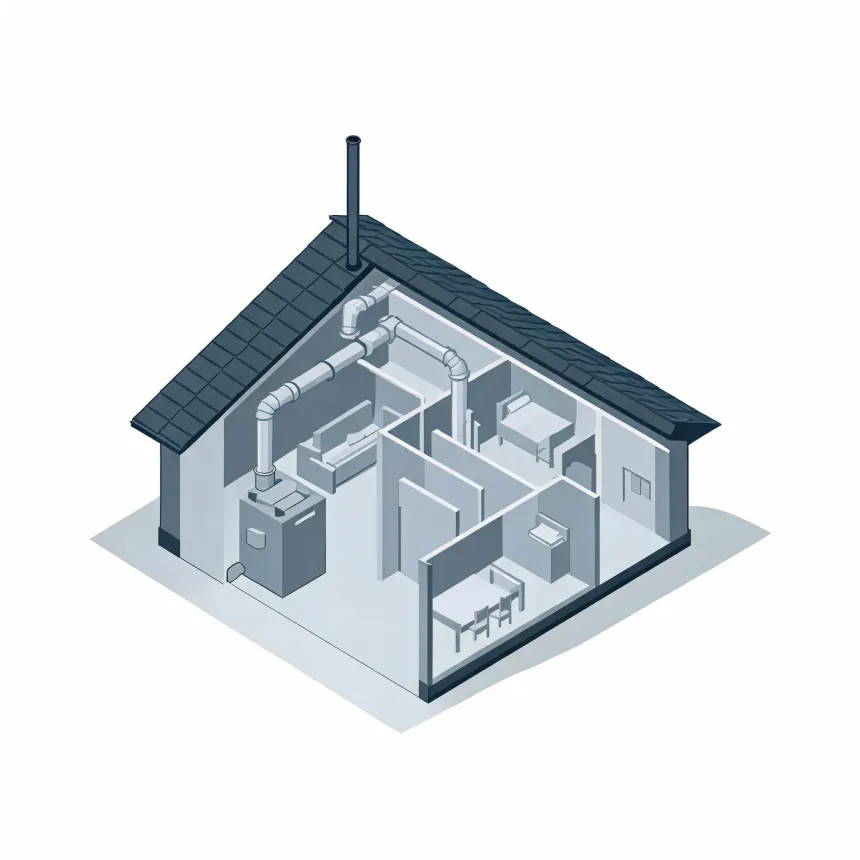
Isometric cutaway illustration of a small single-story house showing interior rooms with furniture, a furnace unit with attached ductwork running to a roof flue, and a dark shingled roof.
Your furnace works hardest from October through April.

NOAA nClimDiv, 1991–2020 normals

Most furnace failures trace back to one worn part, not a system falling apart all at once.

Find the part that quit and the repair holds, since everything else in the furnace is still sound.

Electricity here runs $33.76 per million Btu, and this furnace burns it from September through June

Climate zone 5B
Heat runs September through June
Winter nights average 18°F
September Is When Weak Parts Give OutFurnaces here sit idle all August, then run flat out from the first cold morning in September.

A furnace that's short cycling or running constantly is spending more of your money every day it sits unfixed. Electricity here costs $33.76 per million Btu, and a furnace working harder than it should pulls more of it to do the same job. A dirty filter, a failing igniter, a blower motor drawing more than it needs, any of these make the furnace strain to put out the same heat. That strain doesn't show up as a lump sum. It shows up a little at a time, on every bill, for as long as the problem sits there. Getting it looked at now is cheaper than letting it run that way through the winter.

Find the part that failed, not just the symptom

A furnace that runs from September through June doesn't get much of a break. When a part wears out, a proper diagnosis finds the actual cause instead of just quieting the symptom, so the fix holds for the months of running still ahead.

Find a contractor
A man in a cap and brown jacket, seen from behind, climbs porch steps toward a blue front door while carrying a canvas tool bag, with a potted shrub in a blue planter beside him.
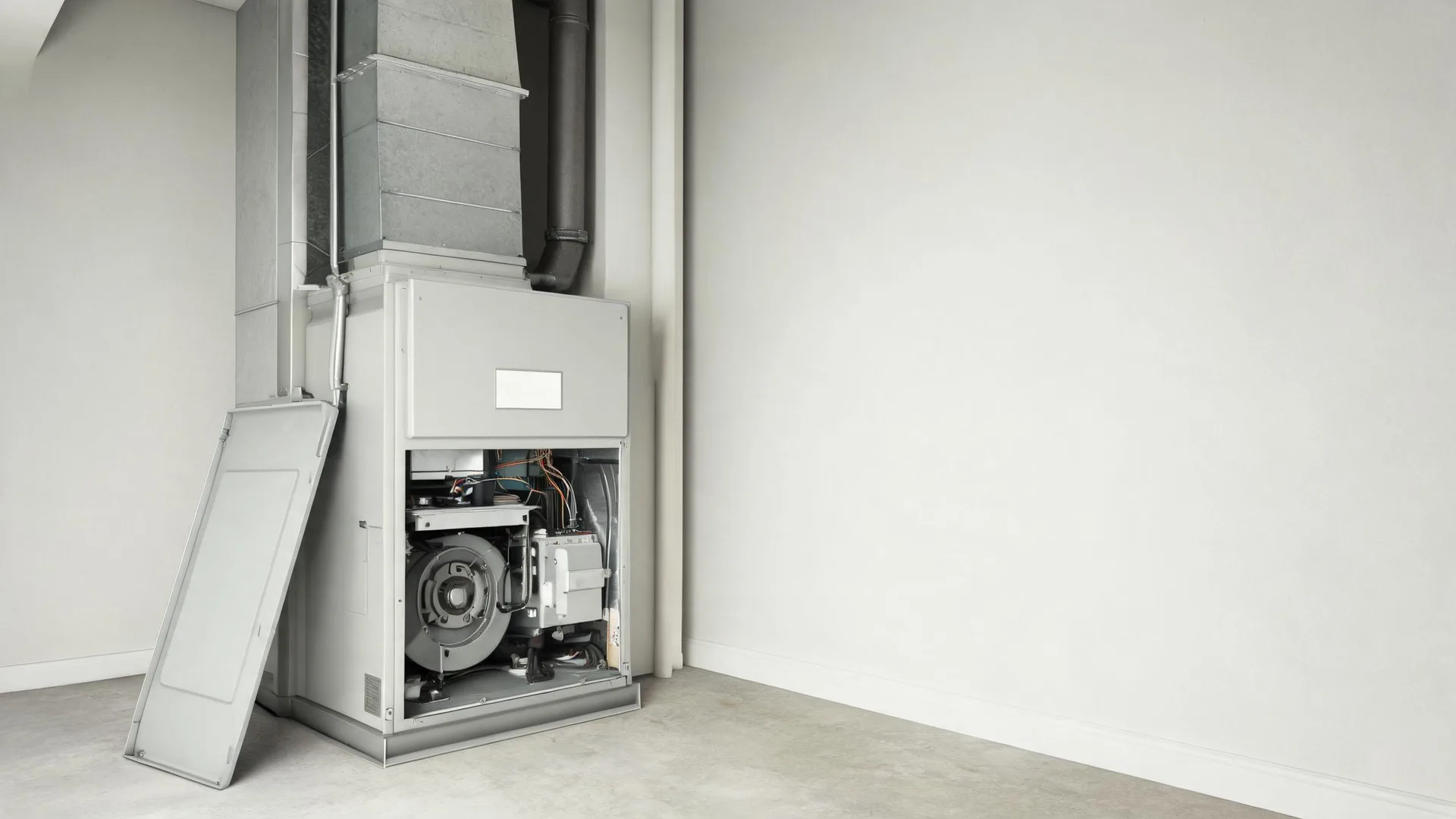
A gray residential gas furnace installed in an unfinished basement, surrounded by ductwork, a metal flue pipe, and a gas supply line.

What to Check Before You Call

Before anyone comes out, there's a handful of things worth checking yourself. Start with the thermostat. Make sure it's set to heat, not cool, and that the set temperature is actually above room temperature. A dead or low battery in the thermostat will sometimes cause odd behavior that looks like a furnace problem but isn't. Next, check the filter. Pull it out and hold it up to a light. If you can't see light through it, it's choking off airflow, and that alone can cause a furnace to overheat and shut itself down partway through a cycle. Look at the air vents and returns around the house too. If furniture or boxes are blocking them, the furnace can't move air the way it needs to. Check the breaker box. A furnace that won't start at all sometimes just tripped a breaker, and it's worth resetting it once to see if it holds. If it trips again right away, stop and leave that to a professional, since a breaker that won't stay on usually means something electrical is actually wrong. If your furnace has a standing pilot, see if the pilot light is lit. If it's gone out, most units have a reset procedure printed right on the access panel. If yours uses electronic ignition instead, you won't see a flame to check, and that's normal. Last, look at the furnace switch, the one that looks like a regular light switch, usually mounted on or near the unit itself. It's easy to bump off by accident, and a furnace with no power to it will never start no matter what the thermostat says.

A Cracked Heat Exchanger Only Gets Worse

A heat exchanger that's cracked or warped won't heal itself by running less hard. Every cycle flexes the metal with heat and then lets it cool, and a weak spot widens a little more each time. Left alone, a hairline crack turns into a gap big enough to let combustion gas mix into the air the furnace is pushing through the house. That's not a problem that waits for a convenient time to get fixed.

A Struggling Blower Motor Wears Out Its Neighbors

When a blower motor starts drawing more current than it should, the strain doesn't stay contained to the motor. The extra heat it throws off can degrade the wiring and the control board nearby, and a motor that's seizing up can trip the limit switch over and over until that switch wears out too. What started as one part failing can turn into two or three if the furnace keeps getting asked to run.

A furnace usually tells on itself before it quits outright. Short cycling is one of the clearest signs, where it fires up, runs for a minute or two, and shuts off before the house actually warms. That's often a limit switch tripping because of a dirty filter or a blower that isn't moving enough air. A burner flame that's flickering yellow instead of burning steady blue points to a combustion problem worth having checked. Banging or popping when the furnace first kicks on usually means the ductwork is expanding against something, or a burner is delayed in lighting and igniting a small buildup of gas at once. A furnace that runs longer than it used to, or runs constantly without the house getting warmer, is losing efficiency somewhere, whether that's a dirty flame sensor, a worn blower, or ductwork leaking air before it reaches the rooms. None of these fix themselves by waiting.

A diagnostic visit starts before any panel comes off. A tech will ask what the furnace was doing right before it quit or started acting up, since a furnace that bangs on startup points somewhere different than one that short cycles all day. From there it's a sequence, not a guess. Check the thermostat call, check for power at the unit, check the flame or ignition sequence, check airflow across the heat exchanger. Each step rules things out so the next one means something. A tech will pull the filter, check the flame sensor for a buildup of residue, and look at the burners while the furnace is running, since a lot of what's wrong only shows itself once the thing is actually firing. The goal is to find the one part that's actually failed, not just the symptom it's causing, because quieting a symptom without finding the cause means the same call comes in again later.