




An unfinished concrete basement containing a gas furnace with sheet-metal ductwork, utility shelving, and exposed overhead joists.

Furnace Repair in Emmett, ID

Tell us about the job

Takes about a minute. No obligation.

RepairFurnace or heatingGem County, ID
Step 1 of 2

What ZIP code is the job in?

Your furnace in Emmett runs about eight months a year, October through May. Overnight lows average 23°F in December, January and February, so it's not coasting through those months, it's working near its limit night after night. Winter storms hit this county often, and the furnace rarely gets an easy stretch between them. That kind of steady demand wears on an igniter or a blower motor faster than mild weather would. If yours is acting up, the cause is usually tied to that workload, not bad luck. Getting it looked at properly matters more here than in places where the system barely runs.

8 months
October through May, your furnace is on duty
23°F
the average winter night it heats against
68 winter storms
in ten years, the nights a failure hurts most
Isometric cutaway illustration of a small house showing a furnace unit connected to ductwork running through the interior and attic, with a chimney on the shingled roof and simple furniture in the rooms.
Your furnace works hardest from November through March.

NOAA nClimDiv, 1991–2020 normals

Furnaces in Gem County sit idle most of the summer, then get switched on in October.

A weak igniter or motor usually gives out in the first weeks of October, not in the middle of winter.

Half the homes in Gem County were built in 1983 or later

Half the homes here were built by 1983
Climate zone 5B
Heat runs October through May

Electricity in Idaho costs $33.76 per million Btu, among the higher rates in the region. A furnace that short cycles or struggles to reach temperature burns more of that to do the job it should do in less time. A cracked heat exchanger, a dirty flame sensor, a blower motor pulling too hard, any of these make the furnace run longer to heat the same rooms. That extra draw shows up on the bill long before the furnace quits outright. Getting the problem found now costs less than paying for it every month until it does.

Get the real cause found, not just a guess

A furnace running eight months a year against 23°F nights doesn't have much slack left in it. If it's acting up now, that's the workload catching up with it, and it's worth getting a proper diagnosis rather than a guess.

Find a contractor
A gray residential gas furnace installed in an unfinished basement, connected to sheet-metal ductwork and PVC pipes.

What to check before you call anyone

Start with the thermostat. Make sure it's set to heat and set above room temperature, and check the display isn't dim or blank, which usually means the batteries are dead. Find the furnace's power switch, it looks like a regular wall switch near the unit, and make sure it wasn't bumped off. Check the access panel too. Most furnaces have a safety switch that keeps the blower from running unless that panel is fully seated and latched. Pull the air filter and look at it. A filter packed with dust chokes the airflow, and some furnaces shut themselves down rather than run that way. If it's a gas furnace, check that the gas valve feeding it is open, and if there's a standing pilot, check whether it's lit. Last, check the breaker panel for one that's tripped. None of this takes tools or experience, and if one of these turns out to be the problem, it rules out a repair entirely. If you've gone through all of it and the furnace still won't run right, that's the point to stop and get it looked at.

What a bad igniter or flame sensor looks like

The furnace tries to start, you hear it click, and nothing catches. Or it lights, runs a few seconds, and shuts off. That short cycle is usually a flame sensor that can't detect the flame anymore, not the igniter itself. Either way the furnace is trying to tell you something specific, not just acting old.
What the blower tells you before it fails

A blower motor losing strength doesn't quit all at once. First the air coming from the vents feels weaker than it used to. Then you notice certain rooms barely get warm while others are fine. A grinding or rattling sound from the unit while it's running means the motor bearings or the wheel itself are already wearing, and that gets worse on its own schedule, not yours.

A cracked heat exchanger doesn't get smaller if you leave it alone. Heat makes metal expand, and a crack that's tight when the furnace is cold can open further under a full heating cycle, then close up again as it cools. Each cycle flexes it a little more. A flame sensor coated with a thin layer of oxidation works the same way in miniature. The furnace fires, can't confirm the flame fast enough, shuts off, then tries again, and each failed attempt adds a little more wear to the igniter cycling along with it. A blower motor straining against a dirty wheel or a failing bearing draws harder to do the same job, and that extra draw heats the motor's windings beyond what they're built for. None of these fix themselves by running more. They fail on their own schedule, and that schedule gets shorter the longer the furnace keeps working through the problem instead of having it looked at.

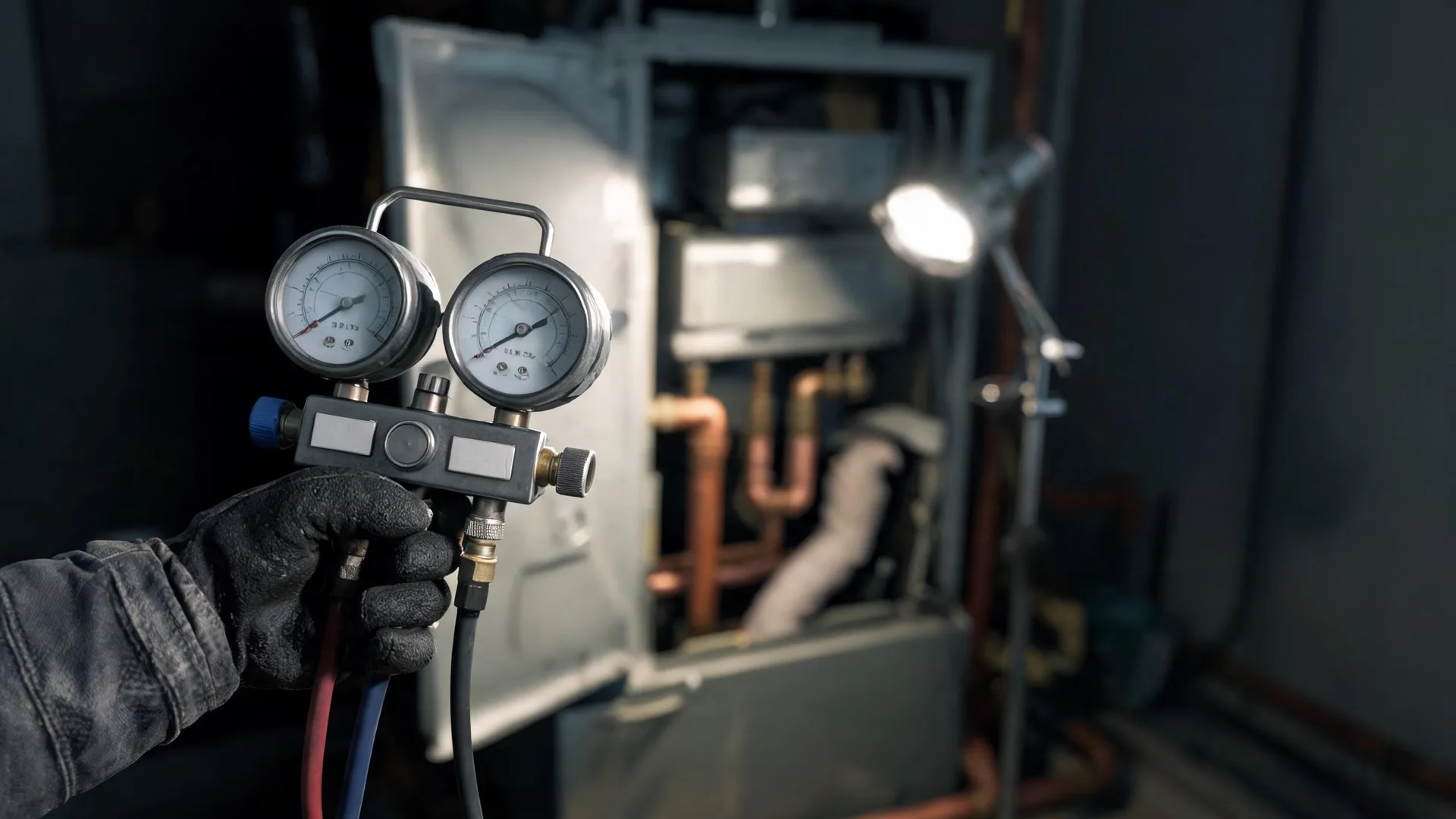
A diagnostic visit starts with questions, not tools. A tech wants to hear what the furnace is actually doing. Does it fail to start, short cycle, run but blow weak air, or make noise while it runs. Then the cover comes off and the burners, igniter and flame sensor get a visual check for soot, corrosion or cracking. After that comes watching the furnace run an actual full cycle instead of guessing from a cold unit. Amp draw on the blower motor gets tested against what that motor is rated for, since a motor pulling too many amps is already straining even if it hasn't quit yet. A heat exchanger gets inspected directly when it's in question, never assumed, because that's not a part anyone should guess about. The visit should end with a specific finding. Not a general one, a specific part and a specific failure, and what it takes to fix it.