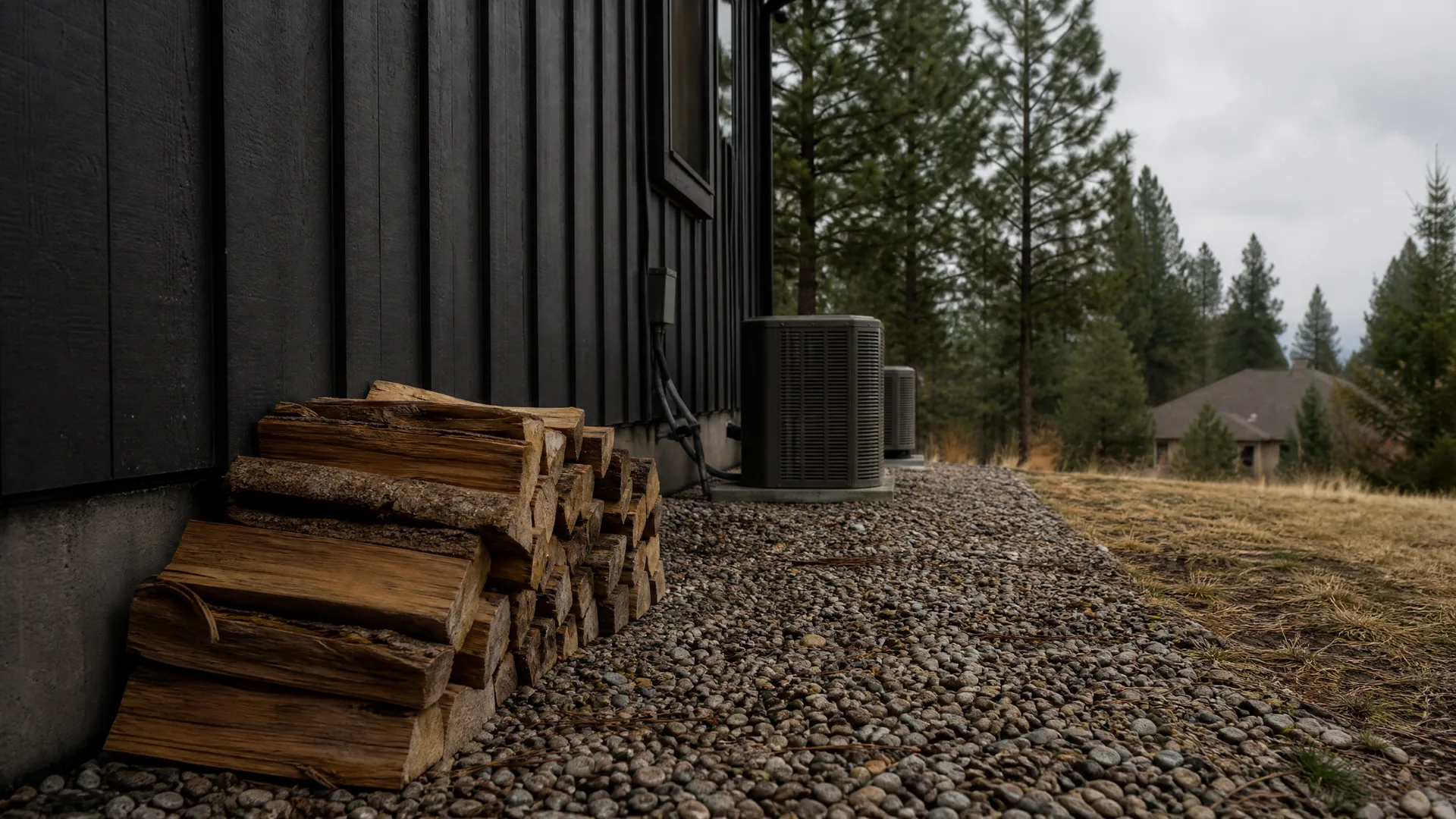





Stack of split firewood against the dark board-and-batten wall of a house, with two outdoor condenser units on a gravel strip, dry grass and conifer trees beyond under an overcast sky.

Furnace Repair in Burley, ID

Tell us about the job

Takes about a minute. No obligation.

RepairFurnace or heatingCassia County, ID
Step 1 of 2

What ZIP code is the job in?

Furnaces in Cassia County run from September through June, about ten months of the year. That leaves a short stretch where the system gets a real break. Burley sees its share of winter storms too, with heavy snow, ice and blizzards hitting the county 55 times between 2015 and 2024. Every one of those storms means the furnace is running longer and harder to keep up. That kind of workload wears on an igniter or a blower motor faster than it would somewhere milder. When something starts acting up, it's usually not bad luck. It's a part that's been working overtime finally showing it.

10 months
September through June, your furnace is on duty
20°F
the average winter night it heats against
55 winter storms
in ten years, the nights a failure hurts most
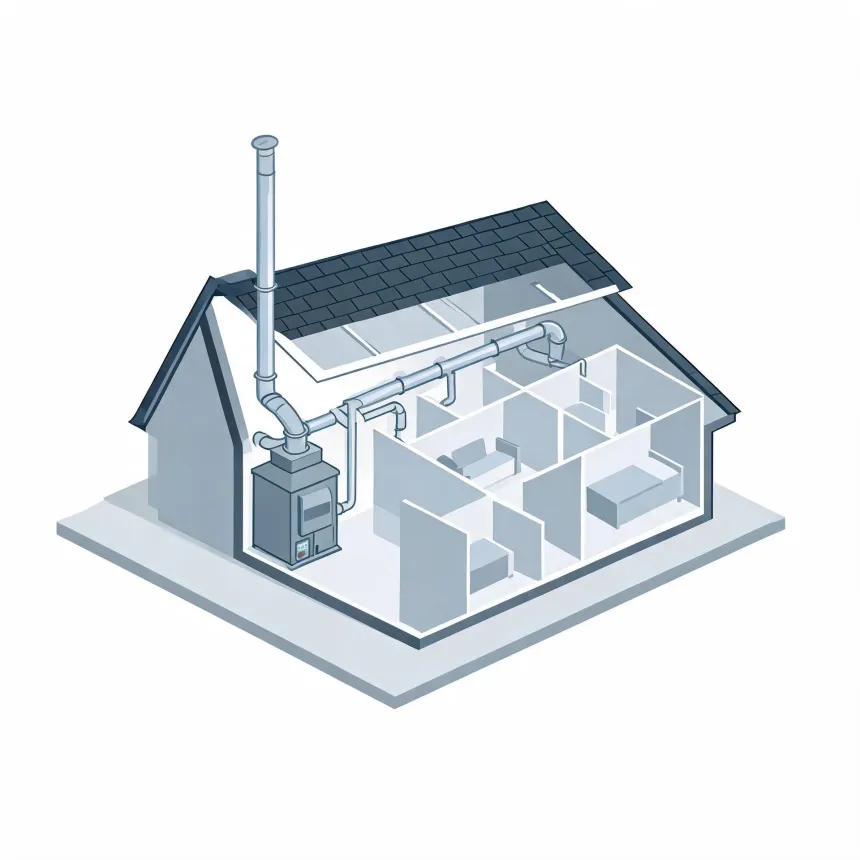
Isometric cutaway illustration of a house showing interior rooms with furniture, a furnace unit with a tall flue pipe outside, and ductwork running through the attic.
Your furnace works hardest from November through April.

NOAA nClimDiv, 1991–2020 normals

A furnace that short cycles is shutting off before the air in your house actually warms up.

That's a sign worth calling in before it leaves you with no heat at all.

A furnace running on bad parts spends more every month until someone fixes it

Climate zone 5B
Heat runs September through June
Winter nights average 20°F
September is when weak parts failFurnace season starts in September here, right after the one stretch the system gets to rest.

Electricity in Idaho ran $33.76 per million Btu in 2024, and that number doesn't care whether your furnace is working right. A furnace that short cycles or struggles to hold a set temperature pulls power the whole time it's doing it, not just when it's heating well. Since the furnace here runs most months of the year, a problem left alone keeps showing up on the bill, month after month, until it's fixed. Getting a repair call in while the issue is small costs less than waiting for the furnace to quit on a cold night.

A furnace working this hard needs a real diagnosis, not a guess

Ten months of run time and 55 winter storms in a decade put real hours on an igniter or a blower motor. Whatever's acting up in your furnace right now has likely been building for a while under that load. Getting it looked at now means the part gets fixed instead of pushed until it fails outright.

Find a contractor
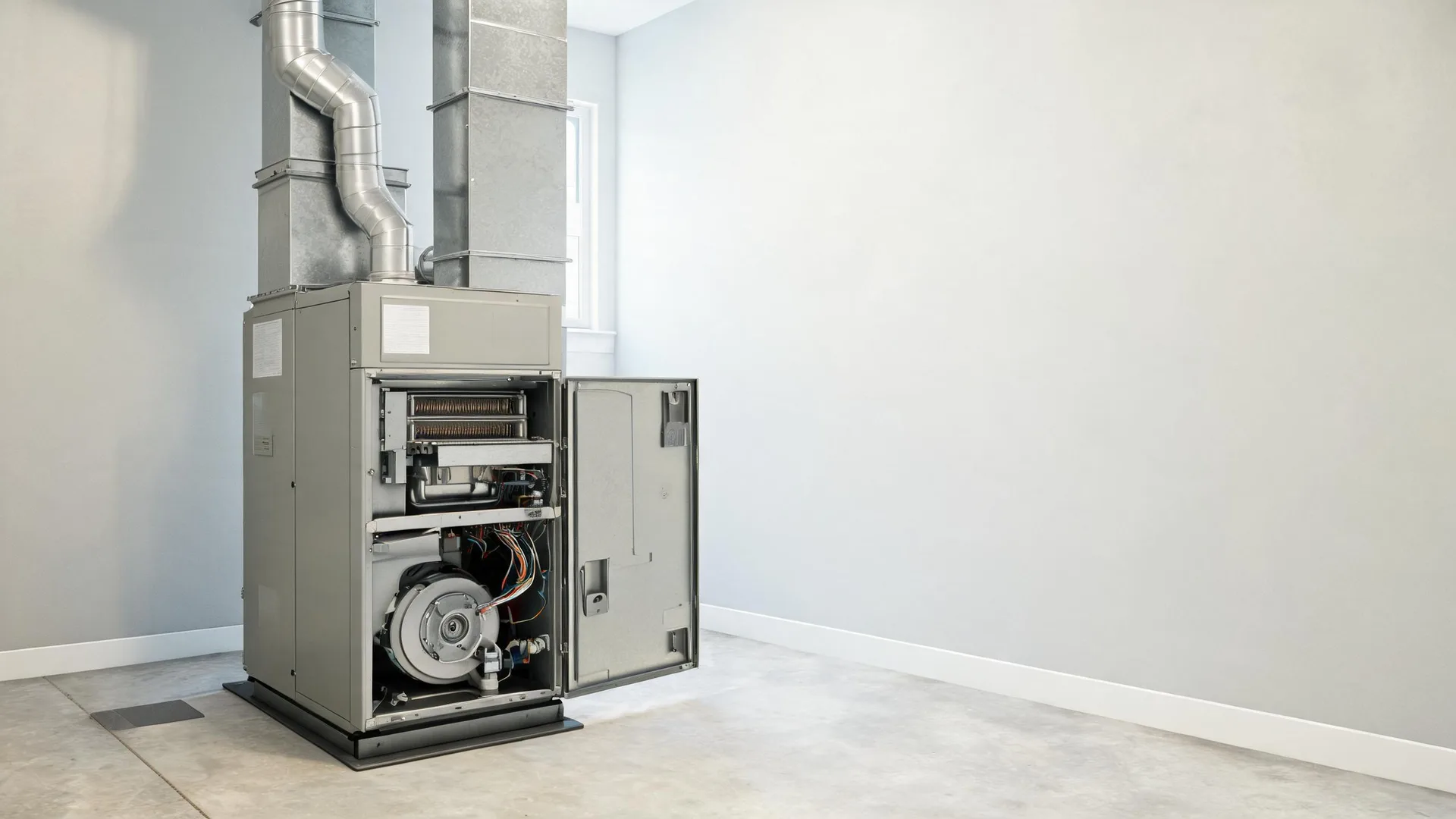
A gray residential gas furnace installed in an unfinished basement, connected to sheet-metal ductwork and PVC pipes.

Every cycle takes something out of the parts that make heat

An ignition system only has so many cycles in it before it stops lighting reliably. On a hot surface igniter, the element gets brittle with every heat-up and cool-down, and eventually it cracks. A flame sensor works less dramatically: it just collects a film of oxidation from being in the flame path over and over, until it can't sense a flame anymore and the control board shuts the gas off as a safety measure. Blower motors fail from simple wear, the bearings drying out after enough running hours, or the motor windings breaking down from heat over time. Flex ductwork and shoddy gas connections don't fail on a schedule, but anything mechanical that cycles on and off thousands of times a season is always closer to the end of its life than the start. None of these parts announce themselves until they're most of the way gone.

Check the simple things first

Look at the thermostat before anything else. Make sure it's set to heat and the set temperature is actually above room temperature. Check that the furnace switch, the one that looks like a light switch on or near the unit, hasn't been bumped off. Look at the breaker panel for a tripped breaker. If the furnace uses a standing pilot, check whether the pilot light is lit. None of this requires tools, and it rules out the causes that have nothing wrong with the furnace itself.
Know what's worth a look and what isn't

Pull the filter and hold it up to a light. If you can't see light through it, swap it, a clogged filter chokes airflow and can cause shutdowns that look like bigger problems. Check that supply and return vents around the house are open and not blocked by furniture or rugs. Listen for a repeated clicking at startup with no flame catching, that's the igniter trying and failing, and it's not something to keep testing yourself. Beyond the filter and the vents, opening the furnace cabinet or testing electrical parts is a job for someone who does this for a living.

A furnace that's struggling doesn't fix itself by staying on longer. If the heat exchanger has a crack starting, more cycles just means more flex, more stress, and a sooner failure, not a gentler one. A blower motor with dry bearings is doing more work to turn than it should, and it'll keep doing that work until it seizes. Short cycling is the same problem in a different coat: every restart puts a surge through the igniter or the hot surface element, and it's already close to the end of its life. Letting a known problem keep running doesn't buy time. It spends it.

Not every furnace problem ends with a new furnace, and it helps to know how that call actually gets made. Age matters, but it's not the whole story. A furnace in its last couple years of expected life that needs a heat exchanger is a different decision than the same furnace needing a new flame sensor. The part matters as much as the age. A flame sensor, an igniter, a capacitor, these are routine swaps on a furnace of any age, because they're wear items and replacing one doesn't tell you anything about the rest of the unit. A cracked heat exchanger is different. It's not a wear item in the same sense, and finding one usually means the unit has been running long enough that other parts are approaching the same point, even if they haven't failed yet. The other thing worth asking is whether this is the first real repair or the latest in a string of them. A furnace that's needed three different fixes in two years is telling you something a single breakdown doesn't.